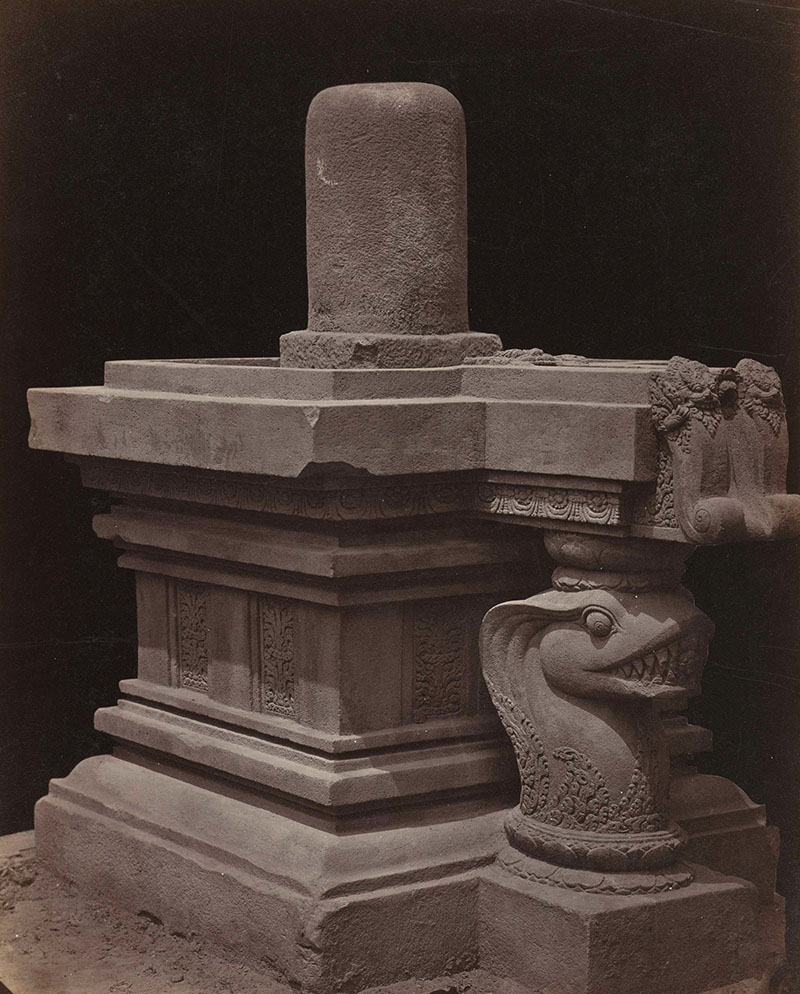
It symbolises the goddess Shakti as well as the feminine procreative power within Hindu iconography. The word itself literally translates to “abode,” “source,” “womb,” or “vagina.” In the sect of Shaivism, the yoni and the lingam (an aniconic form of Shiva) are believed to represent the male and female principles of the universe and, collectively, signify the eternal process of creation and destruction. In Hindu temples, the two often appear together, with the yoni acting as the receptacle on which the lingam lies.
More Definitions
Bodhyagri Mudra
Also known as the bodhyangi mudra, it means the “mudra of the six elements” or the “fist of wisdom,” and…
Vittala
A Hindu deity who is considered to be a form of Vishnu and is popularly worshipped in present-day Maharashtra and…
madanika
Celestial figure of a young, beautiful woman in Indian art and mythology, often associated with nature. The Sanskrit term madanika…
Hayagriva
The horse-headed avatar of Vishnu, he is the deity of knowledge and wisdom within the Hindu pantheon. He is usually…
Tantra
Heterodox spiritual doctrine and body of knowledge that originated around the sixth and seventh centuries CE in the Indian subcontinent,…
Kubera
A ruler of the yakshas (nature spirits) and a guardian deity in Hindu, Buddhist and Jain religious mythologies. He is…
Varaha
Vishnu's incarnation in the form of a boar. Varaha is third of Vishnu's ten incarnate forms (dashavatara) and is associated…
Mahasiddha
A term used in Tibetan and Tantric Buddhism for someone who embodied the perfect siddhi (psychic or supernatural abilities) through…