-
ChicagoImpart Encyclopedia of Art. "Ghodiyu, Palna, Panghuda." October 30, 2026. https://imp-art.org/articles/ghodiyu-palna-panghuda/.
-
MLA"Ghodiyu, Palna, Panghuda." Impart Encyclopedia of Art, Oct. 30, 2026, https://imp-art.org/articles/ghodiyu-palna-panghuda/.
-
HarvardImpart Encyclopedia of Art (2026) Ghodiyu, Palna, Panghuda. Available at: https://imp-art.org/articles/ghodiyu-palna-panghuda/ (Accessed: 12 November 2026).
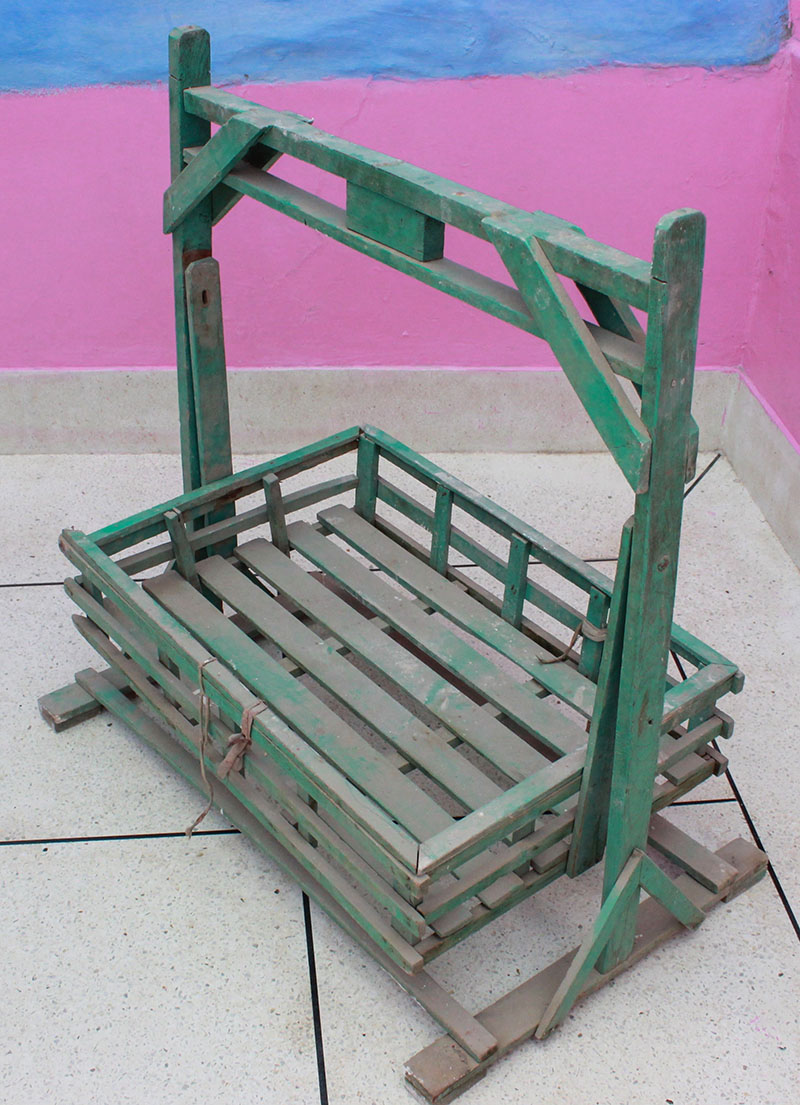
Cradles for infants and young children in the form of wooden- or metal-framed structures or woven baskets are a common form of vernacular furniture in northwestern India, where they are known variously as ghodiyu, parnu, palna and panghuda. In Gujarat and Rajasthan, symbolic miniature versions are often used as part of rituals.
Types and terminology
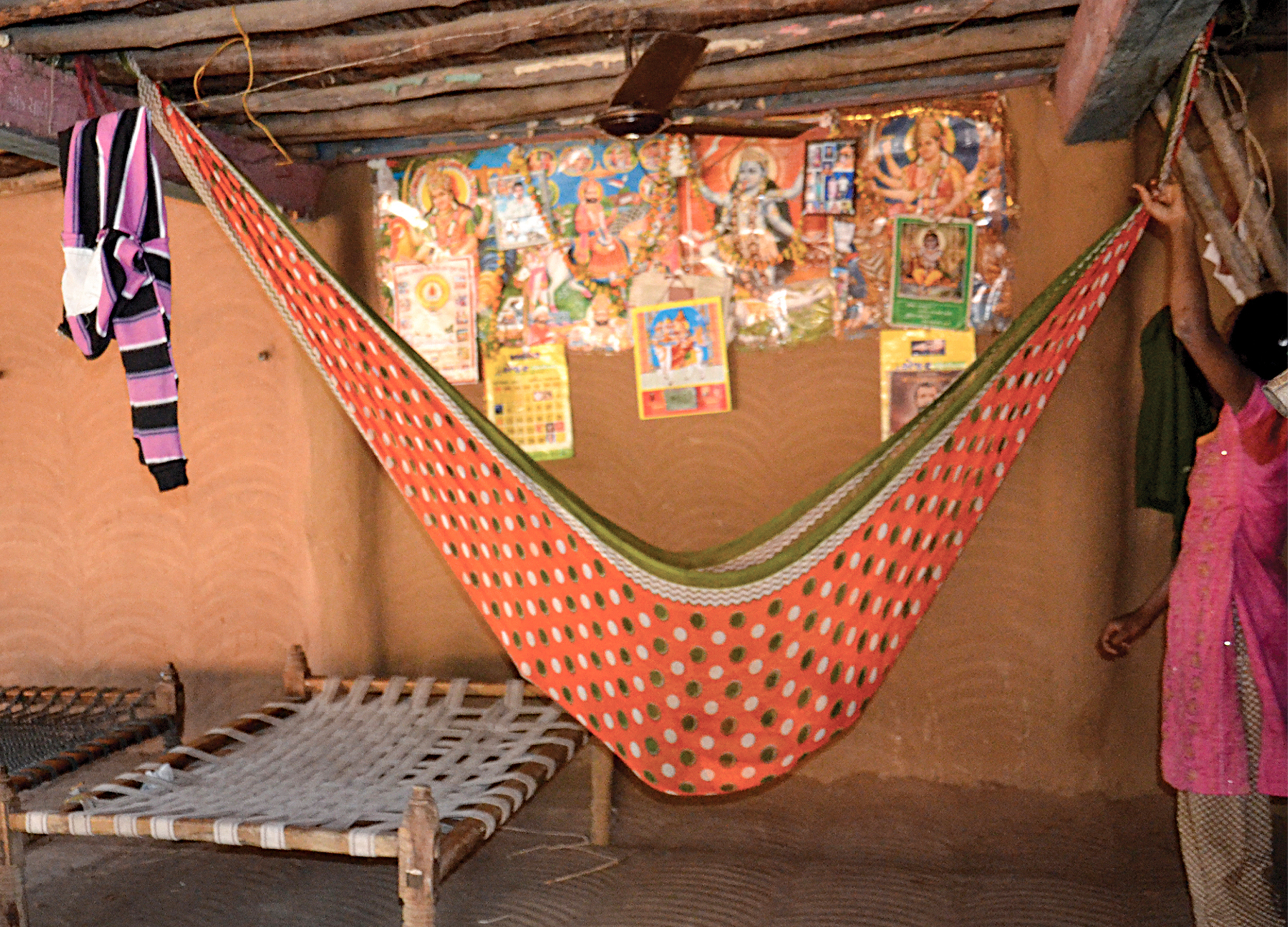
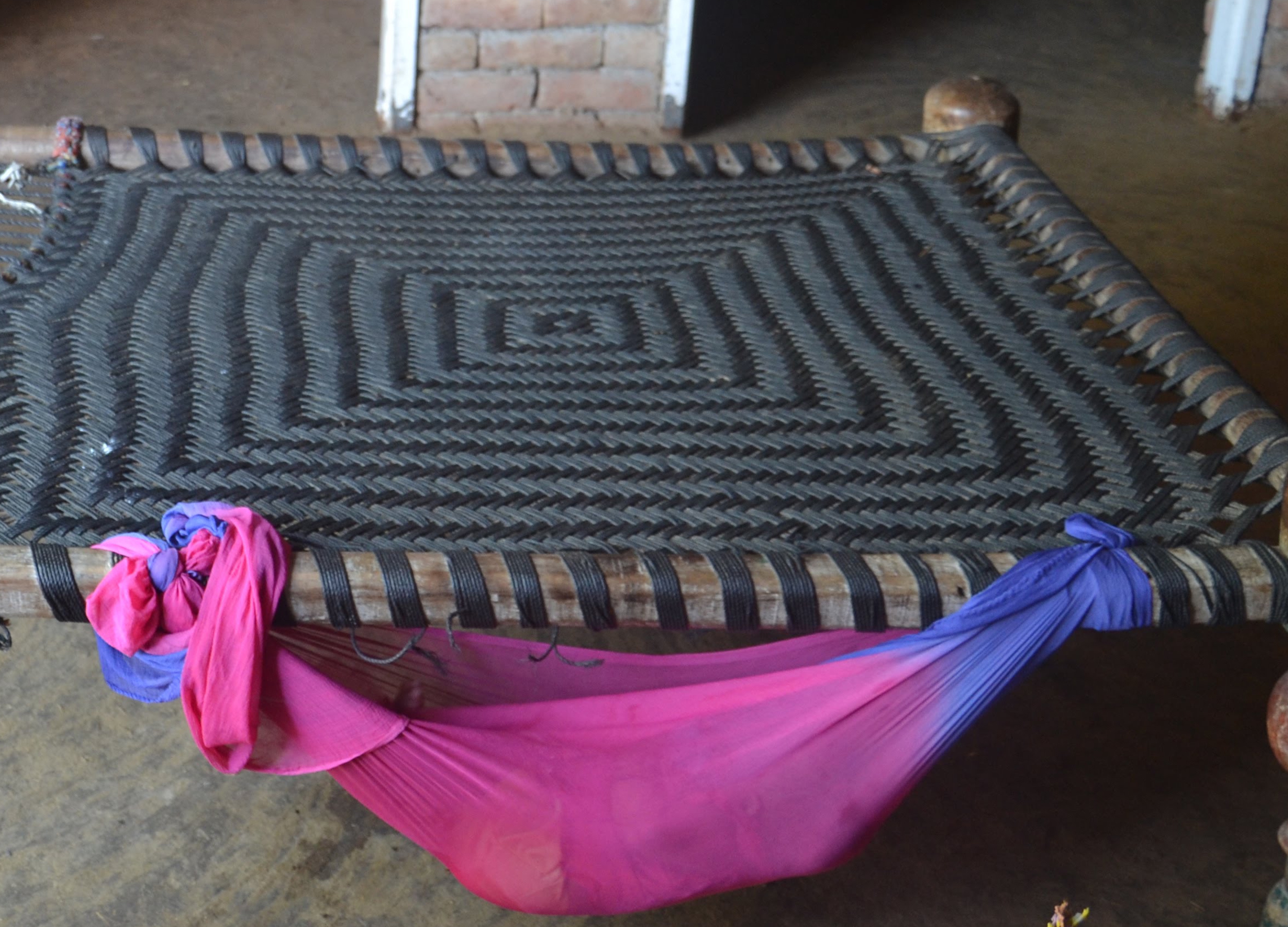
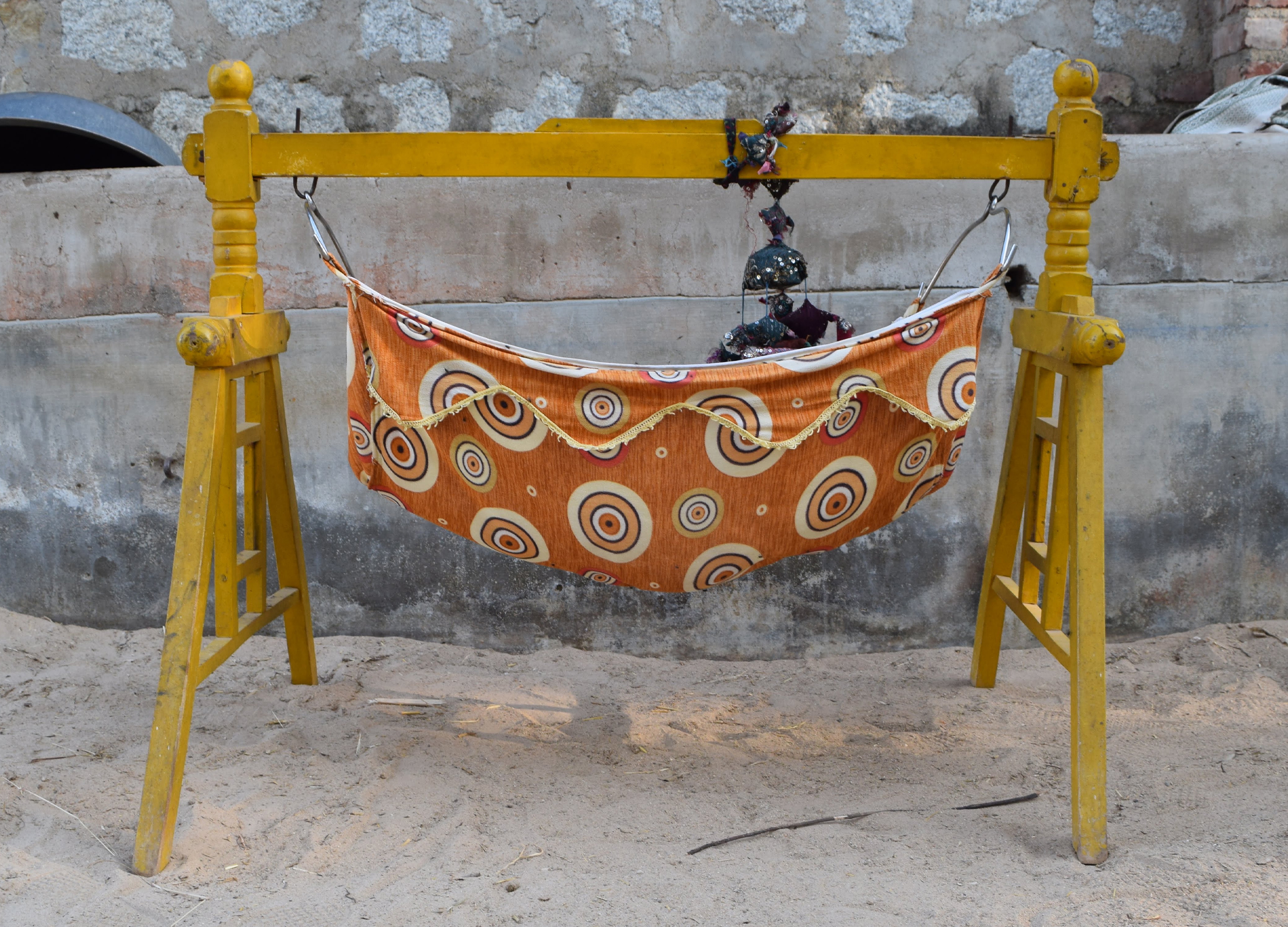
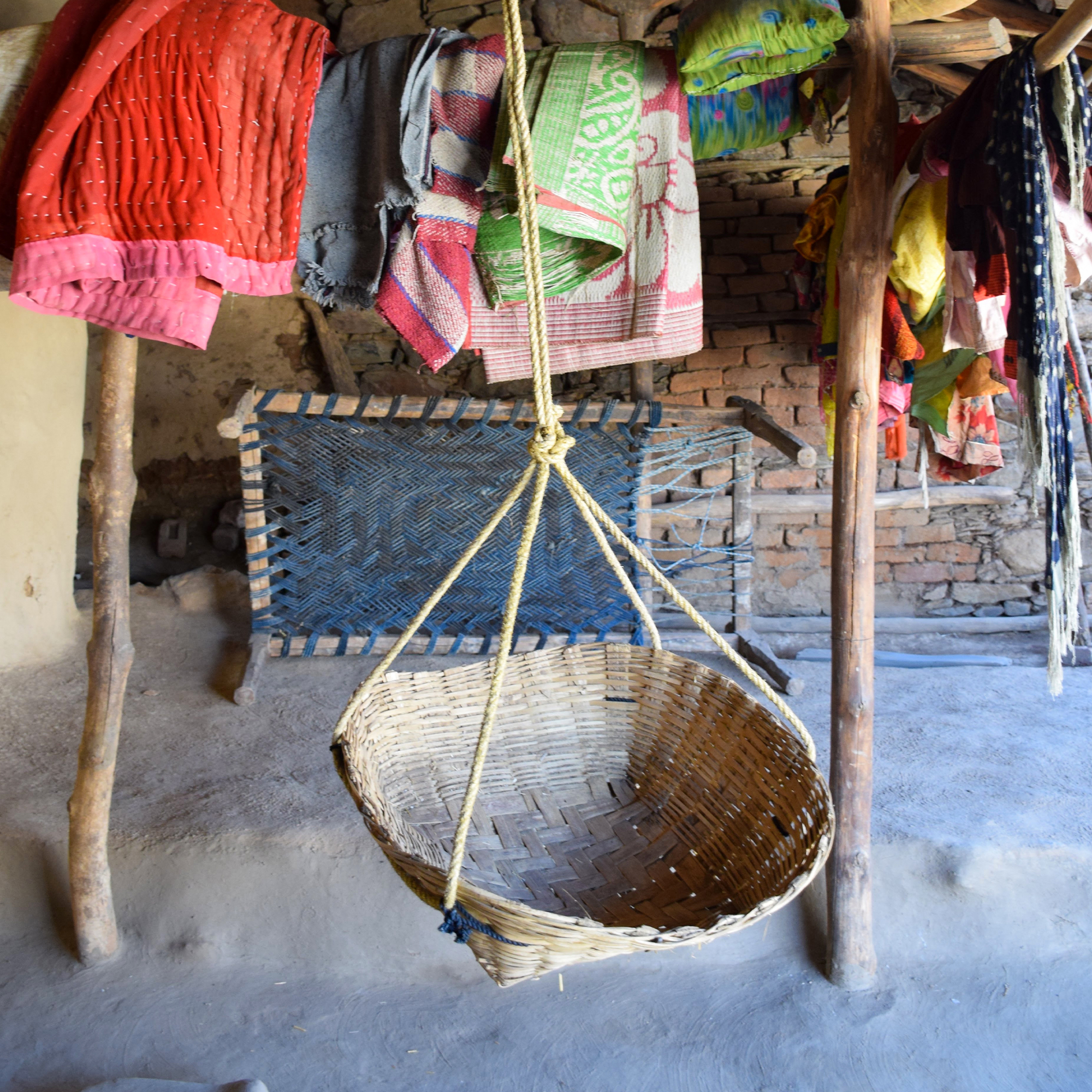
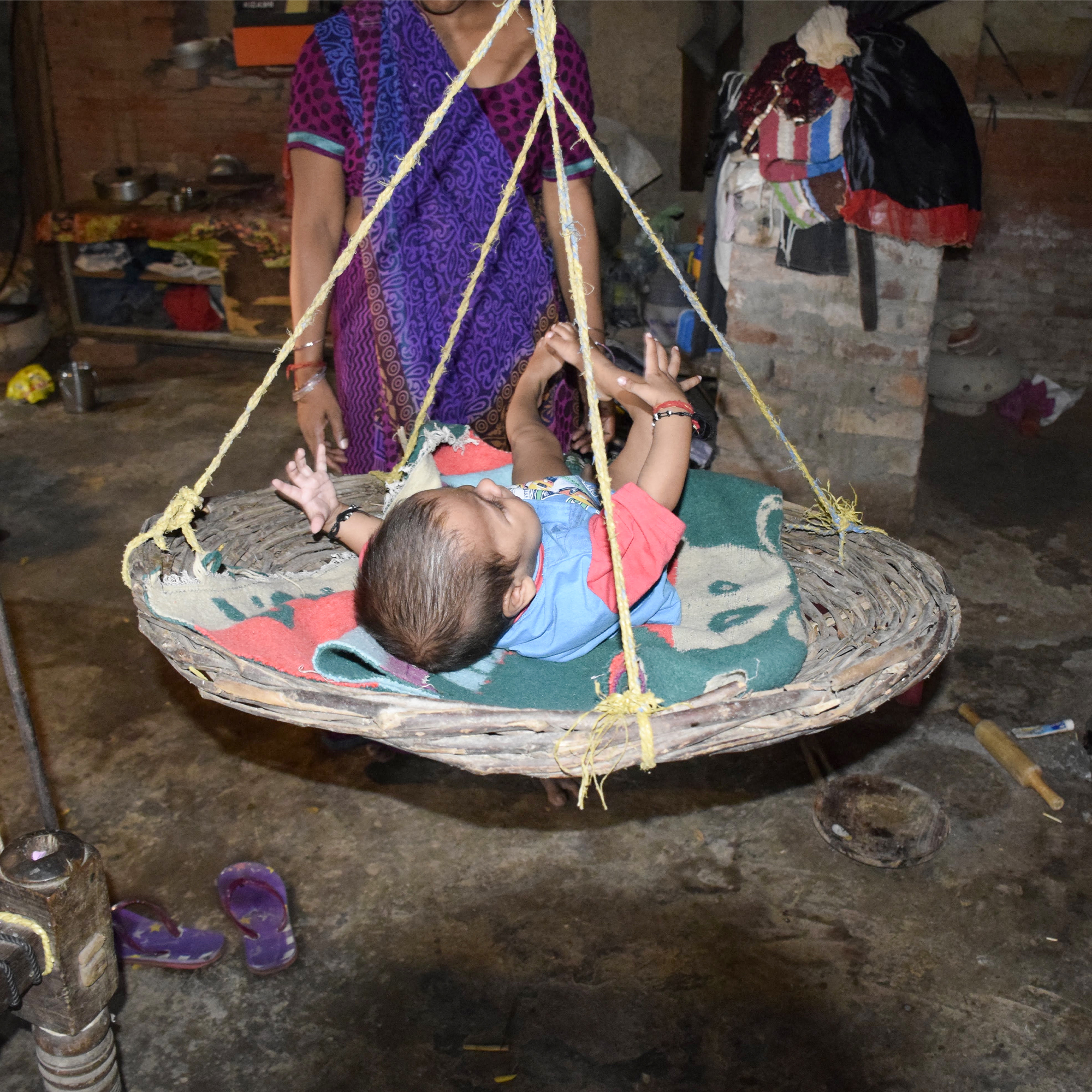
The most rudimentary, as well as the most ubiquitous, form of cradle in the region is a hammock improvised from a length of cloth, often a sari or bedsheet, suspended from the ceiling or from a beam or charpoy frame. Such a hammock is known as khoyu in Gujarat, jholiya in Rajasthan, and jhalli in Punjab and Haryana. A cradle with a frame suspending the hammock is called ‘ghodiyu’ (from Gujarati ghodi: ‘stand’ or ‘support’, among other meanings) in Gujarat and parts of Rajasthan. A cradle in which a structured crib or cot is suspended in the frame is known as ‘parnu’ or ‘hindo’ in Gujarat, ‘palna’ in Rajasthan, and ‘panghuda’ in Punjab, where it is documented only in the Majha and Malwa regions. In the Vagad region of Rajasthan and the Khadar region of Haryana, ‘palna’ refers instead to a woven basket-like crib hung directly from the ceiling.
Design and construction
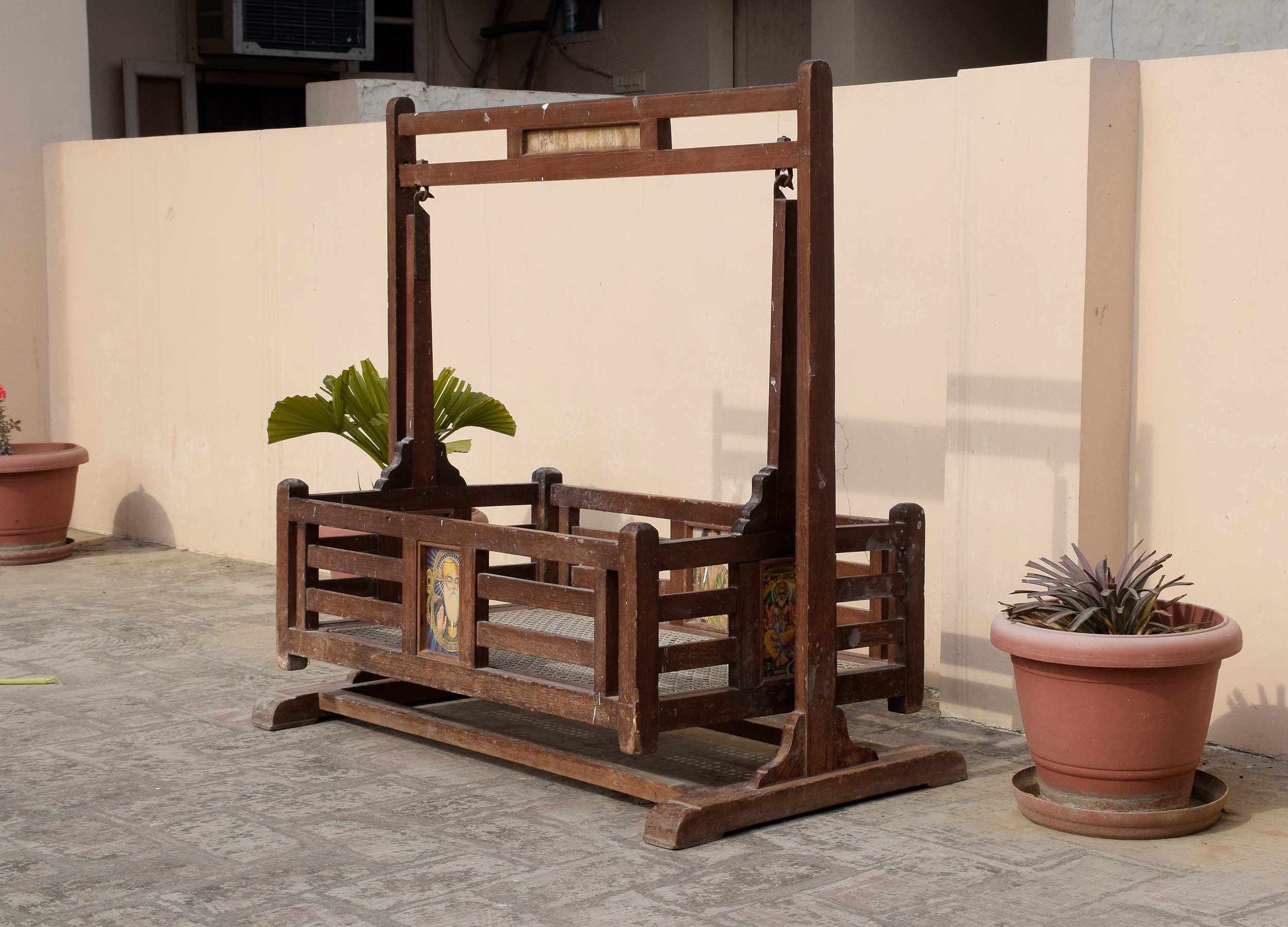
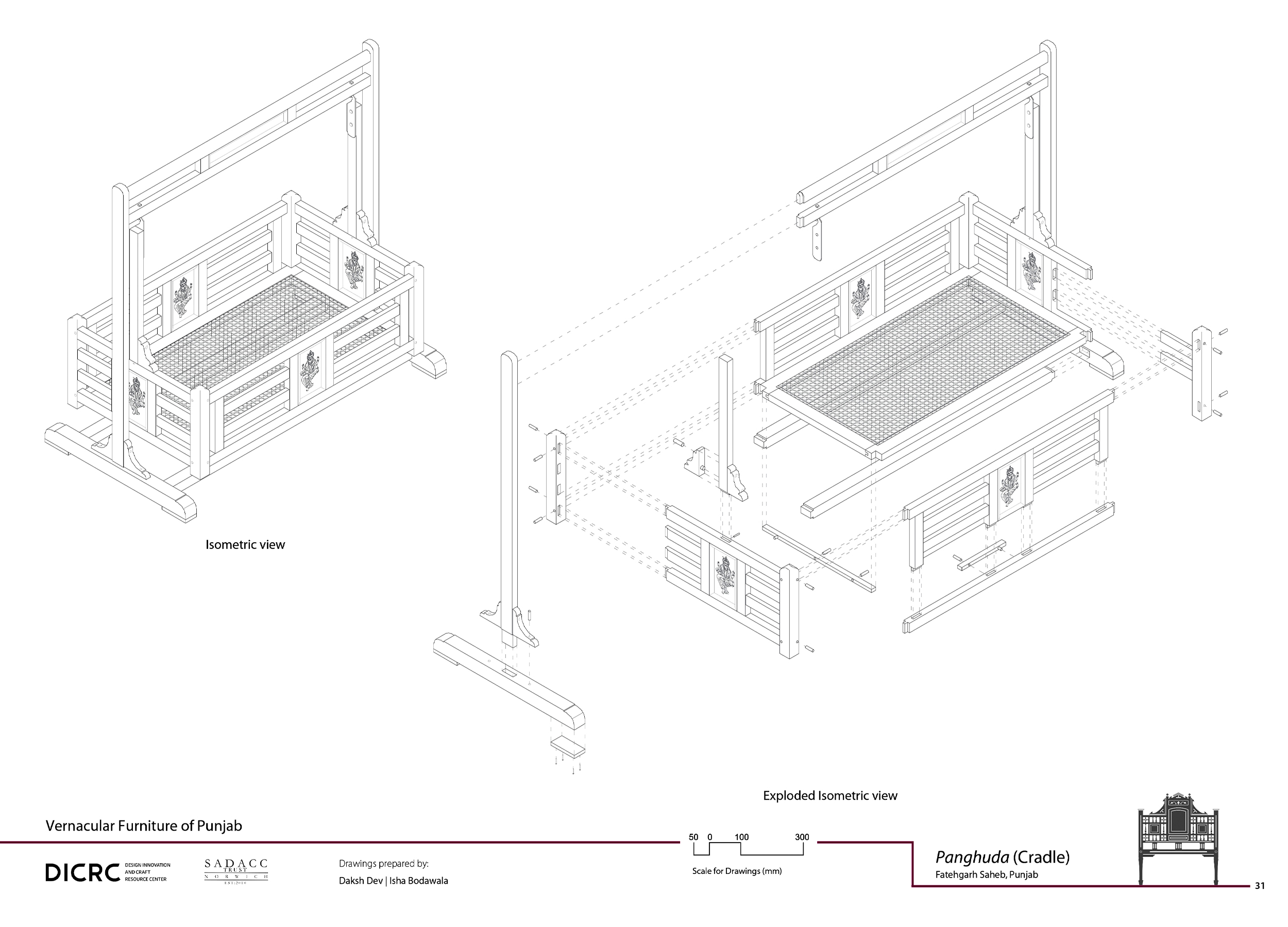
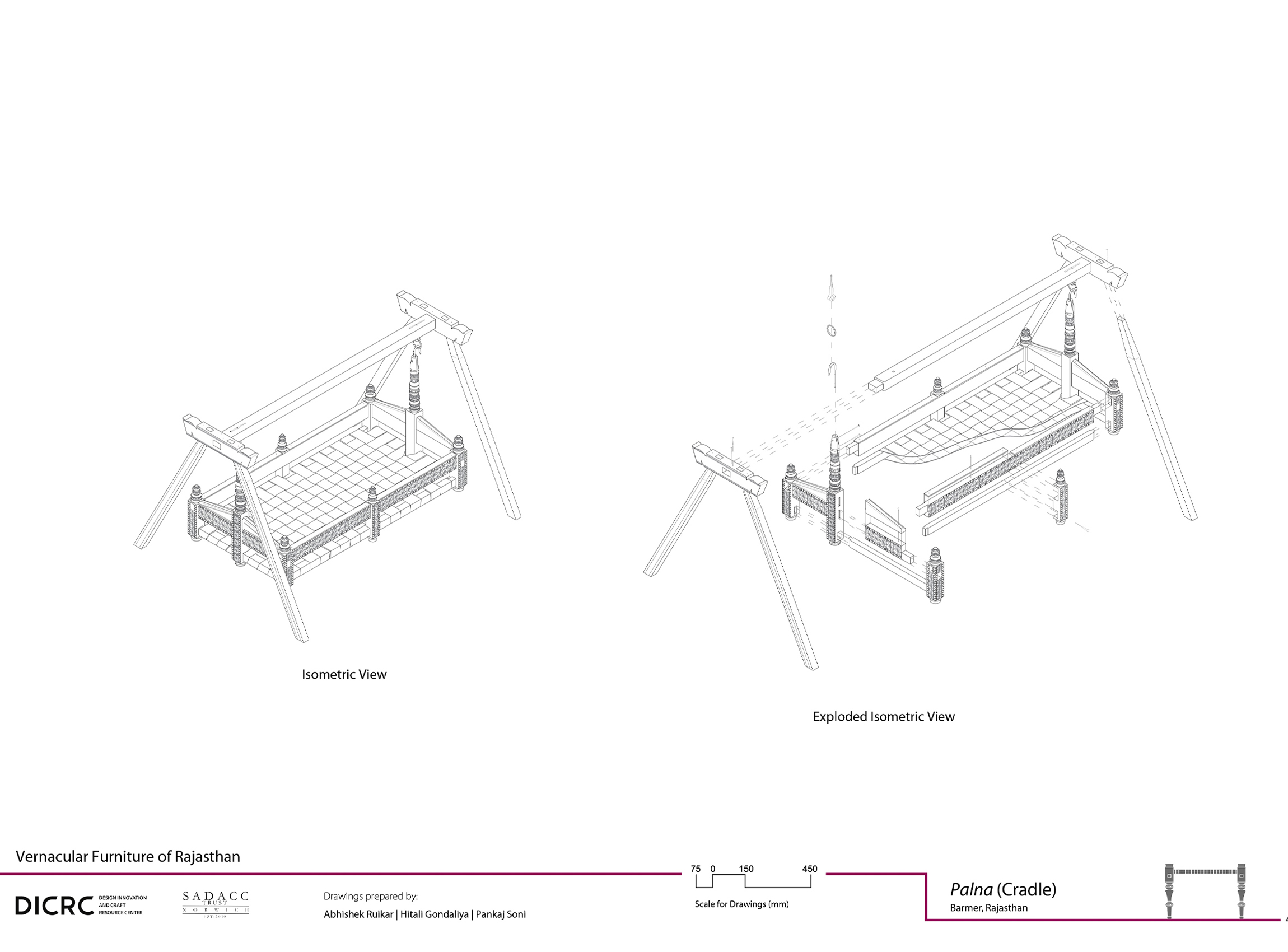
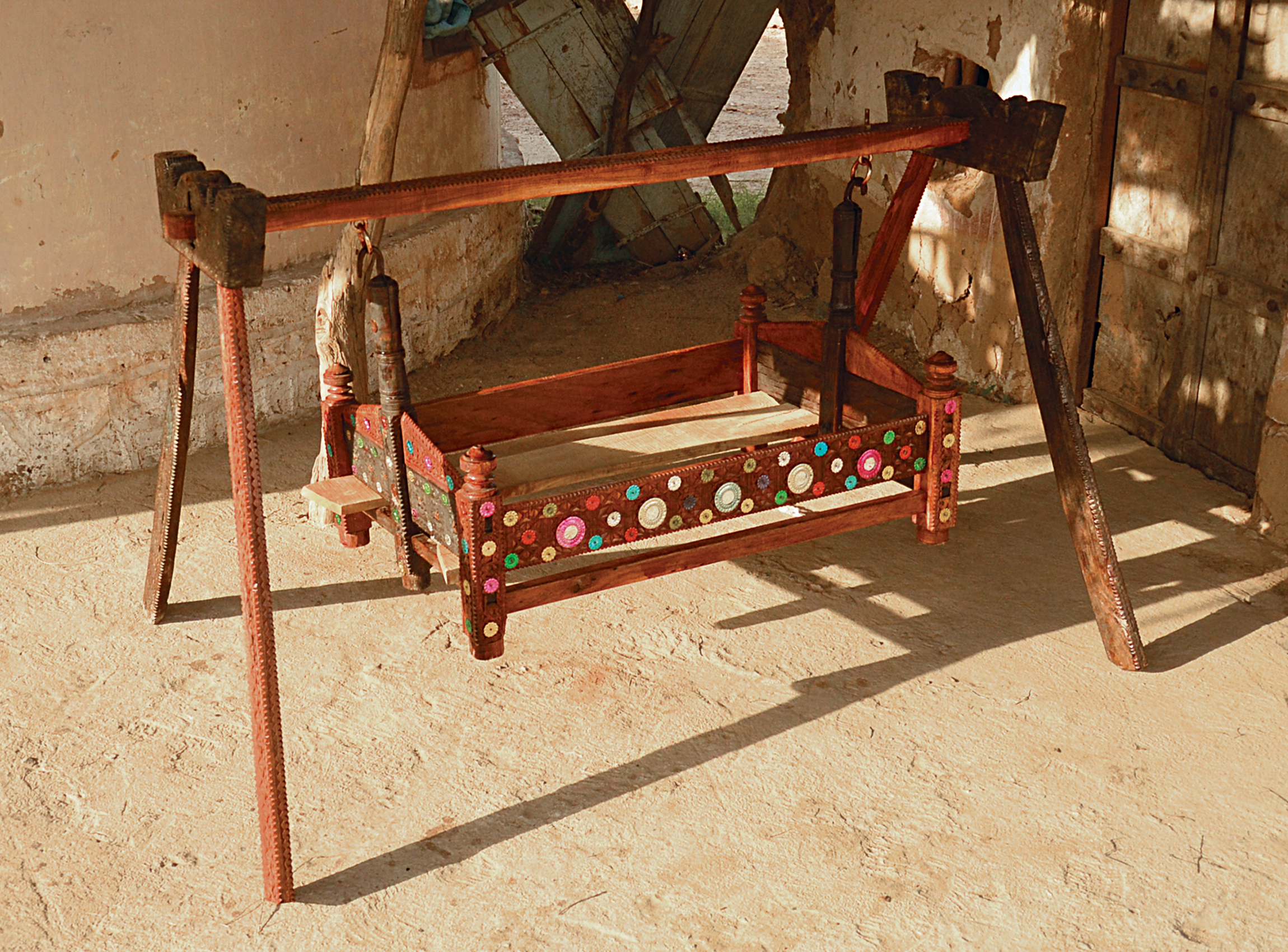
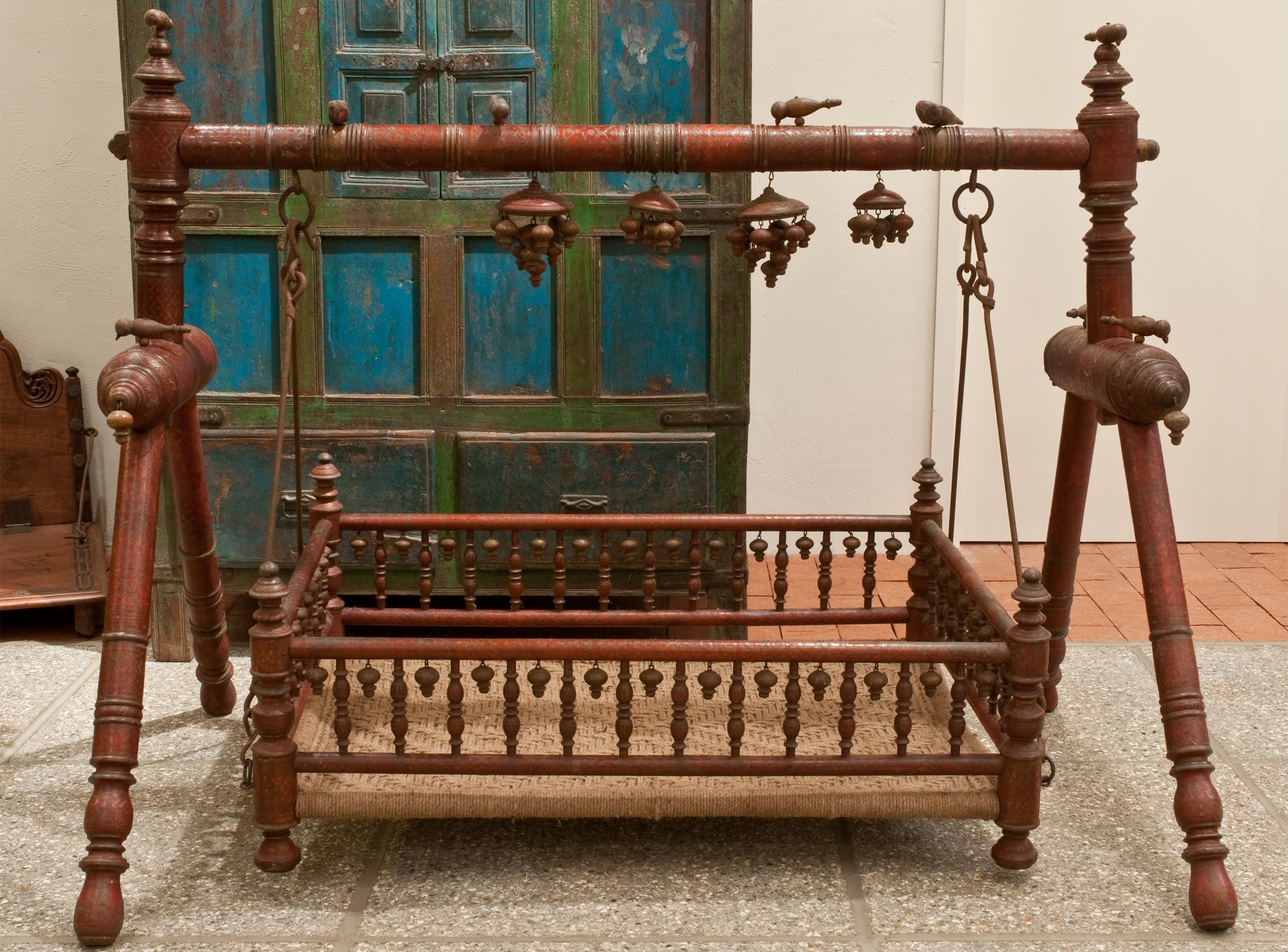
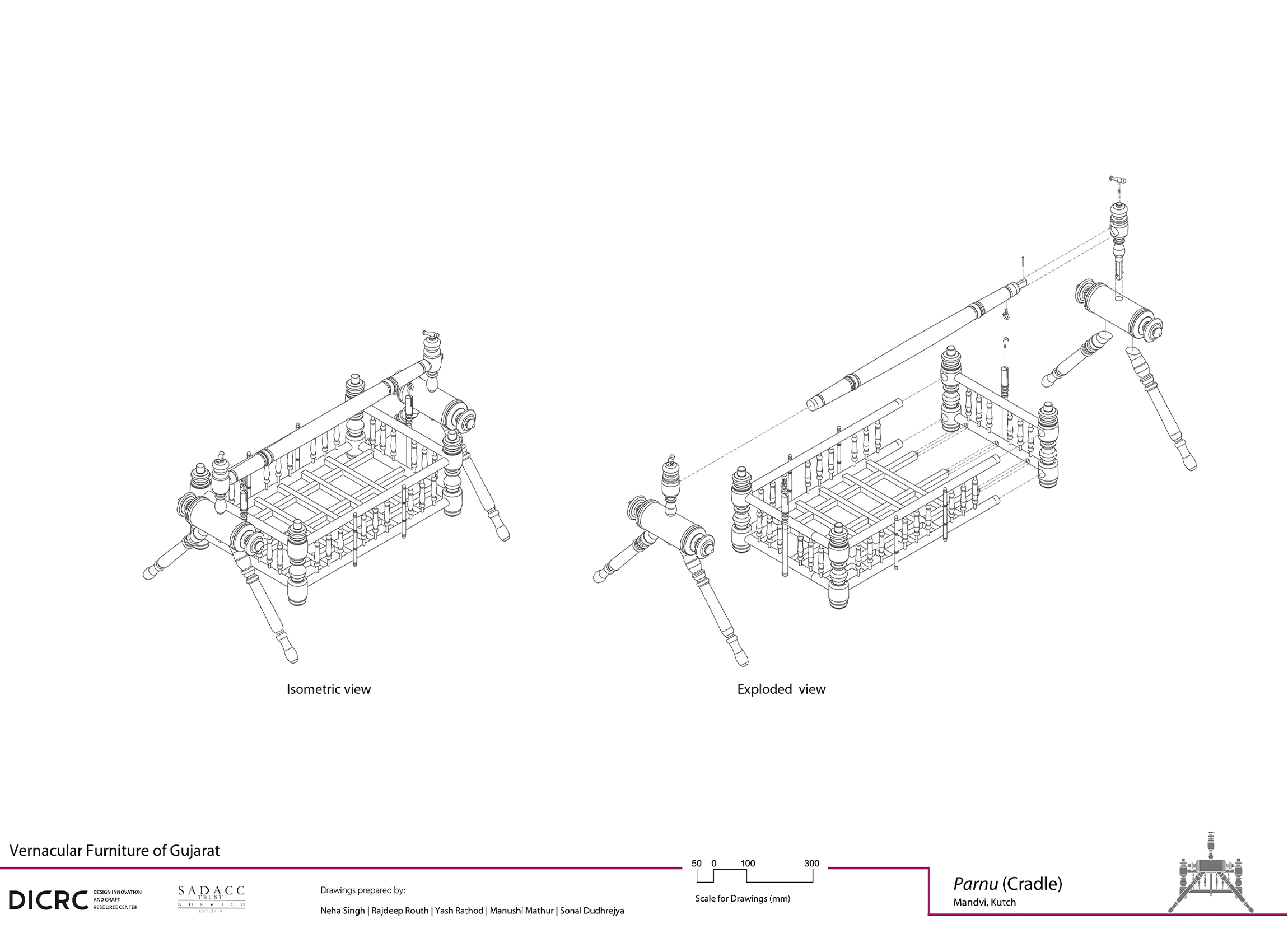
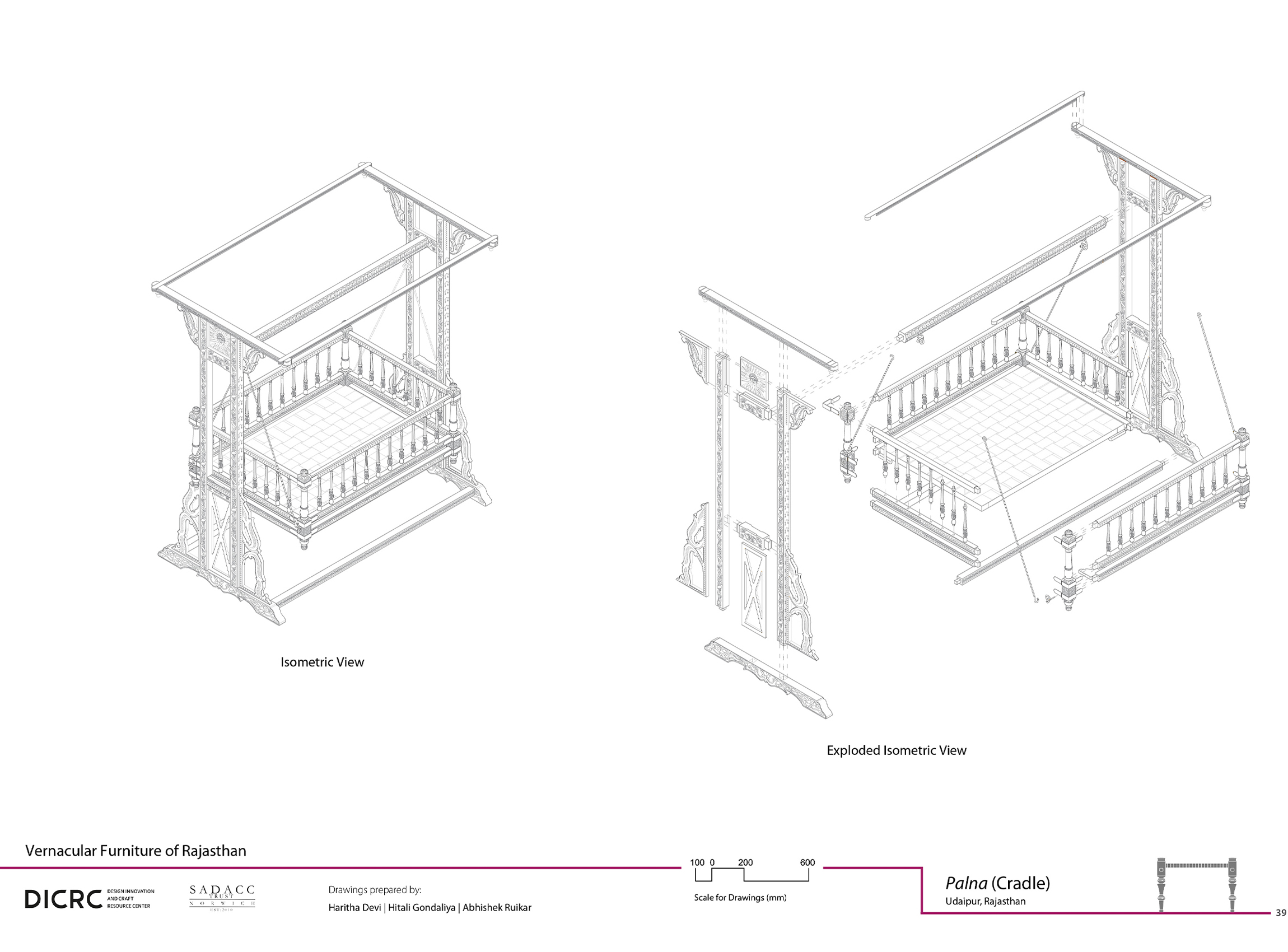
The cradle typically consists of two parts — the structural frame and the crib for the infant. In the ghodiyu, parnu, and many panghuda, the frame is generally two pairs of trestle-like legs joined at the top by a horizontal beam — often comprising seven or nine members. These are assembled using mortise and tenon joinery and can be easily disassembled to be stored away when a child has outgrown the cradle, and reassembled later for the next child. Another design, often seen in the heavier, less modular palna in Rajasthan and panghuda in Punjab, comprises one or more vertical supports on either side supported on flat horizontal members along the ground. Most traditionally constructed cradles in Gujarat, Rajasthan and Punjab feature carved or lathe-turned wooden members that are typically lacquered or painted. They may be reinforced with the addition of wooden dowels or metal bracing. More recent cradles employ materials such as plywood, metal, and plastic.
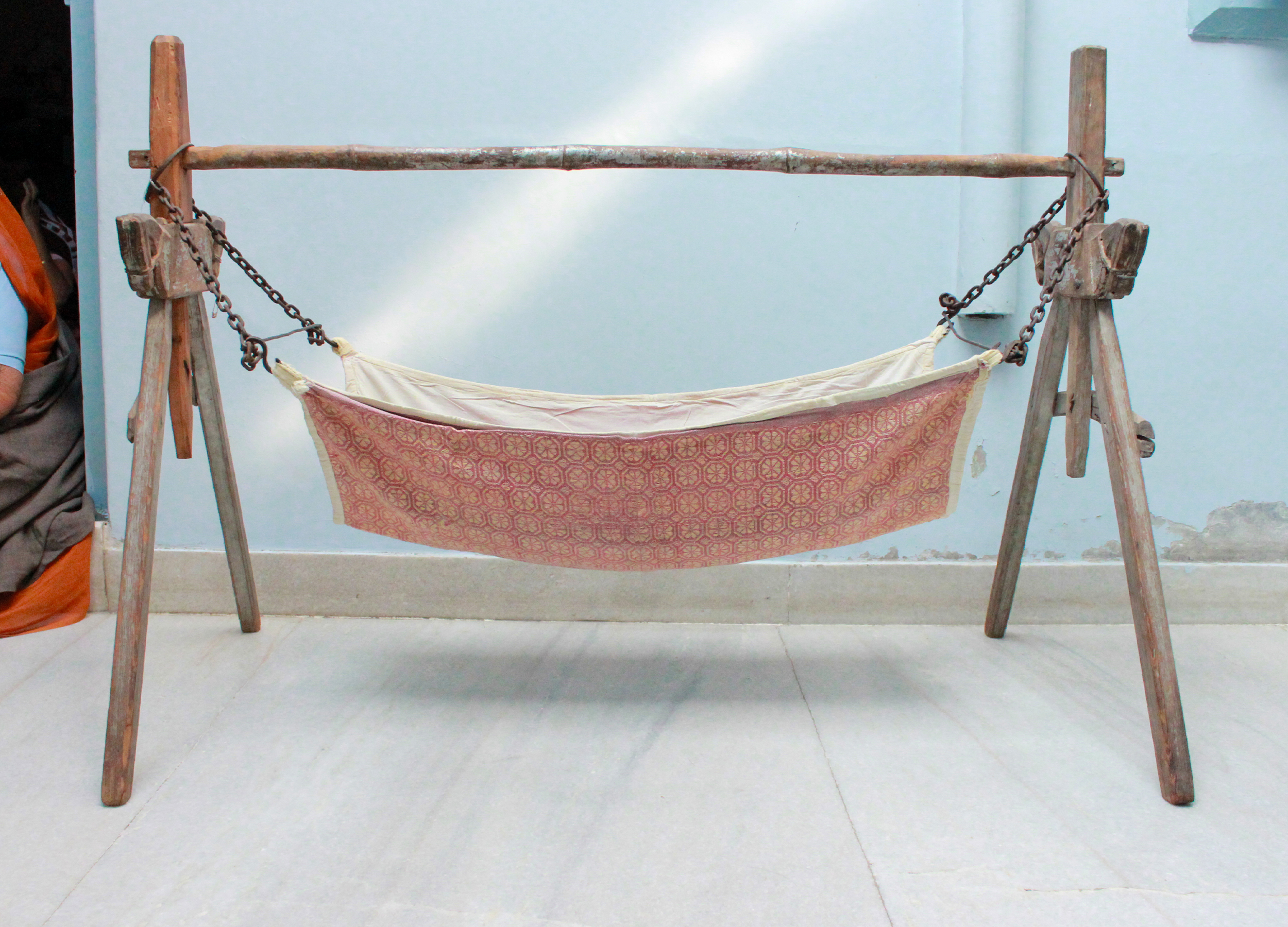
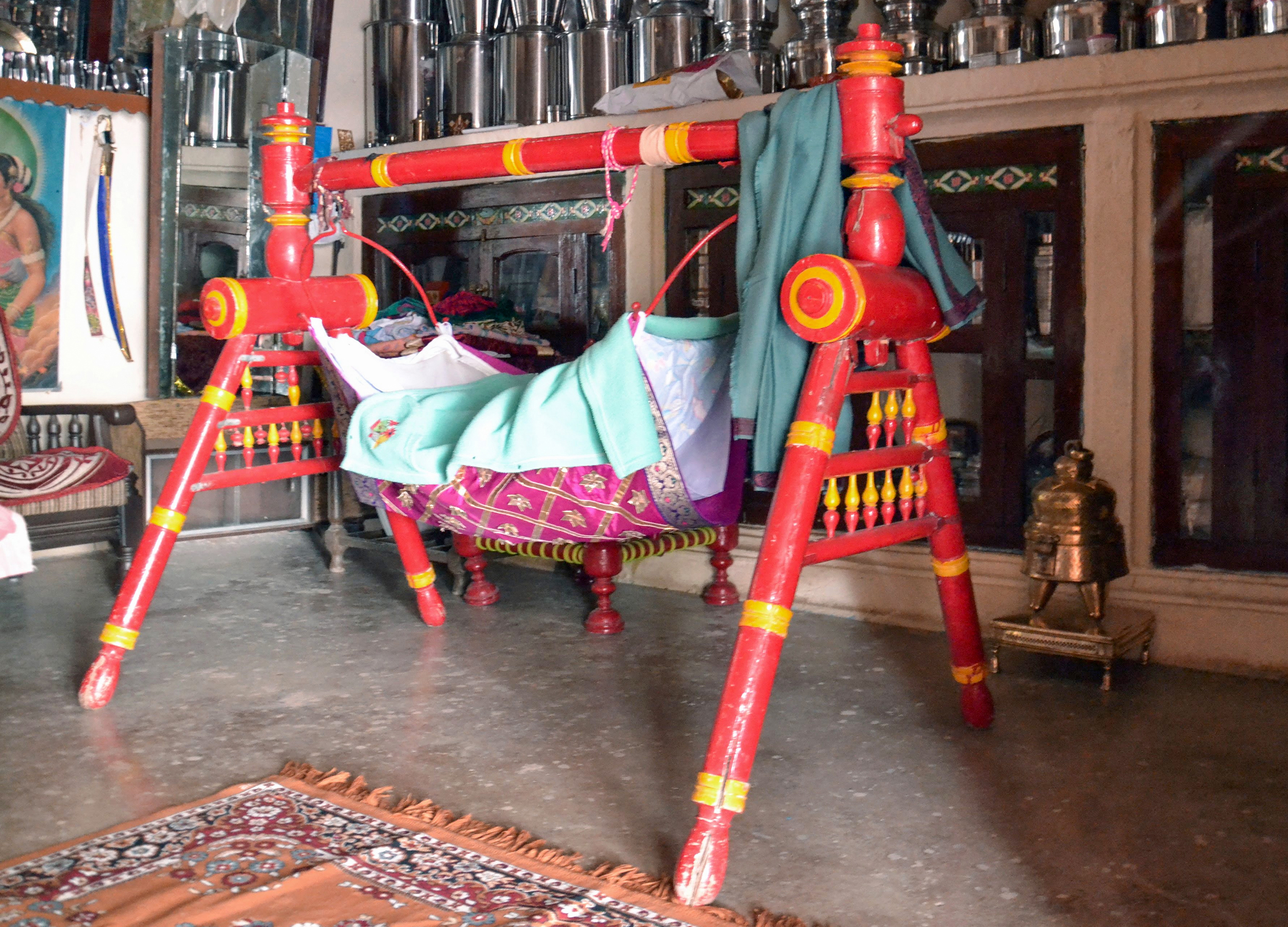
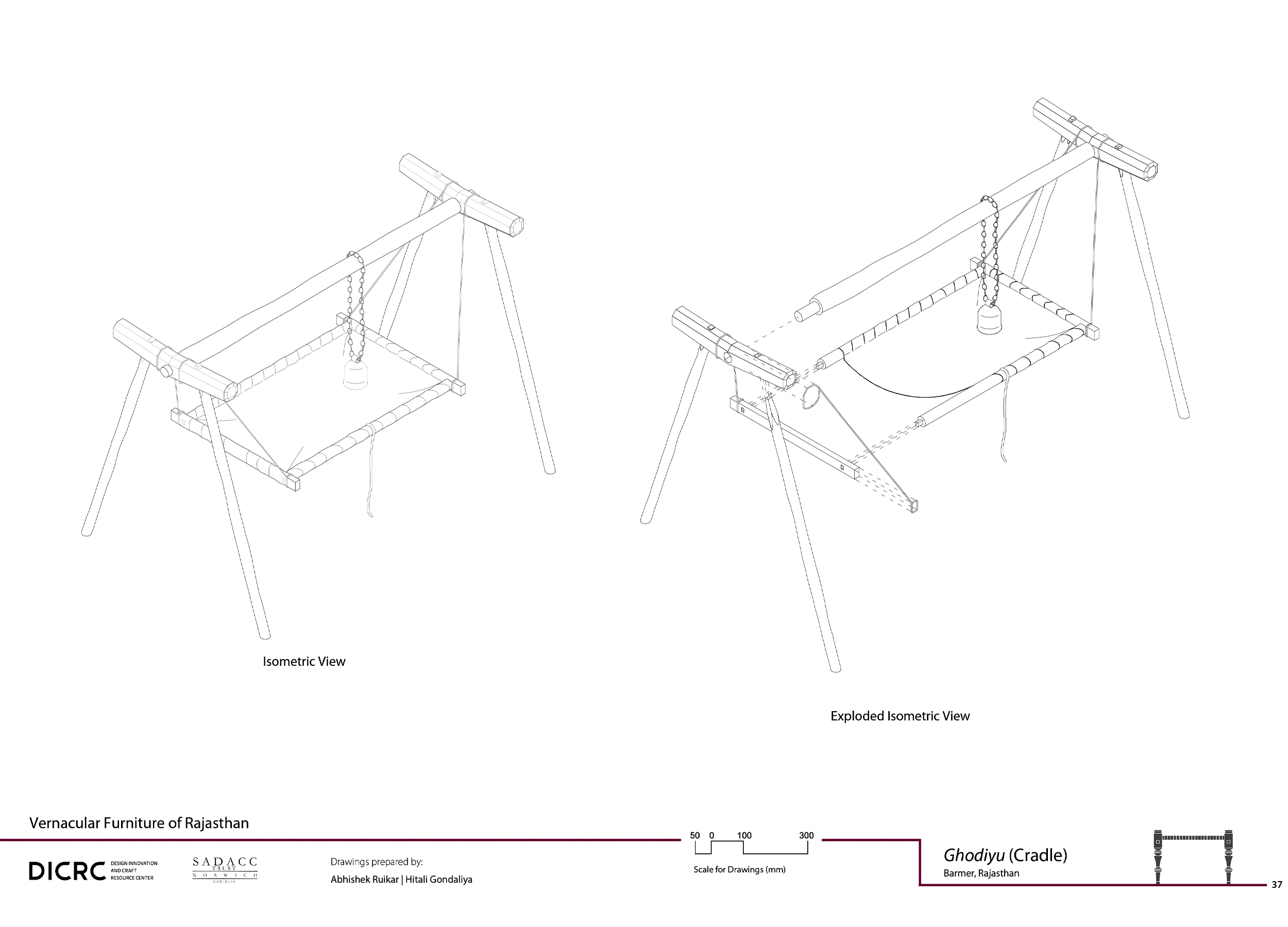
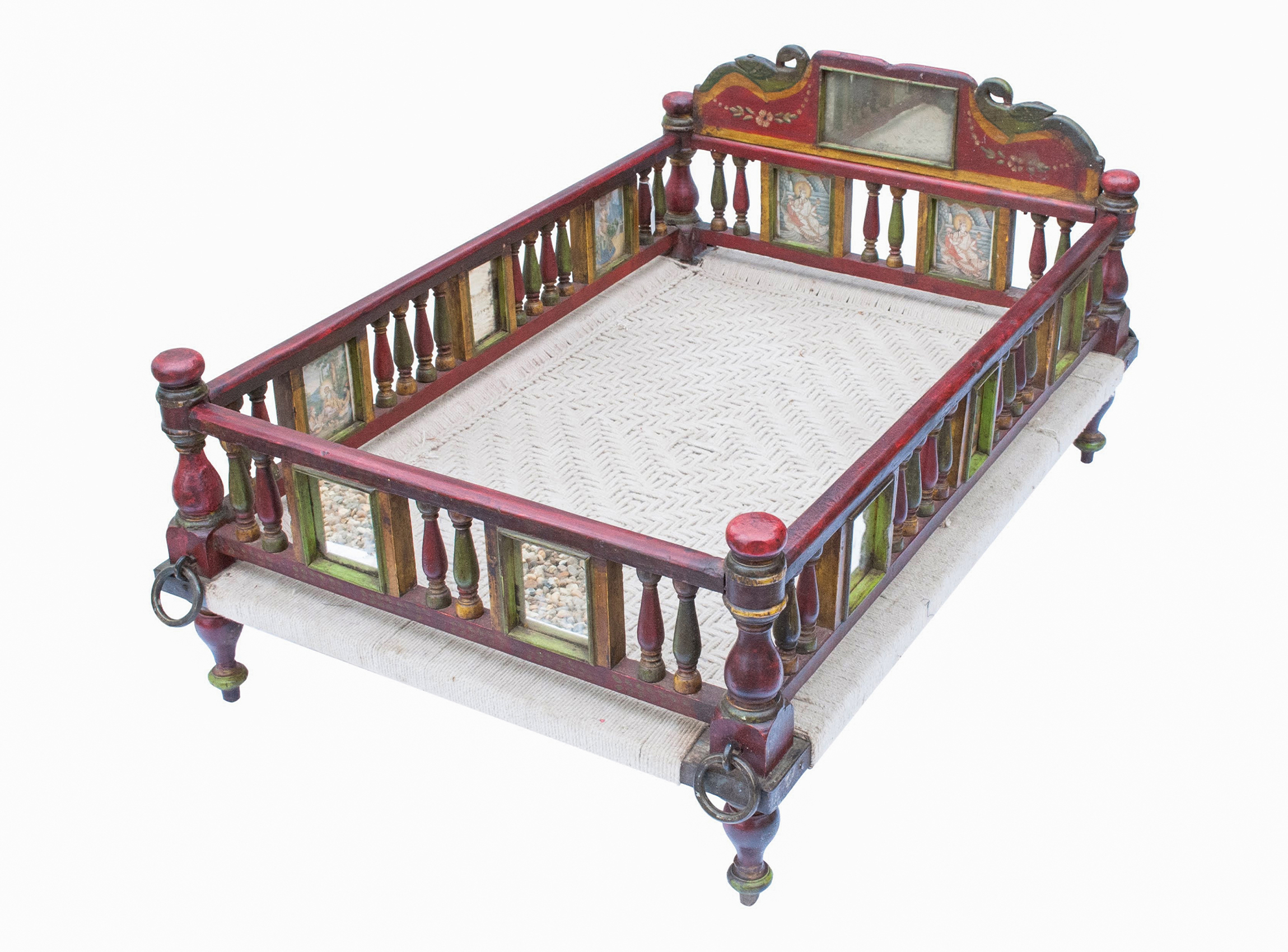
The crib is suspended from the top beam using hooks, ropes, chains, or metal rods or hoops. It may take the form of a fabric hammock, as in the ghodiyu in Gujarat and Rajasthan, or a wooden cot with a solid or webbed base, as in the parnu, hindo, palna, and panghuda seen across northwestern India. The latter is a simple rectangular structure comprising wooden posts and rails and often featuring turned wooden spindles or webbing. The flat bottom surface on which the infant is laid is typically webbed using woven cotton or nylon ropes or straps. In some cradles, it may instead be made of wooden planks or thin criss-crossing wooden members. A mattress or cushion is placed on this.
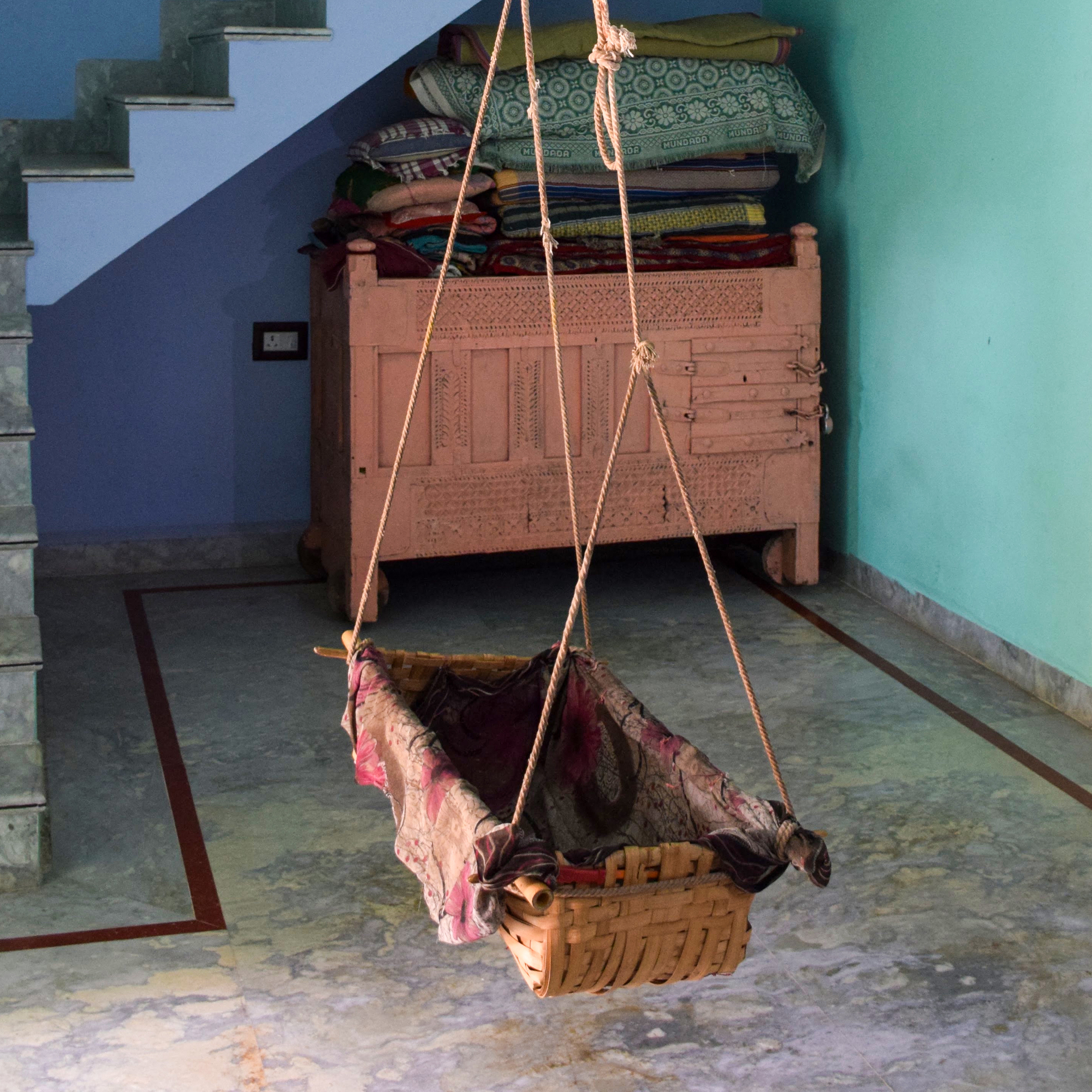
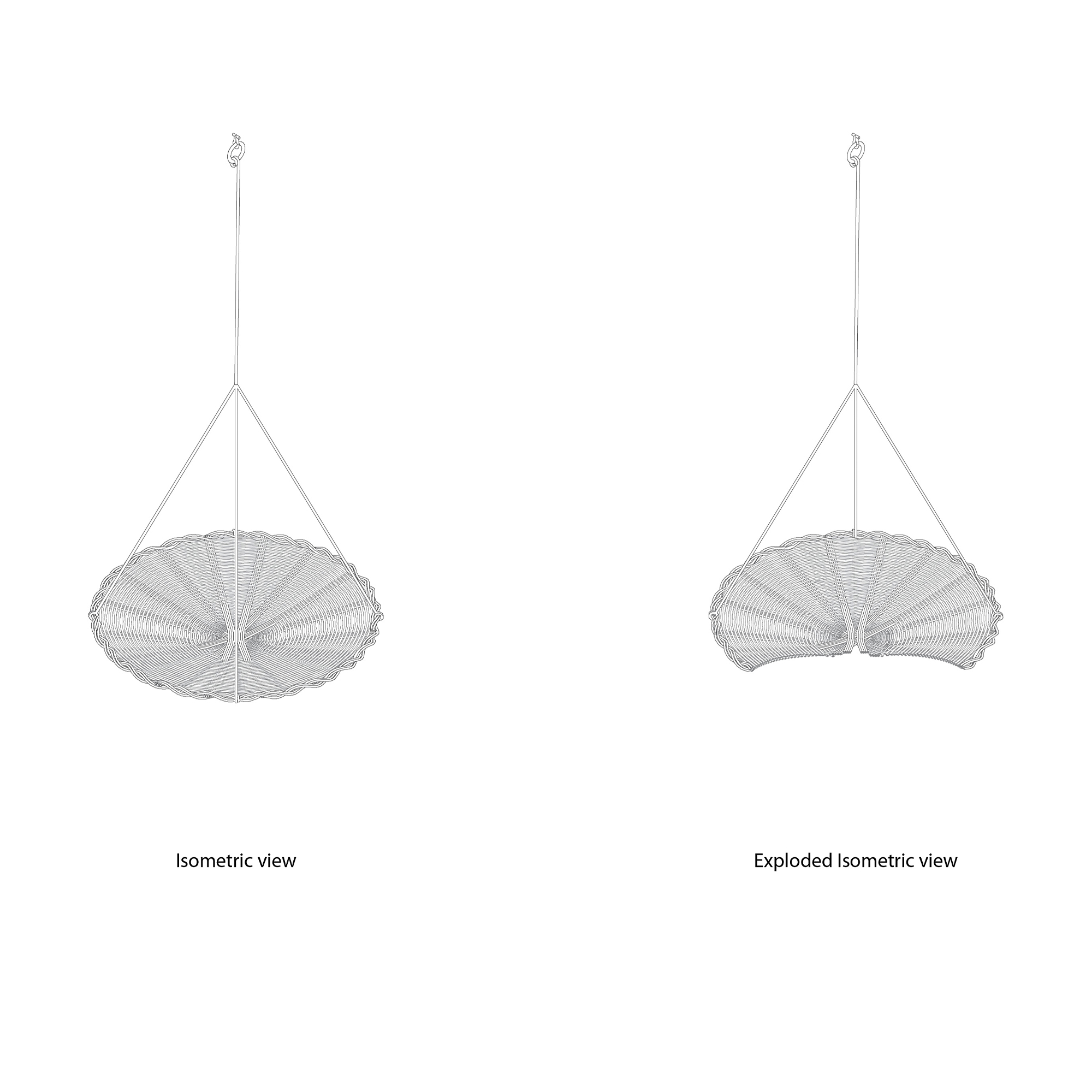
Unique to the Vagad region of Rajasthan is a woven bamboo crib, also known as palna, suspended directly from the ceiling. It is made up of a rectangular frame — two lengths of bamboo joined by two shorter split-bamboo members — between which thin bamboo strips are woven to form the sides and base using traditional basket-weaving techniques. The interior is typically lined with layers of cotton cloth. The Haryanvi palna, documented only in the Khadar region, is a shallow circular basket woven from shehtoot (mulberry, Morus indica) branches and lined with a cotton mattress. Both these types of palna are suspended from metal hooks in the ceiling using ropes.
Ornamentation
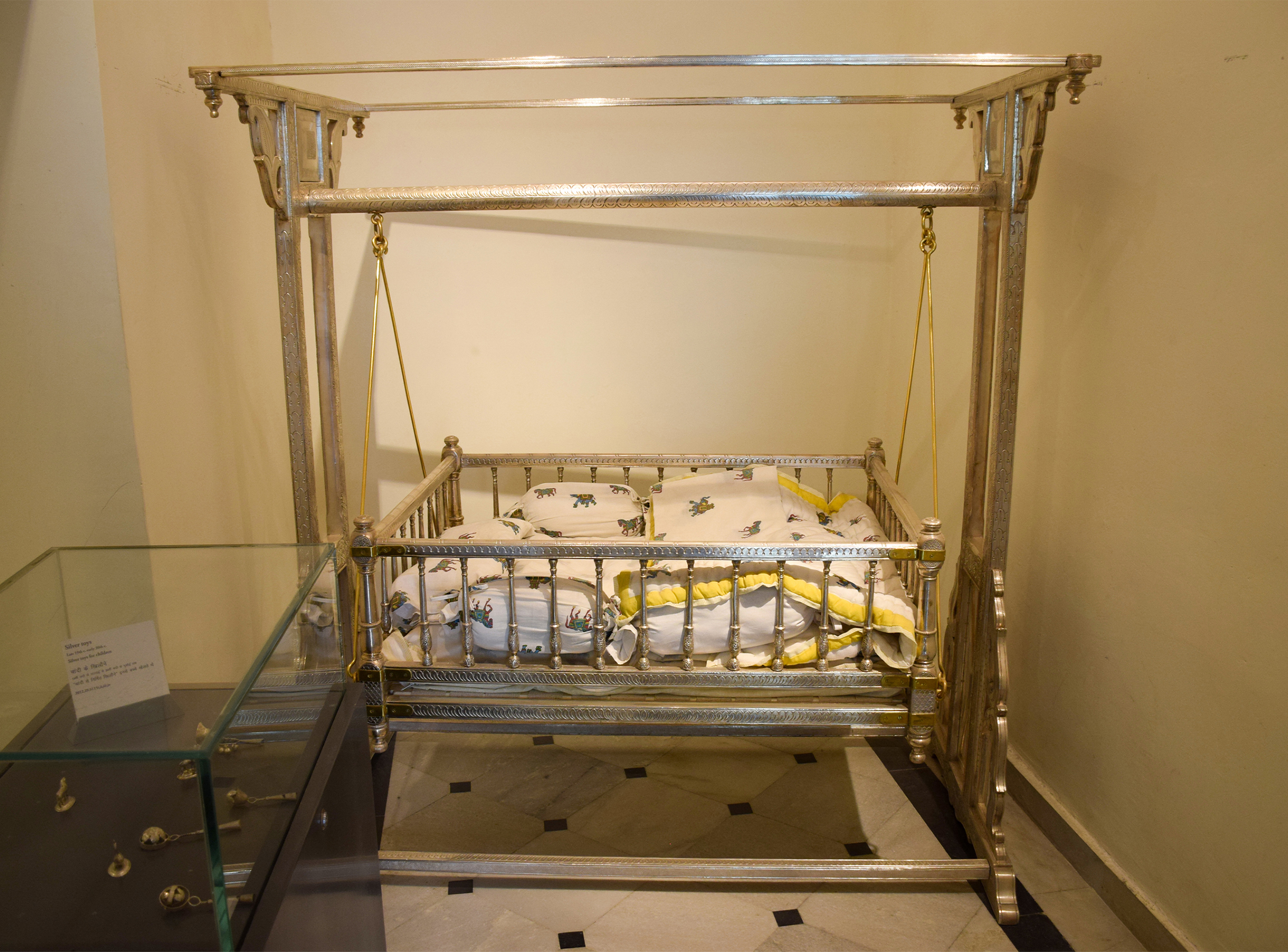
Cradles display a range of ornamentation; they may be plain or carved, painted or clad in metal. They may feature additional elements, such as parrot finials, and bells or other hanging ornaments made from turned wood for the amusement of the infant. The turned wooden members of a traditional ghodiyu frame are lacquered with different colours, typically the auspicious red and yellow. A parnu documented in Mandvi, Kutch features the local style of carving and mirror work on the sides of the crib. A seventy-year-old panghuda in Punjab made from shisham (North Indian rosewood, Dalbergia sissoo) features panels with images of deities set under glass at the centre of each face of the cot. More ornate cradles, such as parnu of royal families in Gujarat, were historically clad in silver decorated with repoussé and chasing techniques, or lacquered in various colours. In Rajasthan, a silver-clad palna with intricate designs and symbols is exhibited at the City Palace Museum, Udaipur. The Mehrangarh Fort in Jodhpur, Rajasthan displays a variety of palna used by numerous generations of royal families — some carved and covered with gold leaf, others featuring enamelling or set with precious gems, reflecting the imperial patronage of these crafts. A unique palna exhibited here features a self-swinging mechanism.
Ritual cradle
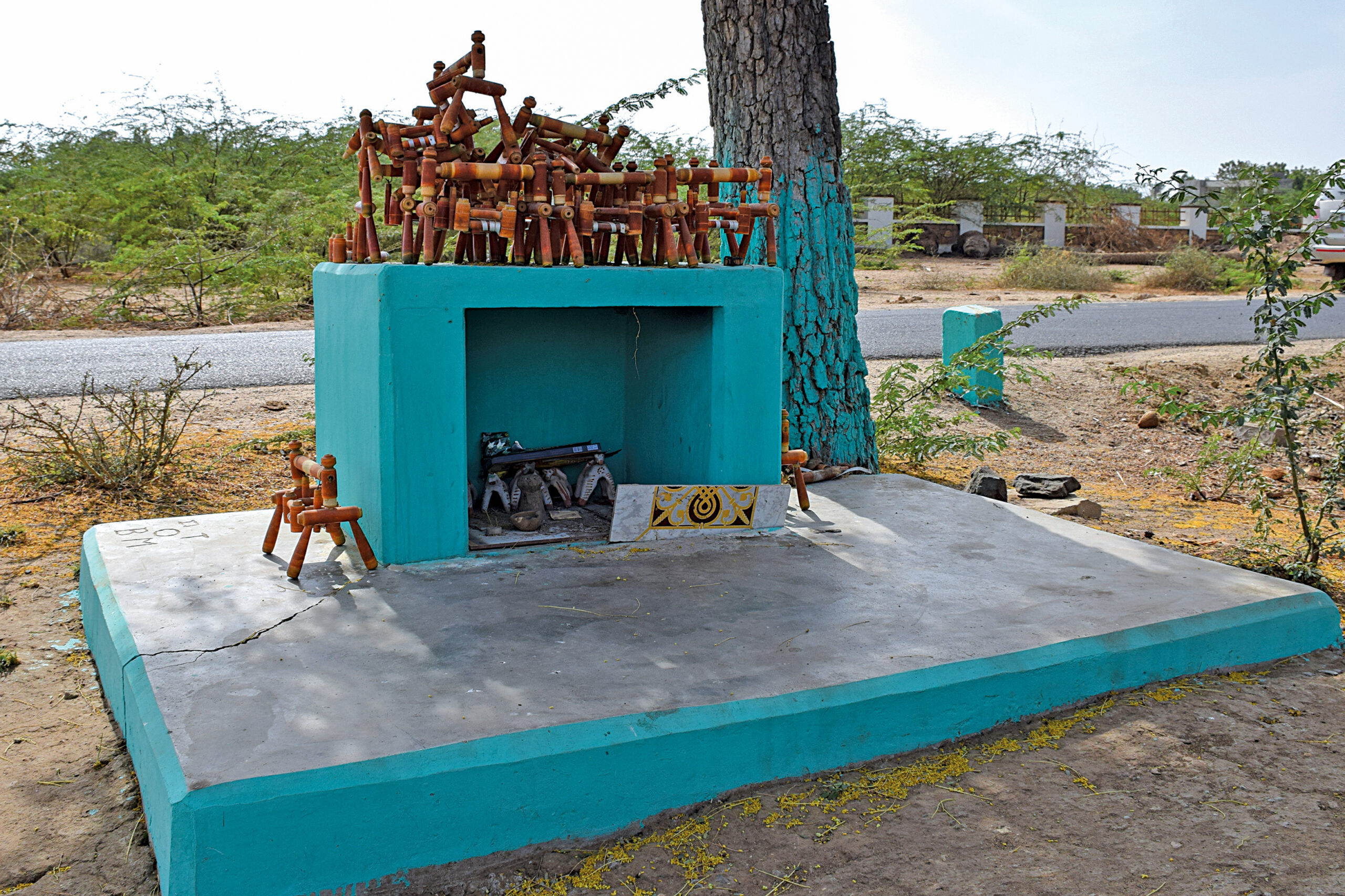
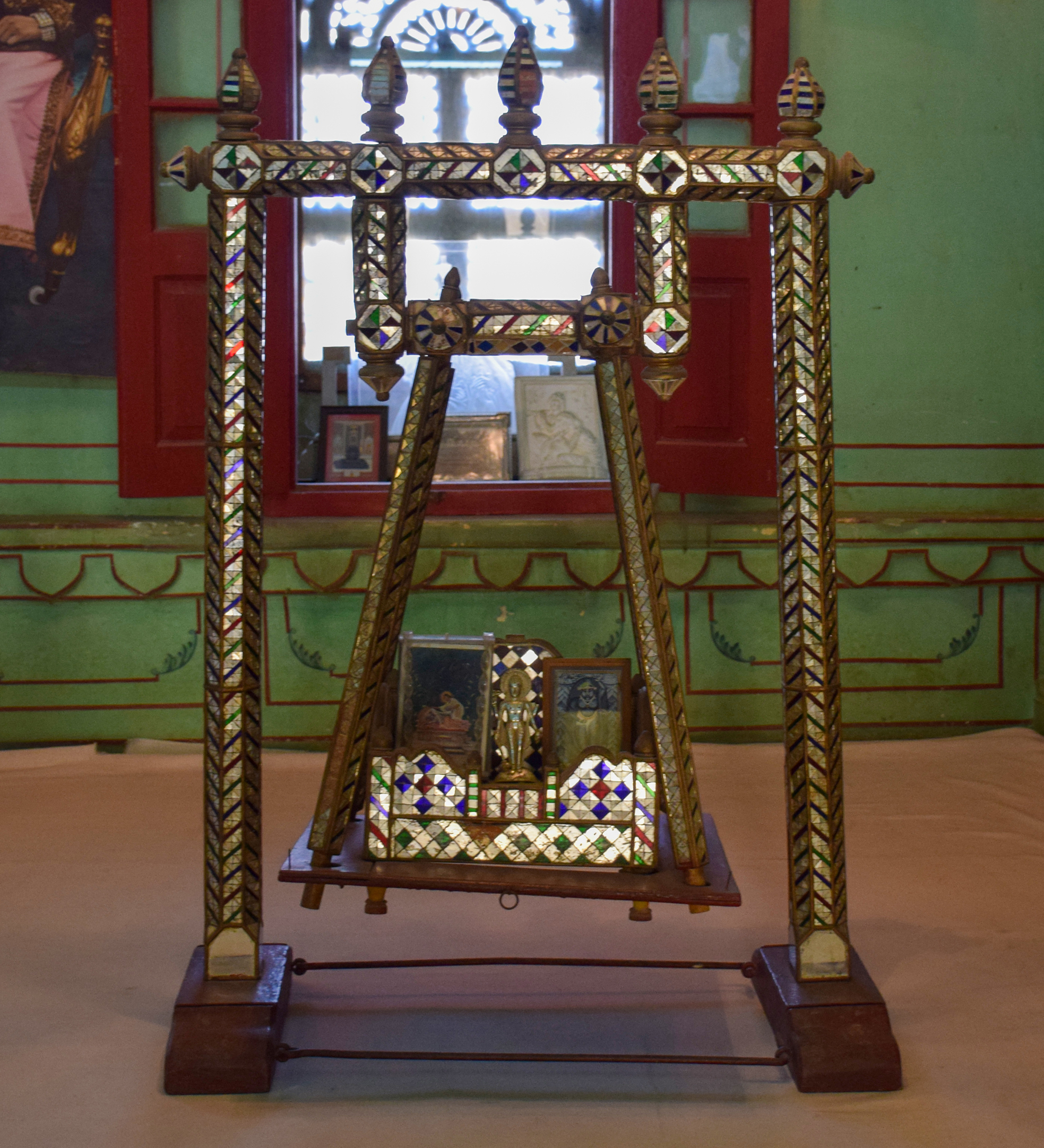
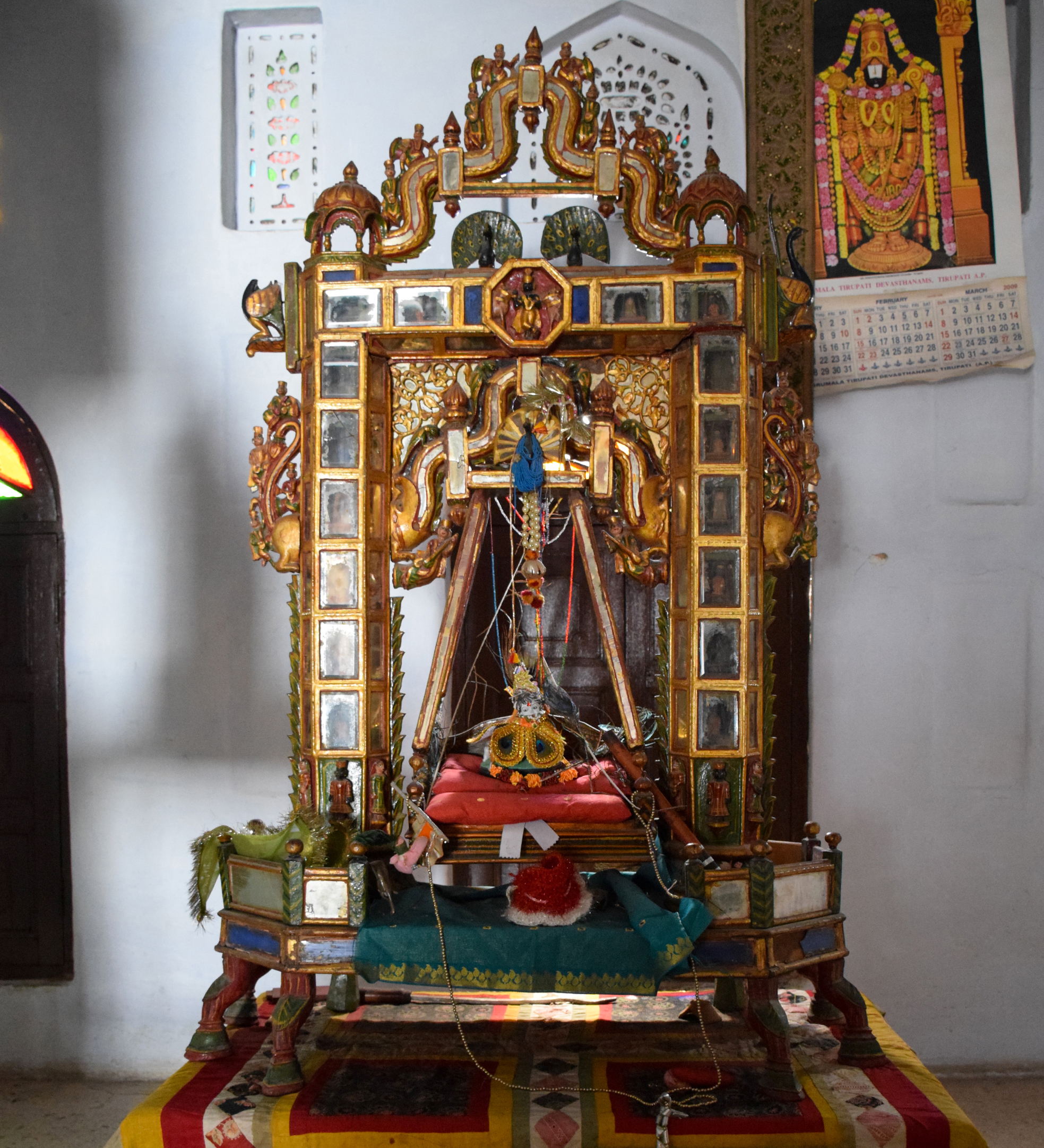
Miniature cradles known as parnu in Gujarat and jhula in Rajasthan (not to be confused with the swing bench known by the same name) are made for ritual use during religious festivals and on auspicious occasions in these regions. These represent the cradle of Balkrishna, the child form of the Hindu deity Krishna, and often hold images or figures of him. In some regions, such as Kutch, Gujarat, miniature cradles are left as offerings at certain shrines by those hoping to conceive a child.
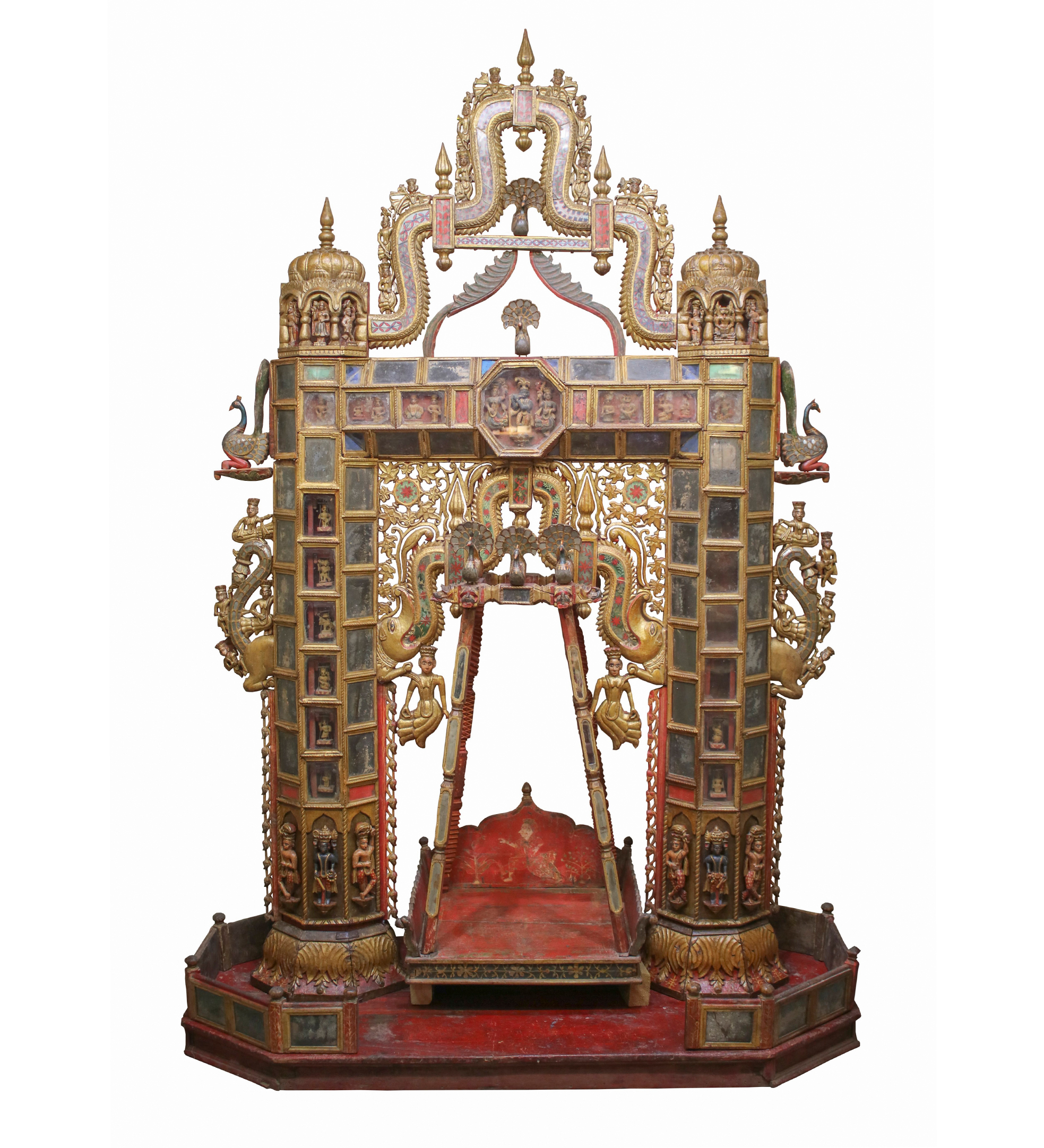
Documented examples of the jhula demonstrate a variety of techniques in their construction and ornamentation. A carved wooden jhula in a Jaisalmer temple, brought out only for special occasions, has a cot with webbing made from intricately woven cotton ropes. At the City Palace in Udaipur is a jhula covered with glass inlay work (thikri kaam, unique to the Mewar and Shekhawati regions in Rajasthan) arranged in striking geometric patterns. The largest and most ornate jhula documented in Rajasthan is at the Junagadh Fort in Bikaner; it features intricate wood-carving, -turning, painting, and elaborate mirror inlay work, with forms borrowed from local architectural features, and motifs of elephants, horses and peacocks. A similar jhula in The South Asia Collection, Norwich features intricately carved figures of Krishna and his attendants on its main supports, detailed with gold paint and mirrors.
Ownership and use
These varied forms of the cradle are widely used to sleep a child in its initial years; the palna and ghodiyu remain the preferred form of sleeping furniture for infants in Rajasthan. The ghodiyu and parnu in Gujarat as well as the palna in Haryana are used from birth to two years of age, while the panghuda in Punjab is used for children between three months and three years old. They are then stored away for use by the next child, often through multiple generations; the modular ghodiyu of Gujarat, which is easily disassembled and reassembled, particularly lends itself to such long-term storage. Cradles may also be passed on or lent between families of a village or community. The cradle is often associated with the qualities that the child develops; a Gujarati proverb states, ‘The son’s qualities (develop, or can be observed) in the cradle.’ Traditionally, parnu used by infants who have grown up to be distinguished people are preserved by the family in the hope of nurturing similar qualities in other infants who may use the cradle.
In Khadar, Haryana, the palna is a significant part of a ritual known as chhuchak, observed following the birth of a male child. When the child is between six and twelve months old, the new mother’s parents present gifts such as toys, furniture, and clothes to the mother, child, and other family members. These, including the palna, are laid out on display on a khaat or charpoy in the village square, to be admired by neighbours and others from the village. Girl babies are placed in the jhalli or cloth hammock instead.
In Gujarat, the ghodiyu is historically more widespread among the general population than the parnu, which was more commonly commissioned by wealthier households and royal families. While a cradle with a cot might indicate the wealth of a family, the use of a fabric hammock does not necessarily imply lack of wealth, but often reflects a preference for utility: the hammock adapts its shape to the infant’s size and position, mimicking a mother’s womb, and is considered most comforting in the baby’s initial months.
This article is adapted from the outcomes of Vernacular Furniture of North-West India — a collaborative research and documentation project by the Design Innovation and Craft Resource Centre (DICRC), CEPT University, India, and The South Asian Decorative Art and Crafts Collection Trust (SADACC), UK — shared with the Encyclopedia of Art through an Impart partnership. Explore more from this series in our Collection Objects Alive: Vernacular Furniture of North-West India.
First published: 30 October 2026
Image Gallery
Bibliography
Bais, Mitraja, Jay Thakkar, Samrudha Dixit, and Ben Cartwright. Sahaj: Vernacular Furniture of Gujarat. Ahmedabad: CEPT University Press, 2018.
Rao, Mansi S., Ben Cartwright, and Samrudha Dixit. Anaikya: Vernacular Furniture of Rajasthan. Ahmedabad: CEPT University Press, 2021.
Rao, Mansi S., Ben Cartwright, Jay Thakkar, and Abhishek Ruikar. Smarya: Vernacular Furniture of Punjab and Haryana. Ahmedabad: CEPT University Press, 2026.
Vernacular Furniture of India. Accessed July 17, 2026. https://vernacularfurnitureofindia.com/.
Feedback