-
ChicagoImpart Encyclopedia of Art. "Kathatara, Chowki." October 30, 2026. https://imp-art.org/articles/kathatara-chowki/.
-
MLA"Kathatara, Chowki." Impart Encyclopedia of Art, Oct. 30, 2026, https://imp-art.org/articles/kathatara-chowki/.
-
HarvardImpart Encyclopedia of Art (2026) Kathatara, Chowki. Available at: https://imp-art.org/articles/kathatara-chowki/ (Accessed: 12 November 2026).
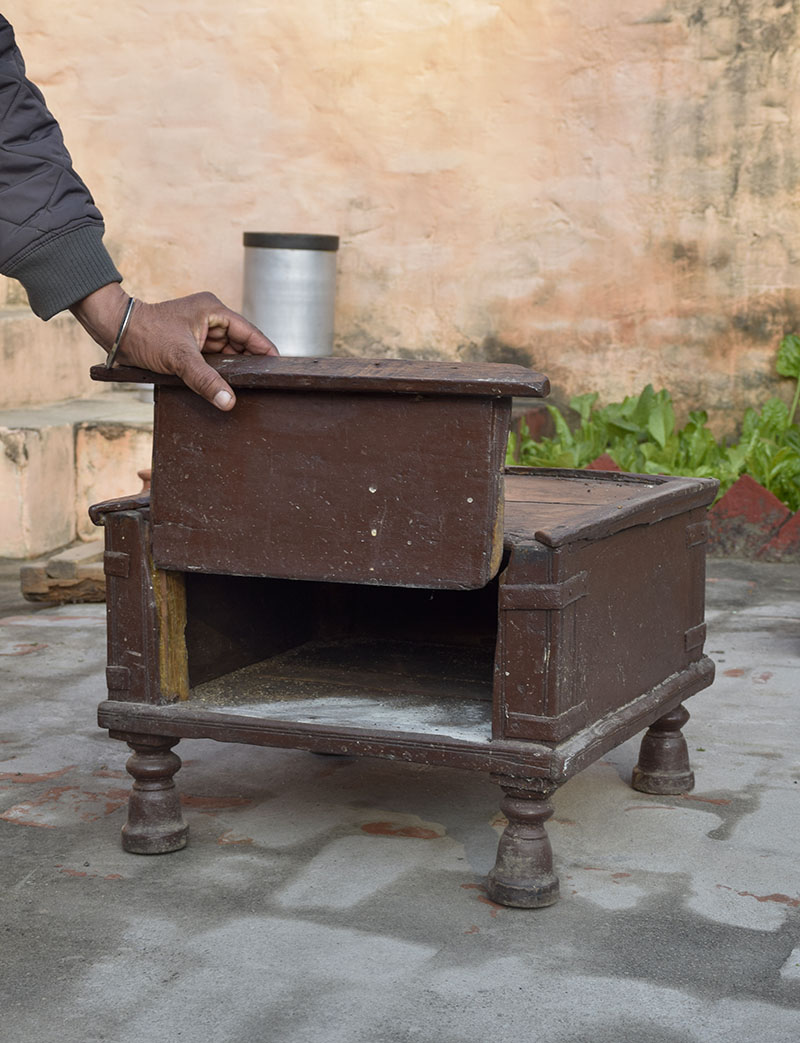
Low wooden larders for food, cooking ingredients, and vessels are among the vernacular furniture of northwestern India, historically used in Punjab’s Malwa region, where they take the form of chowki, and Rajasthan’s Barmer district, where they take the form of kathatara. The kathatara also holds the household’s bedding on its top surface.
Design and construction
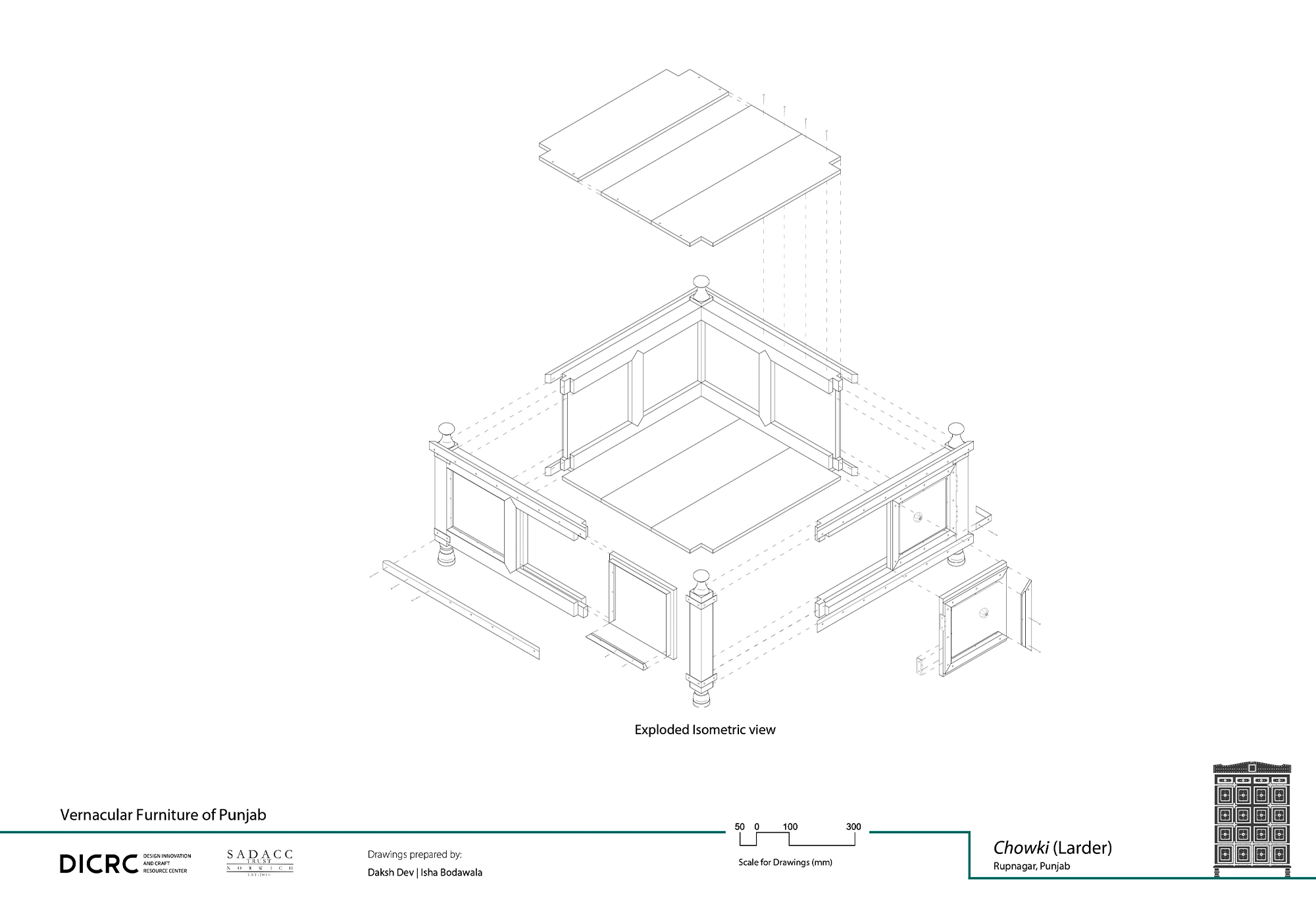
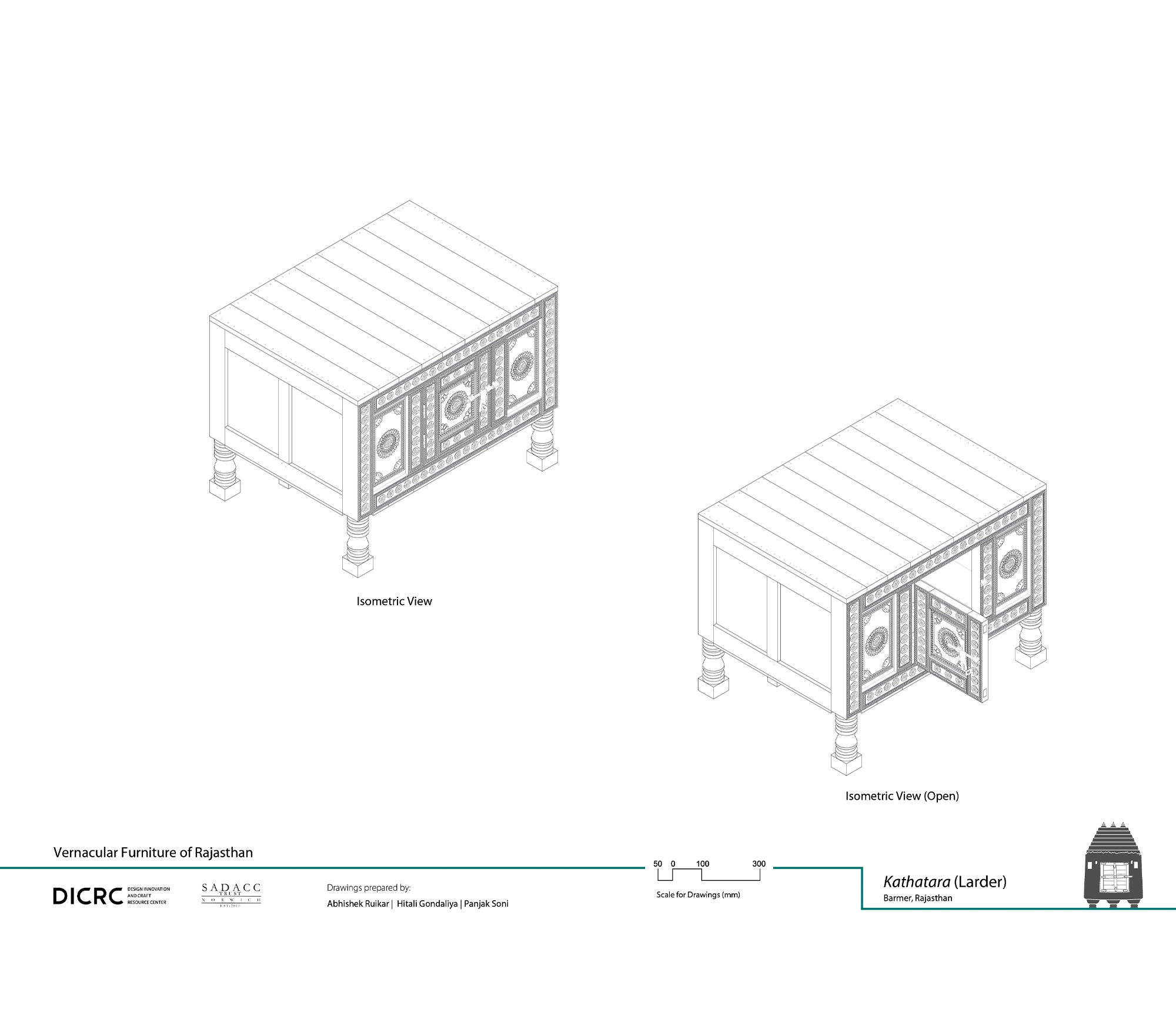
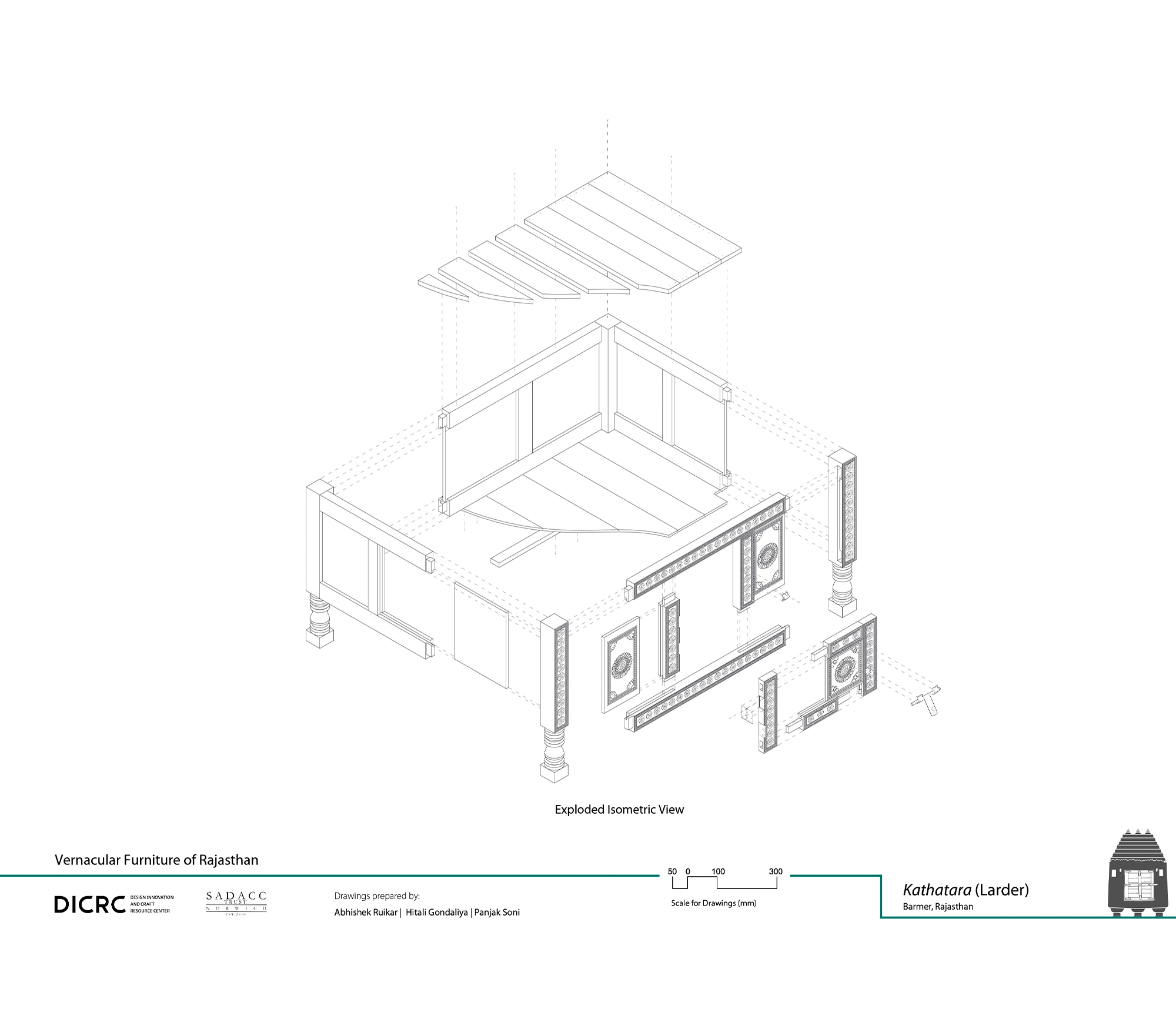
The chowki and kathatara are similarly shaped though varying in their size, construction, and ornamentation. Both are rectangular cabinets, wider than they are tall, raised to a low height on four carved or turned wooden legs, and generally opening at the front. Recorded examples are made using hardwood varieties: local teak (Tectona grandis) in Rajasthan, and shisham (North Indian rosewood, Dalbergia sissoo) in Punjab. The frame members are assembled using mortise and tenon joinery, and flat wooden panels are inserted between them using the tongue and groove method to create the walls; the top and bottom of the larder are made from narrow planks nailed onto the frame. In Punjab, metal braces may be used to reinforce the corners of the chowki. The larder may finally be painted.
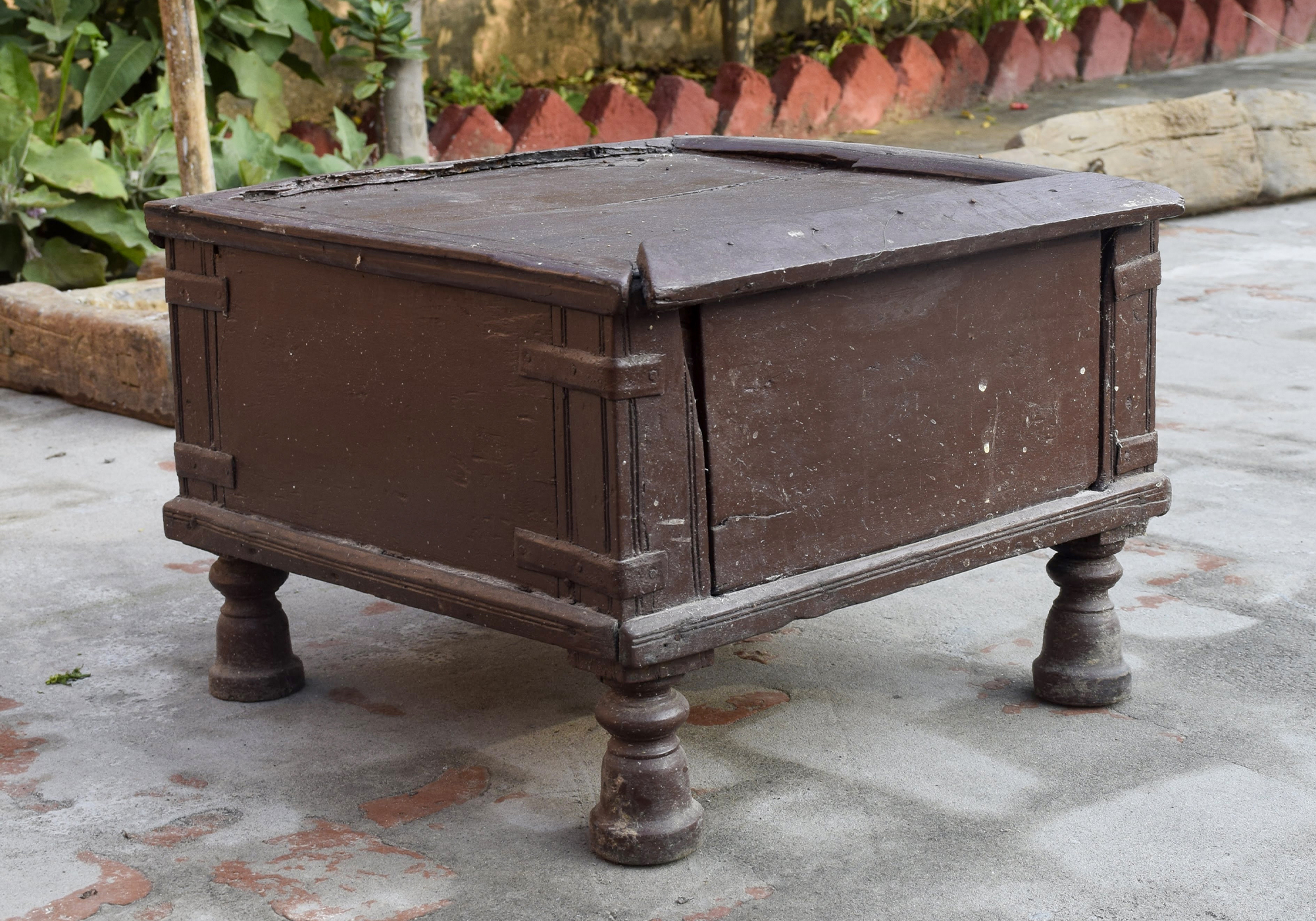
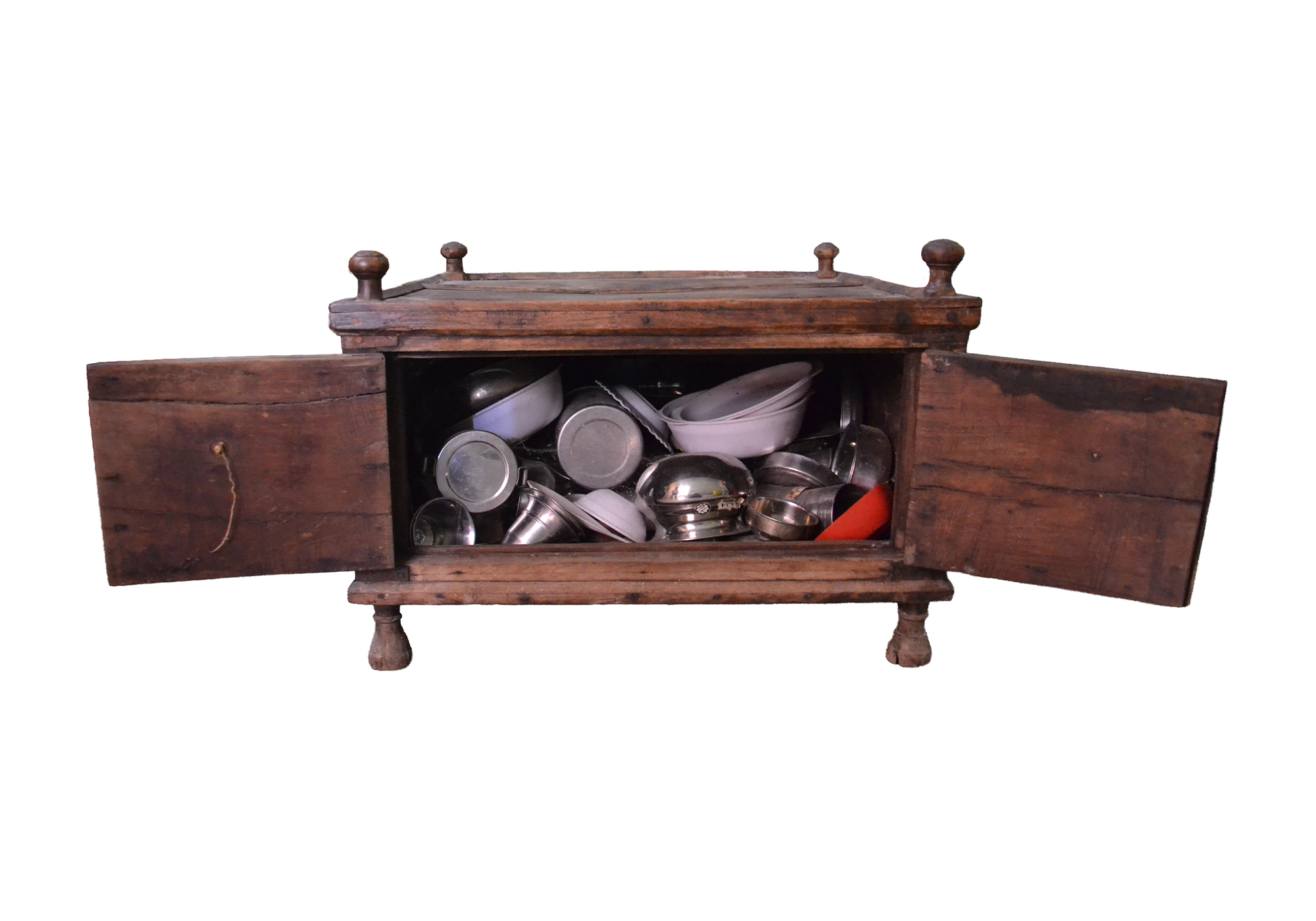
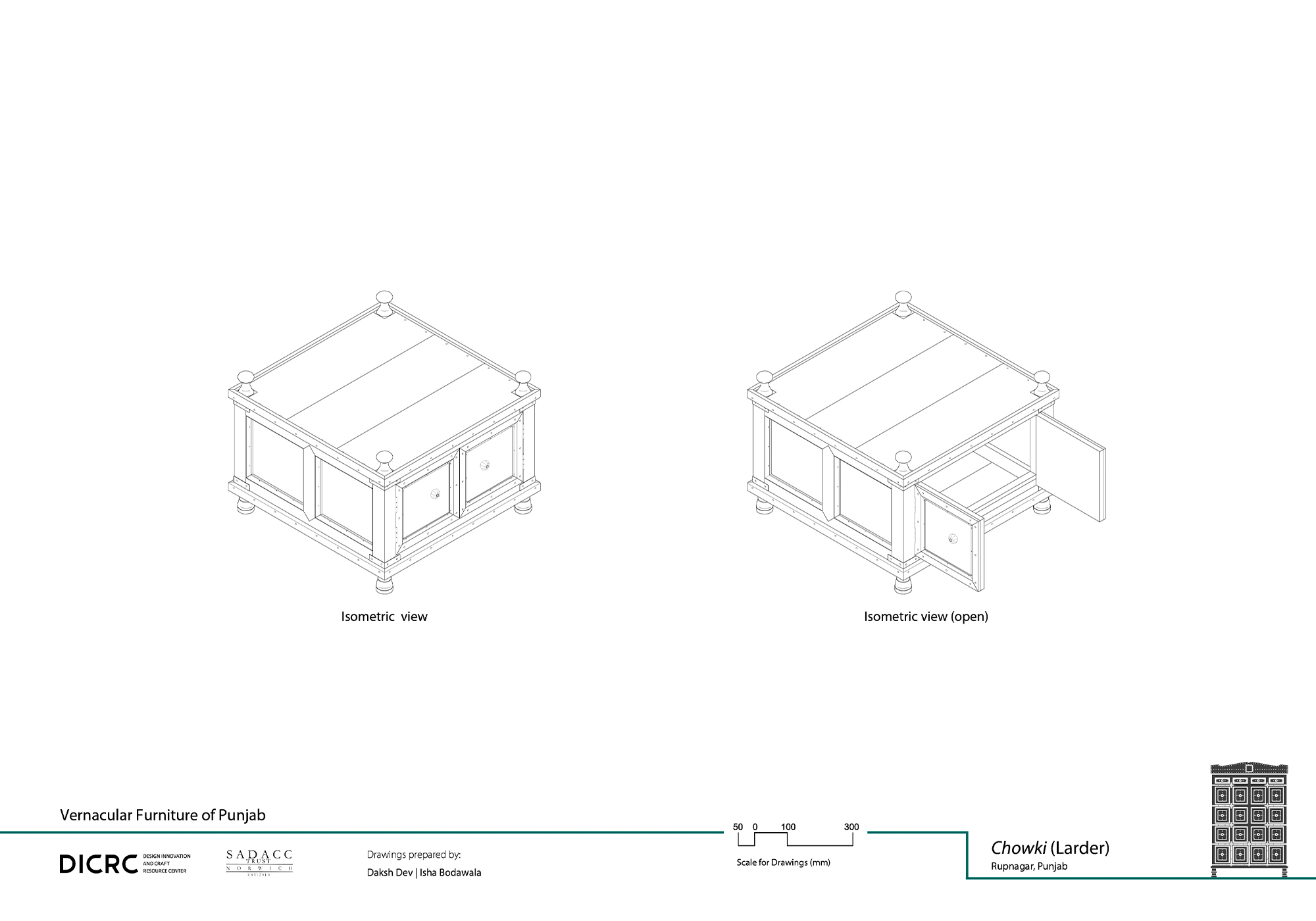
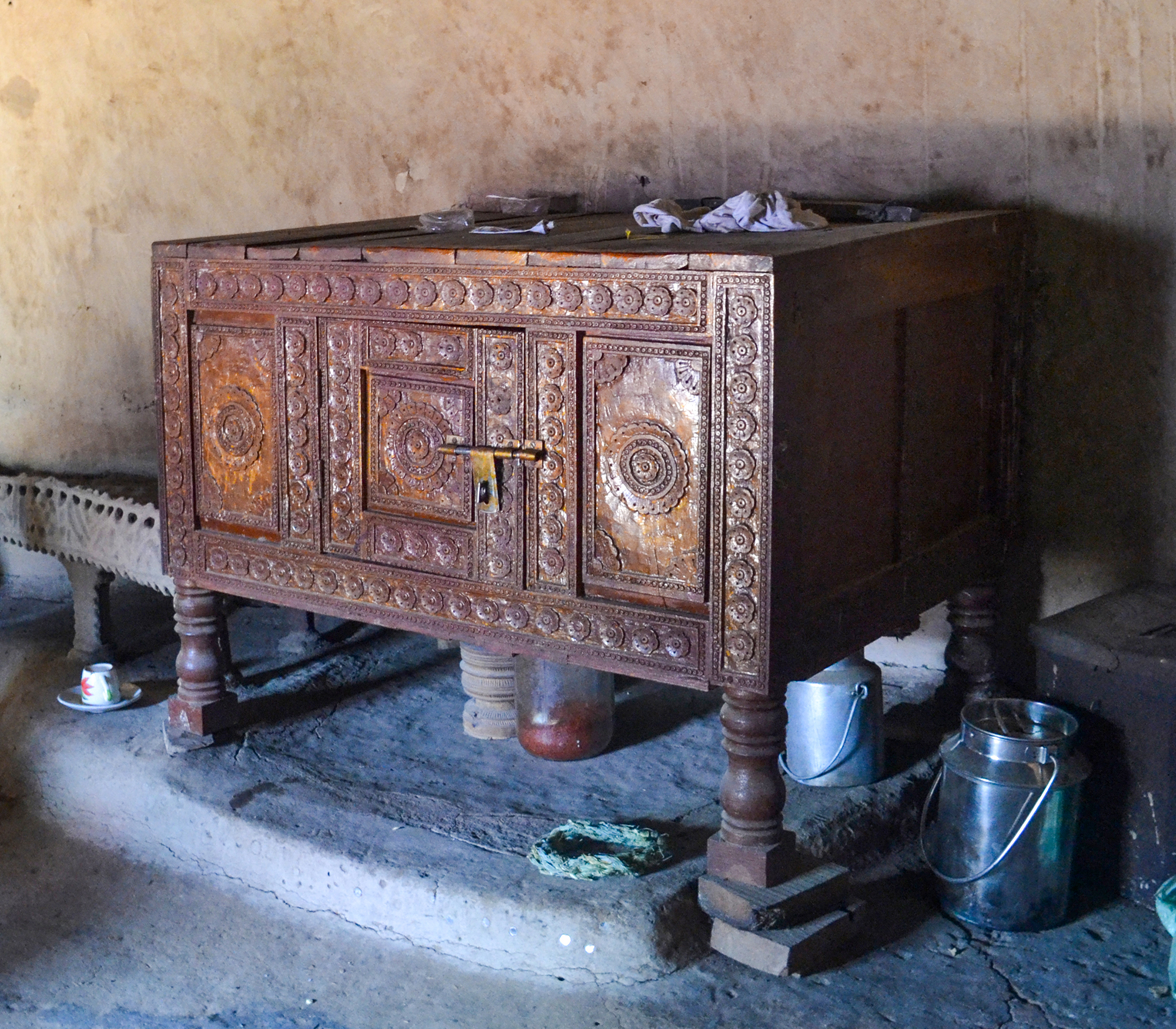
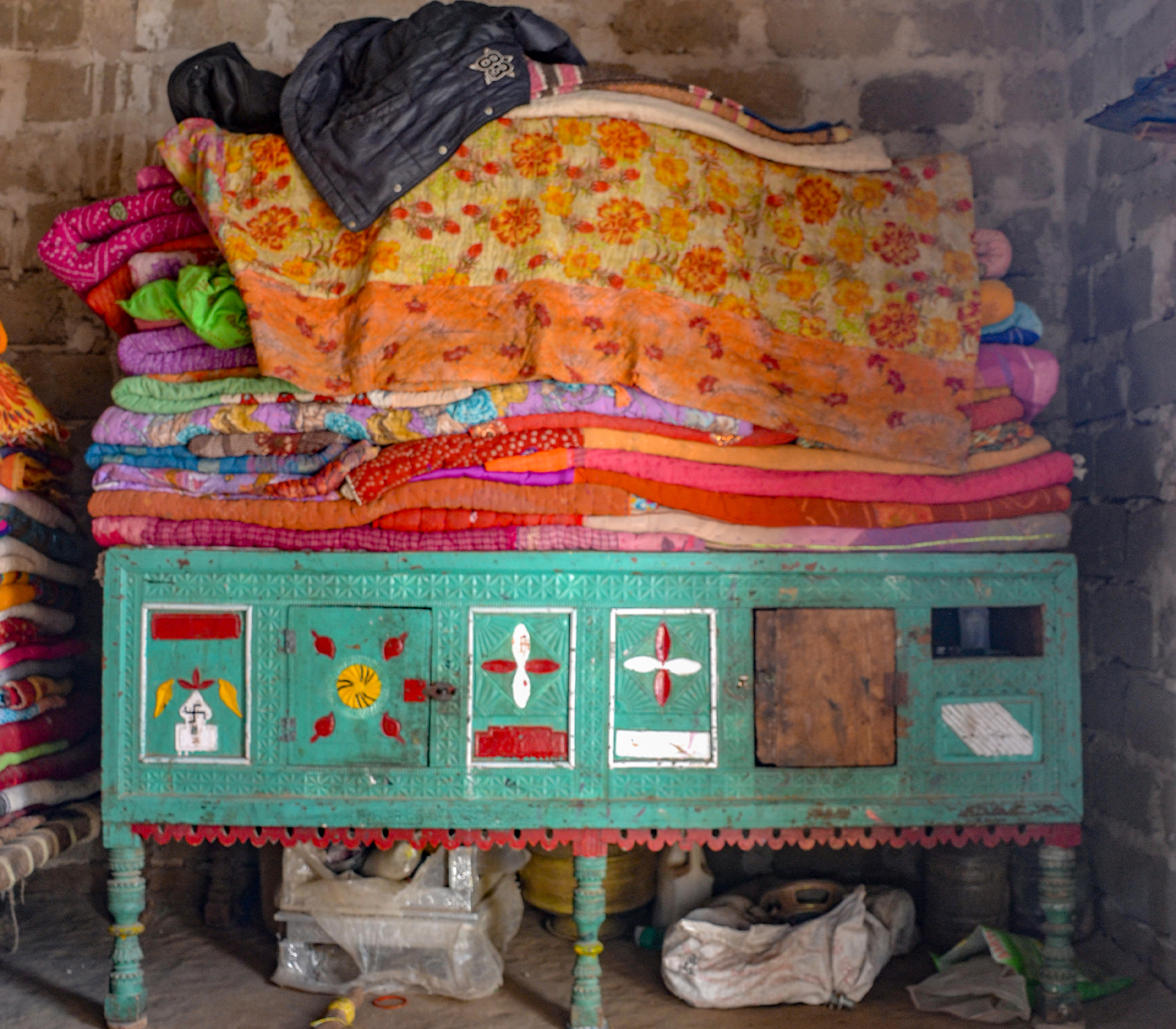
The kathatara in Rajasthan often features a tripartite front decorated with shallow carving in geometric or floral patterns. The door is fitted into the central panel as a hinged shutter. The chowki in Punjab is generally smaller and relatively plain, largely lacking ornamentation, though some specimens feature turned finials on the top corners. While similarly sized across the region, chowki feature a variety of opening mechanisms: the front panel may slide upwards or to the side; a chowki recorded at the village of Arniwala has been retrofitted with double hinged shutters, with a ceramic knob on one.
Ownership and use
Chowki and kathatara are no longer made; documented examples are historical, with many in disuse. The kathatara is unique to wealthier families in Barmer, Rajasthan, who use it in addition to the region’s customary kothlio (mud larder). Whilst the kothlio is used for cooked food and dairy products, the kathatara is used to store cooking ingredients and vessels. The top surface of a kathatara is used to hold the household’s mattresses and quilts, so that the furniture also acts as a damachiya.
In the Malwa region of Punjab, the chowki was traditionally used to store cooked food and ghee, with the top surface sometimes used to hold items such as oil and spices. It would be located in a corner of the cooking space away from heat. A chowki recorded in the village of Arniwala was made in present-day Pakistan as part of the wedding trousseau of the present owner’s grandmother, and arrived in Arniwala when the family moved to India during the Partition. Today, this chowki is used to store kitchen utensils and cutlery.
This article is adapted from the outcomes of Vernacular Furniture of North-West India — a collaborative research and documentation project by the Design Innovation and Craft Resource Centre (DICRC), CEPT University, India, and The South Asian Decorative Art and Crafts Collection Trust (SADACC), UK — shared with the Encyclopedia of Art through an Impart partnership. Explore more from this series in our Collection Objects Alive: Vernacular Furniture of North-West India.
First published: 30 October 2026
Image Gallery
Bibliography
Rao, Mansi S, Ben Cartwright, Samrudha Dixit. Anaikya: Vernacular Furniture of Rajasthan. Ahmedabad: CEPT University Press.
Rao, Mansi S, Ben Cartwright, Jay Thakkar, Abhishek Ruikar. Smarya: Vernacular Furniture of Punjab and Haryana. Ahmedabad: CEPT University Press, 2025.
Vernacular Furniture of India. Accessed August 18, 2026. https://vernacularfurnitureofindia.com/.
Feedback