-
ChicagoImpart Encyclopedia of Art. "Pinjra, Jaali, Doli." October 30, 2026. https://imp-art.org/articles/pinjra-jaali-doli/.
-
MLA"Pinjra, Jaali, Doli." Impart Encyclopedia of Art, Oct. 30, 2026, https://imp-art.org/articles/pinjra-jaali-doli/.
-
HarvardImpart Encyclopedia of Art (2026) Pinjra, Jaali, Doli. Available at: https://imp-art.org/articles/pinjra-jaali-doli/ (Accessed: 12 November 2026).
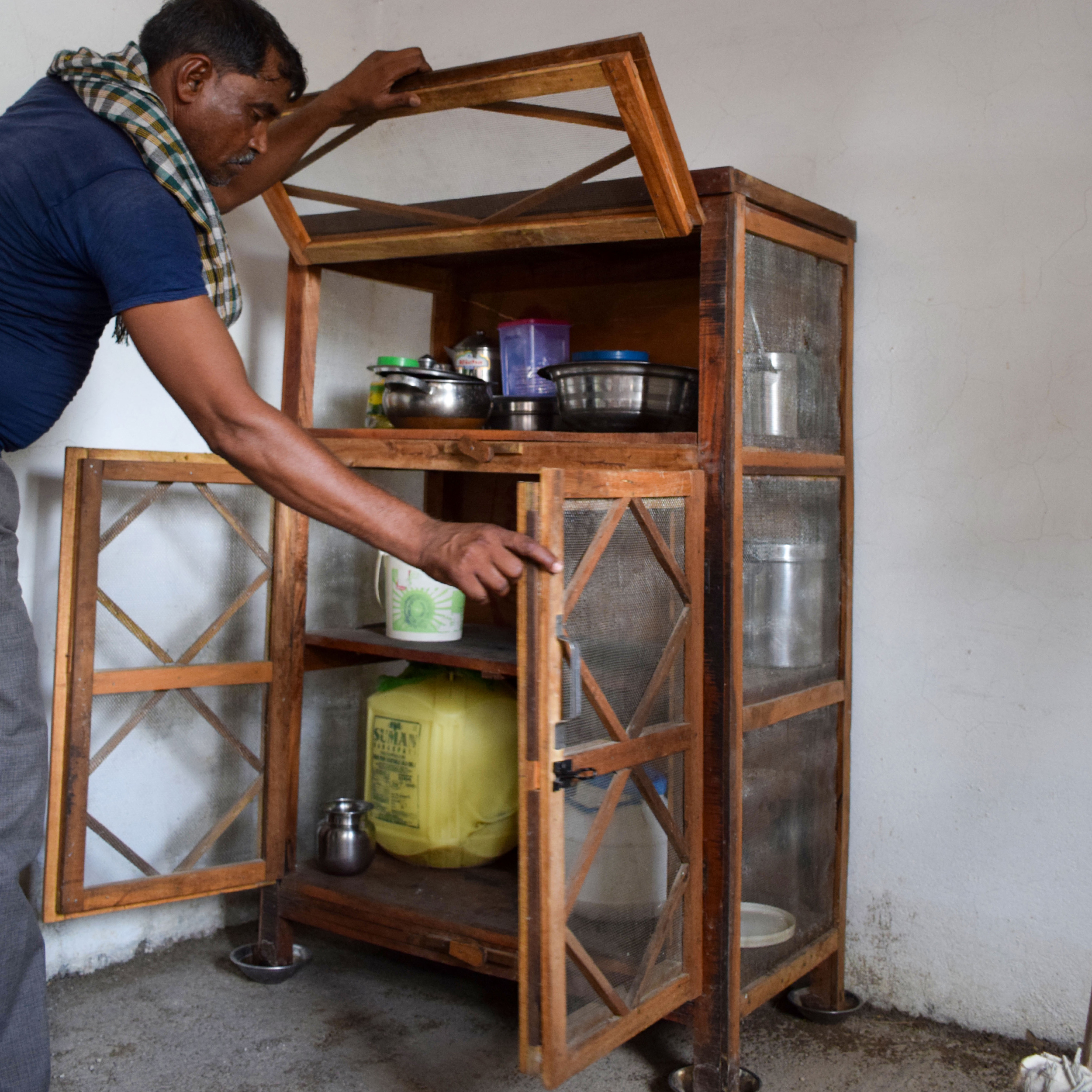
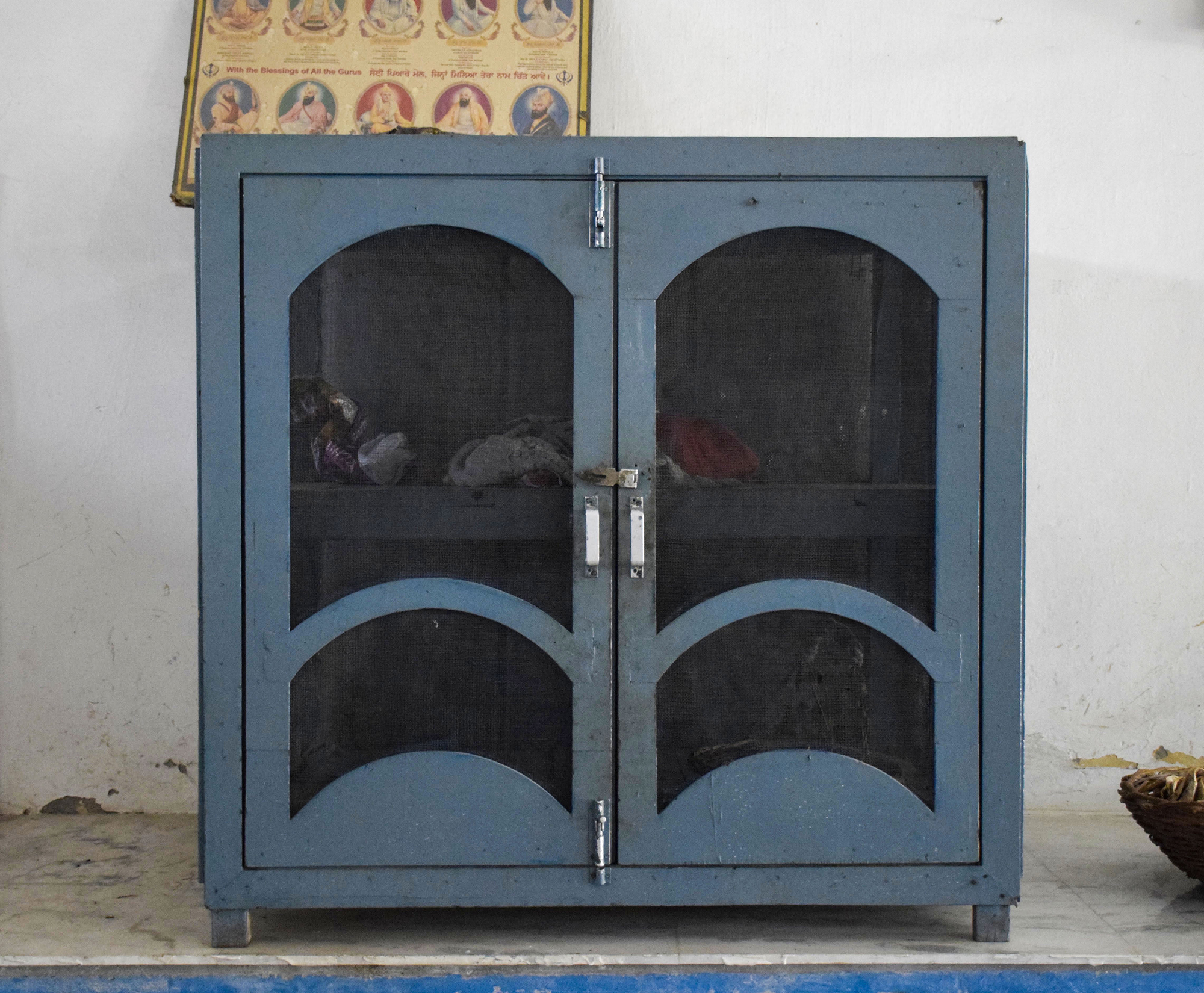
A wooden cabinet with metal lattice or meshwork panels used as a larder is a common form of vernacular furniture in northwestern India, known as pinjra in Rajasthan, and jaali or doli across Punjab and Haryana. Most commonly placed in or near the kitchen within households, it is used to store both cooked and uncooked food as well as groceries, condiments, and other cooking needs, keeping them ventilated but safe from pests.
Terminology
In Rajasthan, this type of larder is found in the Vagad, Merwara and Marwar regions, where it is called ‘pinjra’ — not to be confused with the latticed food cloche known by that name in Punjab and Haryana. Further north and east, across Punjab’s Majha, Doaba, and Malwa regions, and Haryana’s Nardak, Bagad, Khadar, Ahirwal, and Braj regions, such a larder is called ‘jaali’; in the Malwa, Nardak and Khadar regions ‘jaali’ is used interchangeably with ‘doli’. ‘Jaali’ literally denotes a perforated surface — describing meshwork in furniture or intricate stone lattice screens embedded into buildings — and is synonymous here with this type of larder because of its meshwork walls. Some Meo Muslim households in the Nuh (or Mewat) region of Braj use the term niyamat khana (Urdu, niyamat: ‘all that is bestowed by god’; khana: ‘space’) for this type of larder, a name also popularly used for the larder in Delhi and Lucknow in northern India.
Design and construction
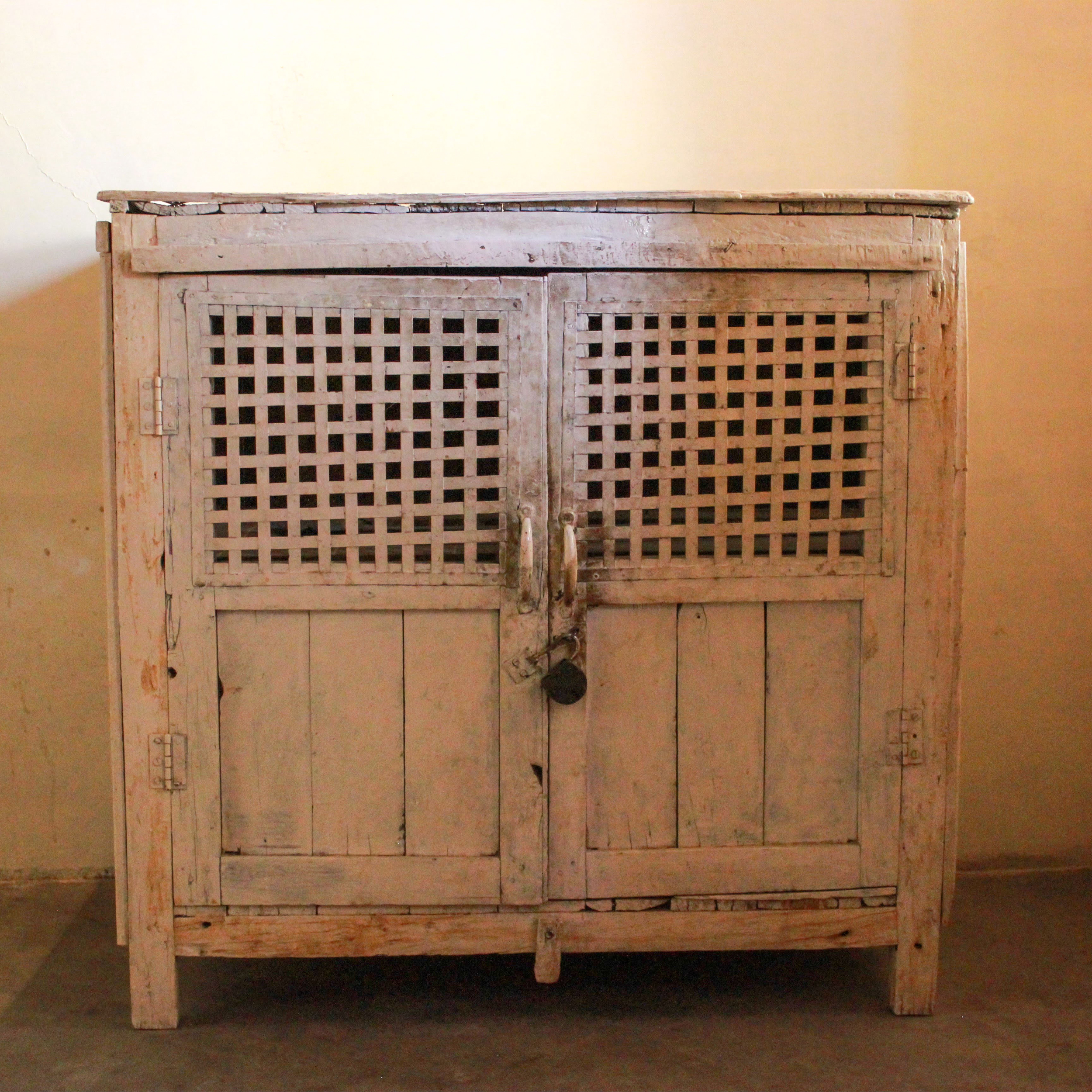
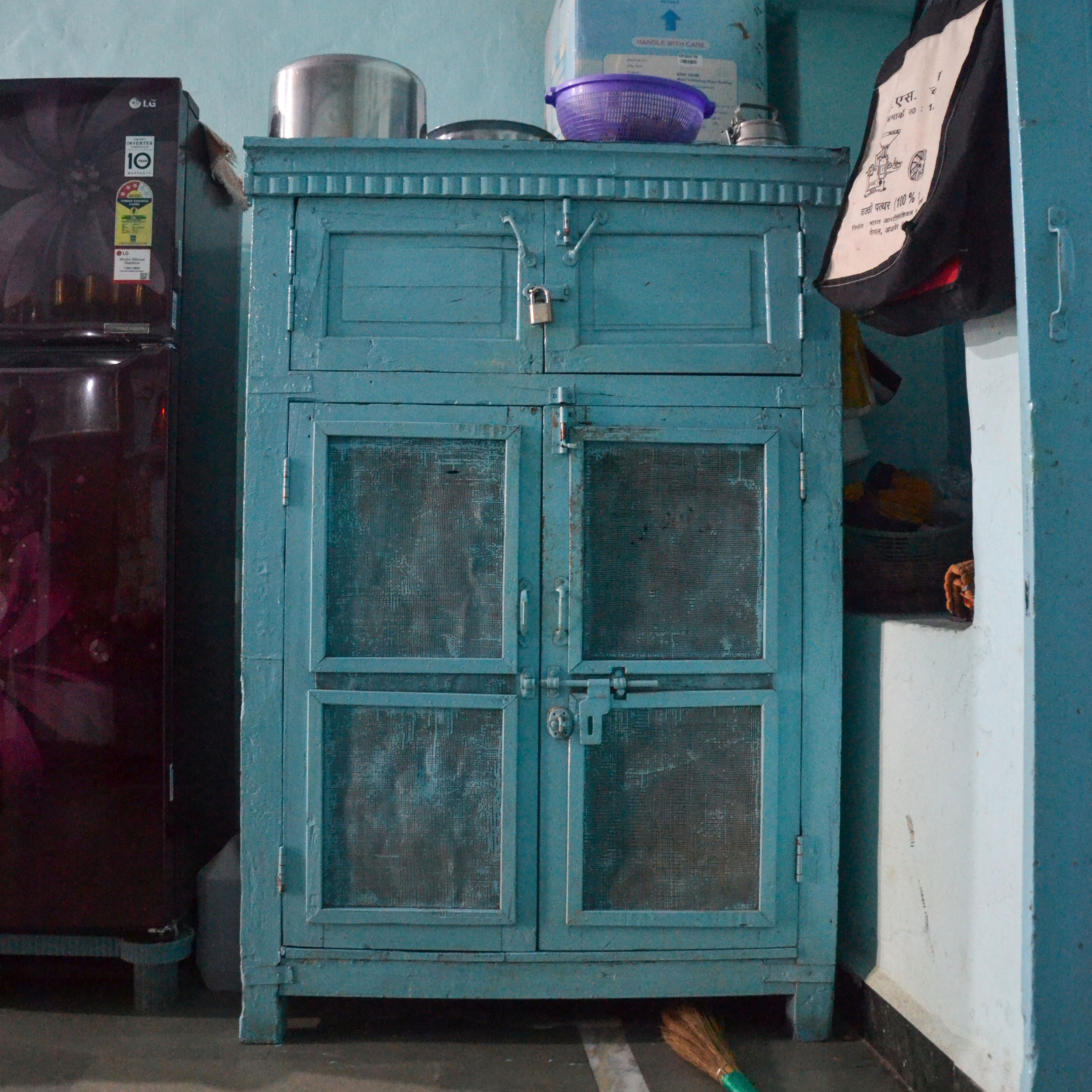
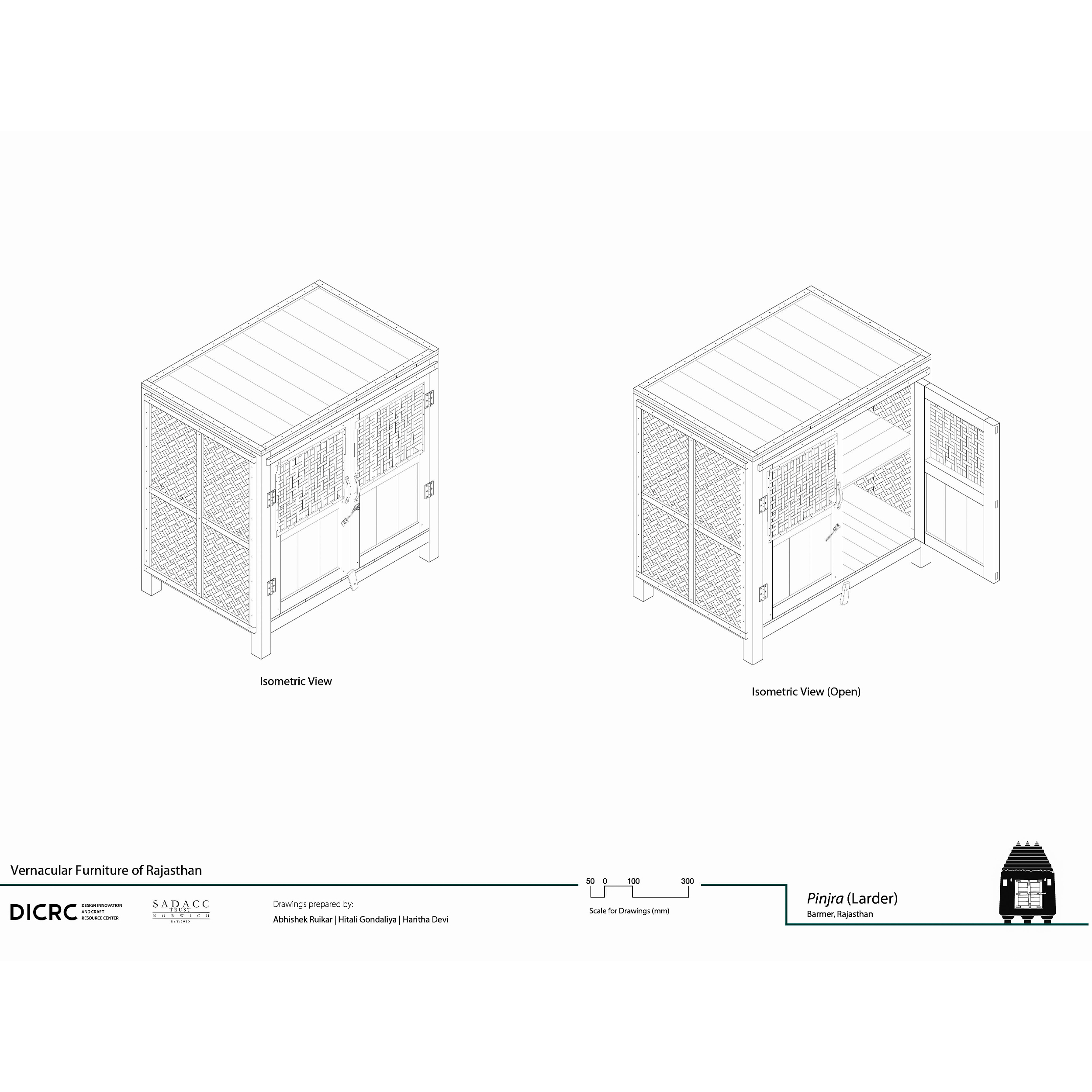
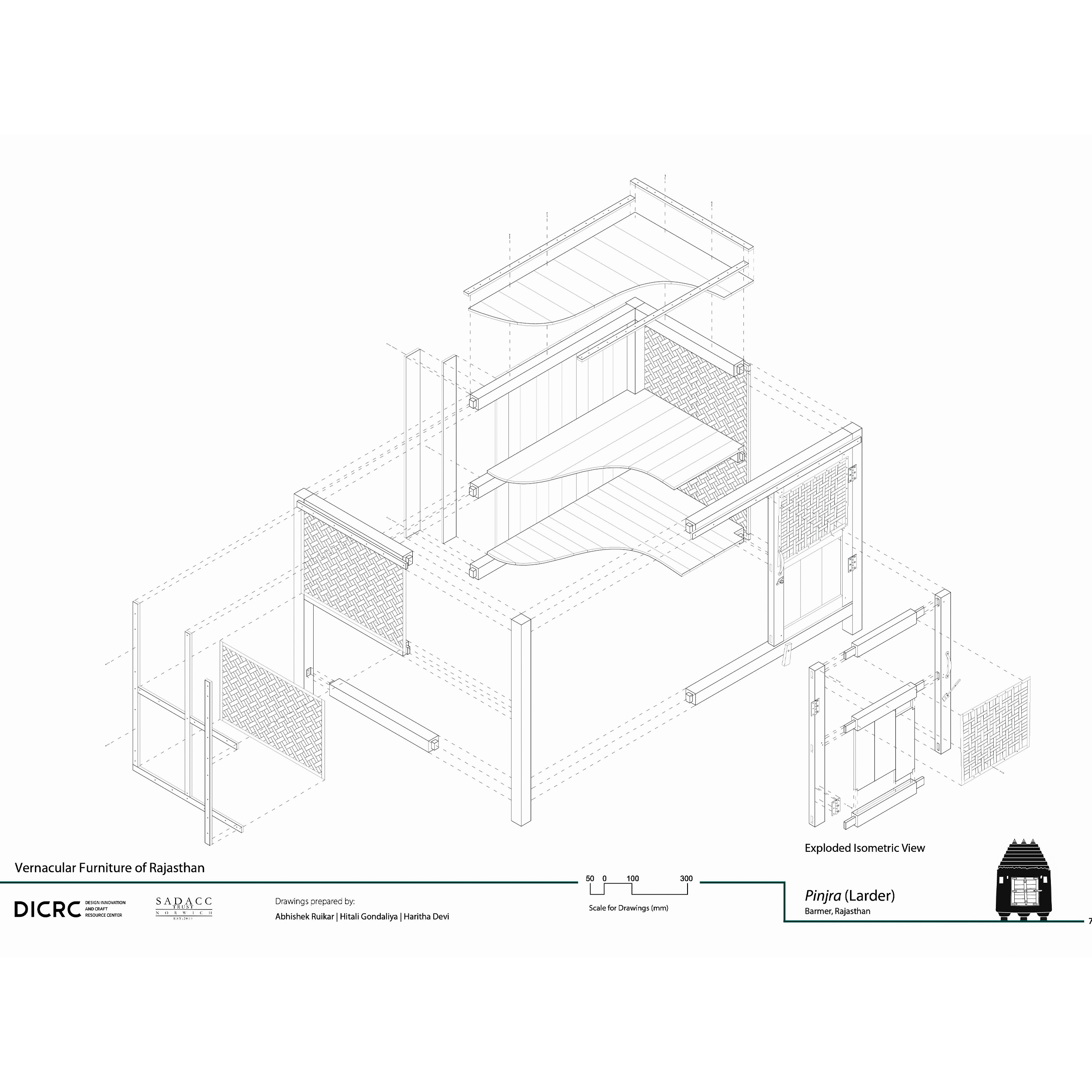
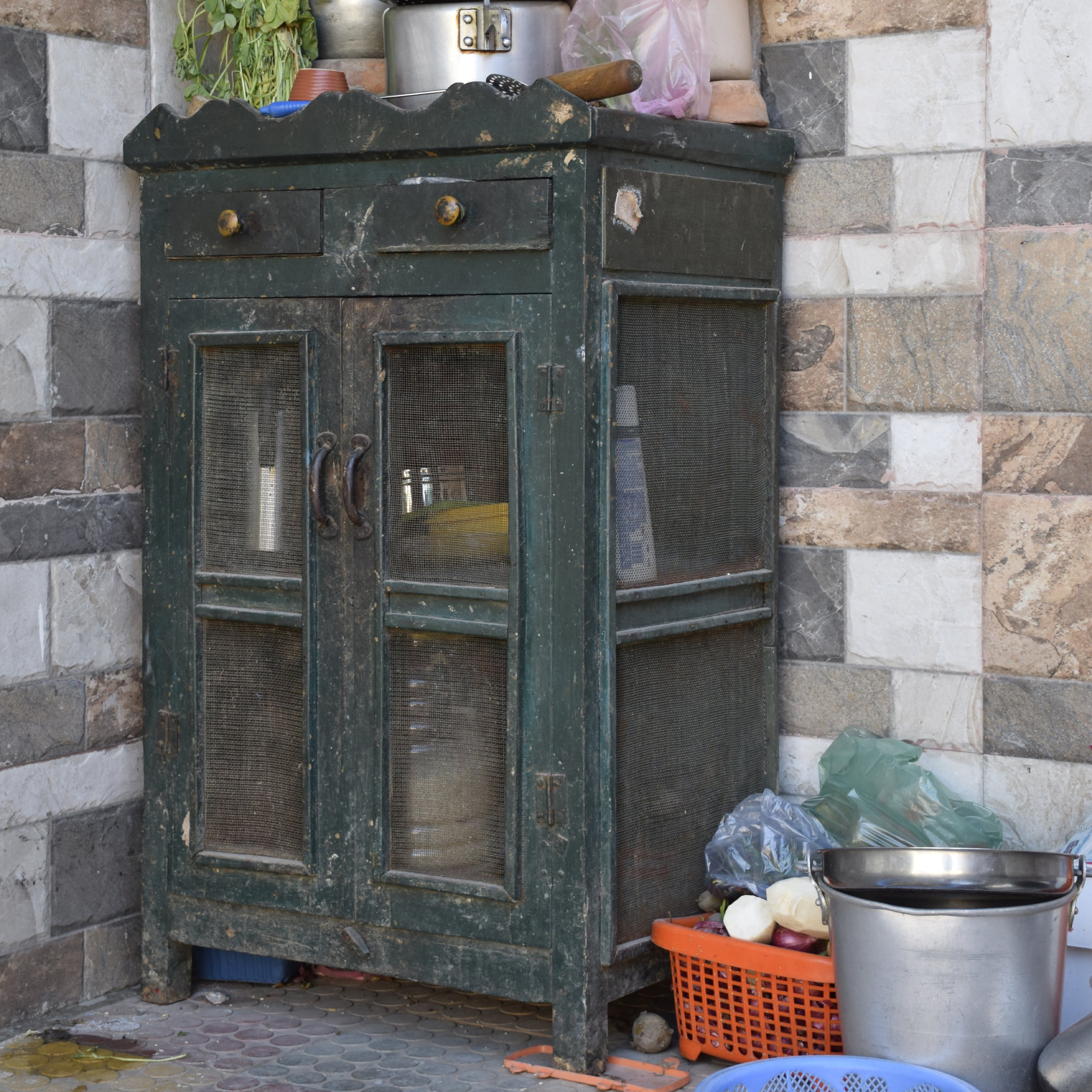
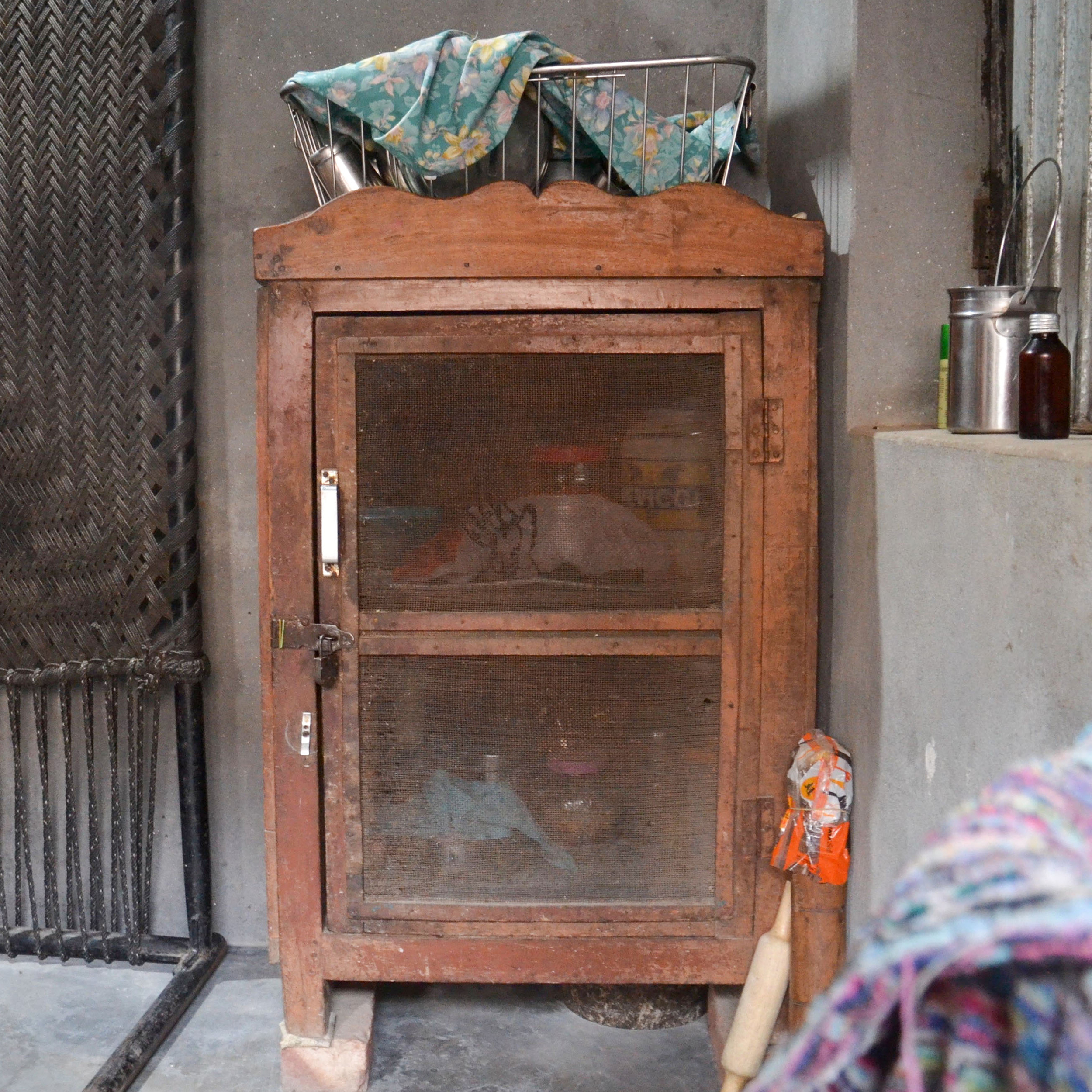
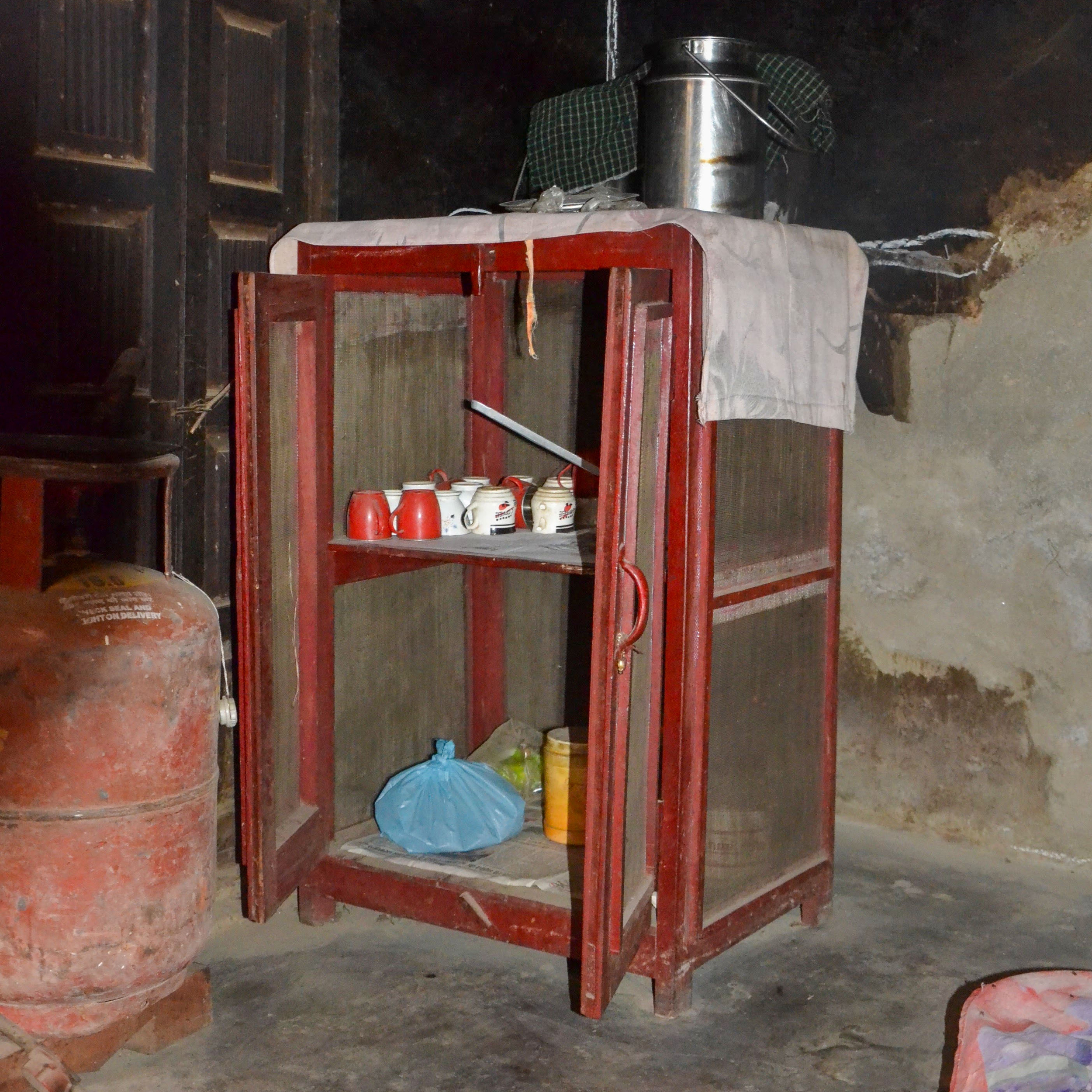
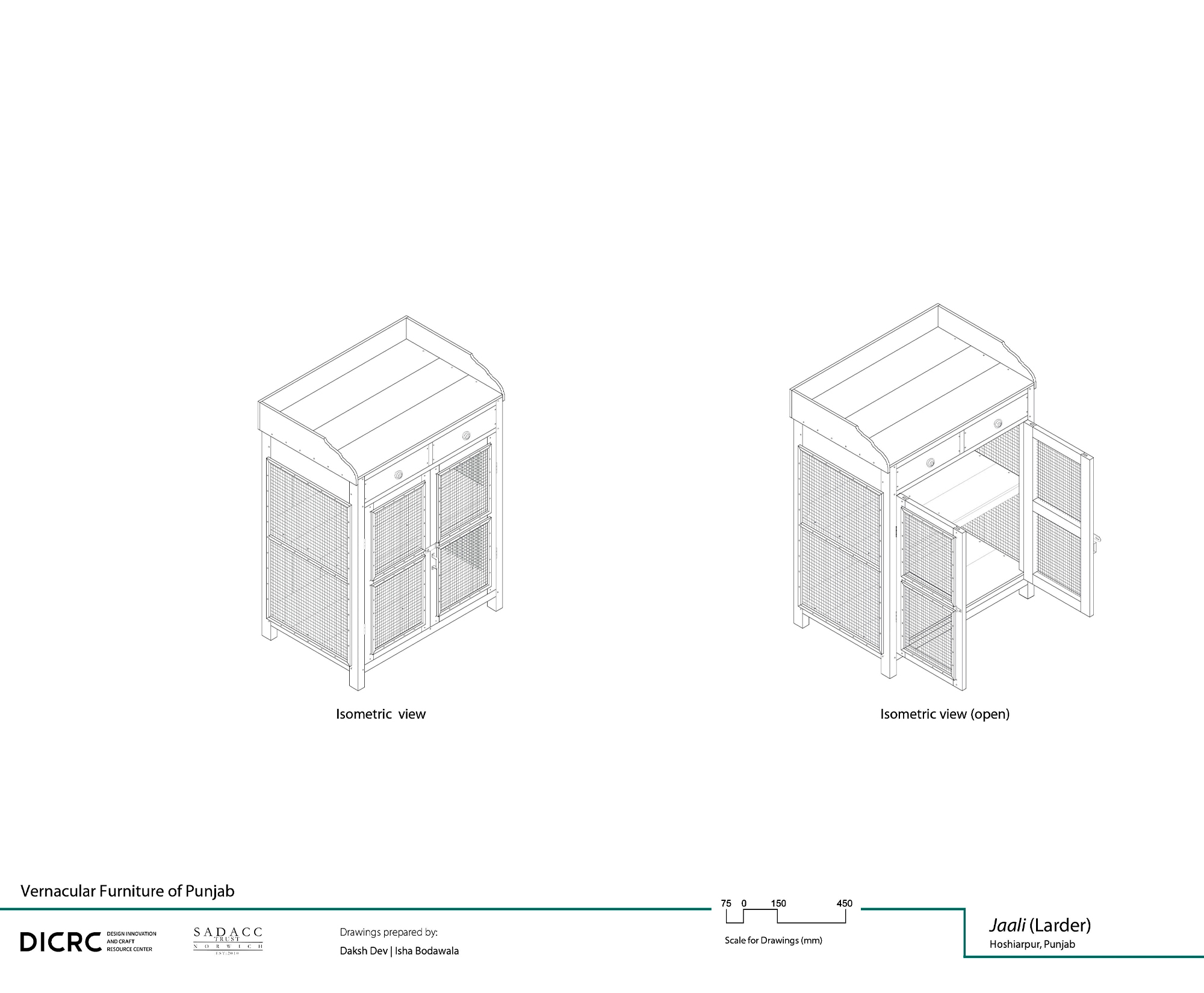
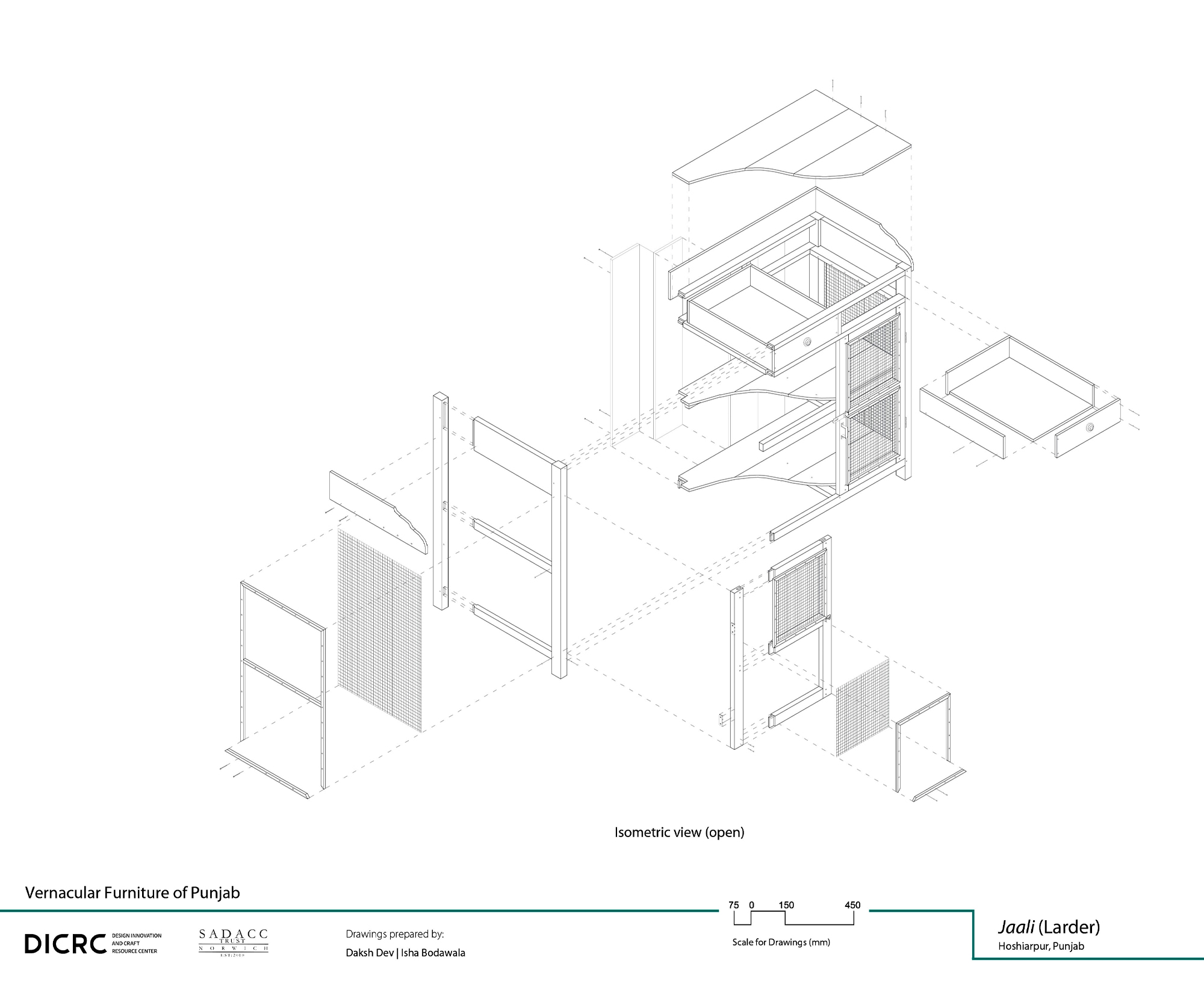
The larder, usually fabricated in wood and metal, is built like a cabinet with a vertical rectangular structure, and fitted with a number of wooden shelves depending on its size. The main framework is assembled using mortise and tenon joinery. Four vertical spines hold together the back and side panels and raise the larder slightly off the ground, while the front is fitted with a single or a pair of hinged doors. Most larders are fitted with a latch that allows it to be locked. The rear is a solid wooden board while front doors are fitted with metal mesh panels; the sides may be solid or fitted with mesh for additional ventilation. A lattice of metal strips is sometimes used instead of mesh. The front sometimes features carving and painted motifs; the sides and back are generally plain. Sometimes, carved wooden members are fixed at the top edges of the jaali. All the wooden surfaces are usually finished with a coat of paint or varnish.
Sometimes, the larder is built into an alcove or set into the wall, rather than being free-standing, with wood and mesh only used for the hinged doors. Some larders incorporate additional storage spaces, sometimes lockable, for items other than food. A lockable top section is seen in some pinjra in Rajasthan. In Punjab, the doli might contain a pair of drawers above its doors. These spaces allow for storage of cutlery or spare cash meant for the day’s expenses.
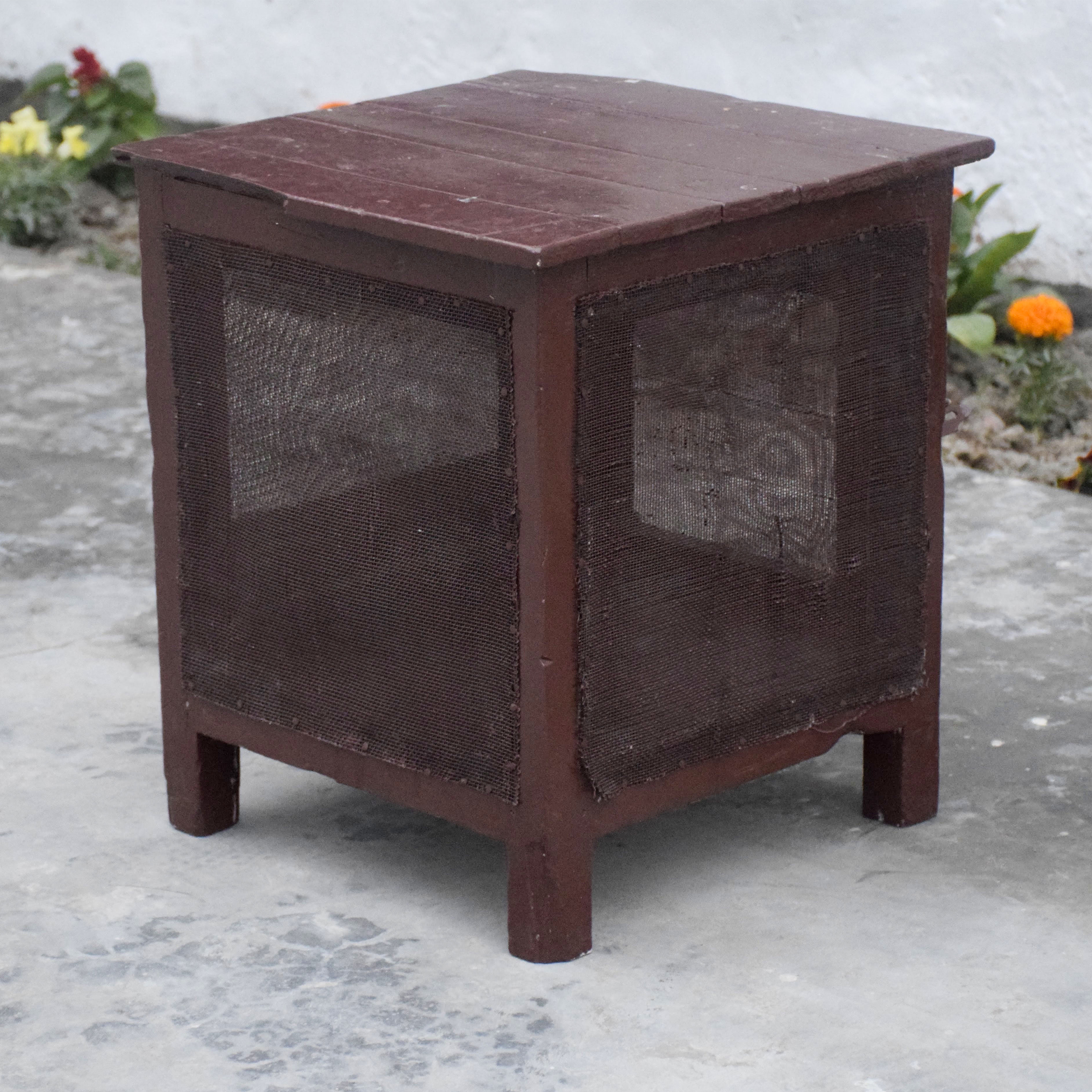
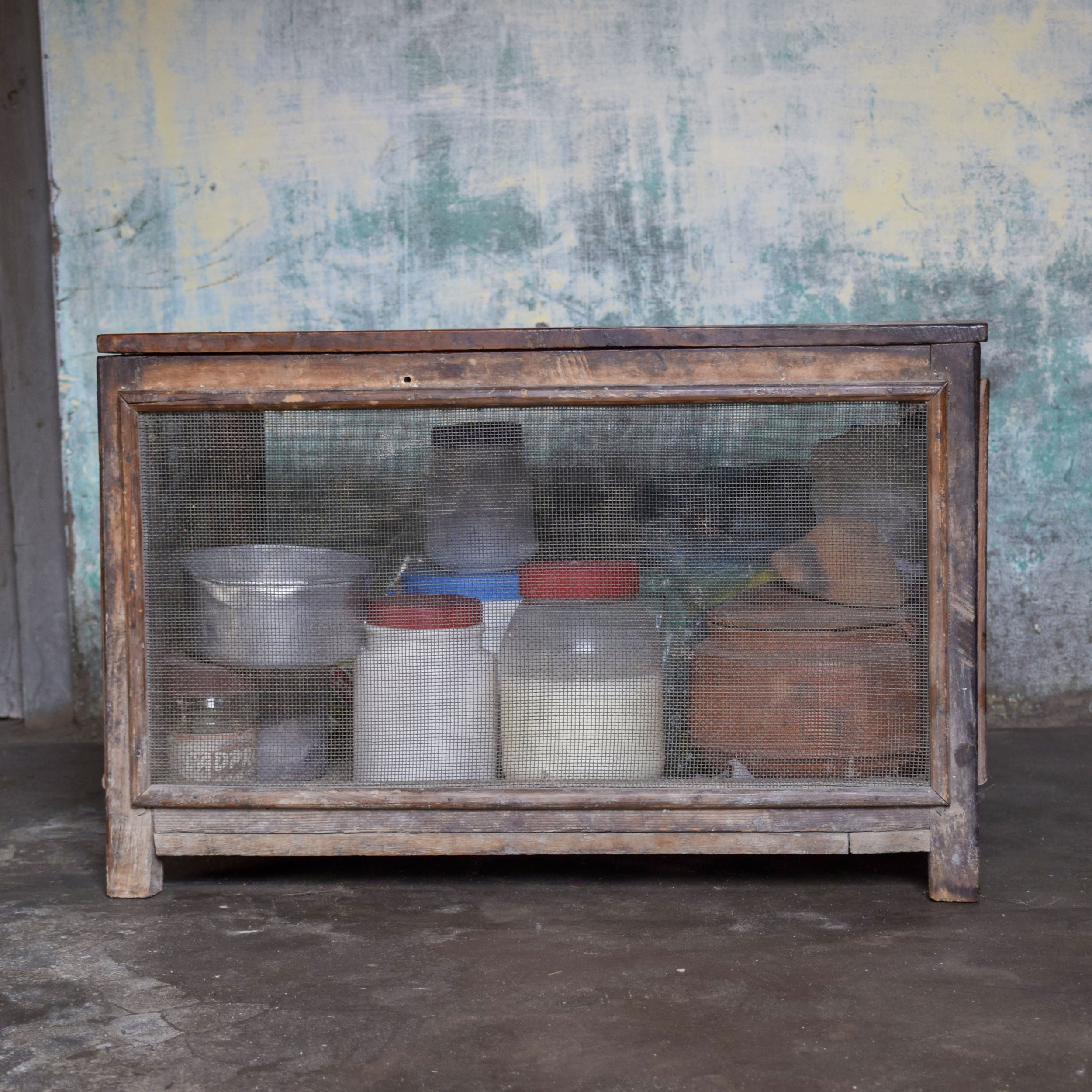
In a variation of form, the doli in Punjab is sometimes built as a chest on short legs, with mesh sides enclosing a single horizontal space and a hinged top lid of solid wood rather than front-facing doors. This type of doli is sometimes raised on one or two stone slabs to keep ground moisture from seeping in.
Ownership and use
The mesh-panelled larder is used to store cooked food, vegetables, and other perishables like dairy products, as well as dry staples such as flour, grains, oil and spices. The flat top surface is also commonly used to hold a variety of items such as containers, vessels, fruits, and frequently used condiments and spices. Sometimes, these larders also store cutlery and cooking utensils, as well as cash. They are typically placed inside or close to the kitchen for easy access; some households might place them in the storeroom. A family may own more than one such larder.
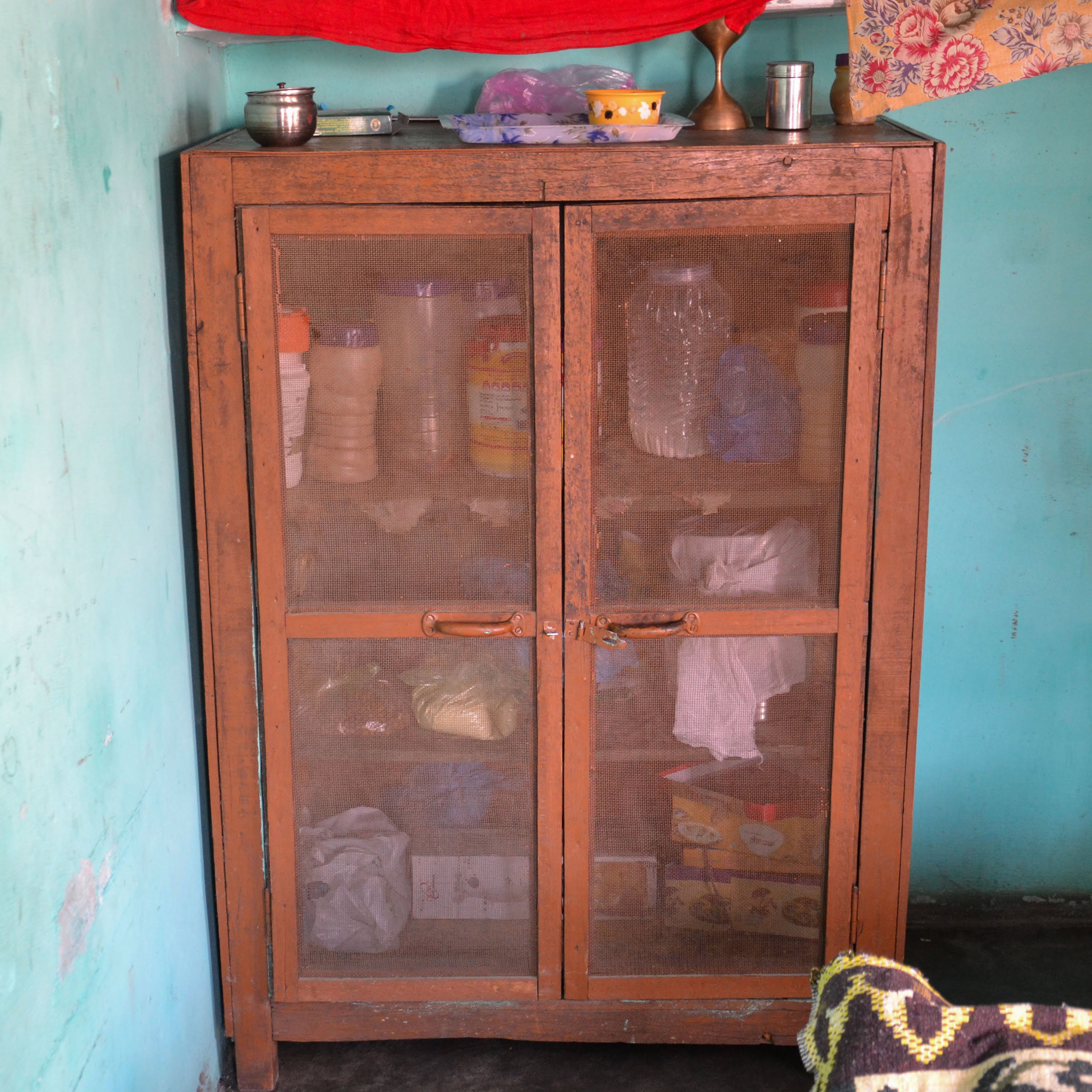
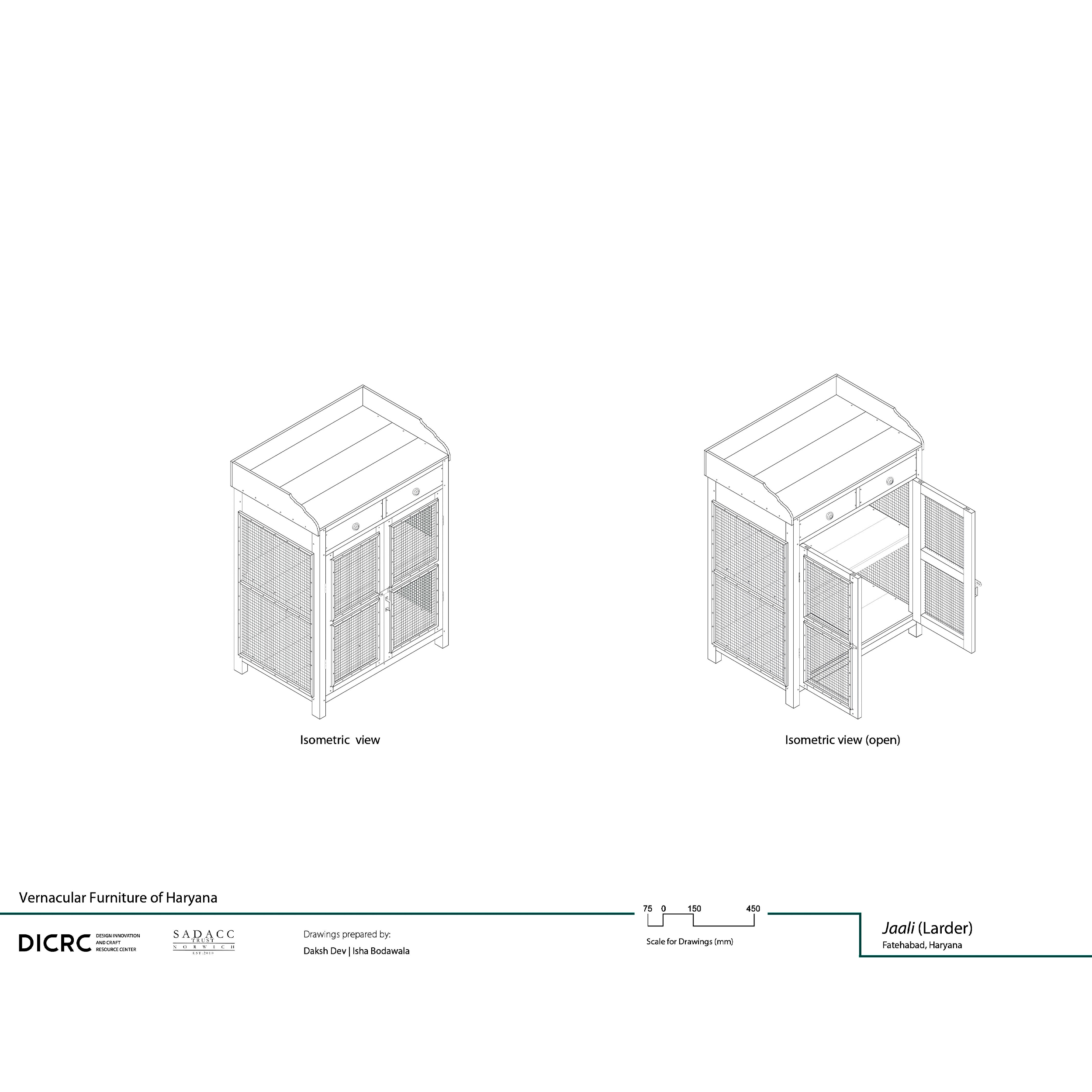
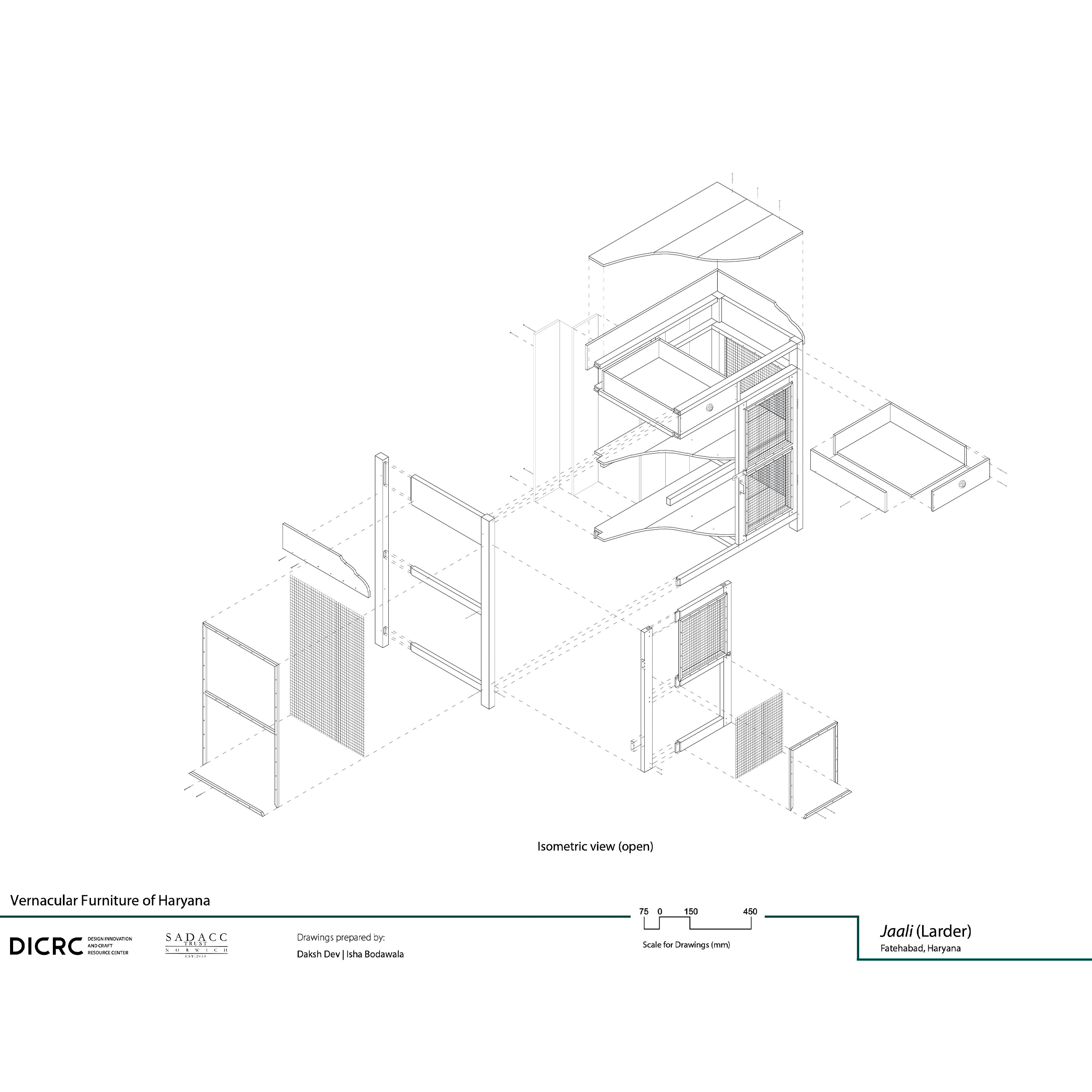
Household larders of this type are often brought in by new brides as part of their wedding trousseau, along with other pieces of furniture such as chests (peti), cabinets (sandook), chairs and tables. These can remain in a family for decades, in some cases following it through displacement and migration, as seen in the case of families who moved to Punjab from present-day Pakistan during the Partition. The keys to lockable larders are traditionally held with the eldest woman of the house. When the meshwork is worn down from use, the larder might be patched up with wood and repurposed as storage for non-perishables.
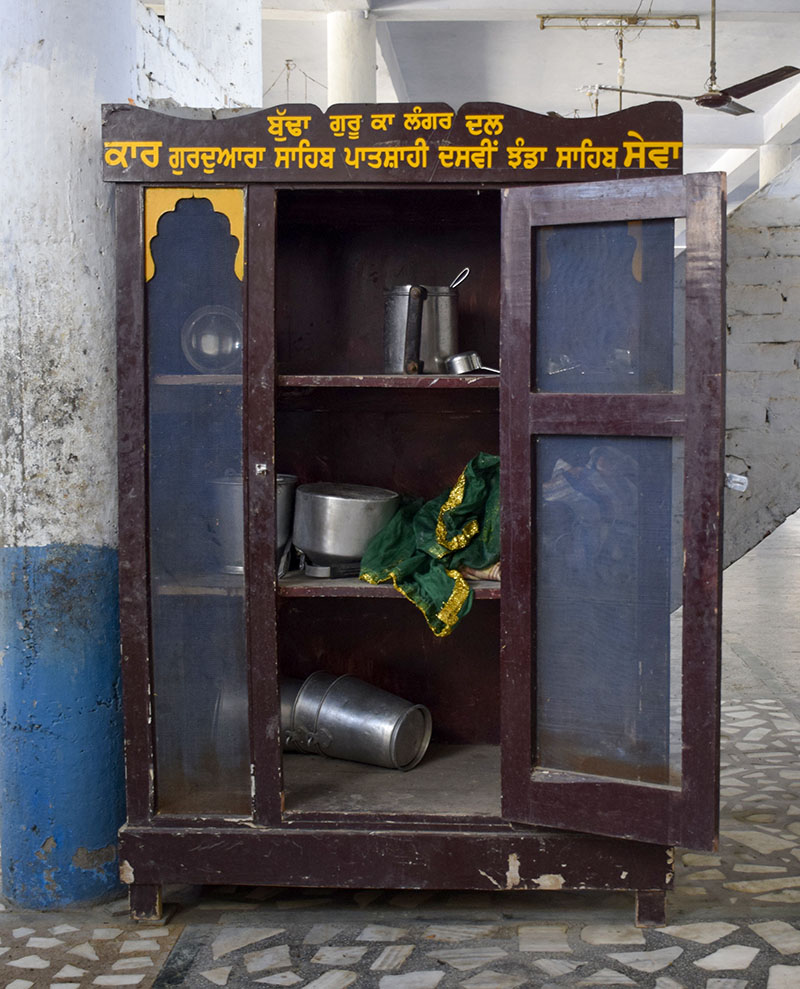
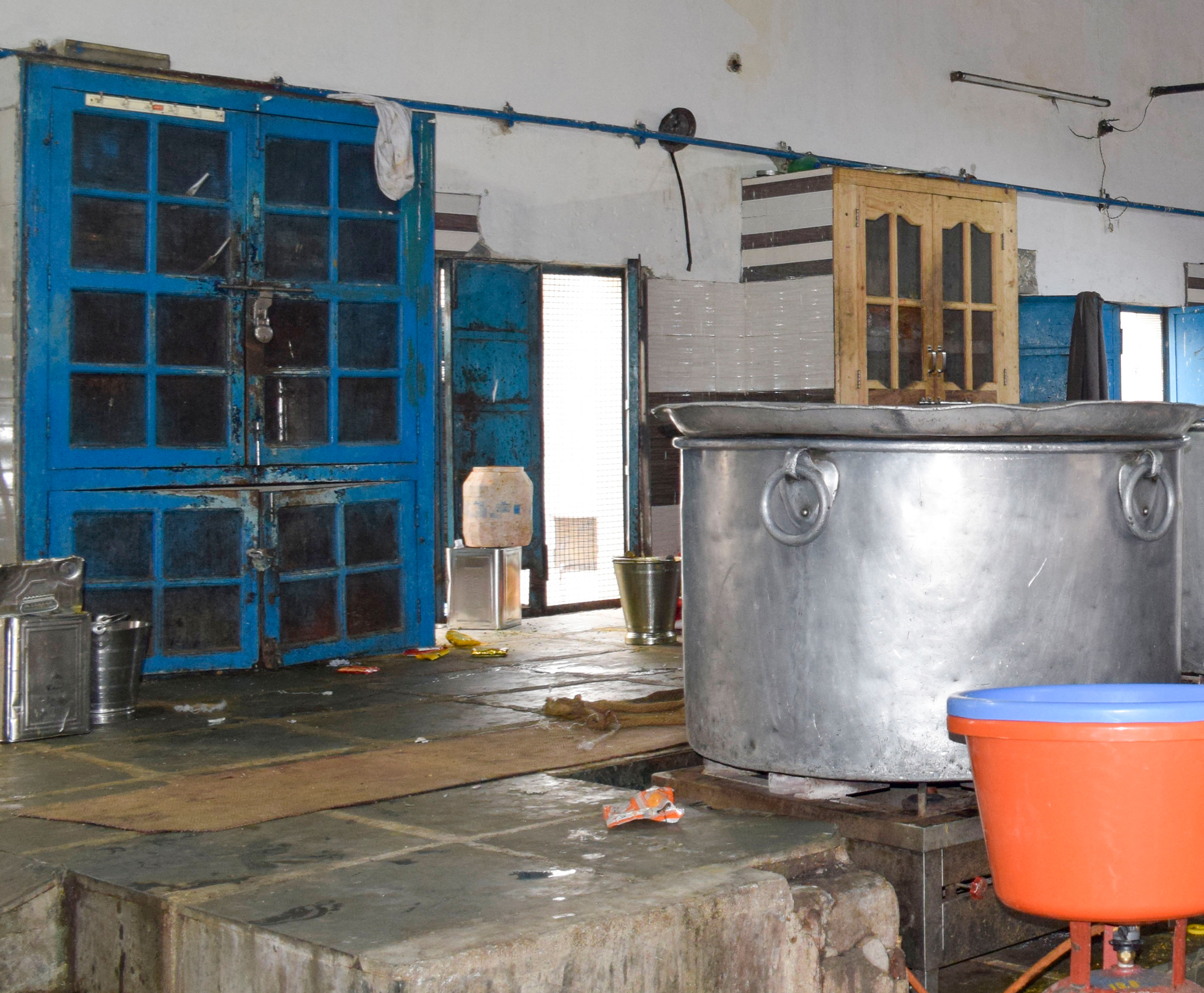
Jaali built for the langar or communal kitchen of gurudwaras are typically larger than domestic ones, and may store both ingredients and utensils needed to cook at scale. These may be donated by devotees; one such, at a gurudwara in Mansa, Punjab, is painted with the words ‘guru ka langar’ (‘offerings of the Guru’) along with the name of the gurudwara. Such vernacular larders remain common despite the availability of refrigerators, used alongside rather than replaced by them.
This article is adapted from the outcomes of Vernacular Furniture of North-West India — a collaborative research and documentation project by the Design Innovation and Craft Resource Centre (DICRC), CEPT University, India, and The South Asian Decorative Art and Crafts Collection Trust (SADACC), UK — shared with the Encyclopedia of Art through an Impart partnership. Explore more from this series in our Collection Objects Alive: Vernacular Furniture of North-West India.
First published: 30 October 2026
Image Gallery
Bibliography
Rao, Mansi S., Ben Cartwright, and Samrudha Dixit. Anaikya: Vernacular Furniture of Rajasthan. Ahmedabad: CEPT University Press, 2021.
Rao, Mansi S., Ben Cartwright, Jay Thakkar, and Abhishek Ruikar. Smarya: Vernacular Furniture of Punjab and Haryana. Ahmedabad: CEPT University Press, 2026.
Vernacular Furniture of India. Accessed July 20, 2026. https://vernacularfurnitureofindia.com/.
Feedback