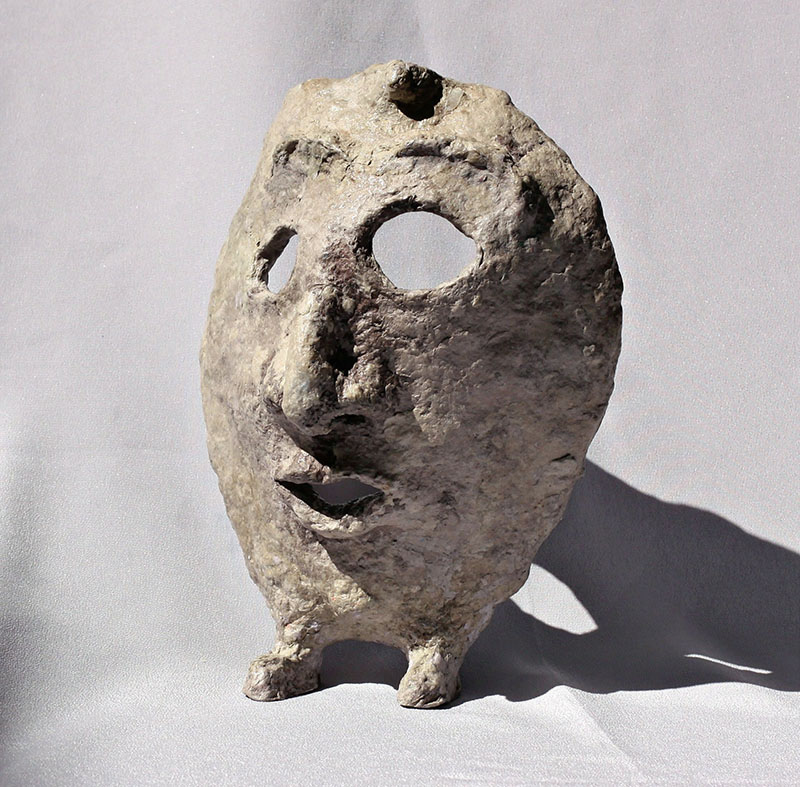
Meaning “chewed paper” in French, it is a composite material made of pulped paper mixed with a glue or adhesive paste and other fibrous materials. The term also applies to paper strips that are adhered to or pressed between moulds, or papier-mâché that includes plaster. Its use originated in present-day China, and the technique of crafting objects from it was well-established in Asia over several centuries before being introduced to Europe in the thirteenth century. In Europe, it gradually became a substitute for plaster and stucco in furniture ornamentation, and several finishes were developed for its use. It is now also used in sculpture.
More Definitions
Aniline Dye
A category of synthetic dyes made with a base material of coal-tar derivatives. Aniline is an organic compound derived from…
Albumen Paper
Photographic printing paper that is coated with albumen, or egg white, and salt before being dipped in a silver nitrate…
Jhalar
A strip of brightly coloured paper, cloth or plastic that is used to craft decorative pieces for festive occasions. The…
Washi Paper
A traditional Japanese handmade paper produced using fibres of trees such as gampi, mitsumata and paper mulberry. Because of its…
schist
Metamorphic rock with large grains typically visible to the naked eye, and generally easy to break into flakes or sheets.…
Mordant
Mordant is a substance that allows natural textile dyes to bond or fasten to a fabric. It is usually made…
Mangalore tiles
Moulded terracotta tiles popularly used on sloping roofs in India, first manufactured in 1864–65 by the Basel Mission Tile Works…
Gouache
An opaque water-soluble paint that contains a gum binder and a white pigment such as chalk mixed with a high…