-
ChicagoBanerjee, Archi. "How ‘Suf’ Embroidery Reshaped a Refugee Community." Impart Perspectives, September 29, 2026. https://imp-art.org/perspectives/features/how-suf-embroidery-reshaped-a-refugee-community/
-
MLABanerjee, Archi. "How ‘Suf’ Embroidery Reshaped a Refugee Community." Impart Perspectives, Sep. 29, 2026, https://imp-art.org/perspectives/features/how-suf-embroidery-reshaped-a-refugee-community/. Accessed 15 Oct 2026.
-
HarvardBanerjee, A. (2026) How ‘Suf’ Embroidery Reshaped a Refugee Community, Impart Perspectives. Available at: https://imp-art.org/perspectives/features/how-suf-embroidery-reshaped-a-refugee-community/ (Accessed: 15 October 2026).
How ‘Suf’ Embroidery Reshaped a Refugee Community
Adept at adaptation and assimilation, the Maru Meghwals of Sindh, Pakistan have leveraged craft to challenge entrenched socio-economic hierarchies of the Kutch region.
By Archi Banerjee
Link copied!
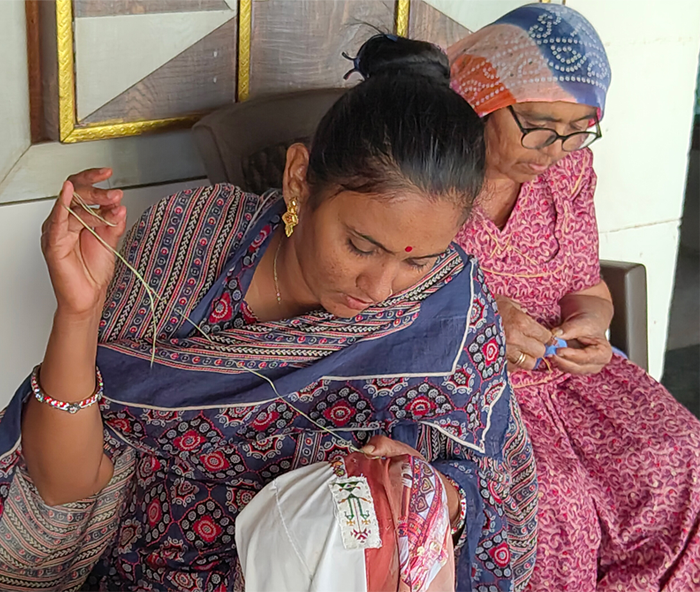
Mother and daughter duo, Bhavnaben Rathod and Gauriben Rathod, embroider suf designs at their home in Tharad on the eastern edge of the Rann of Kutch region. Courtesy the author
One hot afternoon, back in September 2024, I trudged into a Sodha-Rajput hamlet at the border outpost of Vedhar in northern Kutch. I was there to research textiles from the area and soon got talking to an elderly man who eagerly told me about his family’s heirloom — a shawl covered in suf embroidery, a traditional craft practiced by the women of his community. Suf (also called soof) utilises a counted-thread technique that produces intricate and distinctive triangle-shaped designs. He proudly described the shawl as an example of exceptional artisanship, which had been part of his wife’s dowry. In 1971, when he and his family migrated, seeking safety amidst rising hostilities between India and Pakistan, he recalled how they had carried the shawl from Sindh into Kutch, across the border.
This was when his wife, sitting nearby and following our conversation from under a veil, gently corrected him. The shawl had never been part of her wedding dowry. While migrating, after crossing the Rann, she had bought it from another migrant family who had walked for days from Tharparkar and needed money to buy food.
What the man had described as a treasured heirloom to me was in reality an object purchased in the aftermath of a historic displacement event. This anecdote about the confusion over the actual provenance of a textile piece reveals the complicated history of suf embroidery in the region. It was once a non-commercial, domestic craft — women embellished garments only worn by themselves or their family members. But Partition, migration, and the expanding market for Kutchi textiles saw it become a way to earn a living, to survive, and eventually claim a new identity.
A Belonging Beyond Borders
Tharparkar is an arid district in the south-eastern extreme of the Sindh province of present-day Pakistan. It is part of the sprawling Thar desert that extends across eastern Sindh, western Rajasthan and parts of Gujarat, Punjab(s) and Haryana. The Rann of Kutch is a vast tract of saline mudflats edged by tall grasslands. Located at the northern boundary of Gujarat with Sindh, it stays submerged under water only during the rainy months, but for much of the year, it is a flat, white expanse of salt and stones.
Home to several indigenous communities and vulnerable ecosystems, the region has historically been a neglected one — both under the colonial regime and also the post-colonial states of India and Pakistan after independence. The harsh climate, centuries of socio-economic interdependence, and the geographical remoteness from the subcontinent’s mainland hubs, nurtured cultural, ancestral, and historic ties among the communities living in the Kutch-Rann-Tharparkar-Thar region. The bonds have lingered even after the creation of international borders.
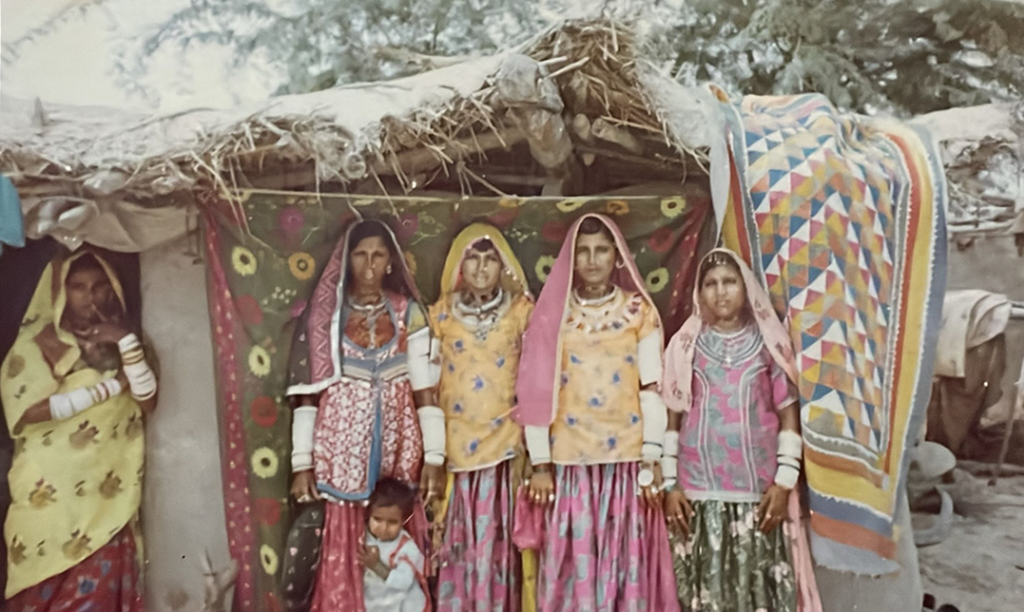
Even though these places may seem neatly divided between the two nation-states, people, families and communities, especially those living in the regions between southern Sindh, western Rajasthan and northern Gujarat near the border, experience the boundaries that separate them more subjectively, according to social anthropologist Farhana Ibrahim. Practices that were centuries old and inter-community ties did not disappear overnight. For instance, the Jadeja clan, former rulers of the erstwhile princely state of Kutch, had a tradition where weddings within the community were prohibited. Thus, even after Partition, families would arrange marriage alliances with the Sodha-Rajputs, who were once the ruling clan at Umerkot in Tharparkar. People from other communities also moved through the region, following old trade and pastoral routes. Events like marriages, festivals, as well as droughts or political circumstances saw people cross the considerably porous border in the Kutch region frequently in the years post-independence.
But the 1965 India-Pakistan war set in motion a series of major and minor collisions between the armies that transformed what had been a relatively ‘soft’ border into a more rigorously policed one, restricting official travel and trade. This affected more than just the movement of people. It also altered the circulation of objects, techniques, and traditions. The physical fencing that followed decades later further disrupted older patterns of cross-border movement and exchange.
A Change of Values
Belonging to the older, more interconnected world of Thar-Sindh and Kutch are unique textile crafts, including a variety of embroidery styles, such as paako, kaccho, muko, khaarek, neran, aabhlo, bavaliyo, and khambhiri. Practiced by the women of different communities, often there would only be minor variations in the core style and fundamental techniques that were passed down, mother to daughter. Embroidery patterns moved across communities and regions, through migration, marriage, and imitation. Paako and khaarek, for example, spread from Sindh to different parts of Kutch with groups such as Meghwals and Muslim pastoralists, and also as part of the dowries of Sodha-Rajput brides, long before Partition.
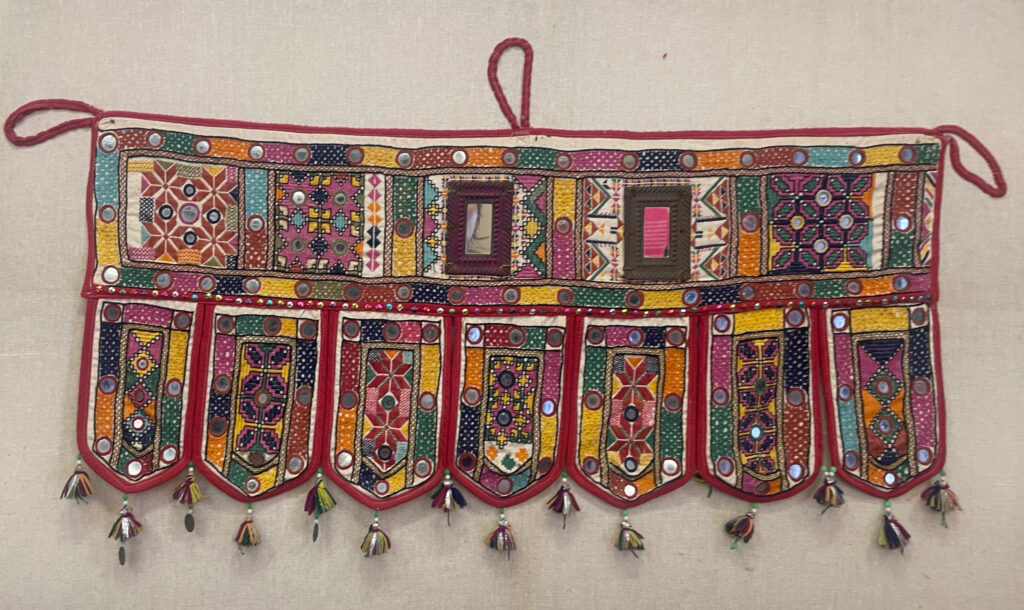
At the same time, each embroidered piece was always unique to the woman who made it and the community to which she belonged. The designs reflected the imagination and skill of the maker while also representing the continuity of garment traditions. Prints, colours, and embroidery functioned as visual codes that communicated age, marital status and the caste of the wearer in social situations.
Clothing also functioned as a form of property and social currency. While both garments and jewellery were included in a new bride’s trousseau, most women realistically had control only over their own clothes and what they could make. Therefore, the quantity and quality of embroidered items brought in by a new bride as part of her dowry influenced her position in her in-laws’ household. Girls who did not have enough embroidered pieces prepared for their dowry often faced difficulty finding grooms.
In the 1950s, a trend of selling these old, embroidered, dowry garments began in Kutch. Frequent bouts of drought, coupled with very few employment opportunities, had brought scarcity and famine to most doorsteps. Families were compelled to sell embroidered pieces made for personal use to earn some quick cash for essentials. Non-governmental organisations (NGOs) working in the region called them “distress sales”. Traders and dealers went village to village, exchanging embroidery for cash and other household items. By the 1960s, traders had begun selling embroidery pieces made in rural households in the commercial markets of Ahmedabad, Mumbai, Goa, Udaipur, Jaipur, and Delhi.
Coincidentally, this was also when the State began to take an interest in creating avenues of rural employment and there was renewed interest in supporting village handicrafts as a way to do so. The All India Handicrafts Board, established in 1952, sought to support traditional crafts by tapping new markets and new customers. In the 1960s and 1970s, embroidery also attracted the interest of foreign travellers following the “hippie trail” across the subcontinent. By the 1970s, the Gujarat State Handloom and Handicrafts Development Corporation Ltd. and the National Institute of Design in Ahmedabad were involved in developing lifestyle products and connecting craft with tourism-based activities.
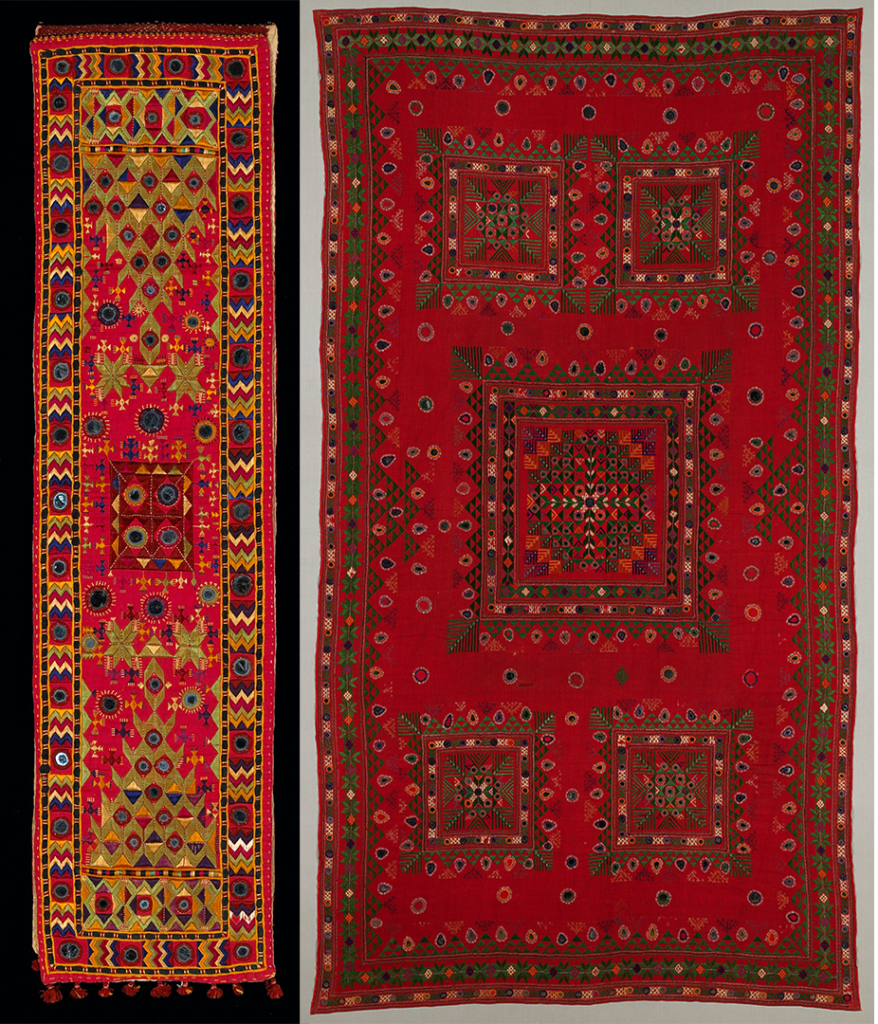
The refugees of 1971 arrived just when all these pivotal economic and cultural shifts had begun shaping the craft economy of the region. Although the mention of the year 1971 usually elicits memories of the Bangladesh Liberation War, what happened on the western frontier was no less significant because it had a lasting effect on the social fabric of the region. Documentary records state that around 10,000 people from Tharparkar had already crossed into India as a result of hostilities during the 1965 war. When tensions between Pakistan and India escalated again in 1971, Indian troops temporarily annexed parts of Tharparkar. With fears running high, more than 90,000 non-Muslims chose to move into India to avoid being caught in the crossfire. Some returned to their villages once the situation improved, but most did not. Government relief and rehabilitation followed, and in 1978, refugees from Sindh officially became eligible for Indian citizenship.
Surviving the Odds
The Maru Meghwals were among these refugees. Historically, Meghwals occupy a marginal position within the region’s caste hierarchy, with occupations such as disposing of animal carcasses, leather work, tanning, shoemaking, weaving, and farming. Their marginality shaped how they lived. Most often, Meghwal communities were dominated by higher caste groups with very little autonomy over where they lived. One caste-based practice, according to local accounts, was sending Meghwal families to go live in other villages, as part of dowry arrangements. At least one family would be tasked with accompanying each upper caste bride when she moved to her in-laws village after marriage.
Under such circumstances, Meghwals adapted to the social and cultural practices of the dominant groups who lived close to them. Examples of such forms of ‘assimilation’ can be found across Kutch. Meghwals living near Ahir villages in central Kutch wear clothing similar to the Ahirs, embroider garments in similar styles, and eat vegetarian food. In Banni, where Muslim pastoralists roam in large numbers, Meghwals used to wear garments favoured by Muslim men from the region, such as the ajrakh lungi, and consumed non-vegetarian food, including beef. In Tharparkar, the socially and economically dominant Sodha-Rajputs stood above Meghwals, and so the latter presented themselves as culturally similar to the Sodhas. But even such adaptations have not really protected the Meghwals from being discriminated against. They continue to face caste-based segregation and violence — from being barred from temples and other social institutions, to being assaulted (or murdered) for sporting markers of caste pride, such as a moustache, and being denied essential rights, like access to drinking water.
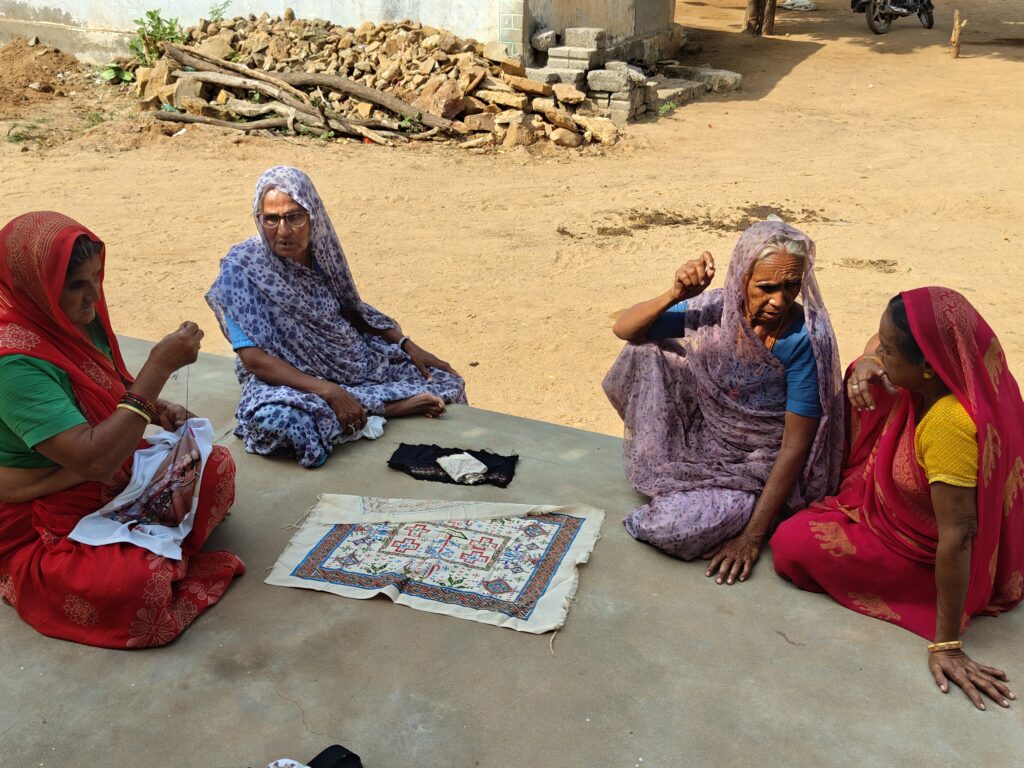
Judy Frater, a renowned scholar of Kutch embroidery traditions, has theorised that embroidery emerged among Maru Meghwal women partly in response to restrictions imposed by the Sodha-Rajputs, who prohibited them from wearing metallic brocades and gota work associated with higher caste status. Unable to use these forms of ornamentation, Meghwal women embellished simpler fabrics through techniques, such as suf and khaarek. Frater notes that these counted thread embroideries require an intimate understanding of the structure of the cloth, as the embroidery is worked by counting the warp and weft, and Meghwals, already being familiar with the craft of weaving, excelled at this technique. Other scholars associate suf with the Sodha-Rajputs of Tharparkar, suggesting that Meghwals learnt the technique while adopting Rajput clothing styles, or while creating dowry pieces for Rajput brides. Similar counted-thread embroideries are also found in the lexicon of other communities as one moves north from Tharparkar to Punjab, Kohistan, Afghanistan, and further up.
Single, uncontested origins for each embroidery style are difficult to trace given the obscured histories of exchange, adaptation and assimilation. But for suf, this at least helps us establish a close association of the style with the Sodha and Maru Meghwal communities of the Tharparkar region and, subsequently, with migrants who carried the technique into Kutch. A point to note here is that suf was not an entirely unknown style in Kutch prior to 1971. Considering marriage alliances of Jadejas and Sodhas, these embroideries were already being practised nominally in the households of the brides from Tharparkar, but it had not yet gained much public visibility.
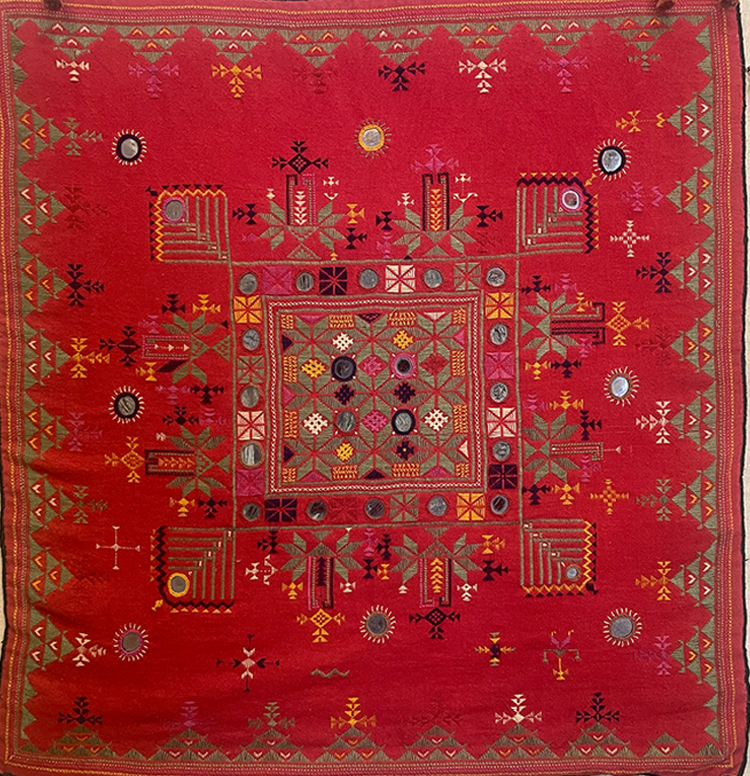
Migrants from Tharparkar recount crossing the Rann to reach Indian territory under the cover of darkness, on foot and by camel, horse and cart, reaching Vaagad, Lodrani and Suigam on the northern border of Kutch and Tharad districts. They were eventually housed in government relief camps, where many remained for years. The largest camp in Kutch, Jura, housed around 45 families from different communities of Tharparkar. The most numerous were the Sodha-Rajputs and the Meghwals, and the remaining were Lohanas, Suthars, and a few other groups.
The refugees were not allowed to leave the camp premises or seek employment outside it as they had not acquired legal citizenship or work papers. Since the government only provided basic rations for survival, these families urgently sought ways to earn money within the restrictions placed on them. The NGO Shrujan, founded in 1969, had already been working in Kutch to preserve local embroidery traditions and had created supplementary craft-based income channels for several communities. Putting this expertise to use, Chandaben Shroff, Shrujan’s founder, obtained special permission to enter the Jura camp to help families through similar interventions. By 1974, suf embroidery had become a recognised and popular style emerging from refugee camps. Embroidery acquired an entirely different meaning for migrant-refugees when they realised suf, by virtue of being uncommon on this side of the border, was fetching them high praises and even higher prices. Women from these families quickly understood that what they considered a non-commercial, household activity was potentially a skill with immediate economic value in their new environment.
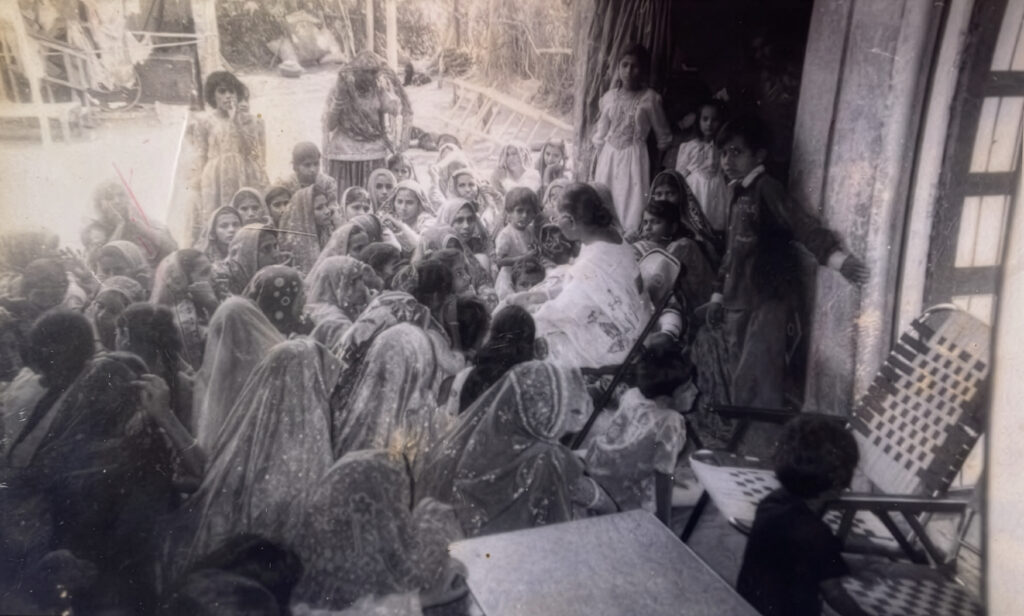
Other organisations such as Kutch Mahila Vikas Sangathan subsequently became involved in commissioning, curating, purchasing and selling suf pieces. The demand and pay was high enough for women from different communities, even those who hadn’t really been exposed to suf embroidery from Sindh, to go learn the techniques from friends or neighbours who did. A late entrant in the craft market, suf rapidly acquired commodity value in capitalist value chains.
Once suf moved out of the domestic arena and into global markets, its identity as a specialised form of embroidery became widely established among dealers, collectors, museums, fairs, haats and urban consumers. Those skilled in the style came to be identified as suf-embroiderers. This was particularly significant for the Maru Meghwals, who were in the process of negotiating how they would be known in their new homeland.
Crafting a New Identity
The Meghwals of Kutch are divided into four sub-castes — Maheshwari, Marwada, Charania and Gurjara — based on their purported places of origin. Meghwals who arrived from Tharparkar in 1965 or 1971, even though they trace their origin to the historic region of Marwar, like the Marwada Meghwals, identify themselves as “Maru Meghwal” to distinguish themselves as a separate community. They maintain this distinction through language, dress, and religious practices that they absorbed from the Sodha-Rajputs while living in Sindh. To people in Kutch, both the migrant Sodhas and Meghwals of Sindh broadly appeared similar because all refugee families were interned together at camps and they had a shared cultural background. They came to be known, collectively, as the ‘Sodhas’ or ‘Rajputs’ from Pakistan.
For the Maru Meghwals, this ambiguity was a chance to reposition themselves in society. To avoid being stigmatised again, as they once had been in Sindh, they began distancing themselves from other existing Meghwal subgroups of Kutch. The popularity of their embroidery and their new identity as suf embroiderers gave them an opportunity to cement these distinctions. The women removed the stack of white bangles characteristic to Meghwals and slowly moved away from the traditional, embroidered choli, kapadu and ghaghro. Instead, in another cycle of adaptation, women began wearing printed sarees wrapped in the dominant Gujarati or Nivi drape styles while unmarried girls began wearing salwar suits in public.
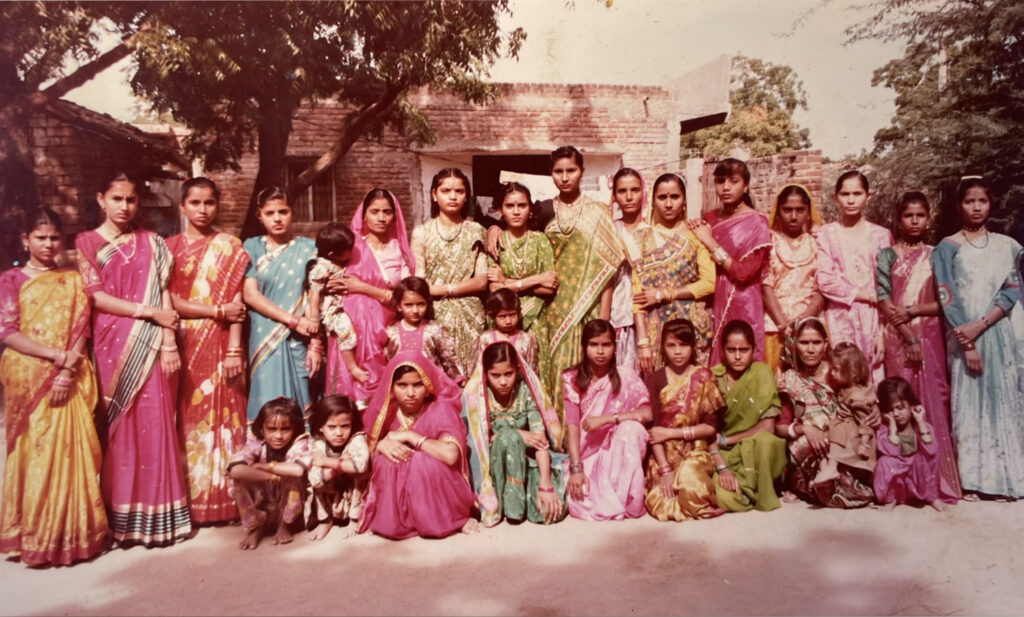
They had practical reasons for these changes: the popularity of their embroidery meant there was less time to make their own clothes. They also needed more practical clothing while travelling to NGOs, government handicraft offices, fairs, and markets. Traditional dress and jewellery not only made travel more onerous, they also made them stand out in more urban, cosmopolitan spaces. In the case of the Sodha-Rajputs, the women of the community also adopted veiled Gujarati saris, pursuing mainstream-Gujarati identities in their quest to acquire citizenship and assimilate for political reasons, despite being homebound in accordance with prevailing Rajput traditions.
After moving out of camps, a majority of Maru Meghwals settled in five villages — Sumrasar, Pharadi and Pragpar I and Pragpar II in Kutch, and Tharad in the Tharad district. In Sumrasar, they established an enclave called Parkar Vas, literally the ‘abode of Parkar’ in 1979. Kala Raksha Foundation , established in Sumrasar in 1993 with the help of Judy Frater, was organised as a cooperative managed by the Meghwals. Its work combined handicraft production and marketing with health and educational programmes. In this way, embroidery created new forms of organisation and collective forms of economic agency for the Maru Meghwals.
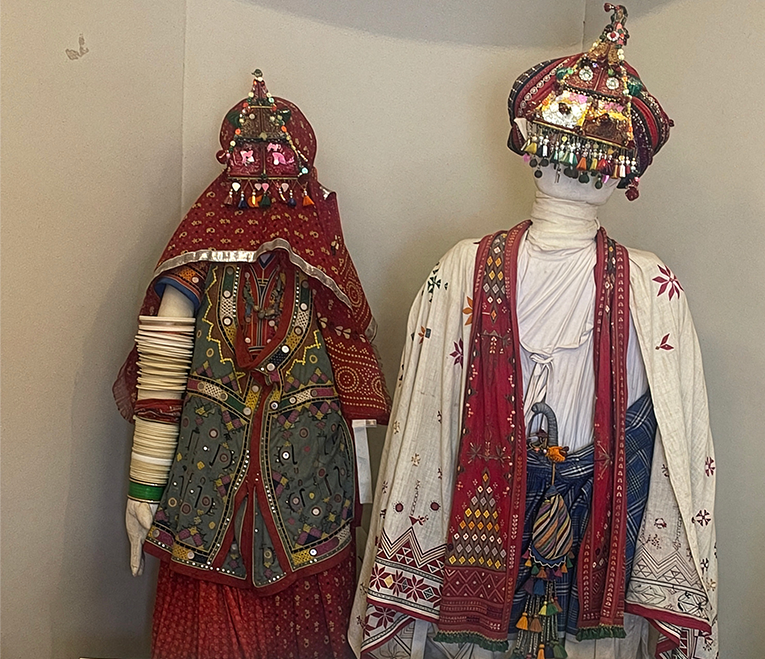
The economic effects of this were significant. Regular income from embroidery improved household security, and men in the community began to take pride in the economic contributions of their wives. Financial security also enabled access to credit, better-built houses, improved healthcare and investment in children’s education. For the Maru Meghwals, this transformation was about more than just a stable income or economic empowerment. It was an avenue to escape their past as ‘Pakistani’ refugees, and marginalisation as a scheduled caste.
Though Maru Meghwal families did endure discrimination even after settling in Kutch villages, their subsequent economic success as suf embroiderers challenged existing and entrenched caste-based segregation. Their ability to travel, organise, earn, and participate in the craft economy made them globally more visible and locally more confident. But not all changes were entirely beneficial. By the 1990s, commercial production had significantly altered the relationship between artisans and the craft. The most detrimental effect was on the quality of artisanship.
The Effects of Commodification
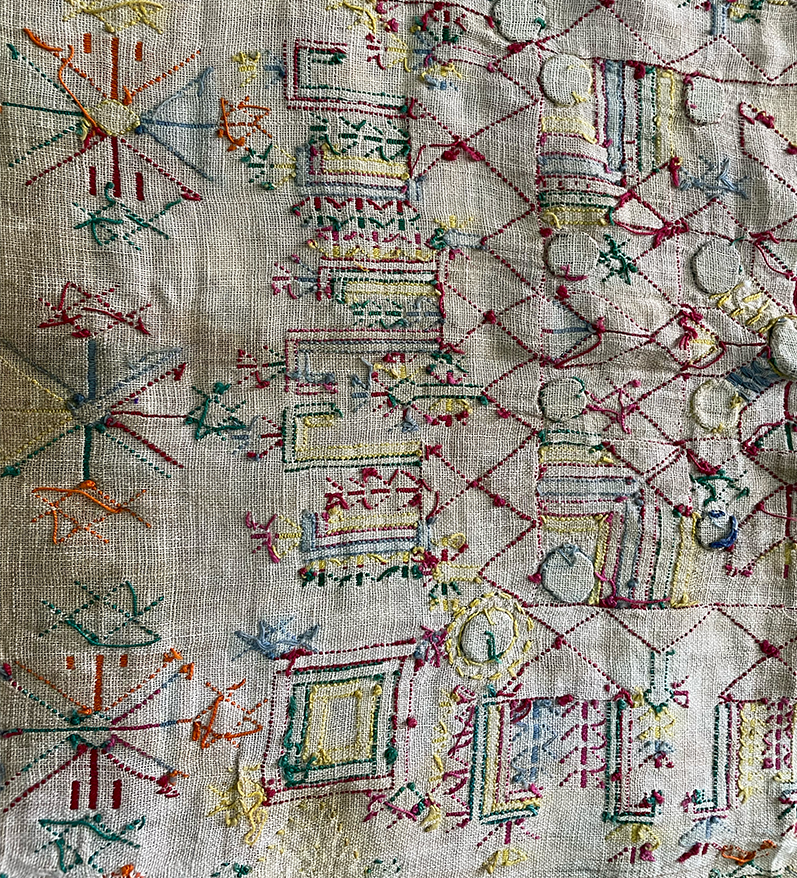
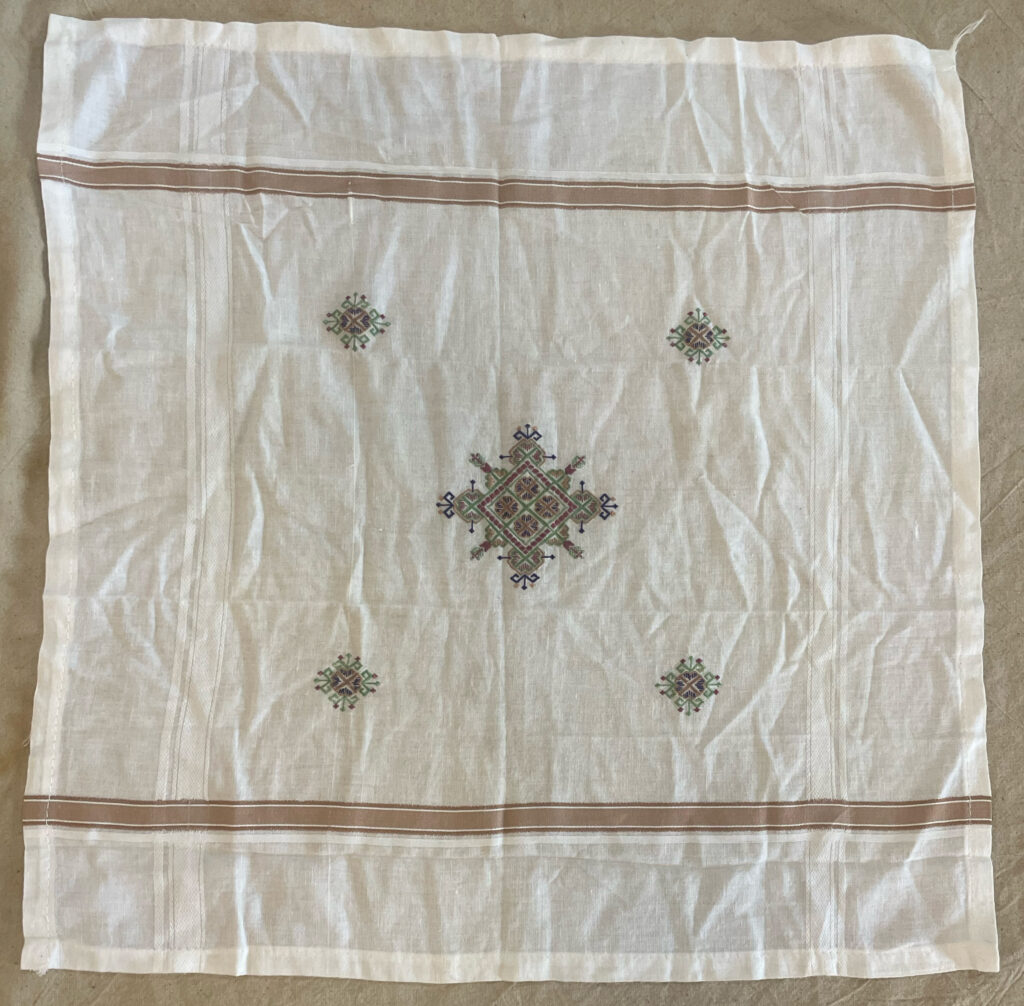
Traditionally, design and execution were inseparable, and a single woman would be responsible for both. In counted-thread embroideries, the logic of a pattern is mentally plotted on the warp and weft; no outline is drawn on the fabric as a guide. But for market-oriented pieces, merchants and organisations began supplying yarn, cloth, and fixed patterns, and, in some cases, even traced designs on cloth to speed by production. Such practices disrupted the fundamental techniques associated with suf embroidery. Most artisans were thus only following instructions as they performed ‘majuri kam’ (labour work) with next to no creative control.
Embroidery — an activity earlier performed between other domestic responsibilities and in leisure hours — started demanding stipulated and fixed hours of labour to meet targets. Women struggled to keep up embroidering for personal use for the lack of time. The intricate and time-consuming nature of suf was modified in different ways by artisans to increase overall efficiency. Elaborate patterns got swapped with smaller motifs; sometimes designs were combined with filler elements, such as machine-made frills and laces.
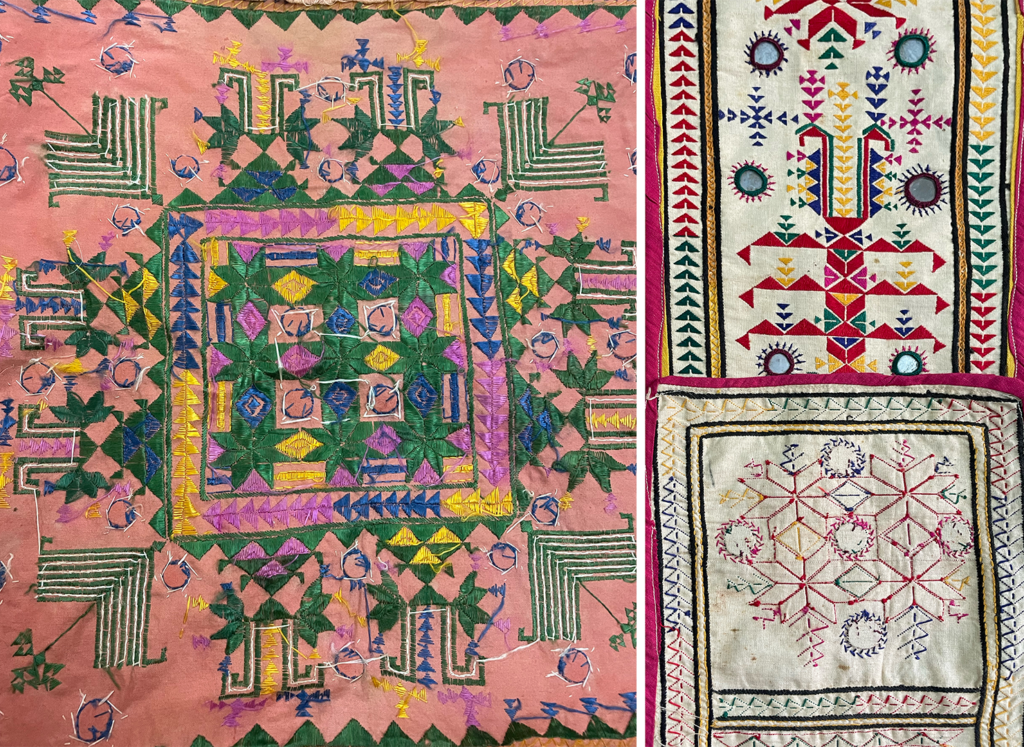
These shifts become all the more apparent when you compare older pieces to relatively new samples. For instance, women were traditionally quite conscious about the cost and labour involved in producing yarn and often reused thread from old textiles. In such pieces, the reverse-side of the embroidery shows a dotted pattern and fully filled satin stitches on the front. But because yarn is now supplied for commissioned pieces, embroiderers use continuous satin stitches on both sides to save time. This makes production faster, but the resulting embroidery is bulkier and somewhat more prone to wear.
Motifs, patterns, and colours were also modified over time to suit the tastes of urban buyers, as dictated by traders who were plugged into urban and international markets. Traditional vibrant colour combinations have slowly been replaced by subtle muted palettes and pastel shades — colours that artisans refer to as “English colours” that “city people” prefer. Even the younger generations within the community, influenced by mainstream, popular culture, evinced a preference for these muted colours over traditional ones, which they see as garish or overly bright.
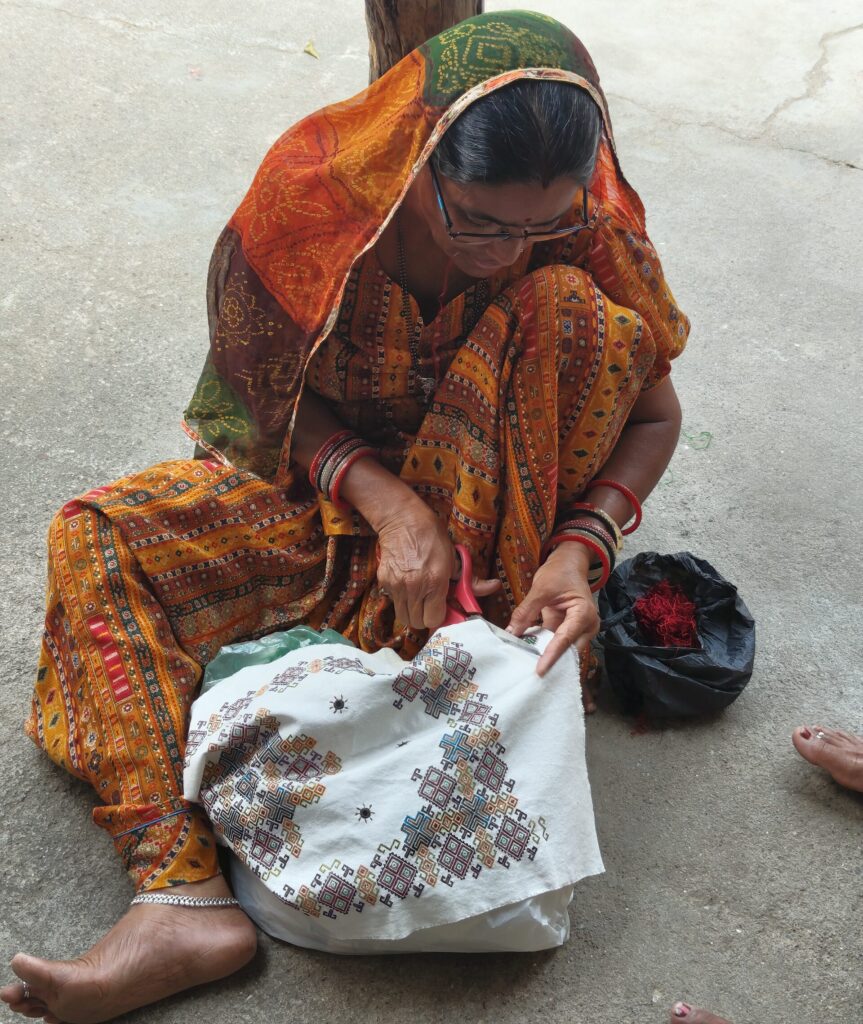
The demand for suf and khaarek, the other counted thread embroidery style, has also meant that younger generations are learning just these two forms of embroidery. In the process, a diverse knowledge-base of stitches, such as paako, bavaliyo, and neran, which were once part of the traditional embroidery lexicon of the Maru Meghwals, stands neglected and gradually faces the risk of being forgotten altogether. Meanwhile, cultural motifs with long histories and community-specific significance have been standardised and are being sold as ‘traditional craft’ designs, stripped of all embedded meanings. These designs have, as a result of commodification, lost much of their original character, value, and uniqueness.
Between Adaptation and Emancipation
Here, we must also briefly look at the other group of Meghwals most closely related to the Maru Meghwals — the Marwada subgroup. The Marwada Meghwals, concentrated in villages in the Banni and Paccham grasslands and along the edges of the Rann, have also increasingly engaged with Kutch’s cultural tourism economy. Unlike the Maru Meghwals, who have worked relentlessly to move away from their caste, the Marwada Meghwals have strategically commodified their cultural identity. They have developed village-based eco-resorts modelled after traditional bhungas (cylindrical low huts typical of this geography) decorated with lippan mud-and-mirror work, and sell embroidery, jewellery, and dhadkis (quilts) to tourists. Community music, traditional dress, and craft have become important aspects of this outward-facing cultural economy, turning markers of caste and community into sources of livelihood. This is one of the few communities where women still actively wear fully embroidered traditional clothing and teach girls all the traditional stitches of their community. While this has created economic opportunities, it has also limited their social mobility by reinforcing the very identities they have chosen to commodify.
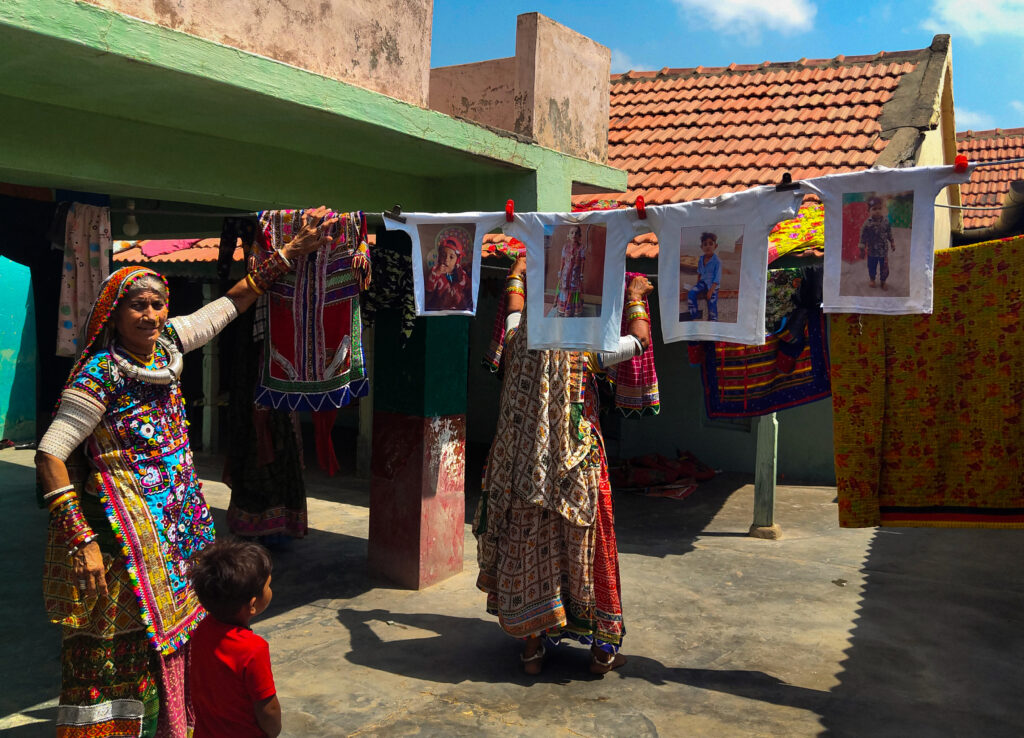
These histories put emphasis on an active study of dress: how people adopt, abandon, imitate or combine styles. How, by choosing what to reveal and what to conceal, clothing can be used to either transgress or reinforce social boundaries. Instead of letting embroidery and dress remain static markers of identity, Maru Meghwal women re-positioned them to challenge earlier repressive socio-economic and cultural positions.
Yet, despite the community’s upward mobility and overall progress since migration, many Maru Meghwal women still continue to observe strict purdah before male family members and defer to them within domestic spaces. In that sense, not much separates them from the home-bound Sodha-Rajput women or the caste-stigma ridden Marwada Meghwal women. Which raises the question — does the eradication of one form of discrimination automatically translate into gains against other forms of oppression or repression? For Maru Meghwal women, many of whom have become trainers and entrepreneurs, this question (and the struggle it represents), is what continues to shape their future.
First published: September 29, 2026