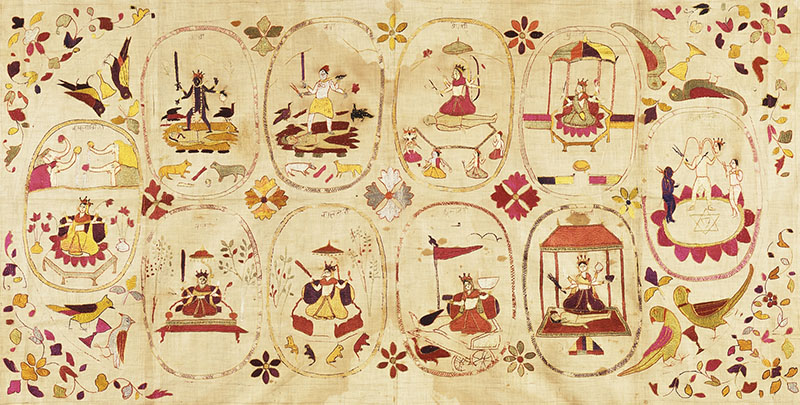
A group of ten goddesses from the Tantric Hindu pantheon, consisting of Kali, Tara, Shodashi, Bhuvaneshvari, Chhinnamasta, Bhairavi, Dhumavati, Bagalamukhi, Matangi and Kamala. They are revered in Shaktism, Shaivism and Vajrayana Buddhism and denote a turning point in the rise of Bhakti cults within Shaktism in the early eighteenth century. The creation of the Mahavidyas is outlined in the Mahabhagvata Purana, attributed to Vyasa.
More Definitions
Narasimha
One of the ten avatars of the Hindu deity Vishnu, he is depicted with the body of a man and…
Vedas
A body of religious texts composed in Sanskrit and considered the oldest scriptures in Hinduism. There are four primary texts…
Sundereshwara
A form of the Hindu deity Shiva worshipped as one of the principal deities of the Meenakshi Temple, Madurai, in…
Samhara
Meaning "destruction" or "withdrawal" in Sanskrit, it is one of the cosmic acts of deities in the Hindu religious tradition.…
Shaktism
A major sect of Hinduism wherein the metaphysical reality is considered to be a woman, and the primordial cosmic energy,…
Arjuna
A mythical warrior and one of the five Pandava princes in the Mahabharata, Arjuna was the son of Kunti and…
Anandatandava
Meaning “dance of bliss,” it is a cosmic dance performed by the Hindu deity, Shiva, in his Nataraja form.
Pandavas
The protagonists of the Indian epic Mahabharata, they are the five sons of Pandu, namely, Yudhisthira, Bhima, Arjuna, Nakula and…