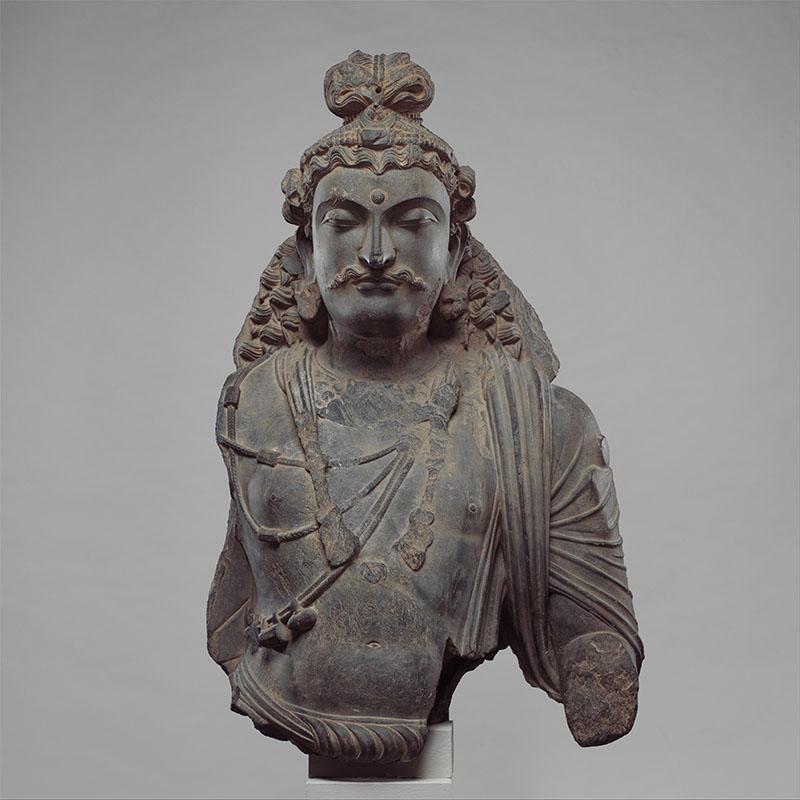
Sculptural art characterised by the merging of Indian and Hellenistic traditions, it overlaps with the reign of the Indo-Greeks in Bactria and the Indian subcontinent, beginning c. 200 BCE. Sculptural pieces from Mathura are believed to display Indo-Greek features such as realistic physiological details, frontal perspectives, iconographic details and the display of folds in sculpted drapery. The Gandhara school, particularly its earliest statues of Buddha, are considered to embody some of the last traces of this tradition of sculpture.
More Definitions
Bauhaus
A school of art and design founded by German architect Walter Gropius in 1919, which emphasised an interdisciplinary approach to…
Photorealism
A genre of painting, drawing and graphics where the image is produced after studying a photograph and rendering a reproduction…
Critical Regionalism
Architectural philosophy emphasising site-specific design that draws on local topography and climate, social and cultural influences, and traditional building knowledge…
Vesara Architecture
A term for an architectural style primarily associated with medieval-era temples in the Deccan region, especially north Karnataka. Derived from…
Architectural Views
A genre of painting that focused predominantly on buildings and their interiors rather than treating them as background. Architectural painting…
Victorian Salon Painting
A number of painting styles that gained popularity in English salons during the reign of Queen Victoria (1837–1901), such as…
Earthwork
Art that is made by shaping or making forms on land or by using natural materials such as grass, rocks…
Neoclassicism
An eighteenth century cultural movement that drew inspiration from the arts and culture of classical antiquity. It embraced classical themes…