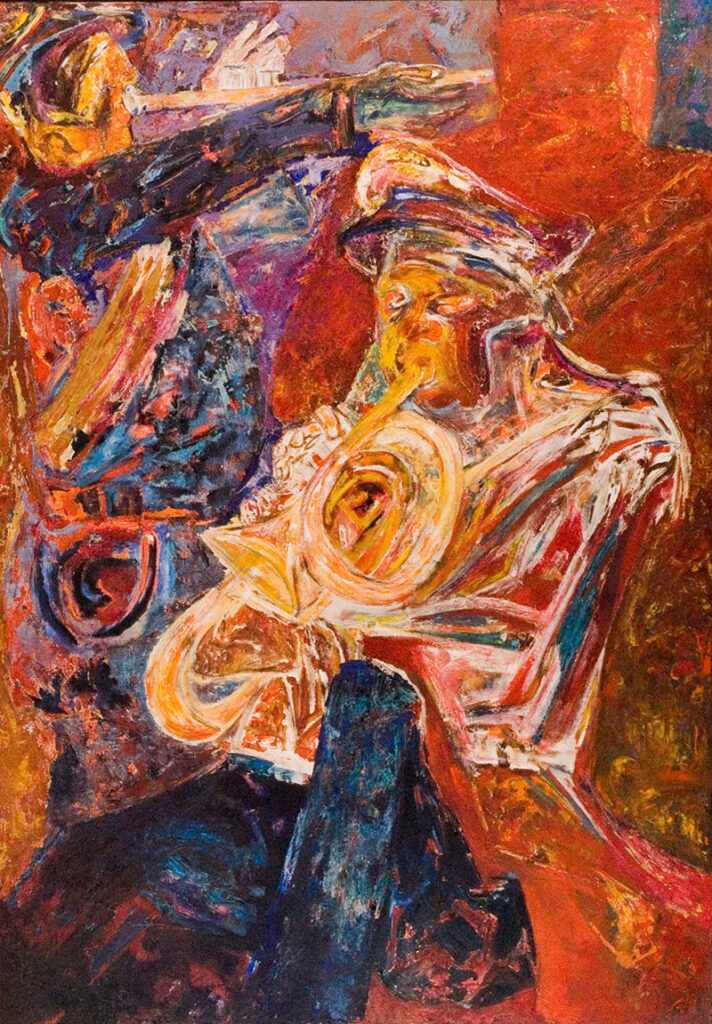
A painting technique in which paint is thickly applied to the canvas, creating a surface texture. This can aid in intensifying the effects of light and shadow or revealing the energetic strokes of the painter. It became prominent in the seventeenth century with Baroque painters such as Rembrandt and Diego Velazquez, and gained popularity throughout the nineteenth and twentieth centuries, exemplified in the works of Vincent Van Gogh and Jackson Pollock.
More Definitions
Combination Printing
An early photographic technique wherein two or more negative images are combined to create a single image. This technique allowed…
Gelatin Dry Plate
A method of producing photographic negatives that emerged in the 1880s, using a glass plate coated with silver salts in…
Schiffli
A multi-thread machine used to create machine embroidery and lace, invented in 1893 by Swiss inventor Isaak Grobli. The term…
Double Running Stitch
A form of running stitch that is even on both sides of the fabric, used in counted thread embroideries such…
Photomontage
A process of creating collages of photographs to create a composite image. It was frequently used in movements such as…
Piping
A type of embellishment or trim in which a folded strip of cloth is sewn around an edge to accentuate…
Selvedge
The edge of a fabric that does not require additional finishing work and prevents the textile from fraying and unravelling.…
Chain Stitch
A decorative embroidery technique in which the stitch consists of consecutive, interconnected loops that resemble the links of a chain.…