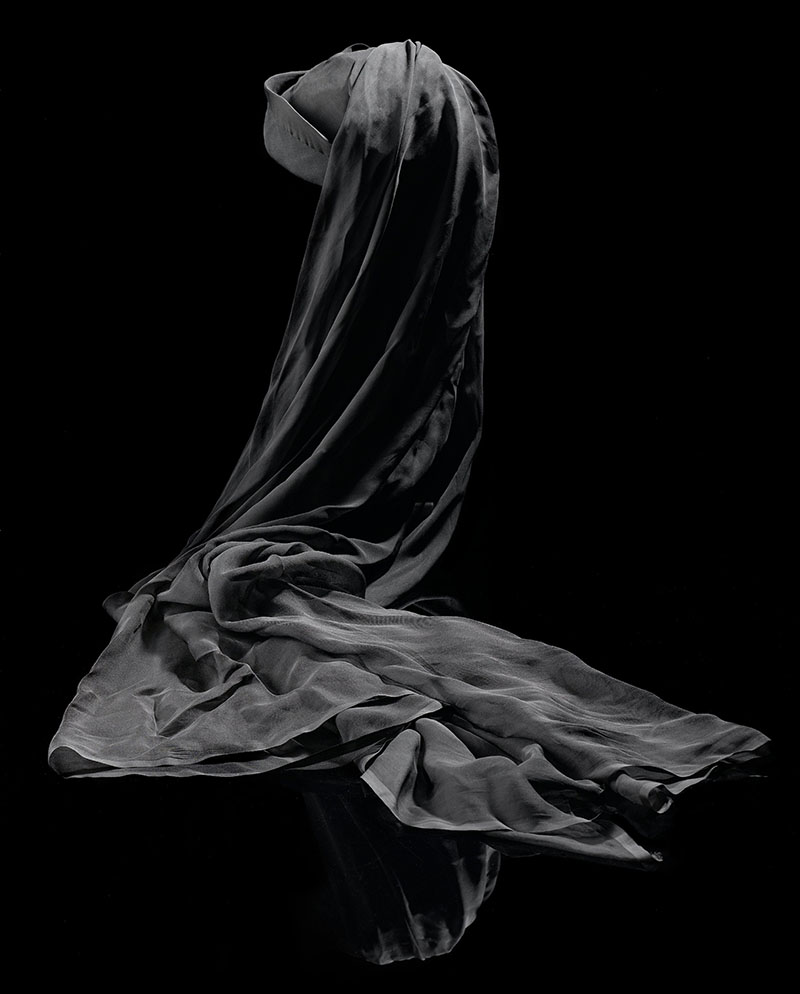
A lightweight, sheer fabric made of fine silk, it is named after the French dressmaker Georgette de la Plante. Known for its crinkled texture, which absorbs dyes well, it is usually used to make saris, dresses, blouses and gowns.
More Definitions
Wasli
A type of handmade paper originally conceived as a surface for Mughal miniature paintings. The paper was developed in India…
Khadi Paper
A traditional Indian handmade paper produced from khadi rags.
Crepe
Also known as crape, it is a fabric characterised by a rumpled, crimped or rippled surface texture. These effects may…
Lurex
A shiny, synthetic yarn made from aluminium-coated plastic, which lends it a distinctive metallic shine. It is woven or stitched…
fixer
In photography, a chemical solution used in the final stage of processing photographic film. It contains sodium or ammonium thiosulphate,…
Washi Paper
A traditional Japanese handmade paper produced using fibres of trees such as gampi, mitsumata and paper mulberry. Because of its…
Reducing Agent
A chemical used in the process of indigo textile dyeing. Indigo is a vat dye, or an insoluble dye, which…
Mangalore tiles
Moulded terracotta tiles popularly used on sloping roofs in India, first manufactured in 1864–65 by the Basel Mission Tile Works…