-
ChicagoImpart Encyclopedia of Art. "Bankdo, Bannk." August 28, 2026. https://imp-art.org/articles/bankdo-bannk/.
-
MLA"Bankdo, Bannk." Impart Encyclopedia of Art, Aug. 28, 2026, https://imp-art.org/articles/bankdo-bannk/.
-
HarvardImpart Encyclopedia of Art (2026) Bankdo, Bannk. Available at: https://imp-art.org/articles/bankdo-bannk/ (Accessed: 19 October 2026).
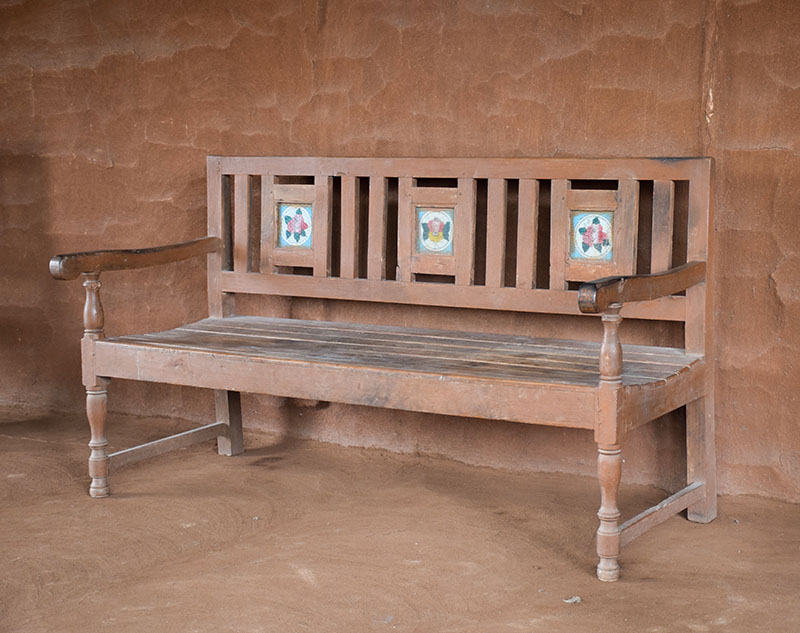
A wooden bench with an inclined backrest and usually armrests, seating two to four people, the bankdo or bannk is a form of vernacular furniture seen in Gujarat and the neighbouring Vagad and Marwar regions of Rajasthan. Derived from church benches introduced by the Portuguese in Gujarat from the sixteenth century onwards, it is used in homes — particularly in verandahs or porches — though in Rajasthan it is also used in public spaces.
Terminology
The terms ‘bannk’ and ‘bankdo’ originate from the Portuguese banco (‘bench’ or ‘seat’) — the long wooden bench introduced in churches built by the Portuguese when they arrived in southern Gujarat. Here, in the cities of Surat, Udvada, Valsad and Daman where they are largely concentrated, as well as among the Adivasi population of the Dang region, they are known as ‘bannk’. In eastern and central Gujarat and in Rajasthan, they are known as ‘bankdo’.
Design and construction
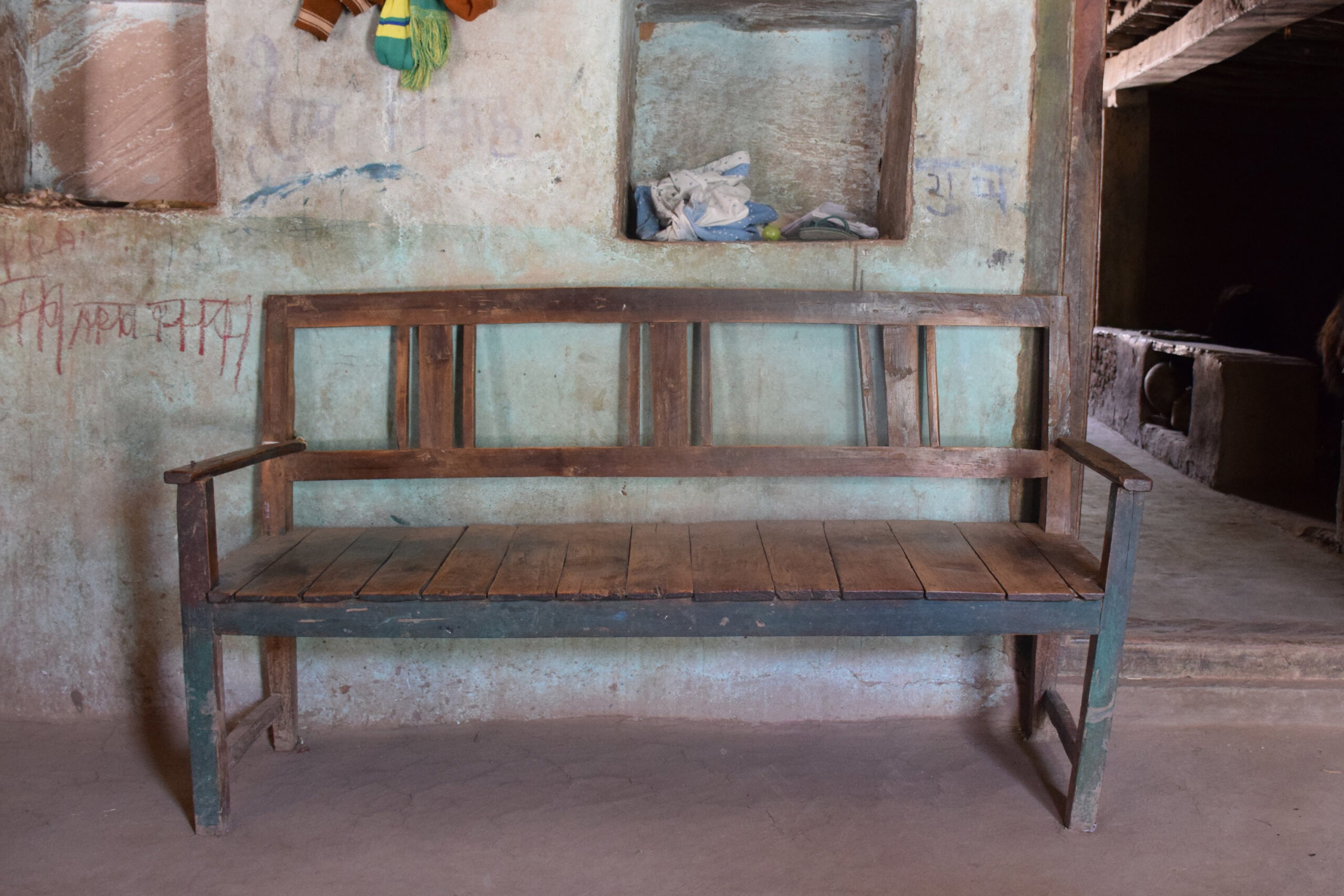
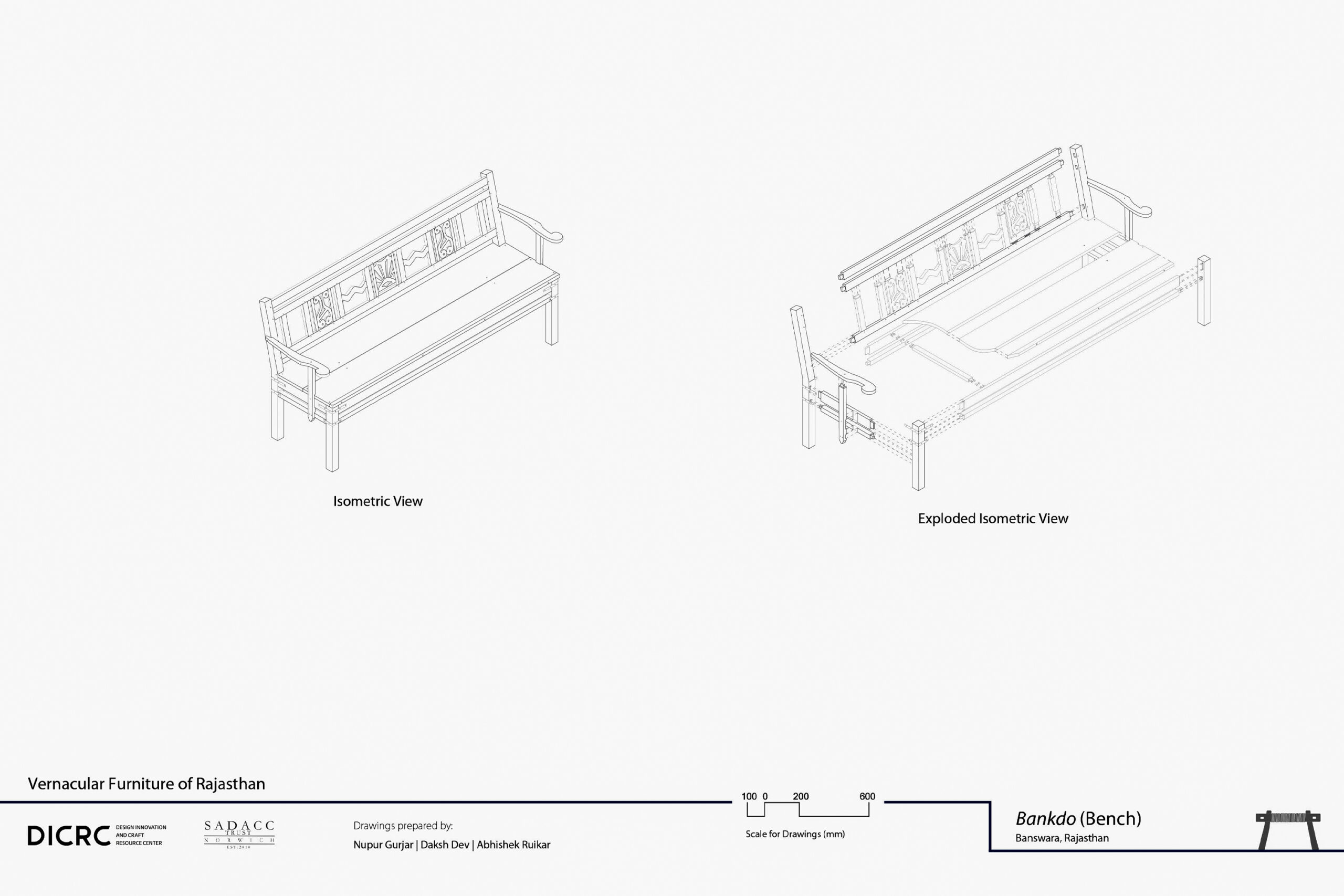
The bench comprises a seat made of long wooden planks or slats, typically supported on four turned or plain legs, an inclined backrest made of wooden members, and typically armrests. In the Gujarati bankdo the front legs are lathe-turned while the back legs are plain. Horizontal stretchers may be added between the legs to ensure rigidity; some bannk and bankdo feature additional legs and/or reinforcing metal straps between the legs and the stretchers. The bench may be constructed using mortise and tenon joinery, or nails, or both.
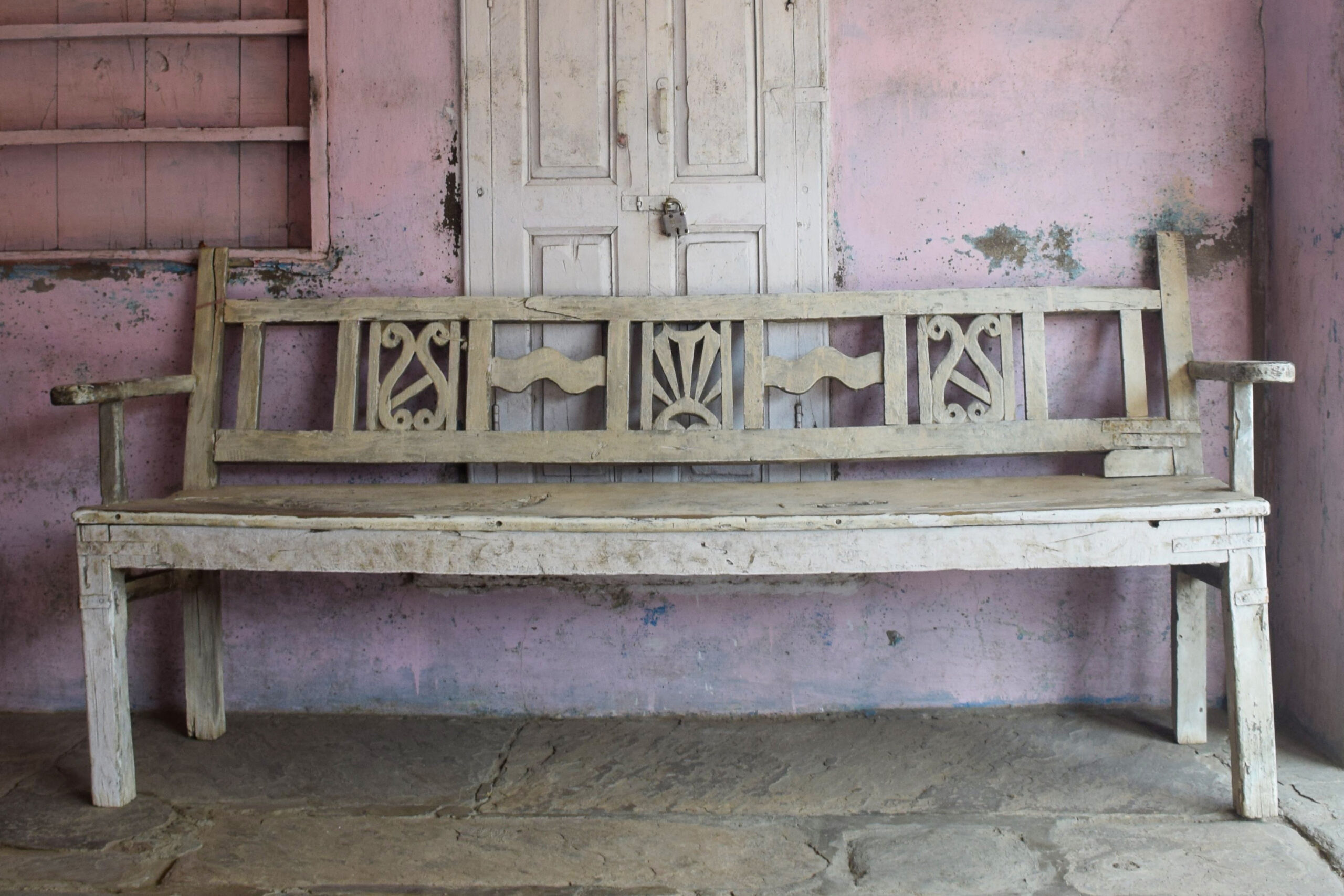
The Gujarati bannk, as seen in southern Gujarat, is long enough to accommodate four or more people. The bannk of the Adivasi communities in the Dang region and in eastern Gujarat are smaller and relatively rudimentary compared to the larger, more delicate forms of other Gujarati bannk. However, these are also frequently adorned with carvings and fitted with locally sourced ceramic tiles. The bankdo, elsewhere in Gujarat, may be a two- or three-seater; the Rajasthani bankdo is typically a three-seater. The two-seater bankdo usually doesn’t feature armrests. The backrest often features a bipartite or tripartite design, corresponding to whether the bench is a two-seater or three-seater, respectively.
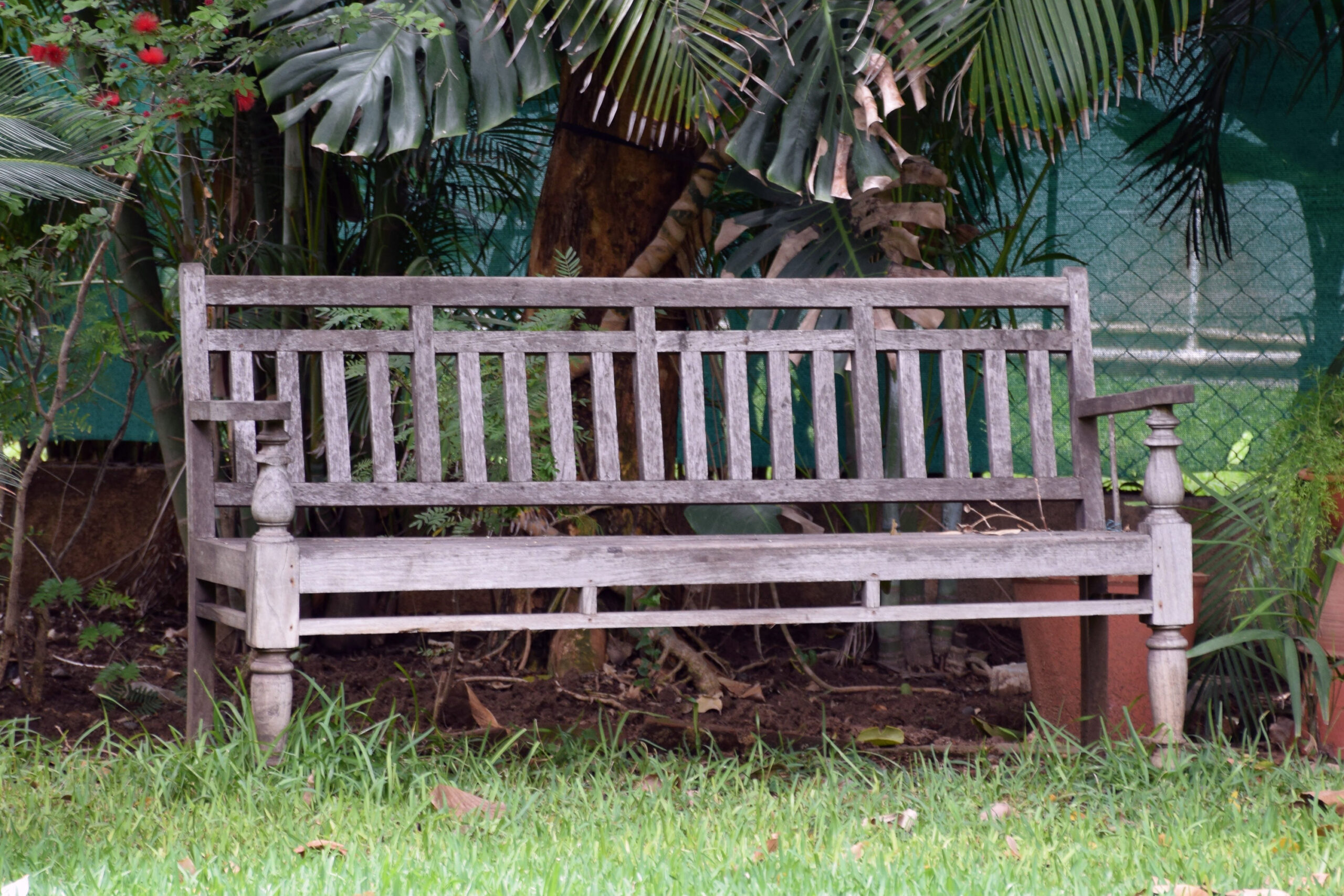
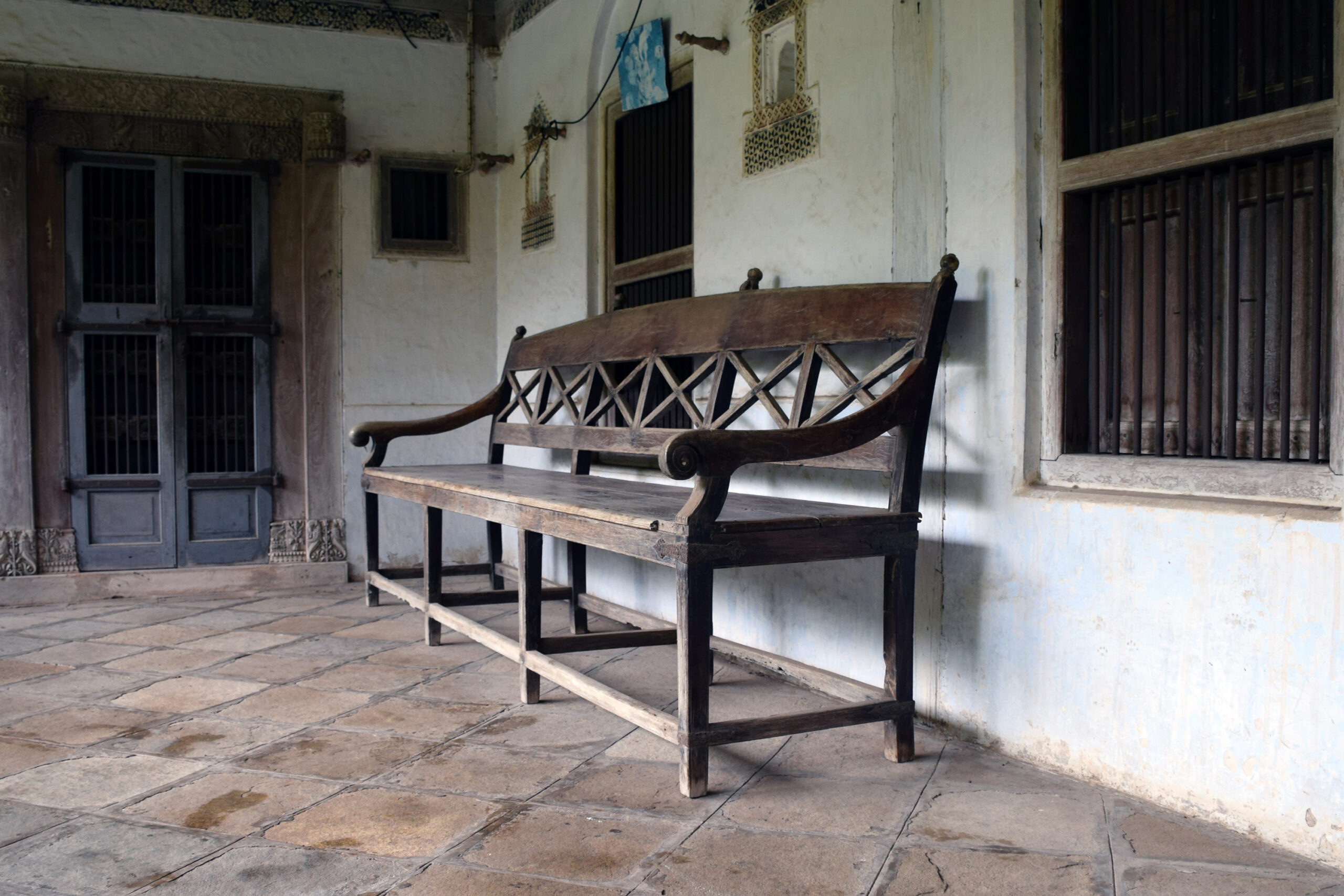
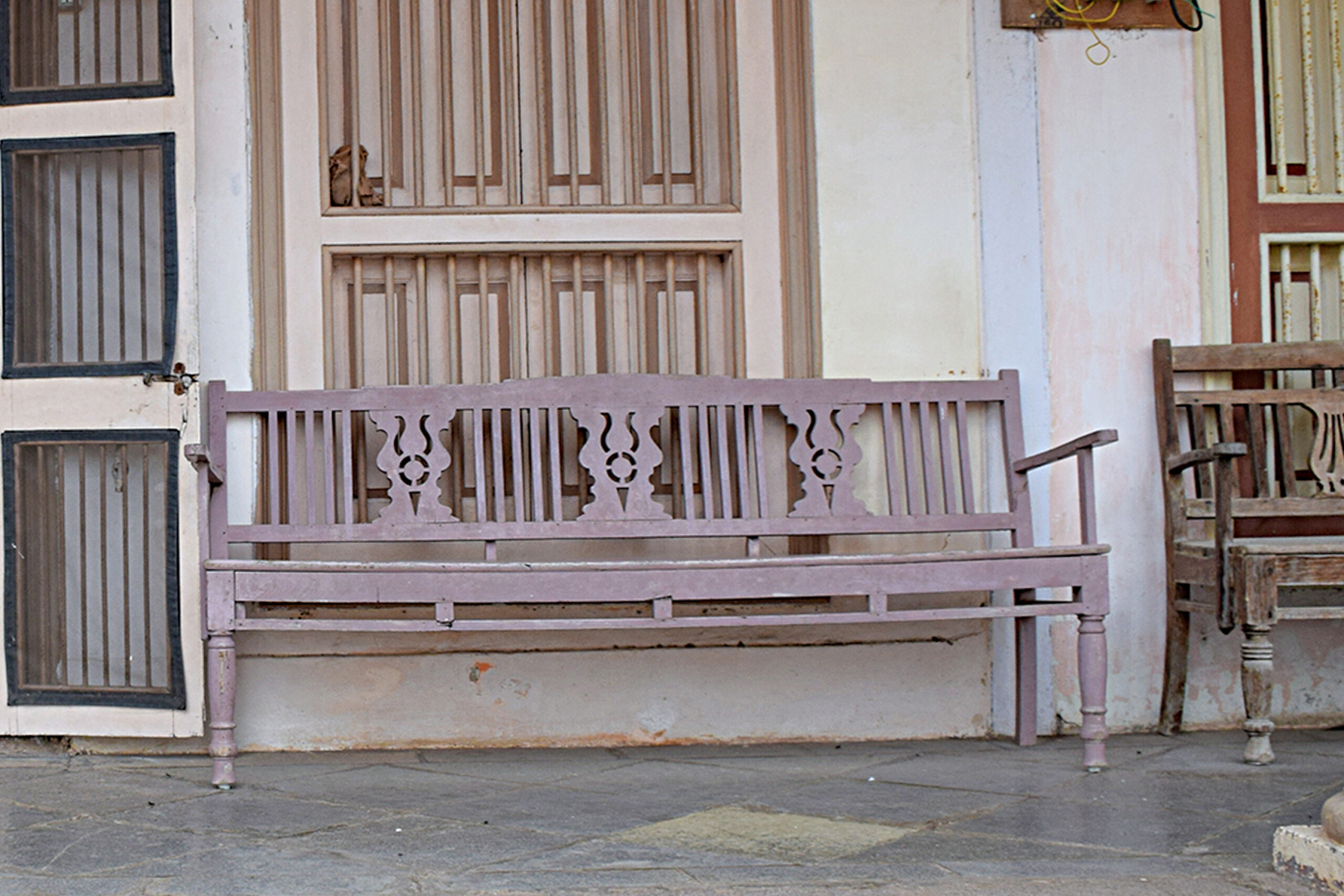
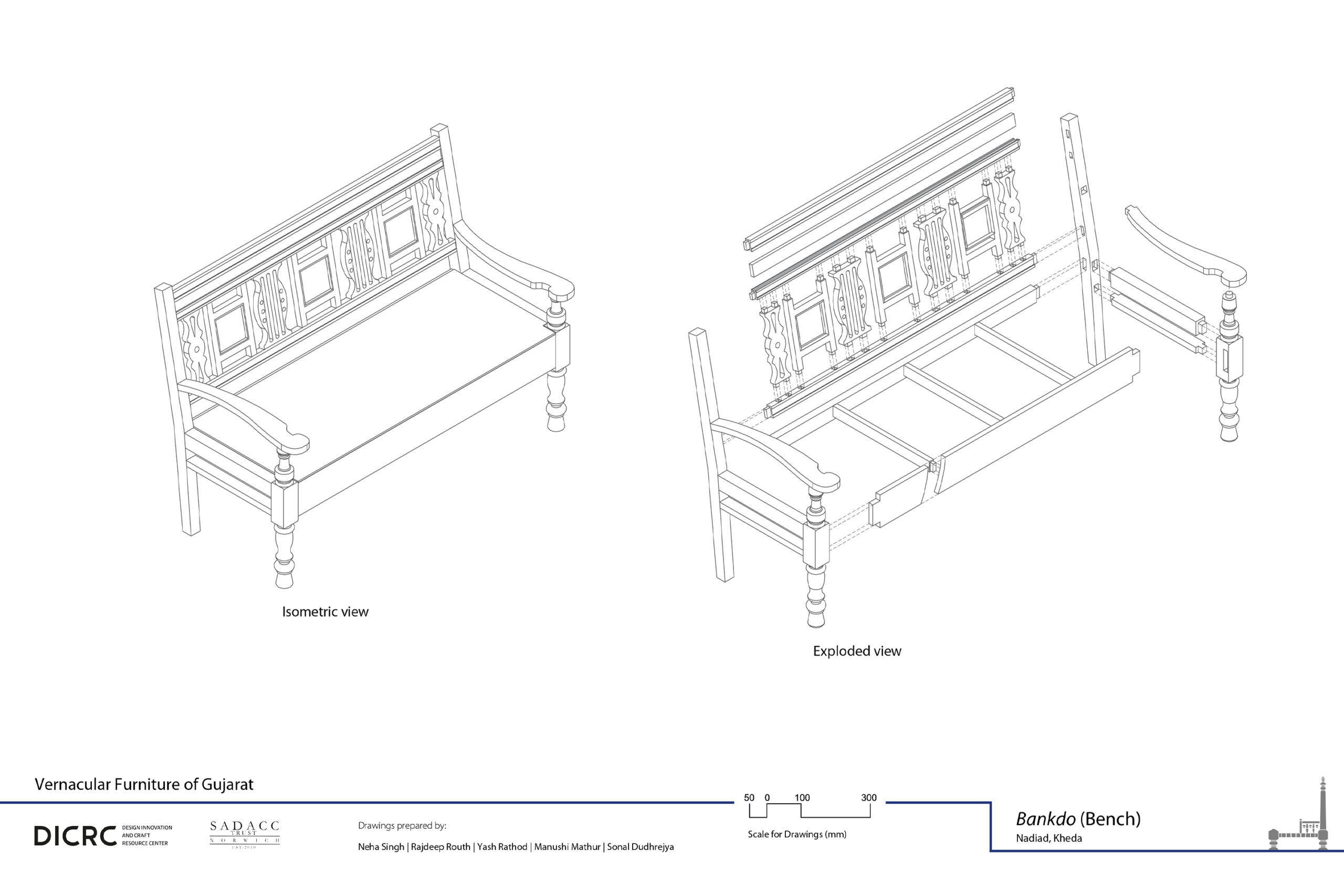
The bankdo in Rajasthan shares close similarities with the Gujarati bankdo, likely due to geographical proximity, migration and furniture trade between the states. Documented Rajasthani examples include bankdo brought in by migrants from Gujarat, and others commissioned based on designs seen in Gujarat.
Ornamentation
The bench ranges from a simple construction of horizontal and vertical members, to one with a complex arrangement of carved wooden members and decorative tiles set in the backrest. More ornate examples of the Gujarati bankdo in particular employ a combination of ornamental woodwork with embossed and glazed ceramic tiles in the backrest, with the ends of the armrests finished in distinctive swirls. The Rajasthani bankdo is seen to be generally painted over in a colour matching or complementing the walls or other wooden elements in the house.
A bankdo documented at a Jain temple in Dungarpur, Rajasthan, is unusual in many ways, likely owing to its particular use for seating the temple’s head priest during sermons on special occasions. Roughly the size of a two-seater, it has a relatively high back and low seat, supported on four stout carved wooden legs. The backrest is inset with a mirror flanked by two glass panels featuring images of deities, and a top member with a carved edge. Two wings on either side form the armrests, and a metal hook is fitted to each corner to allow the bench to be hung as a hichko. It is kept in the temple storeroom when not in use.
Ownership and use
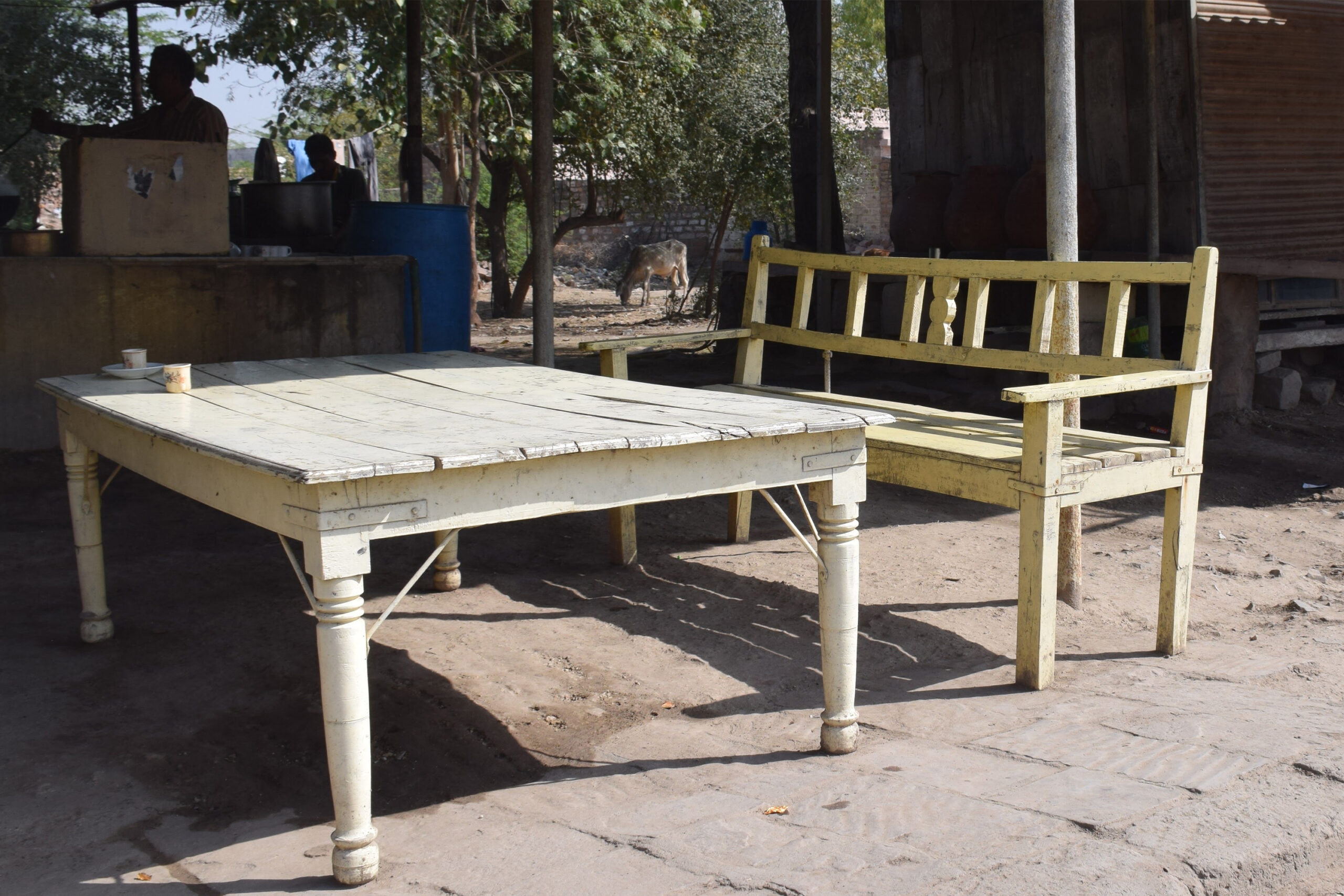
In Gujarat, the bankdo and bannk are generally located in the verandah, entrance porch or living room of the house for seating guests and visitors, and seen especially in Parsi residences of southern Gujarat. The bannk features among the standard furniture of Adivasis in southern and eastern Gujarat, in the semi-covered areas of their mud-plastered dwellings. In Rajasthan, the bankdo is found in both homes and public spaces such as shops and food stalls, where it is very often placed beside a takhat (backless bench) on which food is served, and occasionally also accompanied by a charpoy for resting.
This article is adapted from the outcomes of Vernacular Furniture of North-West India — a collaborative research and documentation project by the Design Innovation and Craft Resource Centre (DICRC), CEPT University, India, and The South Asian Decorative Art and Crafts Collection Trust (SADACC), UK — shared with the Encyclopedia of Art through an Impart partnership. Explore more from this series in our Collection Objects Alive: Vernacular Furniture of North-West India.
First published: 28 August 2026
Image Gallery
Bibliography
Bais, Mitraja, Jay Thakkar, Samrudha Dixit, and Ben Cartwright. Sahaj: Vernacular Furniture of Gujarat. Ahmedabad: CEPT University Press, 2018.
Rao, Mansi S., Ben Cartwright, and Samrudha DIxit. Anaikya: Vernacular Furniture of Rajasthan. Ahmedabad: CEPT University Press, 2021.
Rao, Mansi S., Ben Cartwright, Jay Thakkar, and Abhishek Ruikar. Smarya: Vernacular Furniture of Punjab and Haryana. Ahmedabad: CEPT University Press, 2026.
Vernacular Furniture of India. Accessed July 22, 2026. https://vernacularfurnitureofindia.com/.
Feedback