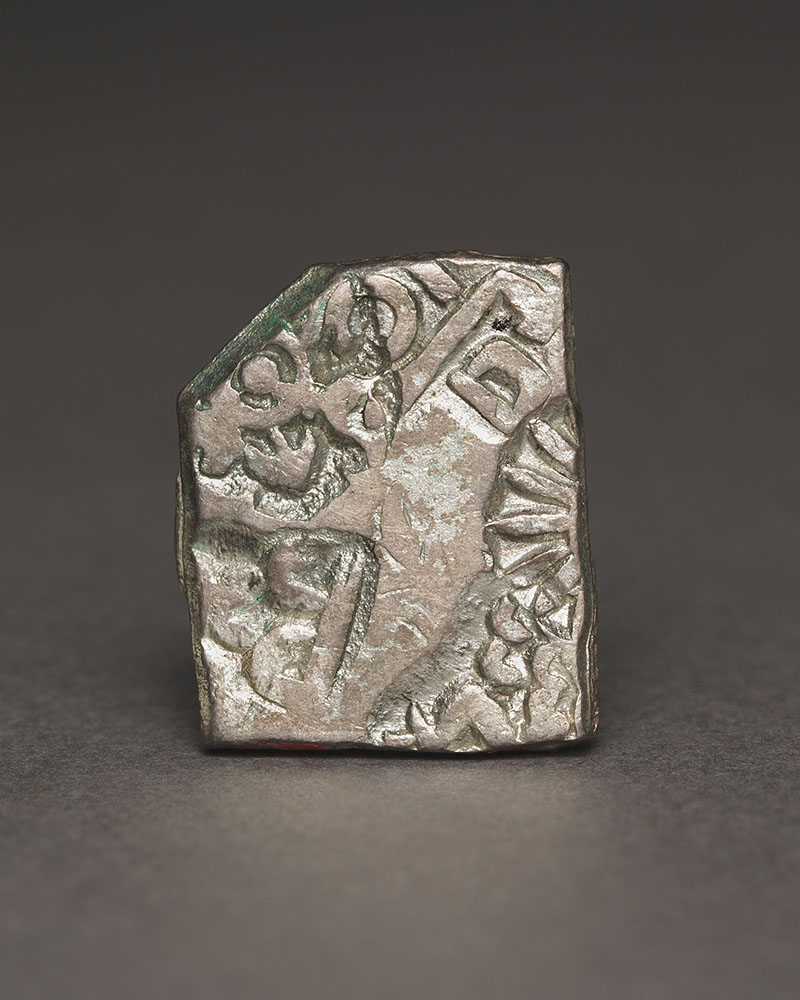
The period between 600 BCE and 300 BCE. In the Indian subcontinent, it was marked by changes in political structure, from the emergence of the Magadha Empire to the arrival of Alexander in the northwestern part of the subcontinent. It also saw the emergence of coinage, the evolution of urban centres and socio-economic classes, and the rise of Buddhism and Jainism as significant religious movements. Textual sources for this period include several Buddhist and Jaina works, as well as the corpus later termed Sangam literature.
More Definitions
Nalanda
A Buddhist monastic university in the ancient state of Magadha (in present-day Bihar), which was widely known as a centre…
Abu’l-Fazl ibn Mubarak
An official in Akbar's court, Abu'l Fazl (b. 1551; d. 1602) was a close confidante of the emperor and wrote…
Vihara
Referring to the act of leisurely strolling as well as a garden or dwelling place in Pali and Sanskrit, vihara…
Vedic Period
The period between the late Bronze Age and the early Iron Age in the northern portion of the Indian subcontinent,…
Prehistoric
The period of human existence prior to the invention of writing systems, starting approximately 2.5 million years ago and ending…
Stone Age
A prehistoric period characterised by the invention and use of stone tools by early humans, it began around 3.3 million…
Department of Fine Arts, University of Kelaniya
Academic institution in Colombo, Sri Lanka, established in 1978 and formerly known as the Institute of Aesthetic Studies. It traces…
Upper Palaeolithic Period
The final stage of the Palaeolithic period, lasting from roughly fifty thousand to twelve thousand years ago. This period was…