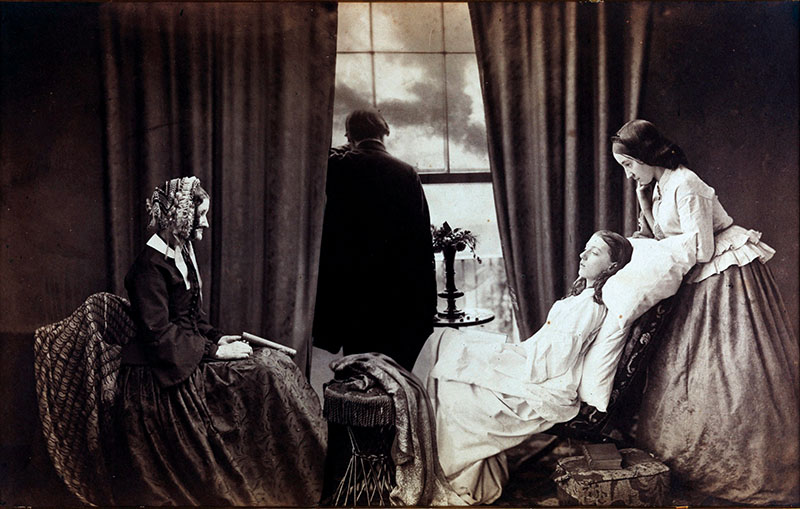
An early photographic technique wherein two or more negative images are combined to create a single image. This technique allowed for additional details to be added through selective exposure, rendering a finer and detailed touch to the images. The method was first proposed by French photographer Hippolyte Bayard in the mid-nineteenth century.
More Definitions
Screen-Printing
Also known as serigraphy and silk-screen printing, it is a stencil-based technique of printing on a substrate such as paper…
Weft-Interlocked Technique
A form of tapestry weaving wherein weft threads of opposing colours are looped onto the same two warp threads to…
Back Stitch
A variety of the stem or split stitch, wherein individual stitches are made in the opposite direction of the embroidery.…
Faience
A broad term used for fine glazed pottery made after the nineteenth century, comprising mineral grains such as quartz or…
Japanese Ink Wash Technique
Known as sumi-e (black ink painting) in Japanese, it is a painting technique that uses black ink in water in…
Weft
It refers to yarn or threads that pass horizontally over and under the fixed longitudinal warp to weave cloth and…
Schiffli
A multi-thread machine used to create machine embroidery and lace, invented in 1893 by Swiss inventor Isaak Grobli. The term…
Satin Stitch
Also known as damask stitch, it is a technique in embroidery that uses flat stitches to cover sections on a…