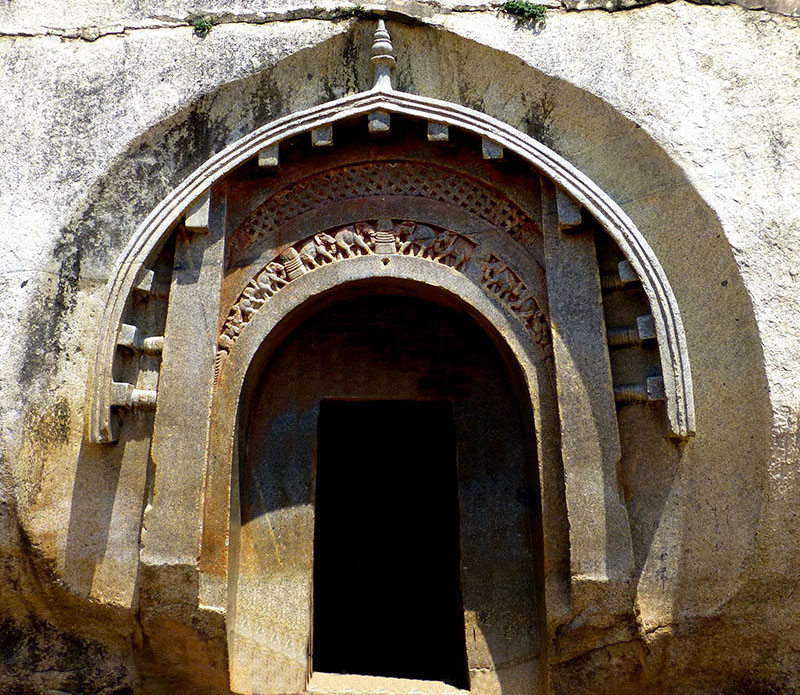
A decorative motif similar to a barrel-vaulted roof, with a circular dormer-shaped or horseshoe-shaped arch. It is commonly found in rock-cut monuments and structural temples in India, with the earliest evidence found in the Lomas Rishi Cave. From the Sanskrit, meaning “moon window.” It is occasionally found in the facade of chaitya halls, and is known as a chaitya arch. It is also incorporated as a decorative element in structural temples in southern India and known as gavaksha (or kudu in Tamil).
More Definitions
Vedika
Meaning ‘railing’ or ‘raised platform or altar’ in Sanskrit and Pali, vedika refers to the outer railing around a sacred…
Mihrab
A niche in the wall of a mosque which indicates the qibla (direction of the Kaaba in Mecca) and is…
Chitrashala
A painted room in the form of a gallery commissioned by kings, nobles and merchants. The chitrashala in Bundi Palace,…
Shala
Derived from the Sanskrit word broadly meaning "house" or "shelter", shala may refer to a covered pavilion, often oblong; a…
Collonade
A row of columns, typically equidistant from each other and joined by an entablature. A colonnade may be freestanding or…
Ratha
A spoked-wheel chariot or cart, usually drawn by horses. Evidence of their use and construction has been found in the…
pitched roof
A roof form featuring one or more inclined surfaces rising to meet at a ridge, point, or wall surface. The…
Architrave
A beam, window or door frame that rises above the stamba or column to provide additional support to the structure.…