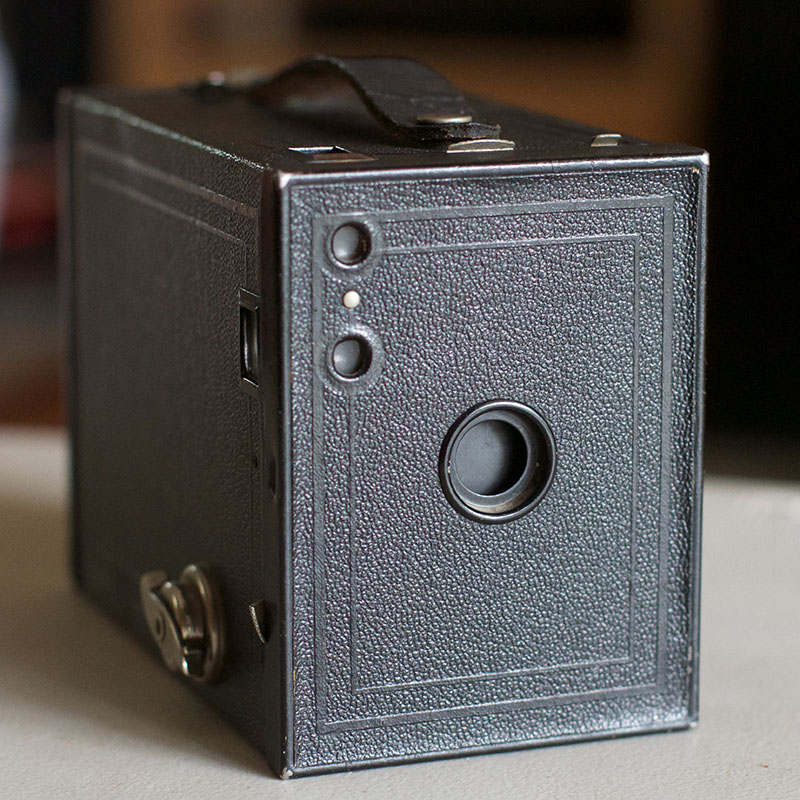
Also known as the Kodak brownie, it is a series of box cameras with a meniscus lens and roll film, invented by Frank A Brownell and made by Eastman Kodak in 1900. The camera was marketed primarily to children, with a low starting price of USD 1. The camera had different versions throughout the years and are generally credited with making photography accessible to the public and giving rise to amateur photography.
More Definitions
photosensitive paper
Paper coated with a photosensitive emulsion, used for making photographic prints, usually in a darkroom. It is first exposed to…
Flying Shuttle
Mechanical tool installed on a loom for textile weaving, which enables the weft thread to be drawn through the warp…
Schiffli
A multi-thread machine used to create machine embroidery and lace, invented in 1893 by Swiss inventor Isaak Grobli. The term…
fixer
In photography, a chemical solution used in the final stage of processing photographic film. It contains sodium or ammonium thiosulphate,…
Paper Negative
A photographic negative created on paper, rather than on modern cellulose film or a glass plate. William Henry Fox Talbot's…
Medium Format Camera
Film cameras that produce images larger than 24 mm x 36 mm but smaller than 4 inches x 5 inches.
Lease Rod
A tool used to separate warp yarn threads and keep them in their place in a hand loom. It is…
fixed-focus lens
Camera lens whose focal distance is pre-determined at the time of manufacture and cannot be adjusted by the user. It…