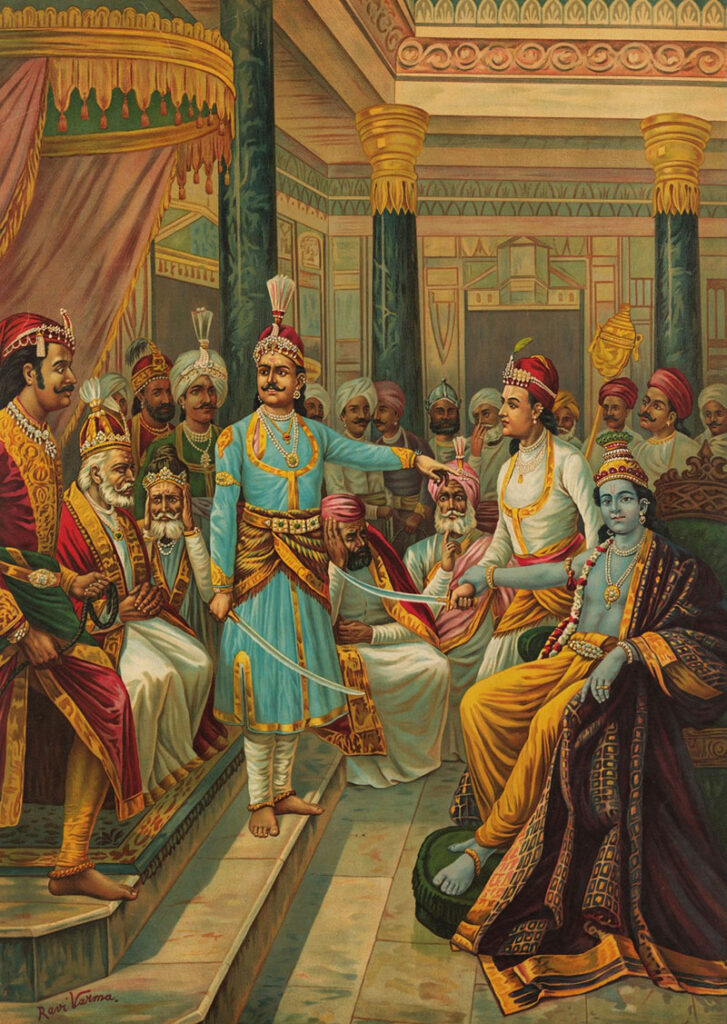
Second-highest of the four classes or varnas (Sanskrit, ‘attribute’ or ‘colour’) of the Hindu caste system, traditionally associated with statecraft and combat. The earliest mention of Kshatriyas is in the Rigveda, where they are called rajanyas (‘rulers’); in later texts, their position as a warrior aristocracy, landowning class, or ruling class is more clearly defined. From early on, Brahmanical texts emphasise the importance of a symbiotic relationship between Kshatriyas and Brahmins, in which the Kshatriya ensures the Brahmin’s worldly life while the Brahmin mediates between the Kshatriya and the gods, and is an important part of the ruler’s advisory retinue. At the same time, Indian history has been marked by Kshatriya attempts to claim equality with Brahmins. Throughout history, the so-called traditional occupations of Kshatriyas — largely administrative or military — have also been performed by other groups, and inter-marriage has been allowed within limits. Thus today, the existence of Kshatriyas as a discrete, socially recognised group has, unlike that of Brahmins, grown dubious. It has now become a status, claimed with varying success by Shudra and Dalit communities aspiring to social mobility or increased political power.
Kshatriya
Link copied!