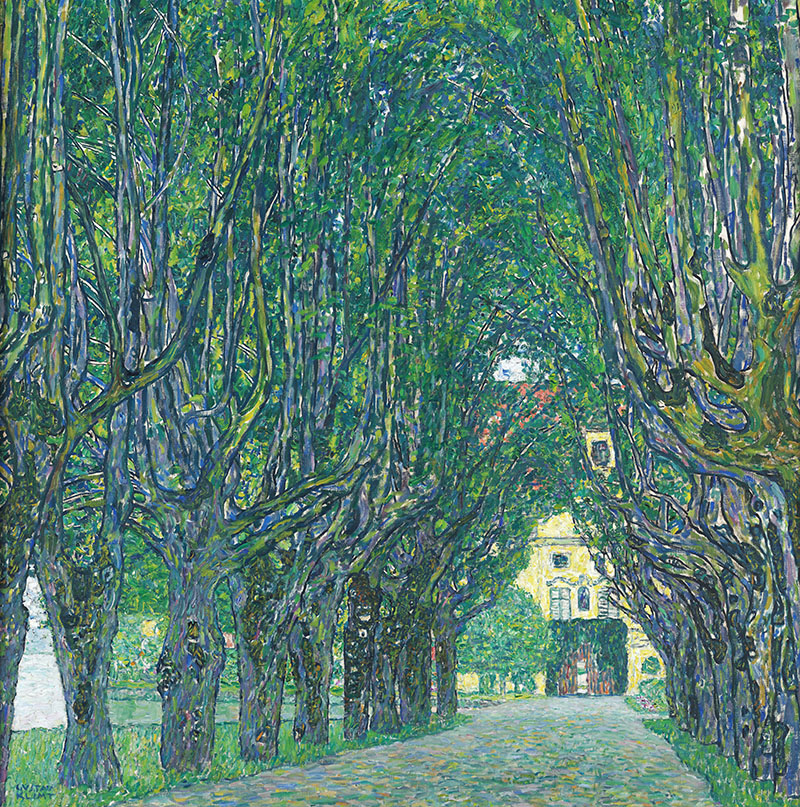
A cultural movement in art, architecture and applied and decorative arts that sought to modernise design and free it from the hierarchy of art and craft. It flourished in Europe and the United States between 1890 and 1910 and was characterised by the use of long, curving, organic lines and muted colours. From the French, meaning “new art.”
More Definitions
Rococo
A design style that emerged in the early decades of the eighteenth century in France, influencing painting, sculpture, architecture and…
Pointillism
Also known as Divisionism or Chromoluminarism, it is a technique in painting that involves applying small, distinct dots or strokes…
Cubism
A modern art movement developed in the twentieth century by artists such as Pablo Picasso and Georges Braque which rejected…
Formalism
An approach to art which emphasises aspects of form, such as line, shape and colour. Formalism engages with the visual…
International Style
Style of architectural design characterised by lightweight, rectilinear structures using industrial materials such as steel, concrete and glass, often featuring…
Tachisme
A French style of abstract painting, characterised by random splotches and dabs, it gained popularity in the 1940s and 1950s…
Indo-Greek Sculpture
Sculptural art characterised by the merging of Indian and Hellenistic traditions, it overlaps with the reign of the Indo-Greeks in…
Second Diffusion
A religious revival movement between c. tenth and eleventh centuries CE, credited with establishing Buddhism as a majority religion in…