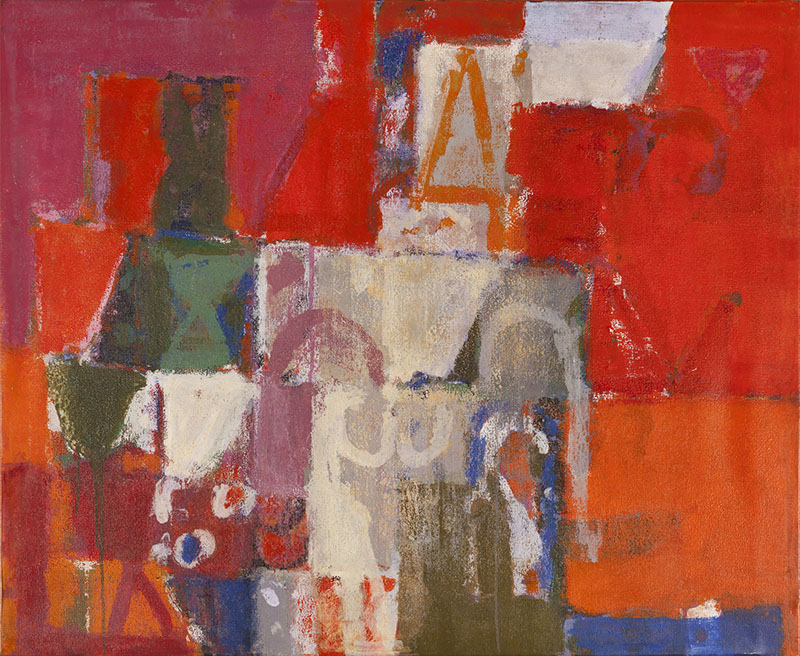
An art movement that developed in New York in the 1940s and led to the formation of the New York School, eventually becoming a dominant influence in Western painting by the 1950s. The movement included artists working across styles that depicted unrealistic and abstract forms, characterised by spontaneous expression.
More Definitions
Chinoiserie
The European interpretation of Chinese and East Asian decorative arts, design, literature and culture, characterised by extreme decoration, stylised objects…
Pop Kitsch
The use of popular and everyday materials and images in pop art. Kitsch in German signifies art, objects and design…
Colour Field Painting
An abstract painting style categorised within American Expressionism, it is characterised by large-scale canvases painted expansively with flat, solid colour…
Neo-Impressionism
A late nineteenth-century movement in French painting that opposed the empirical realism of Impressionism. It used the scientific principles of…
manorath paintings
In the Pushtimarg sect of Vaishnavism, manorath paintings were made as temple records or pilgrimage souvenirs, typically depicting individual devotees…
Baroda Pop
A Pop Art movement established by the artists of the Baroda Group in the 1960s, it was influenced by similar…
Nagara Style
A style of Hindu temple architecture commonly found in northern and central India and characterised by a curvilinear or rectilinear…
Fauvism
A style of painting popular in France in the early years of the twentieth century, led primarily by the artists…