The Indian subcontinent was a major site of botanical survey by colonial explorers between the seventeenth and twentieth centuries. British botanists collected, classified, and circulated plant specimens in service of economic, scientific, and political aims. Central to this enterprise were thousands of botanical drawings produced by skilled Indian artists, which helped shape modern botany. Paper Gardens traces encounters between plants, artists, and garden–institutions, examining the networks of labour and imagination that have built our understanding of the natural world.
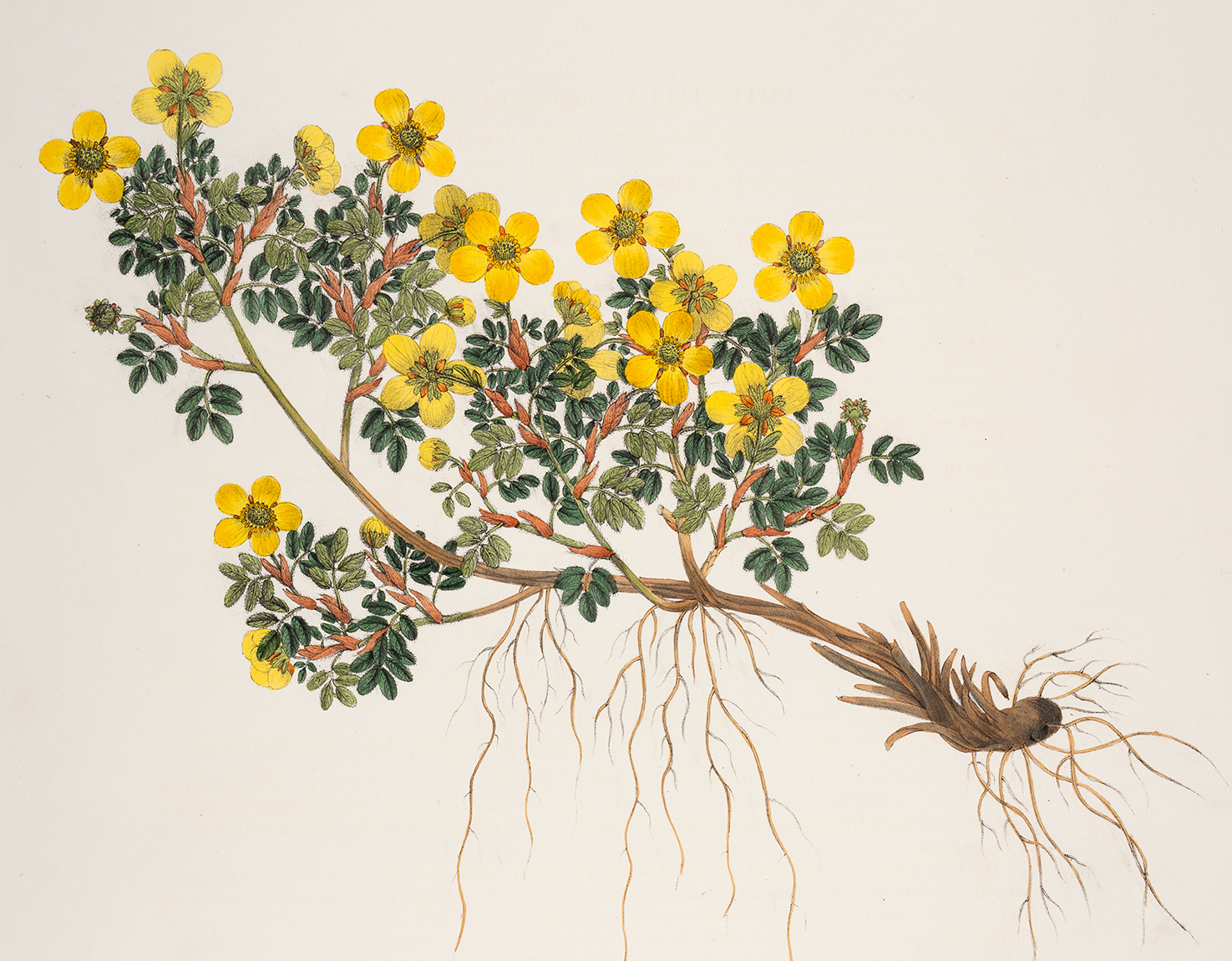
Potentilla arbuscula, Plate 228, Plantae Asiaticae Rariores, or, Descriptions and Figures of a Select Number of Unpublished East Indian Plants, Volume 3; Nathaniel Wallich, Gorachand, Maxim Gauci; 1830–1832; Hand-coloured lithograph; 53 x 35.5 cm. Museum of Art & Photography (MAP), Bengaluru
Potentilla arbuscula, Plate 228, Plantae Asiaticae Rariores, or, Descriptions and Figures of a Select Number of Unpublished East Indian Plants, Volume 3; Nathaniel Wallich, Gorachand, Maxim Gauci; 1830–1832; Hand-coloured lithograph; 53 x 35.5 cm. Museum of Art & Photography (MAP), Bengaluru