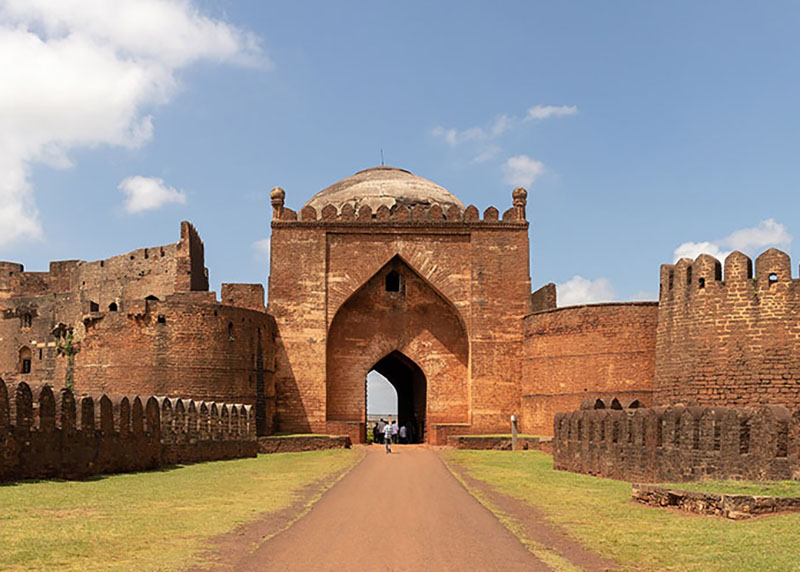
Small Muslim kingdom of the Deccan in India, founded in 1531 by Qasim Barid I, whose family had been serving as ministers of the Bahmani Sultanate in its capital Bidar, in present-day Karnataka, since around 1425. Centred around the city of Bidar, it was one of the five kingdoms to succeed the Bahmani Sultanate, and was later annexed into the neighbouring Bijapur Sultanate in 1619. Though frequently warring with adjacent kingdoms, the sultanate under the Barid Shahis allied with the Bidar, Golconda and Ahmadnagar sultanates to overthrow the Vijayanagara kingdom in the Battle of Talikota (1565). The city of Bidar was captured by Mughal emperor Aurangzeb in 1657 and remained under the Mughal empire until 1724, when it came under the governance of the Nizam of Hyderabad.
More Definitions
Berar Sultanate
Small Muslim kingdom of the Deccan in India founded in 1490, covering the northeastern corner of present-day Maharashtra, and one…
Zamindar
A autonomous or semiautonomous ruler of a province who held hereditary ownership of large areas of land and reserved the…
Bijapur Sultanate
Muslim kingdom of the Deccan in India, founded in 1489 by Yusuf Adil Shah, believed to be a descendant of…
1970 UNESCO Convention
International treaty on combating the international trafficking of assets of national cultural significance, formulated and adopted during the 16th Paris…
Portuguese Estado Da India
A Portuguese term literally meaning the State of India, it is used to refer to the regions of India that…
Harisena
A ruler of the Vakataka Dynasty who reigned in the late fifth century CE. He and his court are believed…
Kanishka
Kanishka (b. n.d.; d. n.d.) was the third emperor of the Kushan Empire (first century CE to third century CE).…
Chola
A medieval dynasty that ruled over areas of present-day Tamil Nadu. The earliest mentions of Chola kings appear in Tamil…