-
ChicagoImpart Encyclopedia of Art. "Varaha." July 2, 2024. https://imp-art.org/articles/varaha/.
-
MLA"Varaha." Impart Encyclopedia of Art, Jul. 2, 2024, https://imp-art.org/articles/varaha/.
-
HarvardImpart Encyclopedia of Art (2024) Varaha. Available at: https://imp-art.org/articles/varaha/ (Accessed: 20 September 2026).
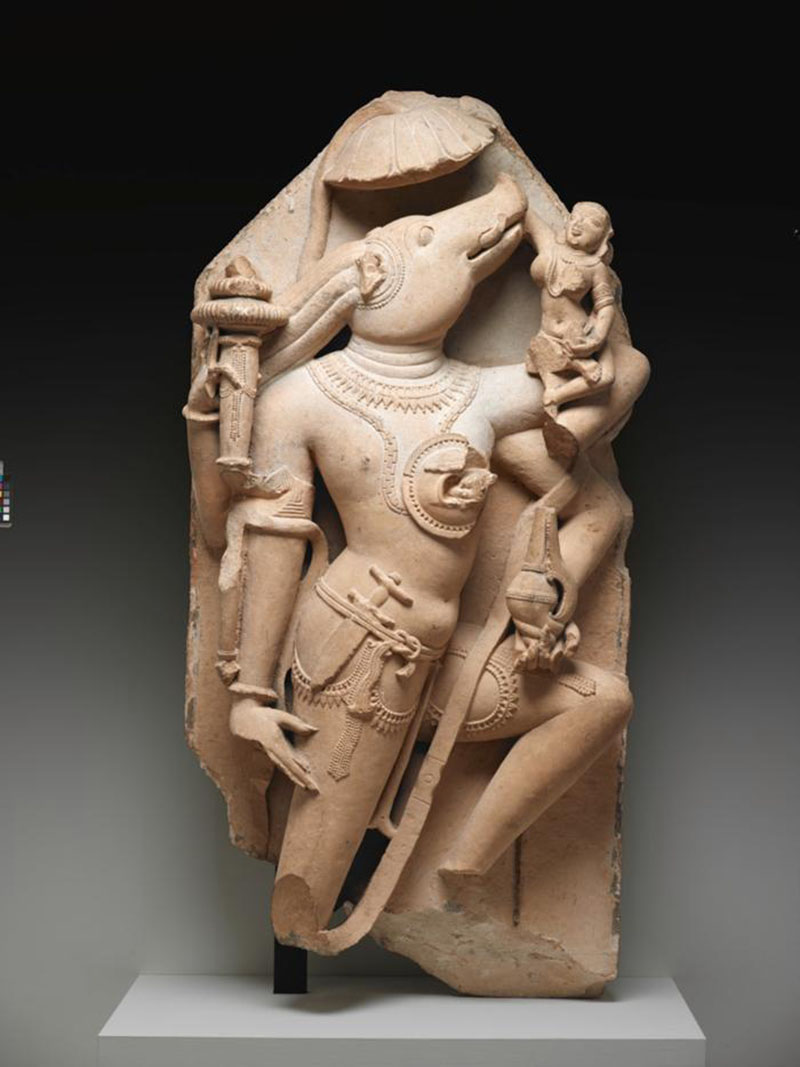
An avatar of the Hindu deity Vishnu, Varaha takes the form of a boar and is the third of his ten worldly incarnations, collectively known as the Dashavatara (Sanskrit for ‘ten avatars’). These incarnations — Matsya (‘fish’); Kurma (‘tortoise’); Varaha (‘boar’); Narasimha (‘man-lion’); Vamana (‘dwarf’); Parashurama (‘Rama with an axe’); Rama or Ramachandra; Krishna; Buddha or Balarama; and Kalki (the avatar yet to come) — are widely associated with Vishnu’s role as the protector of humankind. Another belief is that the Dashavatara are the result of a curse laid upon Vishnu by Shukra — guru of the asuras, or demons — or the latter’s father, the sage Bhrigu. Vishnu’s form as Varaha is symbolically associated with power, wisdom and prosperity.
Origins and early references
In texts from the Vedic period (c. 1500–500 BCE) such as the Shatapatha Brahmana and Taittiriya Samhita, Matsya, Kurma and Varaha are avatars of the god Prajapati, assumed responsible for the creation of the world and its safeguarding. A form of the creator deity Brahma, Prajapati is equated with Vishnu and his incarnations in later texts such as the Puranas. In the Shantiparva book of the Mahabharata (compiled 300 BCE–400 CE), Varaha is one of six avatars of Vishnu; in other variations of the text he is listed as one of ten. The Bhagavata Purana lists him as one of twenty-two.
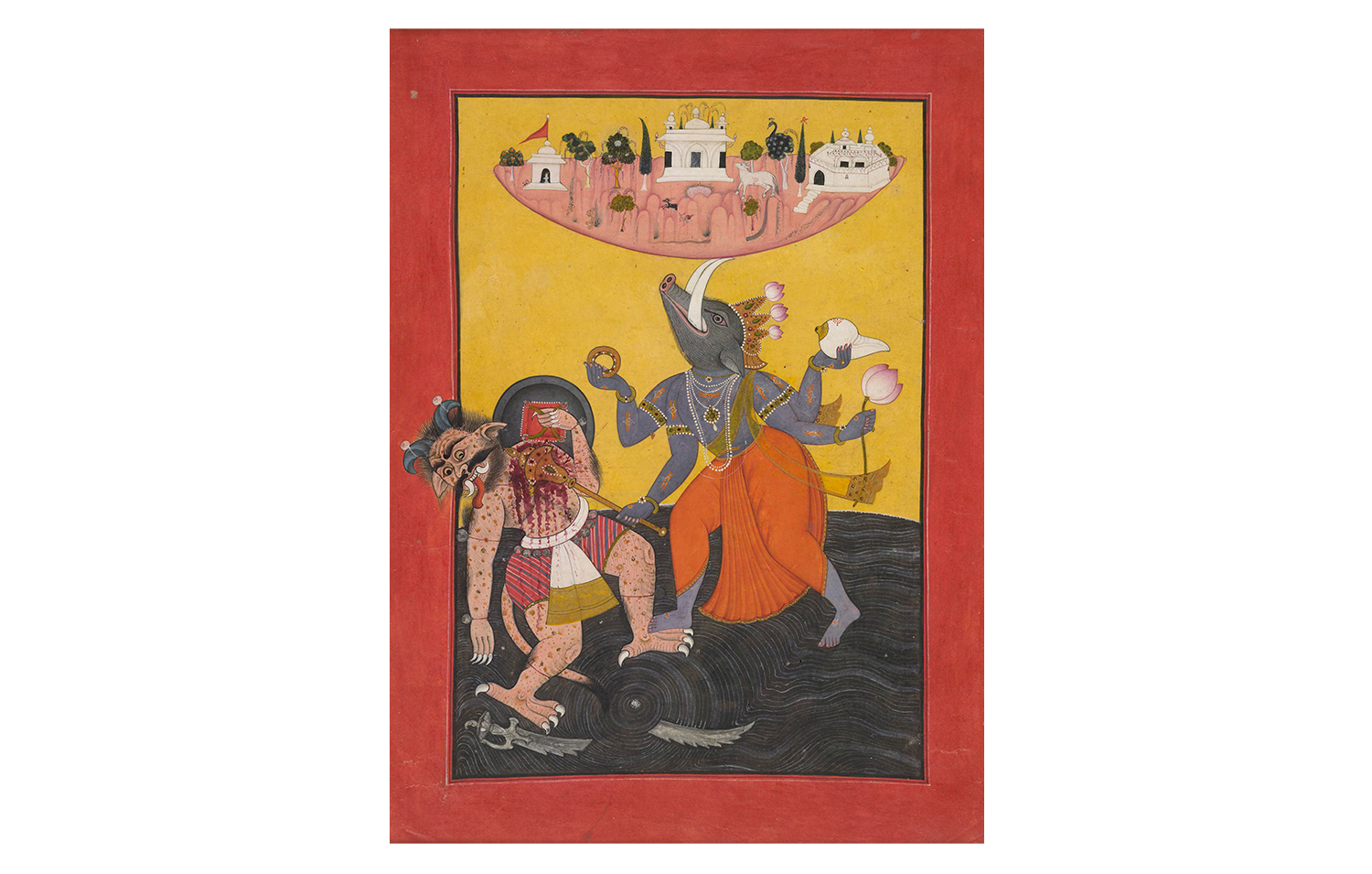
The Taittirya Samhita is one of the earliest texts containing the Varaha myth. It tells that the universe was once composed of endless water, with the earth submerged below. Prajapati roamed the universe as a wind — spotting the earth as a lump of clay underwater, he assumed the form of a boar to retrieve it, and then became Vishwakarma, the divine architect, to expand and render its surface. The Shatapatha Brahmana tells a similar story, but refers to the boar as Emusha, his name from the early Vedic period. The Padma Purana (broadly dated between the fourth and fourteenth centuries CE), which has large sections dedicated to the myths of Vishnu, elaborates further on the story, personifying the drowned earth as the goddess Bhudevi abducted by the golden-eyed asura Hiranyaksha. Vishnu appears as Varaha, slays Hiranyaksha and lifts Bhudevi out of the water, bearing her on his tusks; she then becomes one of his consorts. Versions of this myth are also mentioned in several other Puranas, in which Varaha becomes more firmly identified with Vishnu than with the older Vedic figure of Prajapati. Some scholars have pointed out that the cosmogonic motif of the diving boar also appears in folk narratives of Indigenous peoples such as the Mundas of Orissa and the Koyas who are spread across eastern and central India. As such, the Varaha myth may be a variant of a creation story from older, pre-Vedic cultures.
Iconography
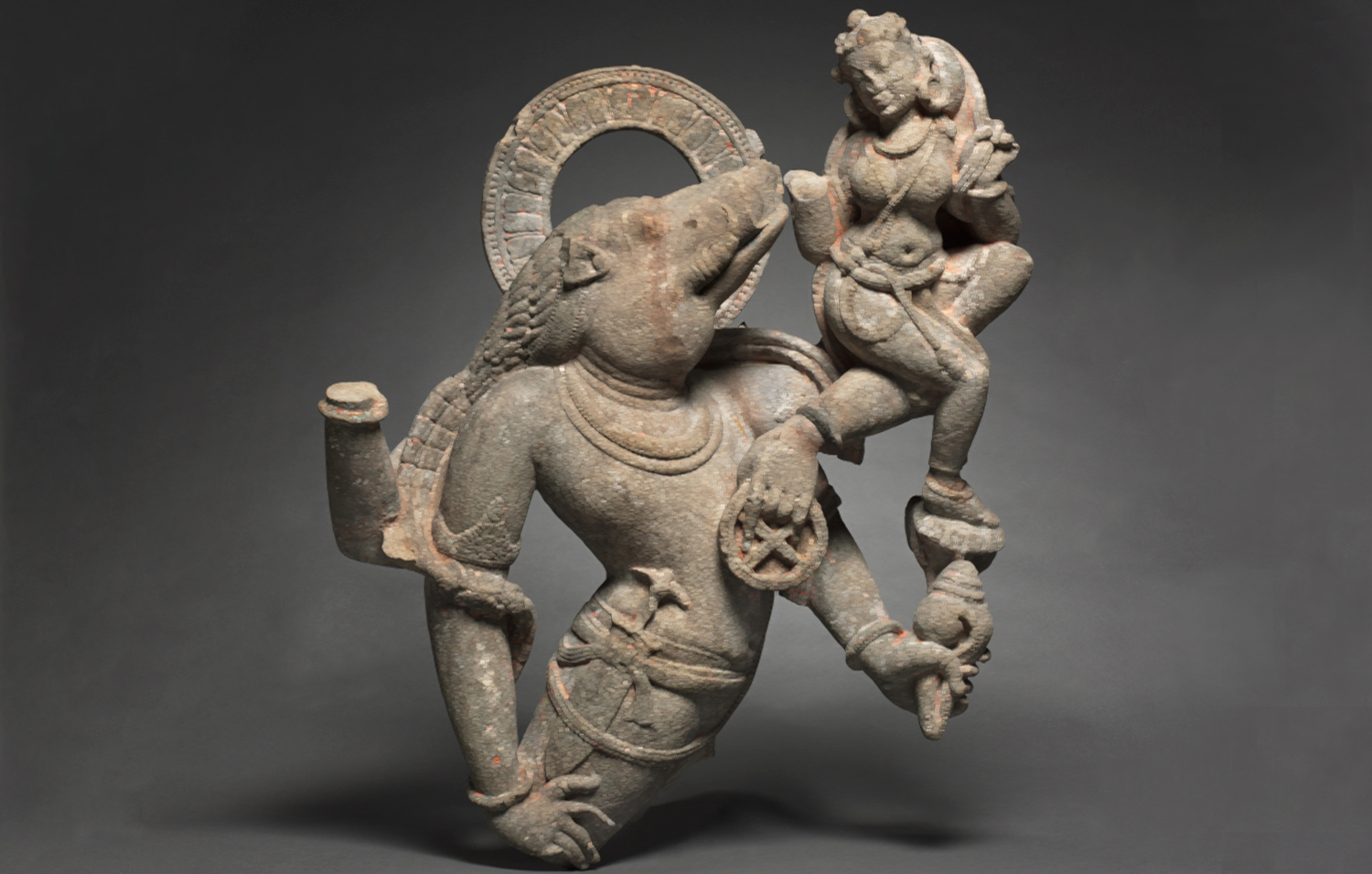
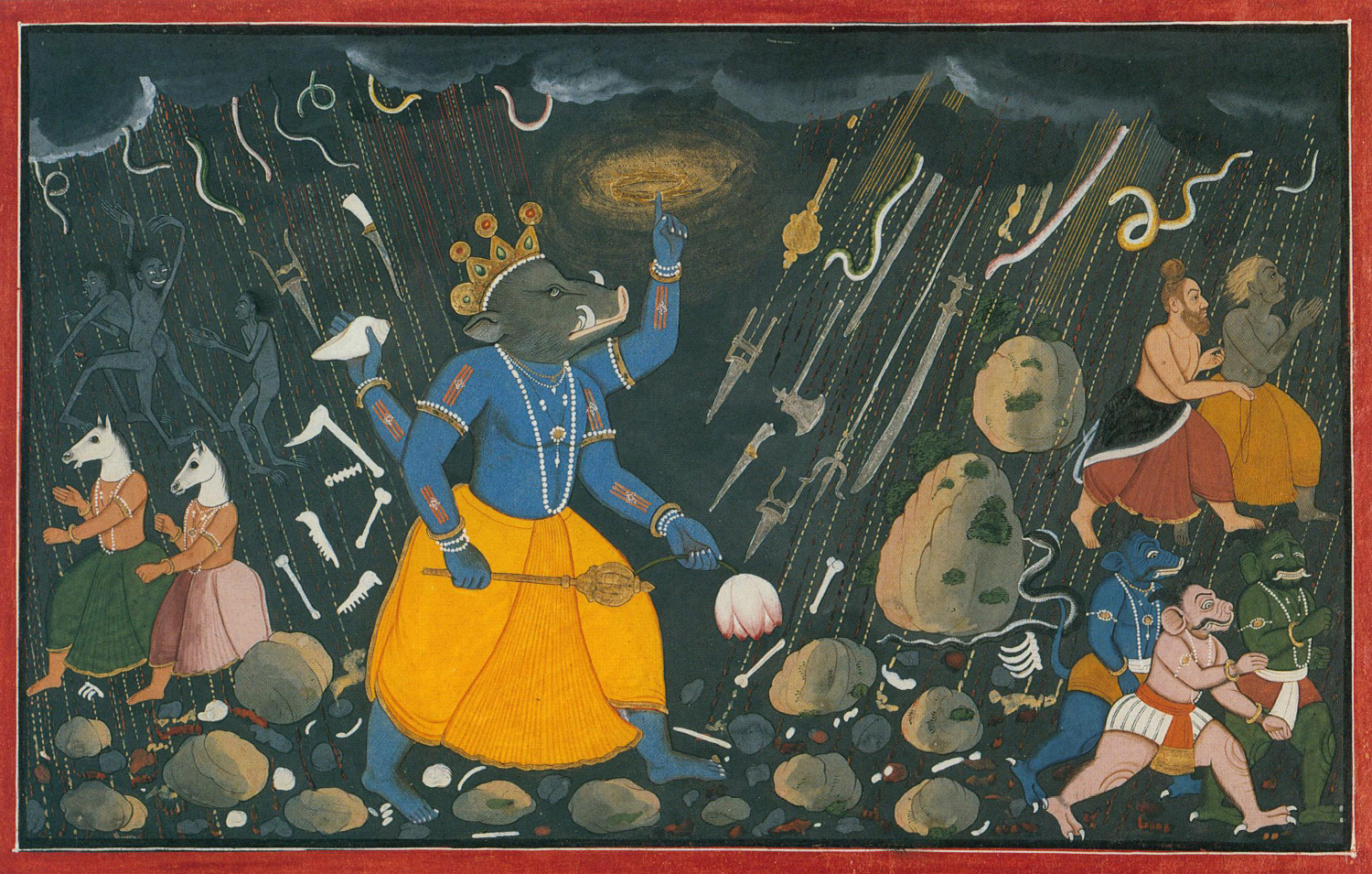
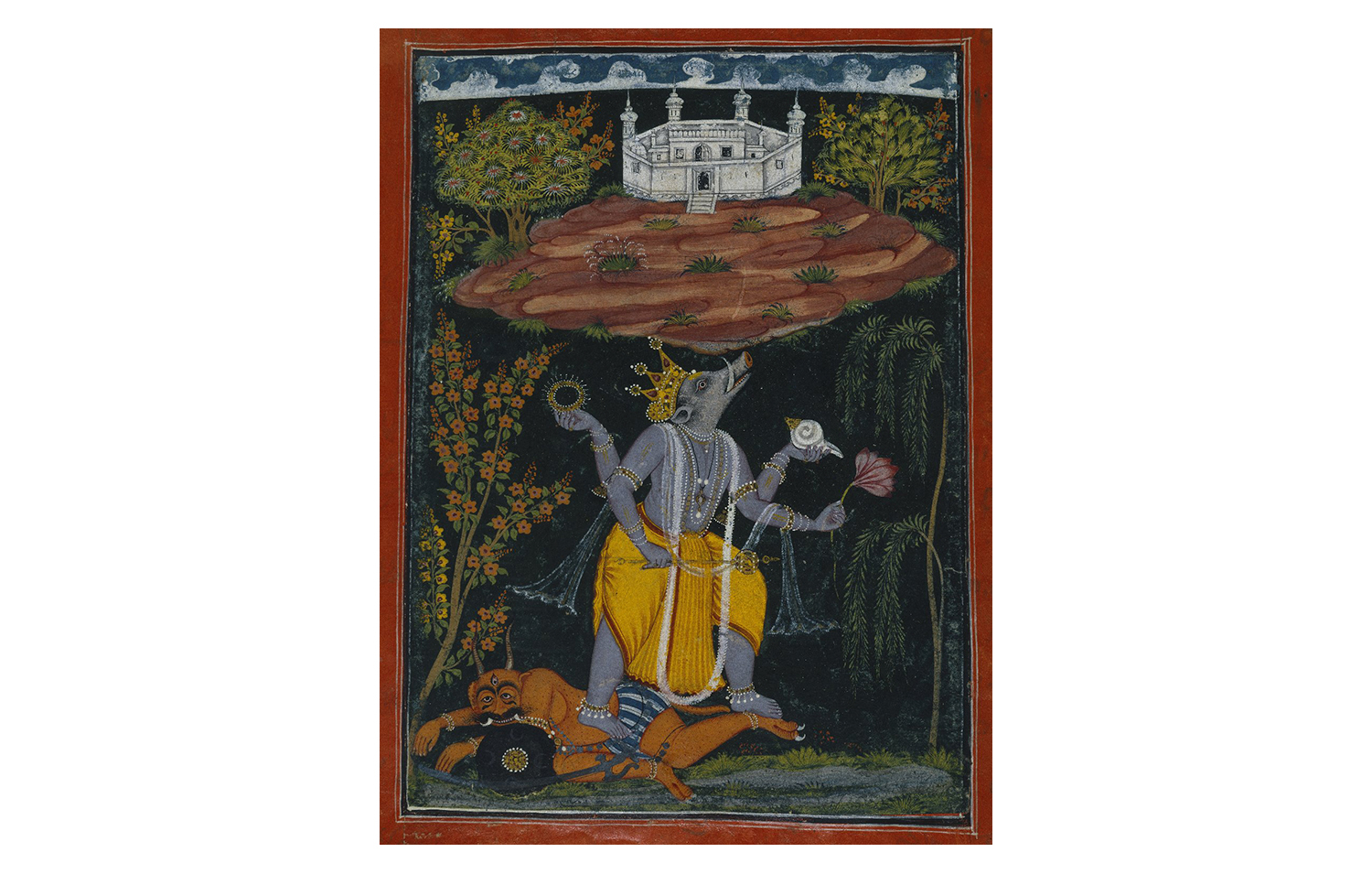
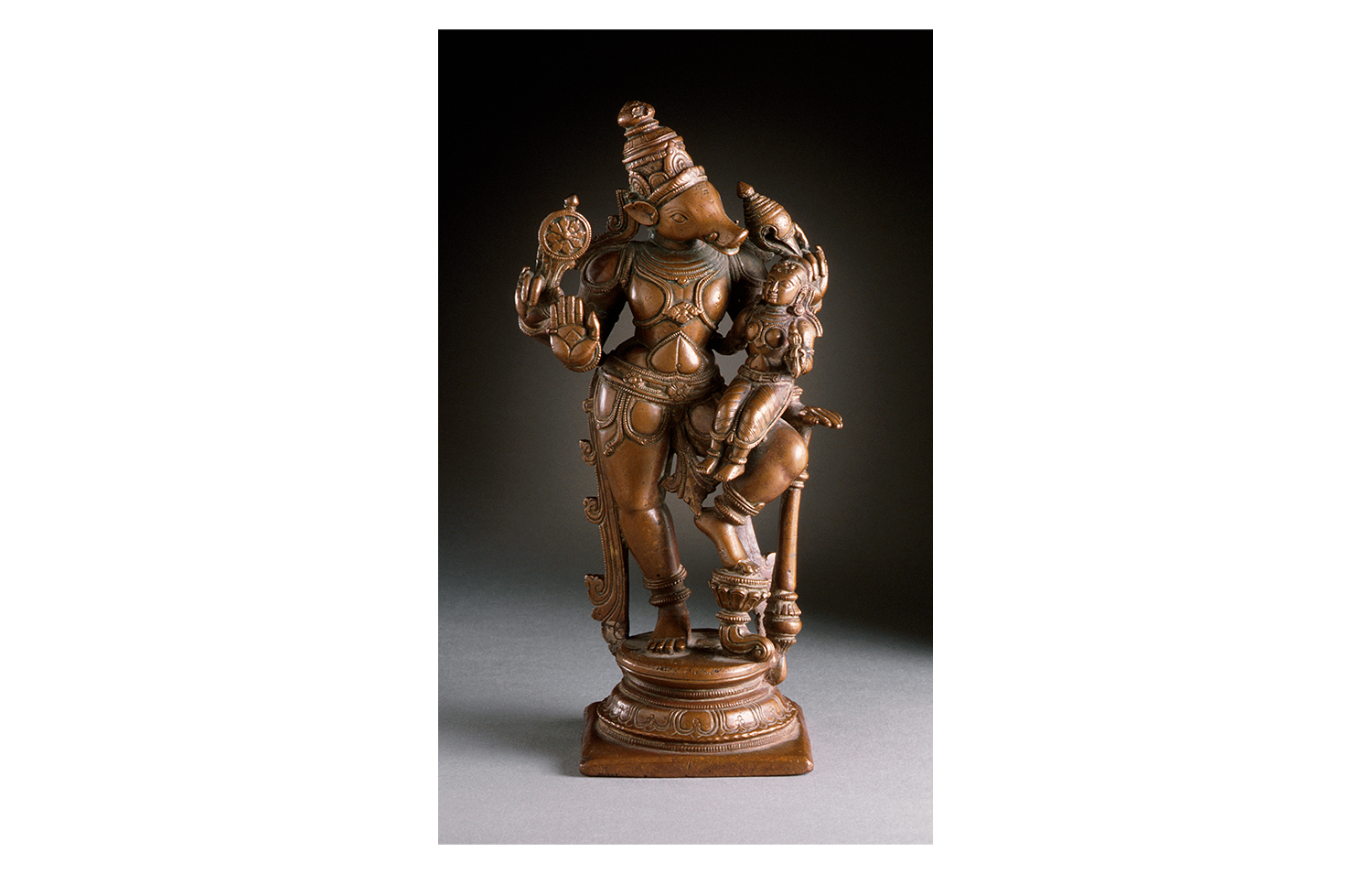
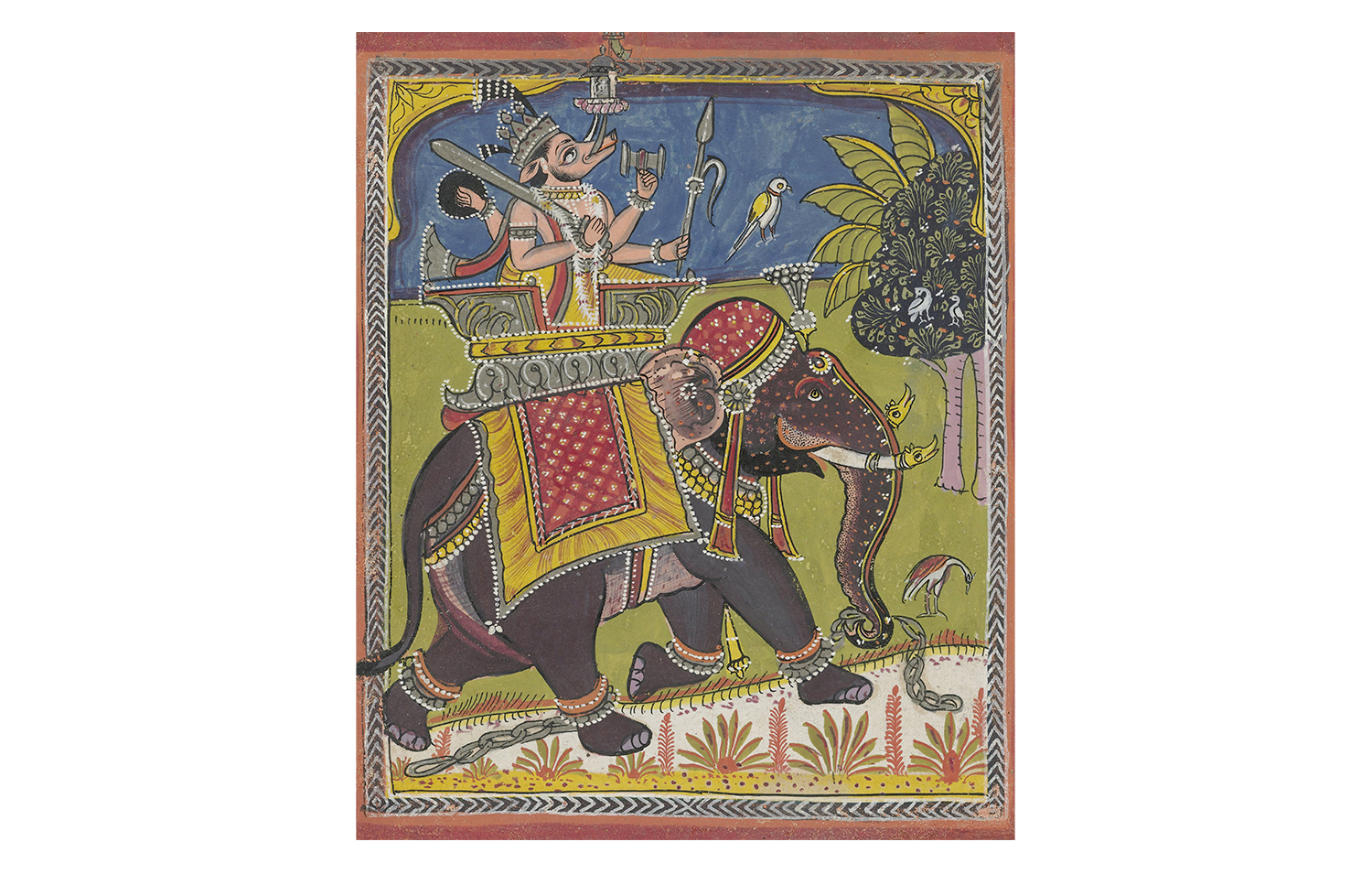
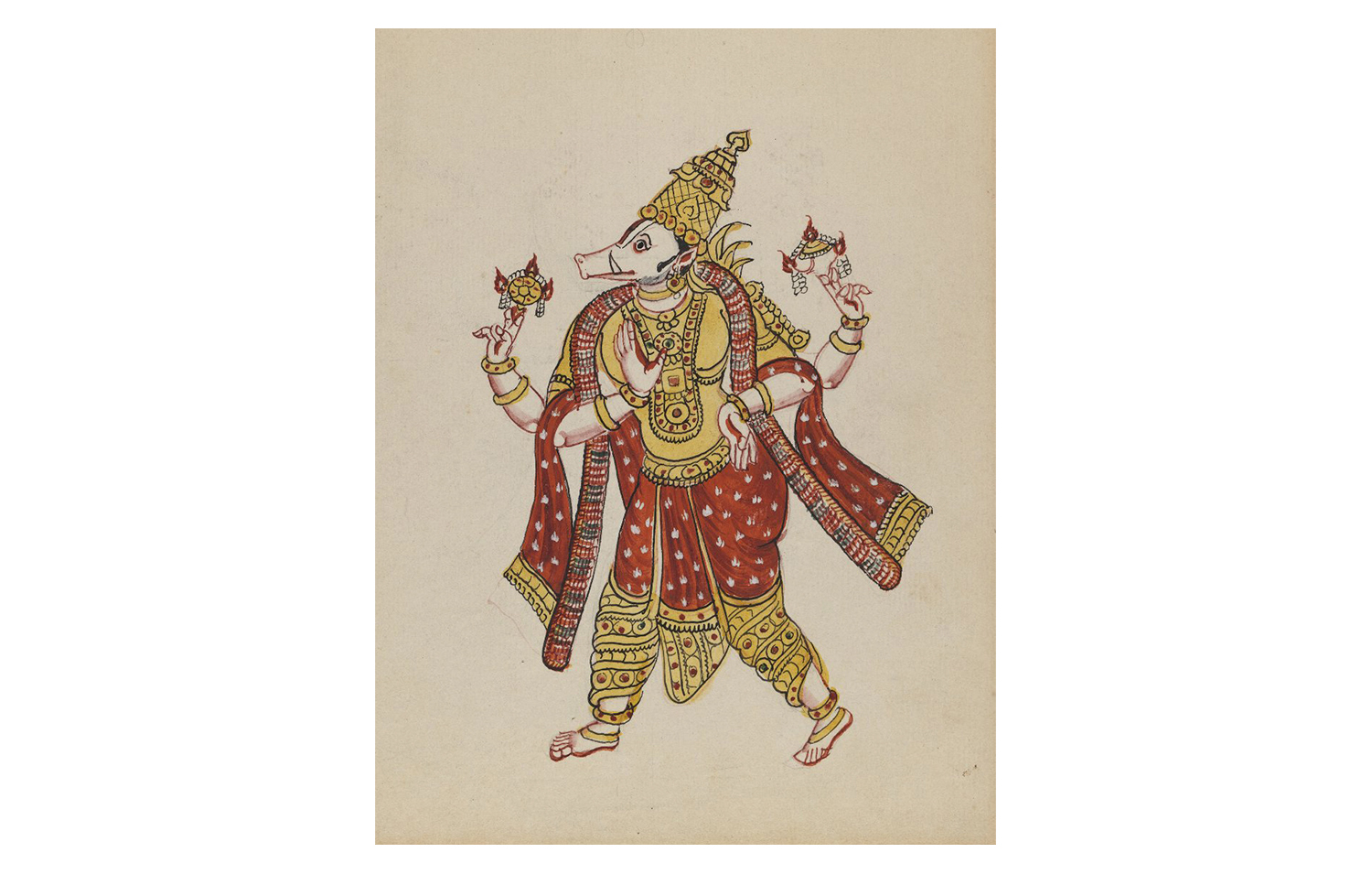
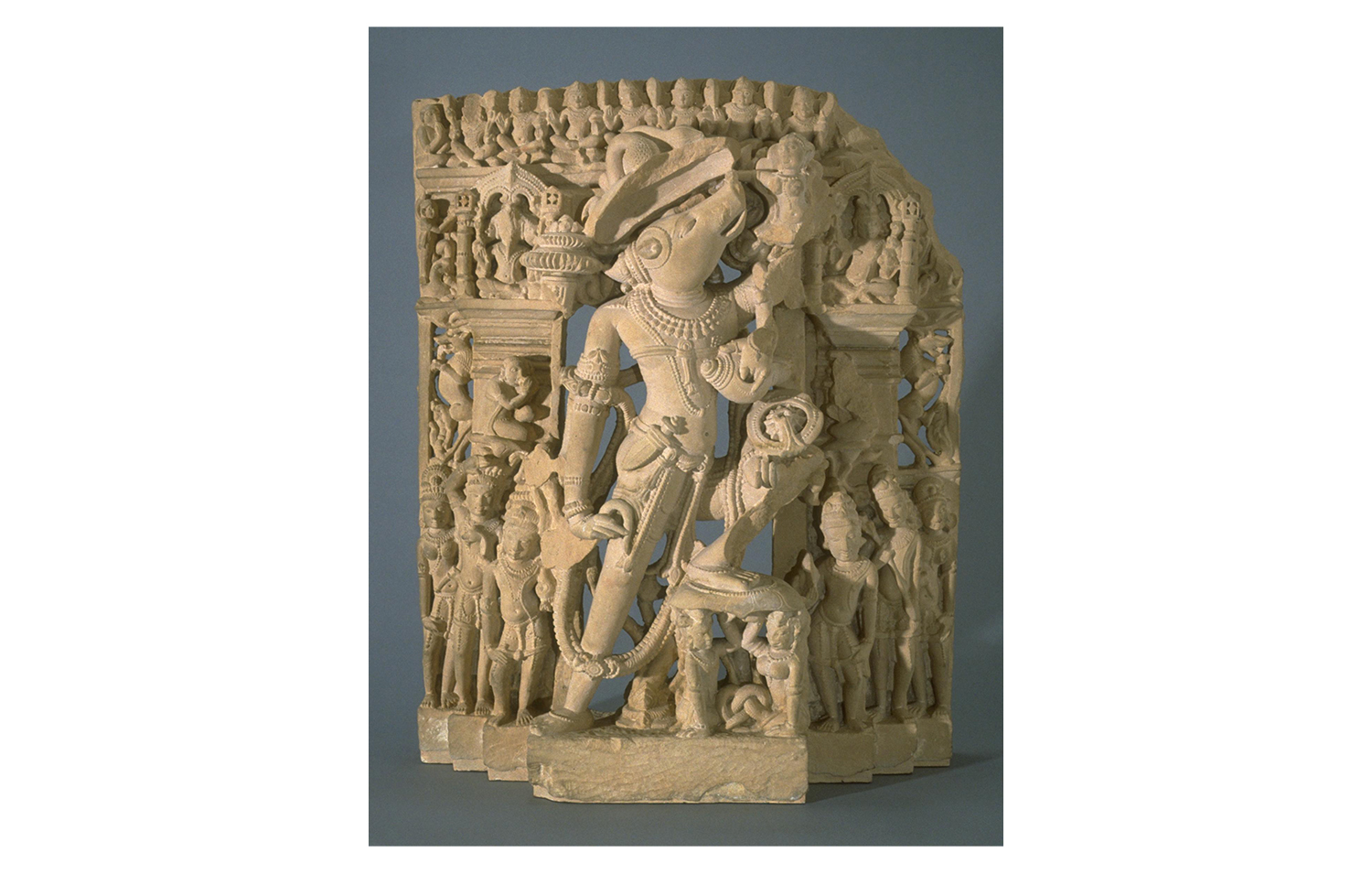
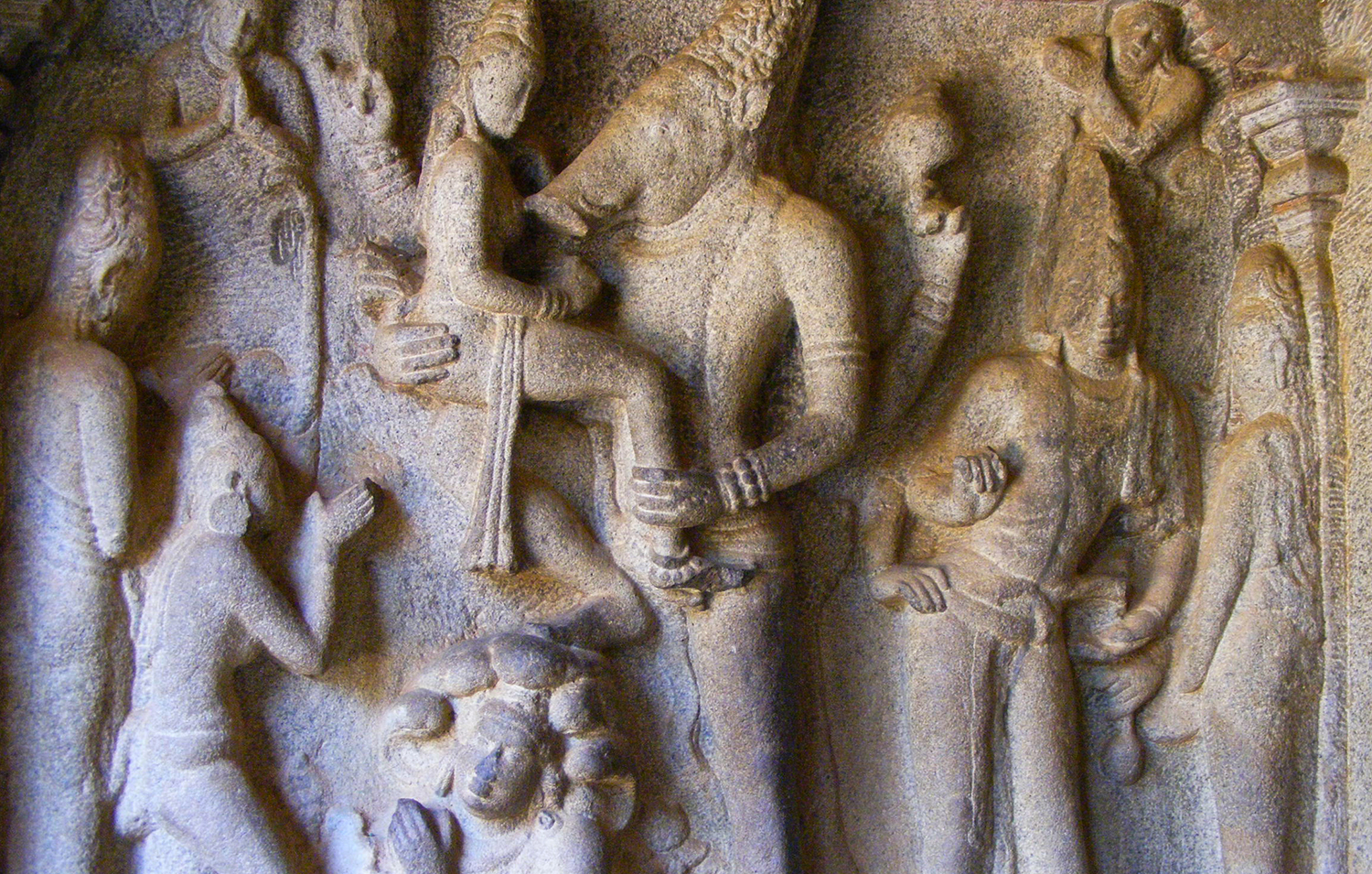
The iconography of Varaha varies in textual sources: in some he is shown in his anthropomorphic form with the head of a boar and the body of a man, and others show his zoomorphic form with the head and body of a boar. Sculptures of Varaha depict him in both forms, though more often in the former than in the latter. His complexion varies from white to deep blue-black. He is often described as having four arms — two holding a shankha or conch, and two holding a chakra or discus. Other sources such as the sixteenth-century treatise Shilparatna mention the gada or mace and padma or lotus as objects in his grasp. The serpent Adishesha appears at his feet, and his wife Bhudevi stands by his side or sits on his right leg; in the Agni Purana, broadly estimated to date between the seventh and twelfth centuries CE, the goddess Lakshmi also appears as his consort. These motifs — the shankha, the chakra, the padma and Adishesha — are commonly associated with Vishnu and his various manifestations. One sculpted Varaha panel from Mamallapuram (or Mahabalipuram) shows the deity flanked by Brahma and another figure that some scholars believe to be Shiva.
Representation in art
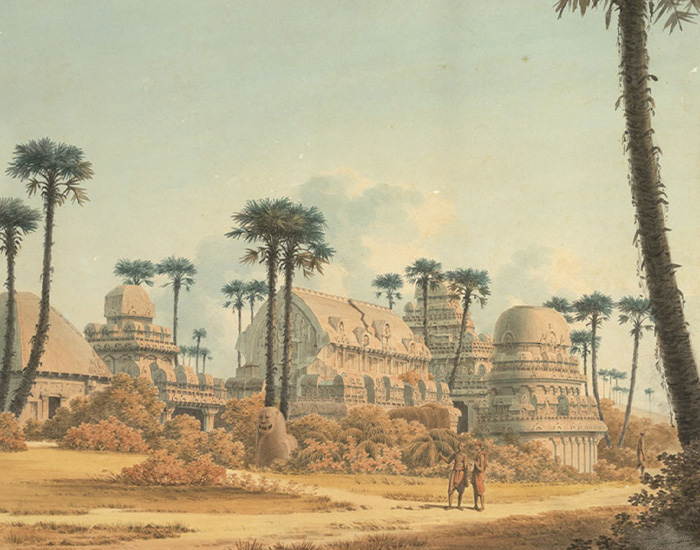
Between the first and seventh centuries CE, images of Varaha spread across the Indian subcontinent. Some of the earliest depictions of Varaha have been found in Mathura and date to the first and second centuries CE. Other early sculptures of Varaha can be found at the cave temples in Badami; the Varaha Cave Temple in Mamallapuram; and the Ellora Caves. Influential rulers have historically identified with Varaha’s might and power — the boar featured prominently in the royal insignia of major empires in southern and central India between the sixth and seventeenth centuries, including those of the Chalukyas, the Hoysalas and the Vijayanagara kings. Varaha also appears on coins minted in the ninth century CE by the Gurjara-Pratiharas of northern India.
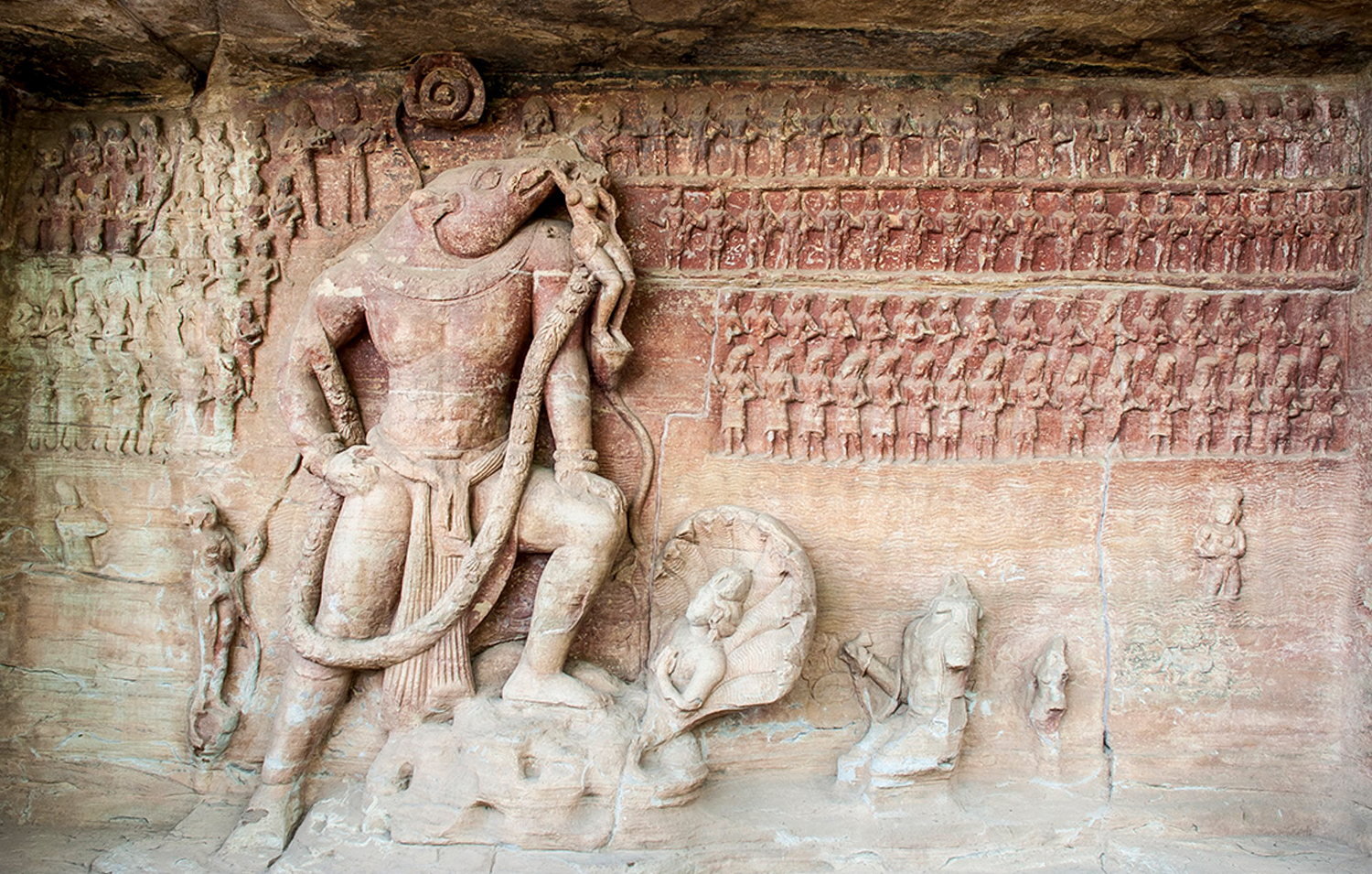
The Udayagiri Caves in Madhya Pradesh are known for their anthropomorphic rock-cut image of Varaha, dated to the reign of Chandragupta II (r. 375–415 CE) of the Gupta dynasty. Here Varaha is seen towering over a nagaraja (serpent-king) at his feet; the earth-goddess clings to his right tusk, and behind him is a smaller, kneeling figure of a man dressed in royal attire. Udayagiri was an important political and ritual centre for the Guptas; the inscription accompanying this image suggests that the scene was meant to commemorate their victory over Naga polities in central India. Some scholars suggest that the royal figure likely represents Chandragupta II himself. Another large rock sculpture of Varaha, dated to the late fifth or early sixth century CE, stands at Eran in Madhya Pradesh. About four metres tall, it is distinctive as one of the first depictions of Varaha in his zoomorphic, massive form. It is significant not only for its stylistic departure from earlier sculptures but also because it marks the decline of Gupta influence in the Malwa region, as seen from its inscription commemorating the first year of rule by the Alchon Hun king Toramana.
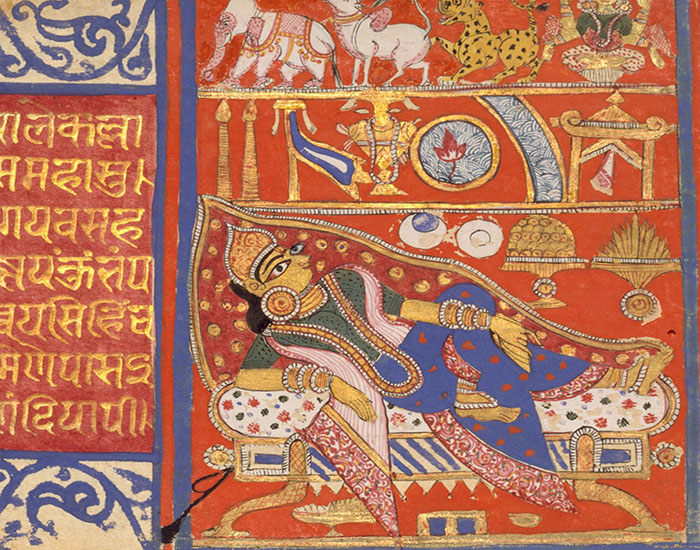
While the prominence of Varaha as a political symbol declined in the late medieval period, his image continued to develop in art. He features in late medieval Pahari manuscript paintings depicting episodes from the Bhagavata Purana and Gita Govinda. In the modern period, he appears in an oleograph produced in the 1930s by the Raja Ravi Varma Press, shown emerging from the ocean and bearing a globe on his tusks.
First published: 2 July 2024
Image Gallery
Bibliography
Becker, Catherine. “Not Your Average Boar: The Colossal Varāha at Erān, An Iconographic Innovation.” Artibus Asiae 70, no. 1 (2010): 123–49. http://www.jstor.org/stable/20801634. Accessed June 20 2024.
Brockington, John. The Sanskrit Epics. Boston: Brill, 1998.
Danielou, Alain. Myths and Gods of India. Rochester, VT: Inner Traditions, 1991.
Elgood, Heather. Hinduism and the Religious Arts. London, New York: Cassell, 1999.
Geer, Alexandra van der. Animals in Stone: Indian Mammals Sculptured Through Time. Leiden, Boston: Brill, 2008.
Gopinatha Rao, T. A. Elements of Hindu Iconography. Vol. 1, Part 1. New Delhi: Motilal Banarsidass Publishers, 1985.
“The Boar Shakes the Mud Off: A Specific Motif in the Varahakatha of the Great Epic and Puranas.” In Battle, Bards and Brahmins, edited by J. Brockington, 301–14. New Delhi: Motilal Banarsidass Publishers, 2012.
Willis, Michael. The Archaeology of Hindu Ritual: Temples and the Establishment of the Gods. USA: Cambridge University Press, 2009.
Feedback