-
ChicagoImpart Encyclopedia of Art. "Bhakti Movement." November 22, 2023. https://imp-art.org/articles/bhakti-movement/.
-
MLA"Bhakti Movement." Impart Encyclopedia of Art, Nov. 22, 2023, https://imp-art.org/articles/bhakti-movement/.
-
HarvardImpart Encyclopedia of Art (2023) Bhakti Movement. Available at: https://imp-art.org/articles/bhakti-movement/ (Accessed: 20 October 2026).
Derived from the root word bhaj, broadly meaning ‘devotion’, the term bhakti finds early references in the works of the fourth-century BCE grammarian Panini in the context of devotion to the deity Vasudeva. The concept was further developed in the latter half of the first millennium BCE in the Bhagavad Gita which framed bhakti as an alternative to the paths of canonical wisdom and ascetical austerities that promised liberation or moksha. The Gita further emphasises bhakti as a devotee’s intimate and emotive relationship with a personal and accessible deity, articulated in the devotee Arjuna’s relationship with the god Krishna. Concurrently, across the Indian subcontinent, worship began to be centred primarily around the deities Shiva and Vishnu and their various manifestations.
Between the sixth and seventeenth century CE, beginning with the literary works of the Tamil poets — the Vaishnava Alvars and the Shaiva Nayanars — conceptions of bhakti crystallised and dispersed to form a subcontinental social movement that was expressed locally in a variety of ways by constellations of saints that heralded the worship of a particular deity. At times, the movement transcended established social hierarchies by absorbing within its fold the personal devotions of female bhakti-saints such as Mirabai and Muktabai, and the experiences of the poet-saints of the Varkari movement such as Namdev and Tukaram, who belonged to marginalised communities in present-day Maharashtra. The forms of devotional worship that were expressed by Tamil saints in literature were absorbed and assimilated as integral forms of Shaivite worship, often becoming essential features of temple worship. Occasionally, the worshippers’ devotion to a deity was viewed in terms of a subject’s relationship with the sovereign. Therefore, the bhakti movement, its idealogues, and its various artistic expressions found royal patronage from such figures as the Tamil Chola kings, and rulers such as Shivaji and other Maratha feudatories.
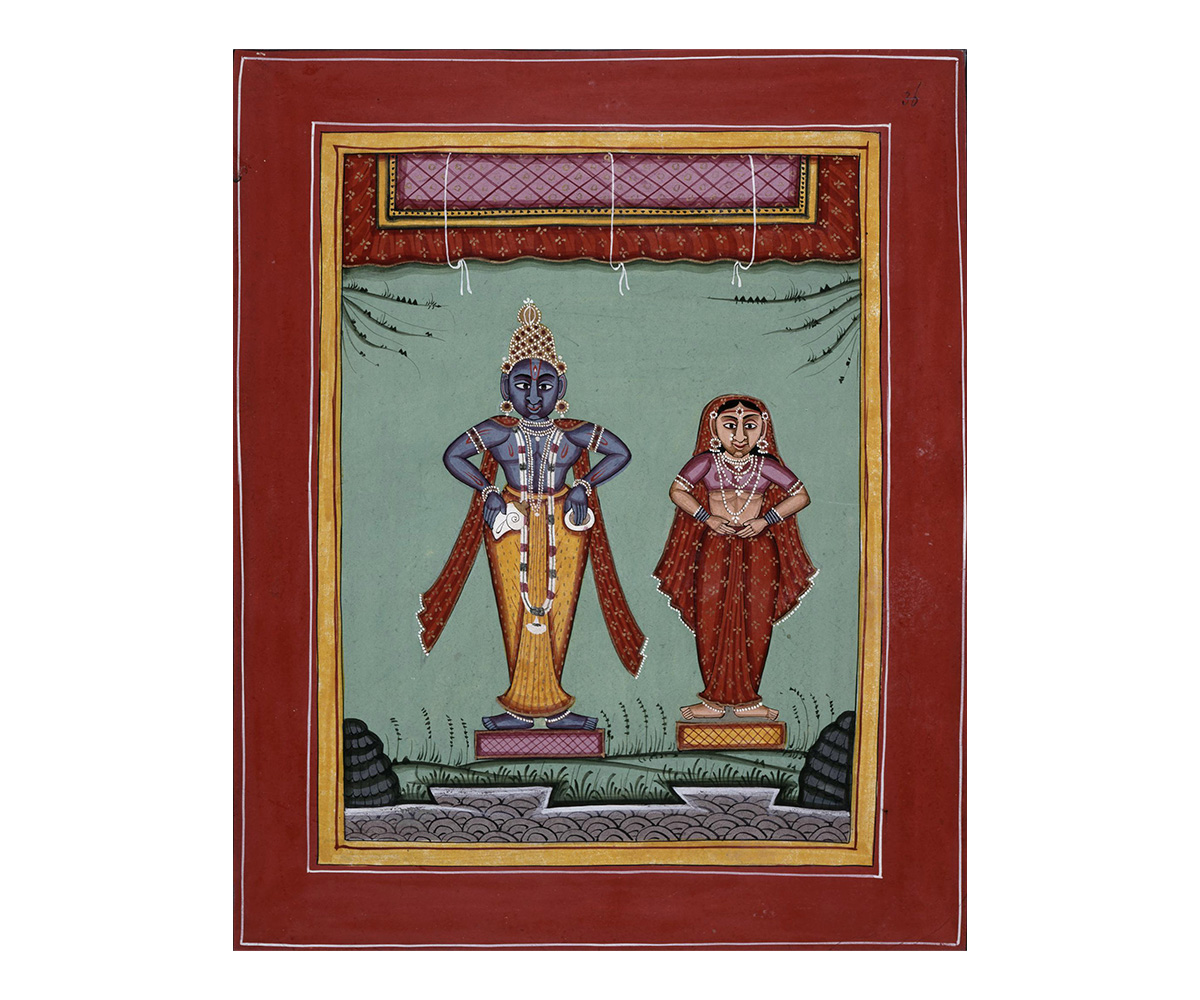
Essential to the idea of devotion to an accessible god is the establishment of a deity in a local seat, or temple, in order to facilitate the worship of its embodied form, directed at an iconic image. Accordingly, bhakti worship is particularly preoccupied with the deity’s form and the physical appearance of the icon, which is placed in a visual relationship of darshan with the devotee and is made to receive offerings in pujas.
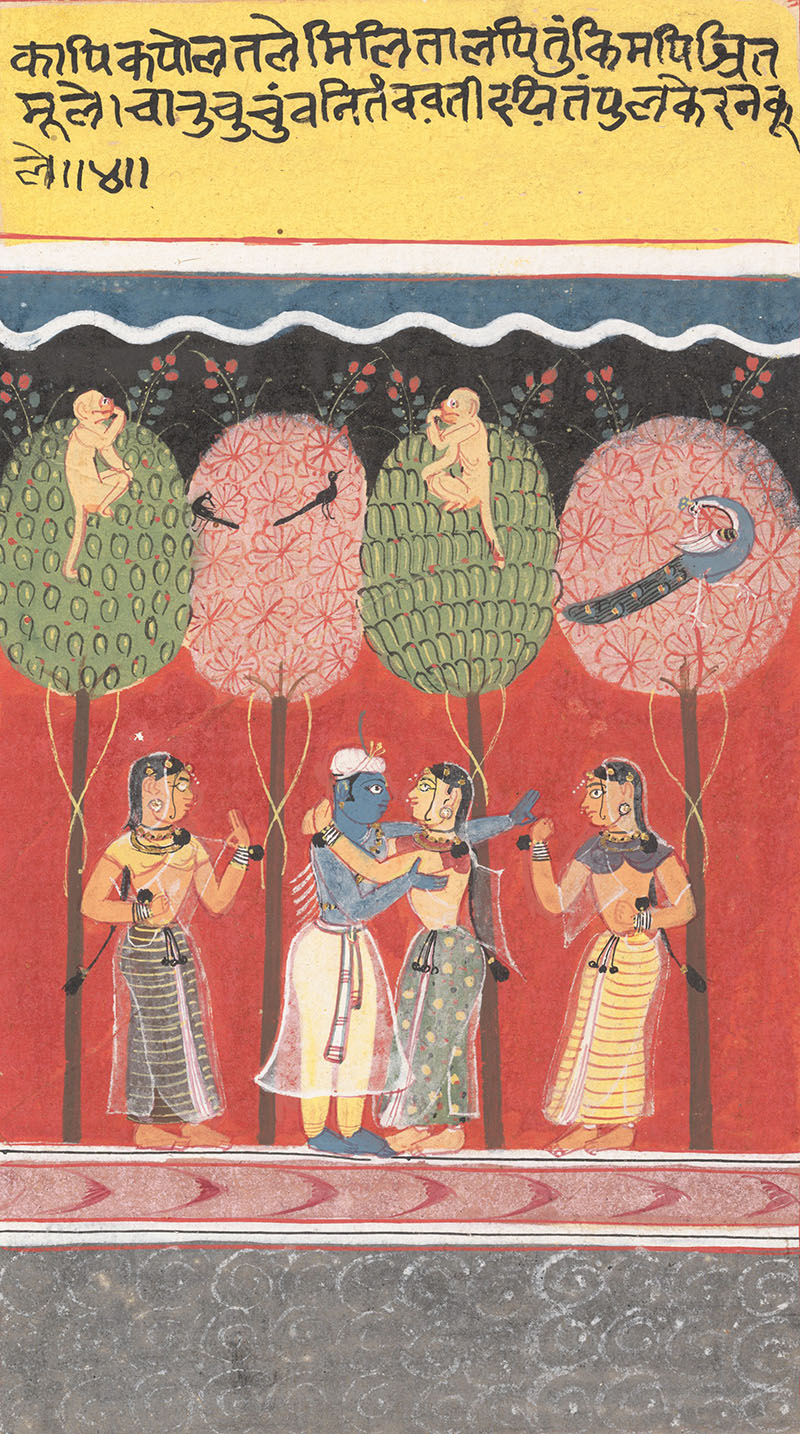
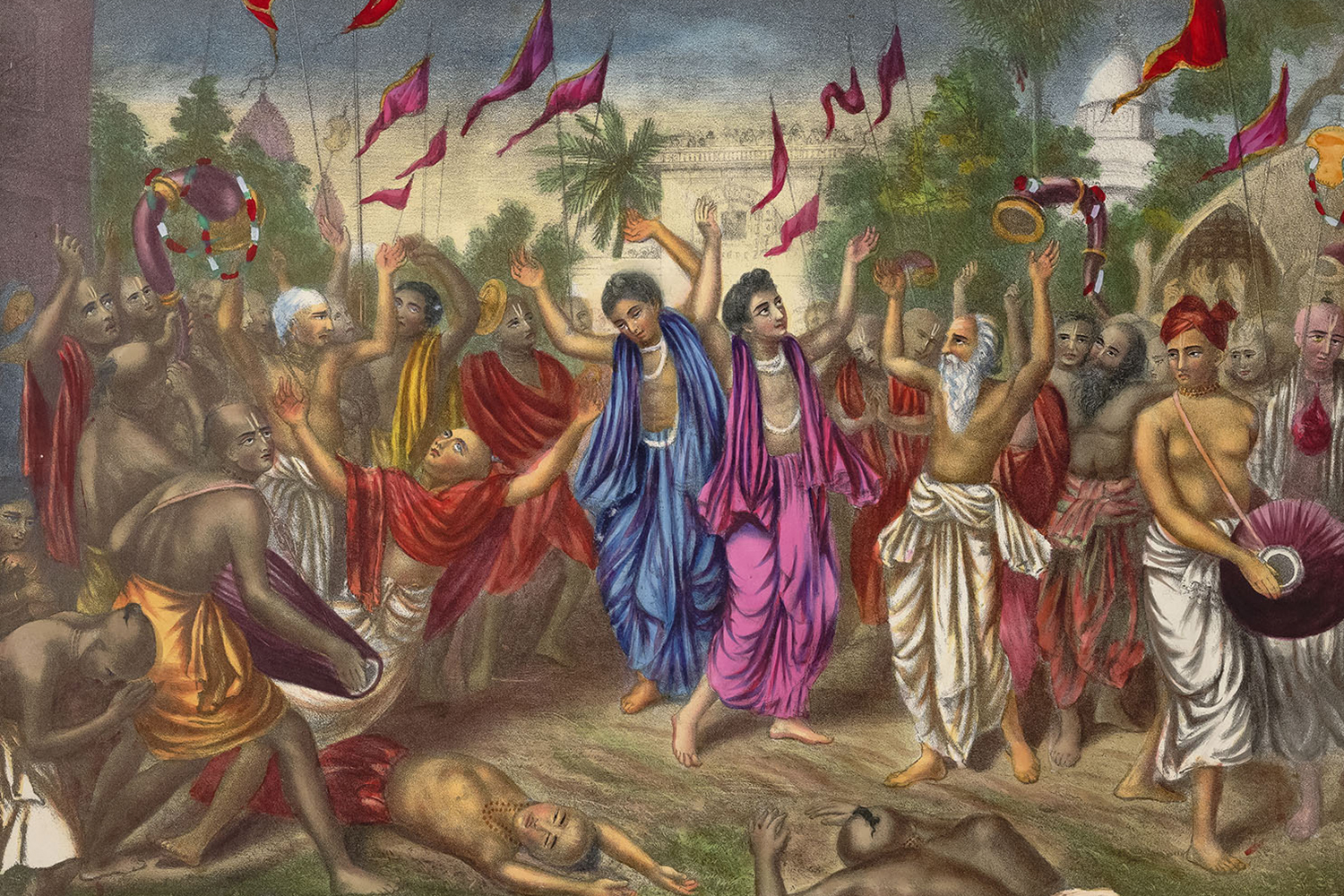
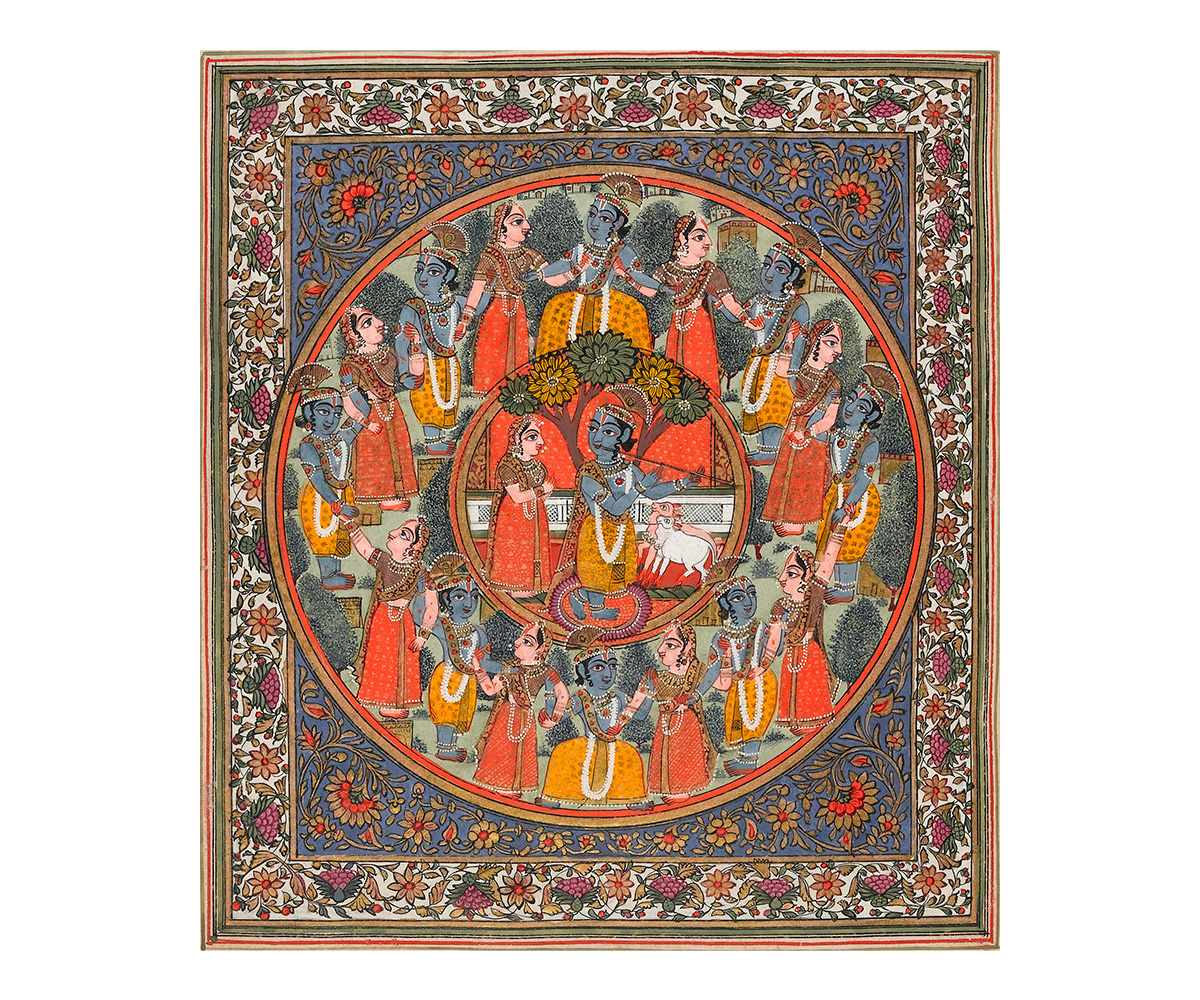
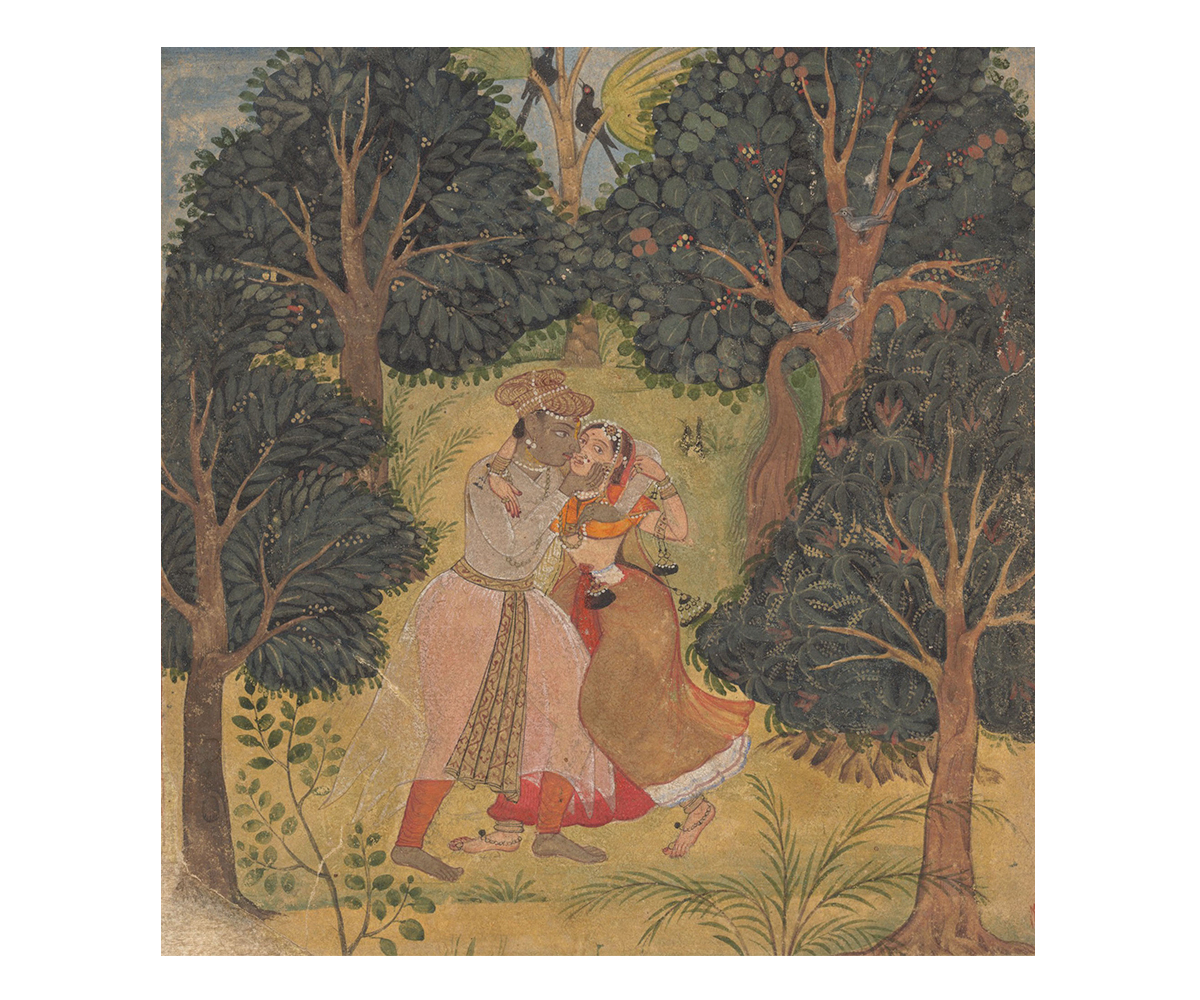
Approachability to the deified figure is promoted not only through a devotee’s engagement with a material form but also through the visualisation of the deity in narratives. The figure of Krishna makes frequent appearances in the devotional literature of the regions of Braj and Bengal which characterises Krishna’s playful romantic dalliances, or rasa lila with Radha and the gopis as a metaphor for the devotee’s relationship with Krishna. In the Gaudiya Vaishnava bhakti tradition which developed in Bengal, devotion to Krishna was often expressed in an erotic tone that identified Krishna as a lover. Literary texts such as Jayadeva’s Gita Govinda and Kesav Das’ Rasika Priya were centred around the intimate courtship of Krishna and Radha, and allowed for an exploration of the themes of rasa.
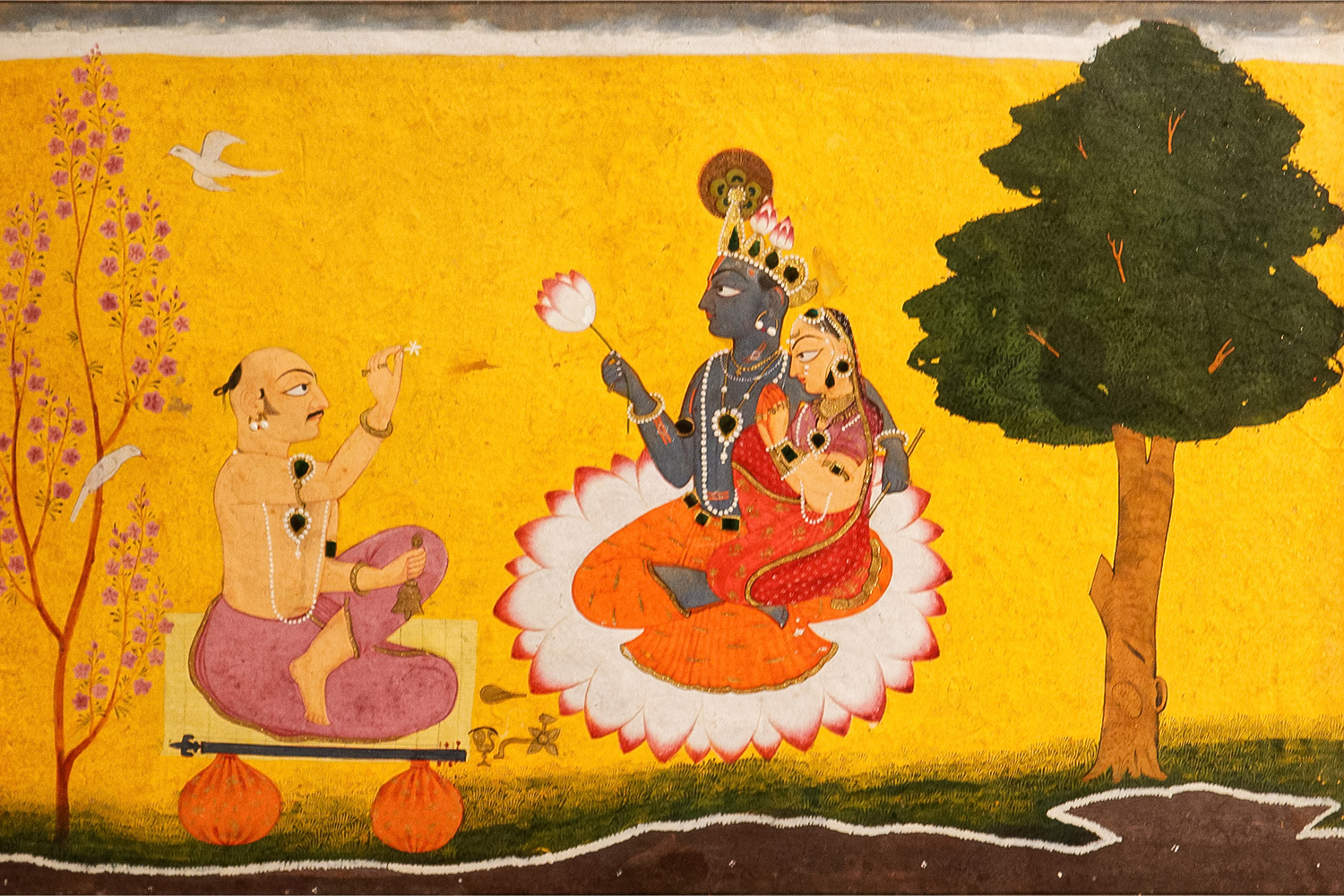
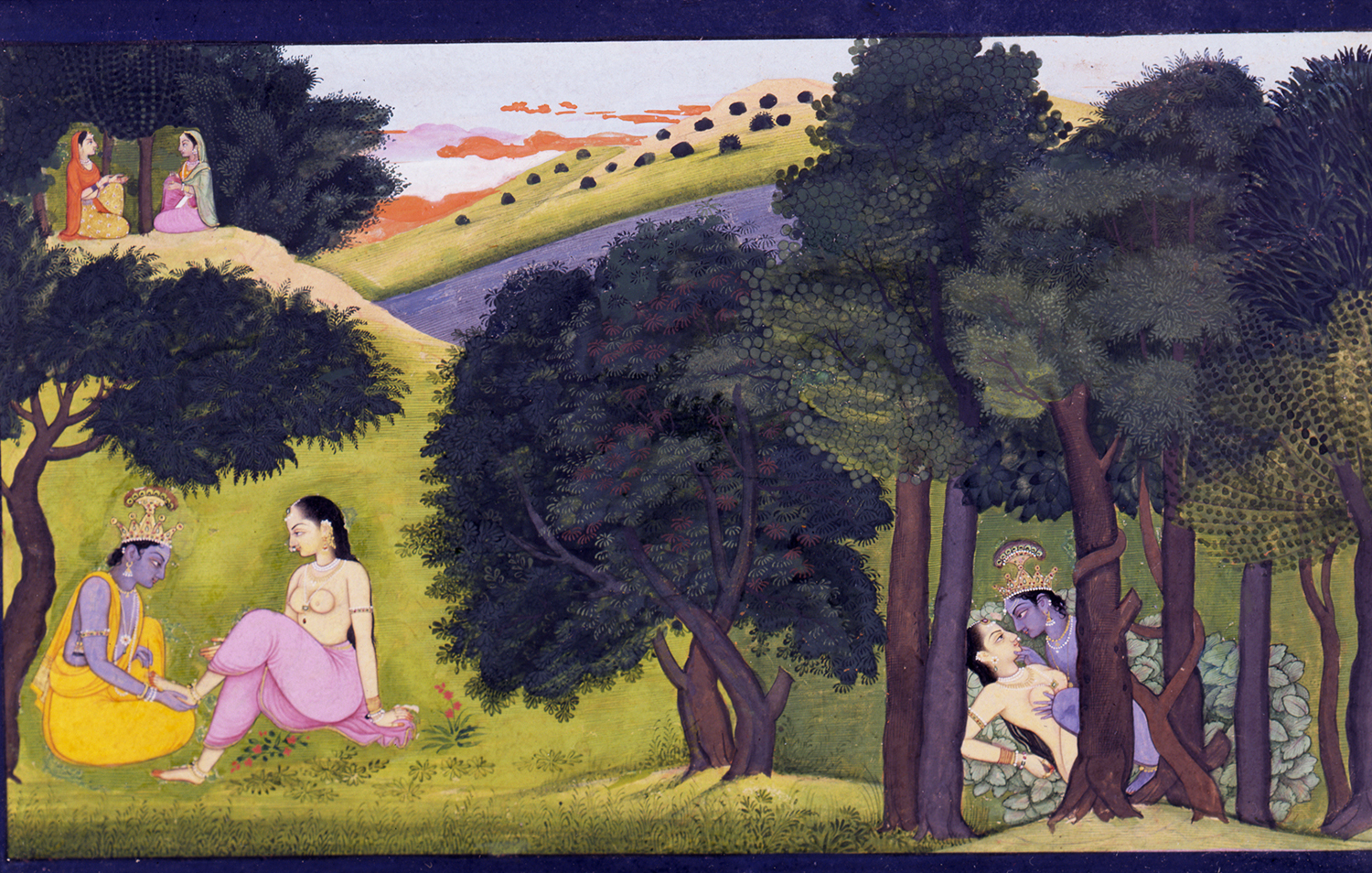
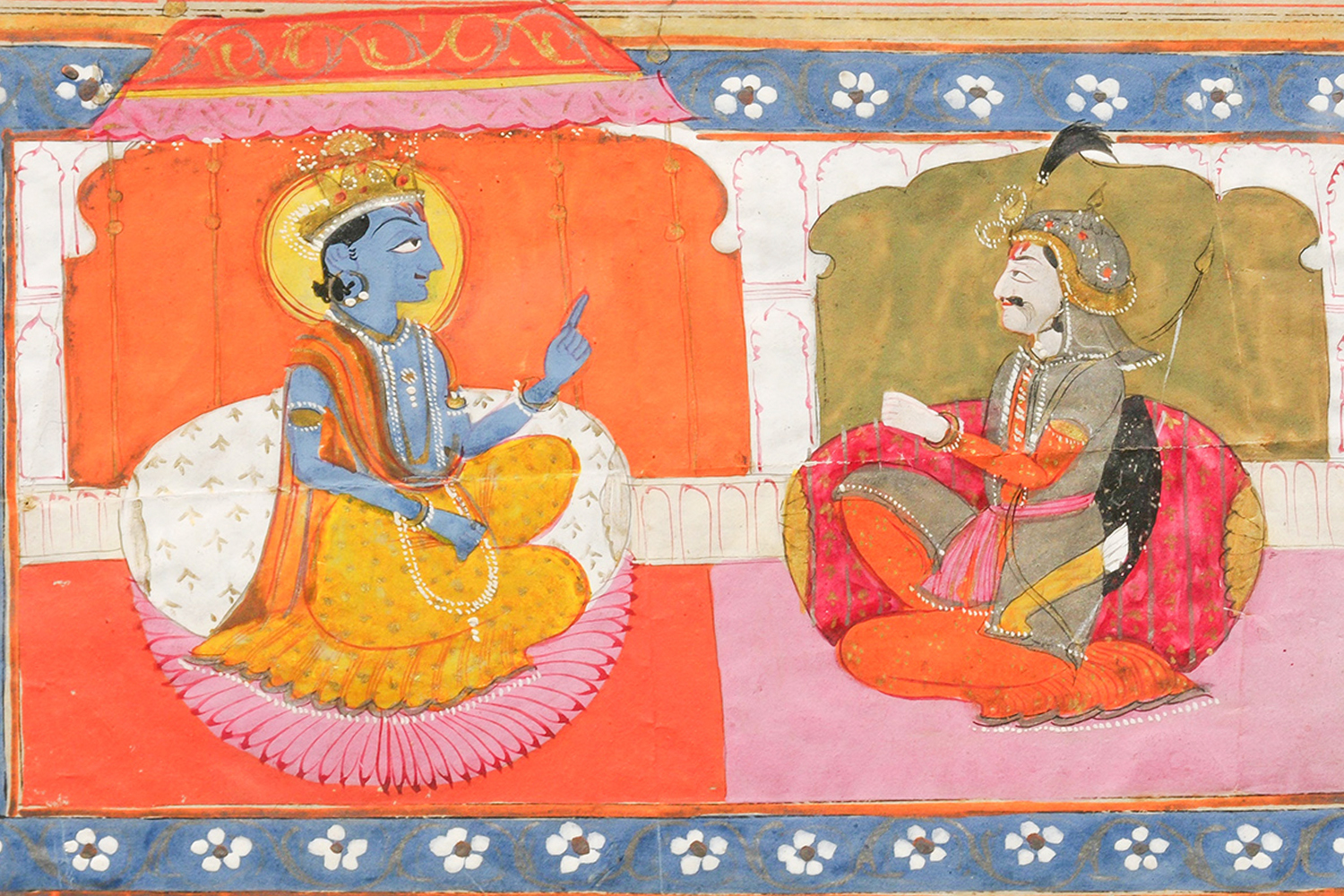
The essential framework of bhakti and its principles were also more generally applied to texts such as Maulana Daud’s fourteenth-century Chandayana based on the romantic courtship of Laurak and Chanda. Stories such as the Chandayana represented a synthesis of the philosophical motivations of the bhakti as well as Sufi movements. Chandayana and other such parables, as well as poetic texts such as Gita Govinda and Rasika Priya have been reproduced in a large variety of illustrated manuscripts rendered in local artistic styles, including Mughal, Deccani, Pahari and Rajput schools. Scholars have noted the conscious merging of the figures of connoisseur/hero and Krishna, both denoted by the term ‘rasik’. This intentional ambiguity was also reflected in illustrations of the Rasika Priya where, it has been noted, the image of the nayaka was based on the image of Krishna. Occasionally, versions of the Gita Govinda have included portraits of the patron and their family that depict them in devotional postures, as bhakts, in scenes of Krishna’s play.
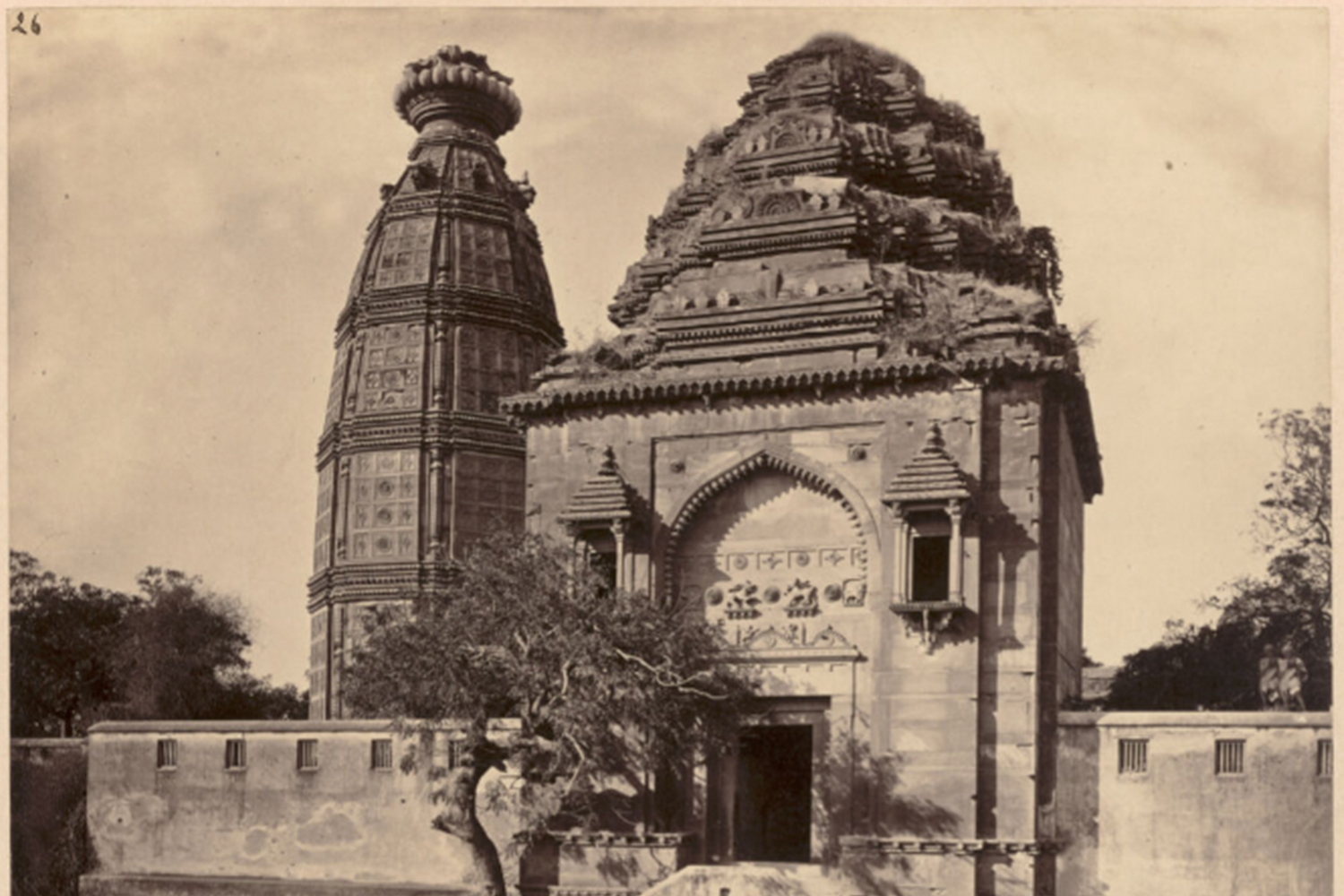
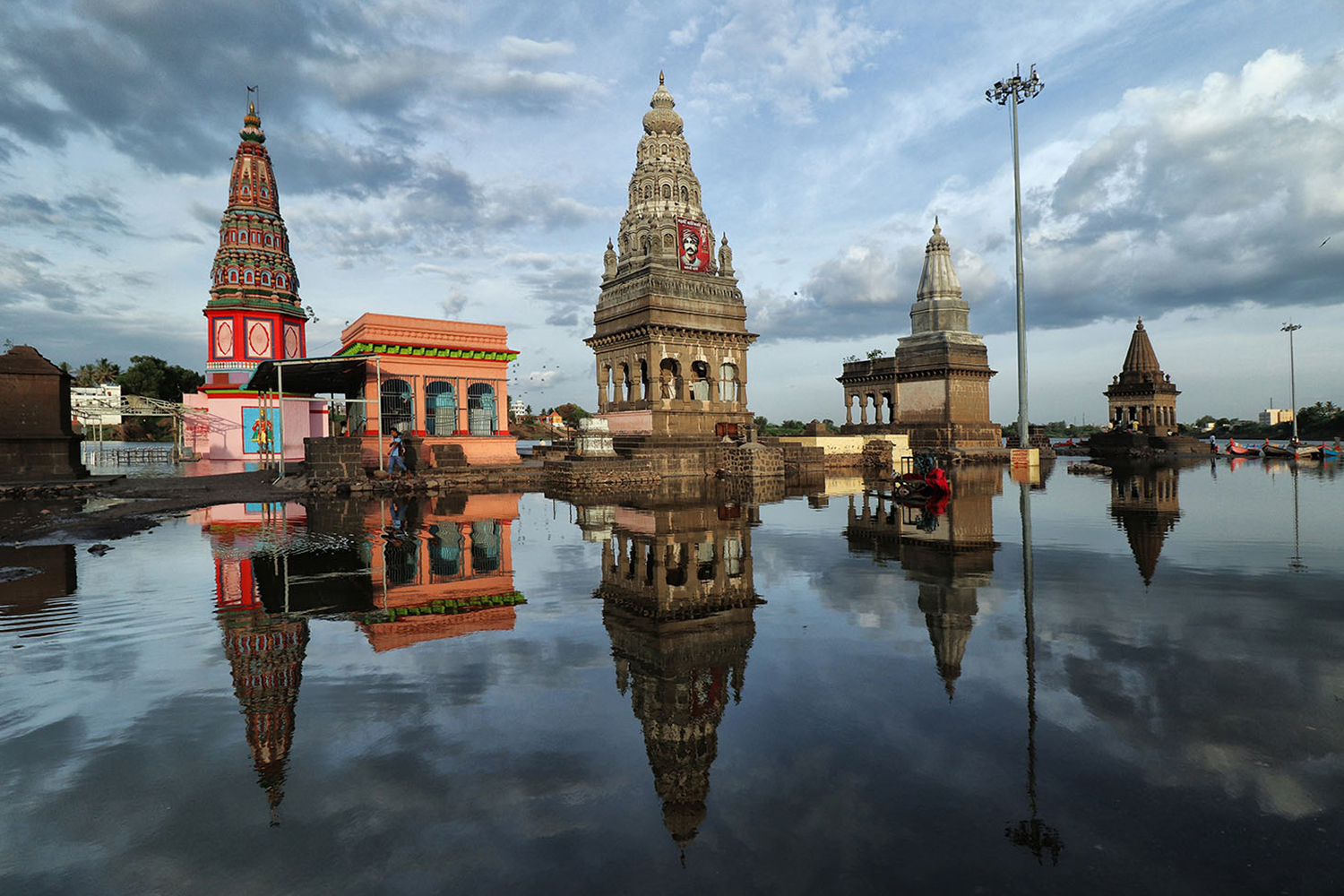
Regions that were intimately associated with a particular deity such as Vrindavan with Krishna, or Pandharpur with Vithoba, as well as regions where networks of bhakti saints were active at various points of time, such as Bengal, became centres of architectural patronage where benefactors channelled resources for the establishment and maintenance of devotional structures in acts that were considered an expression of their bhakti.
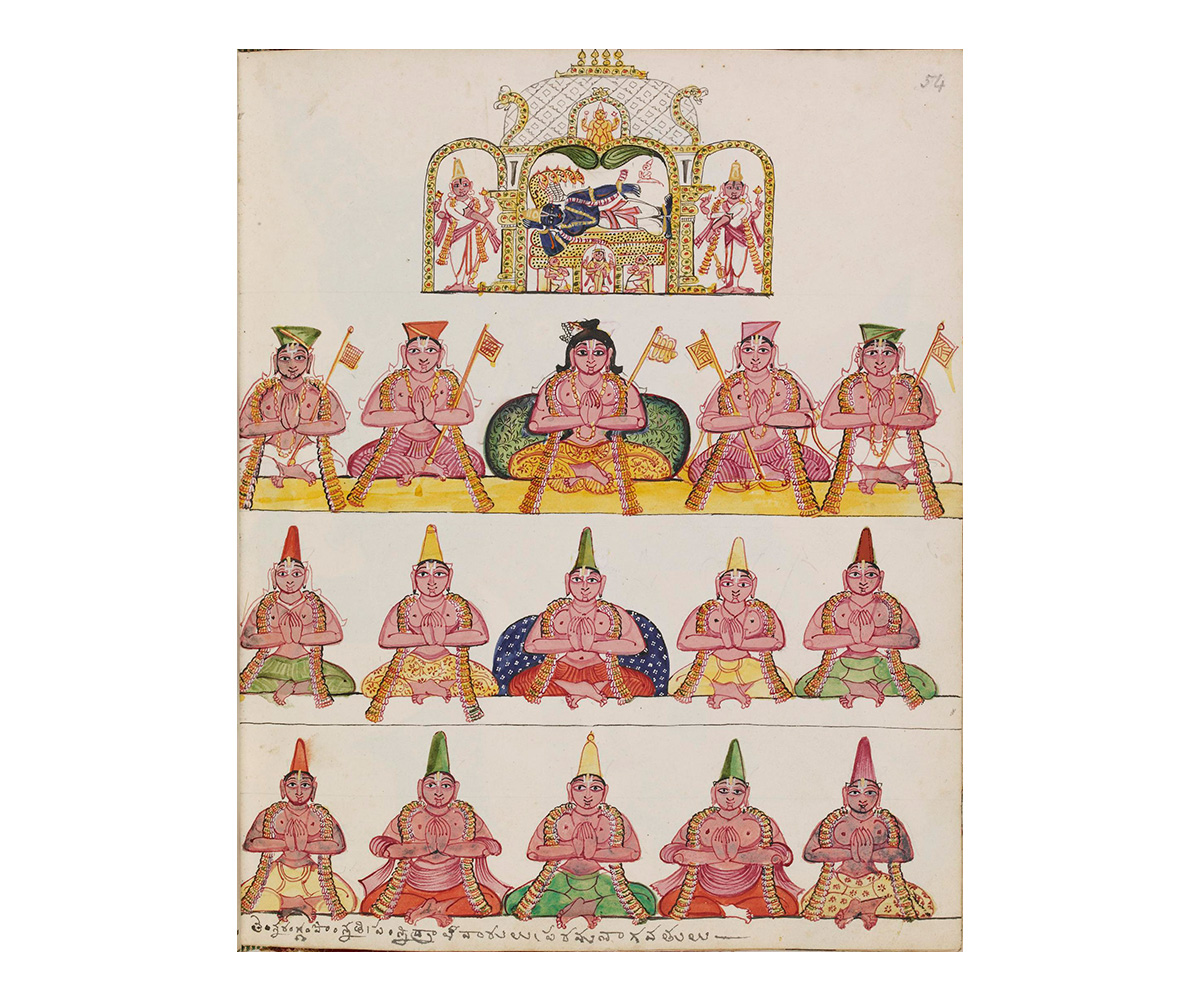
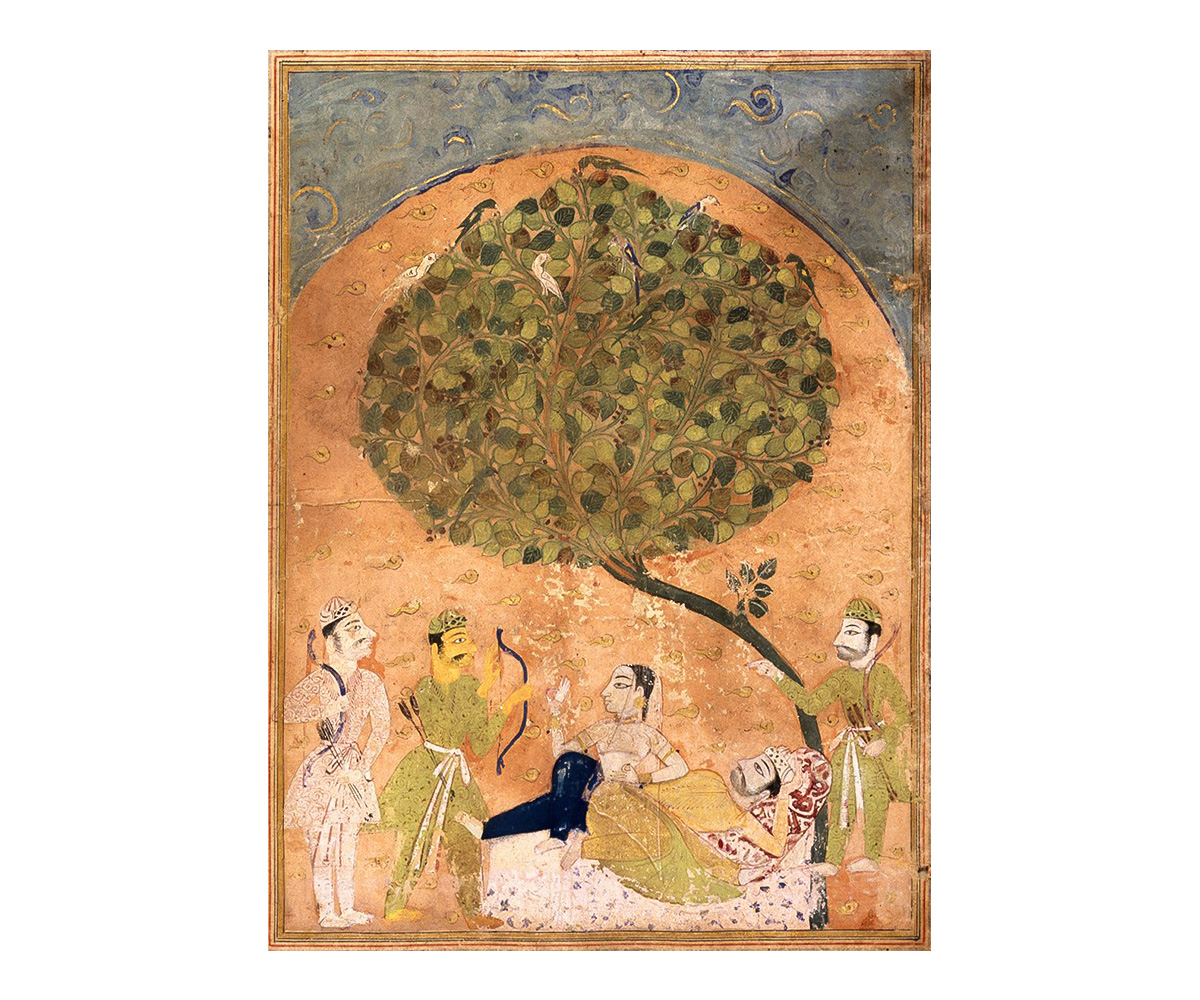
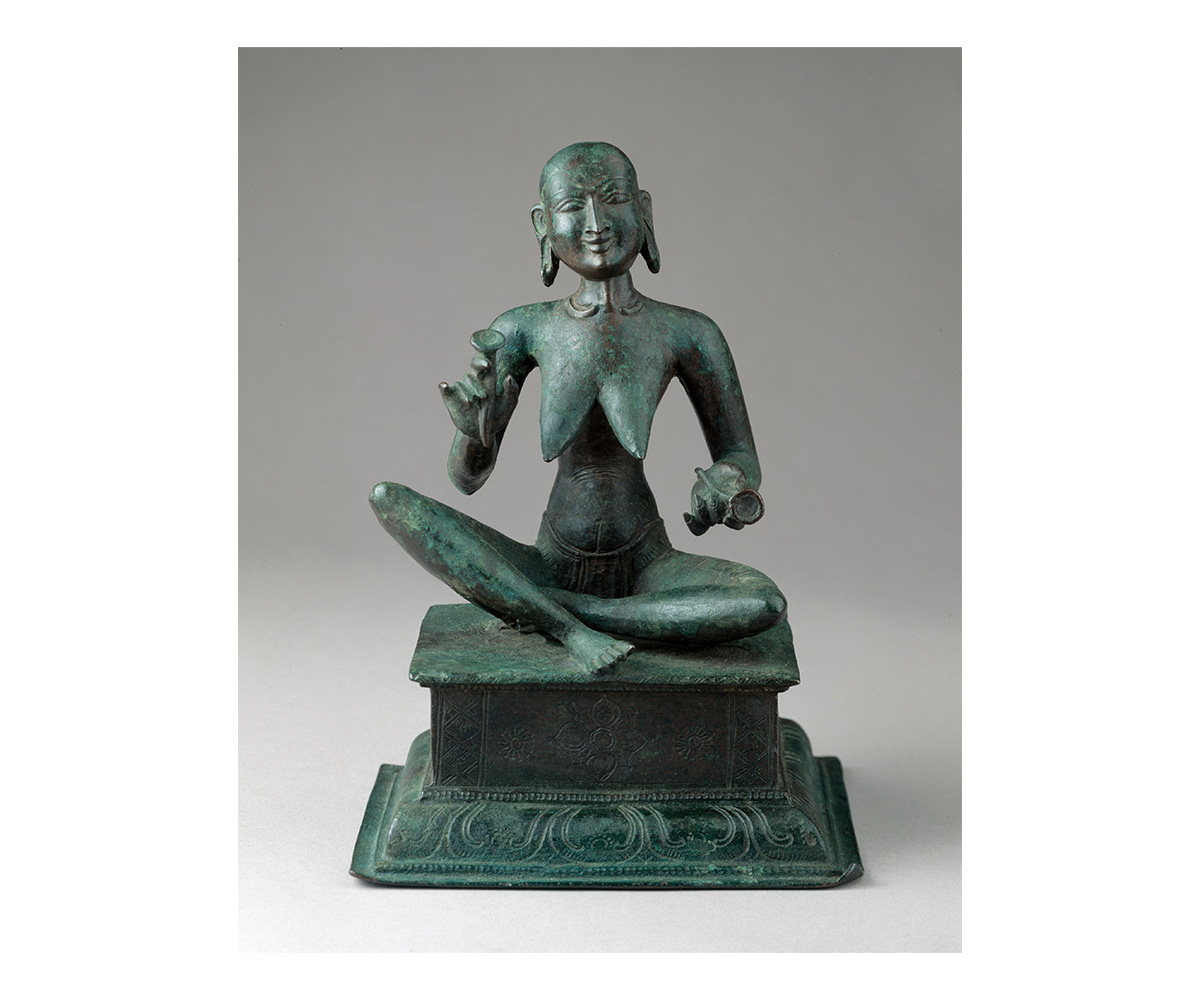
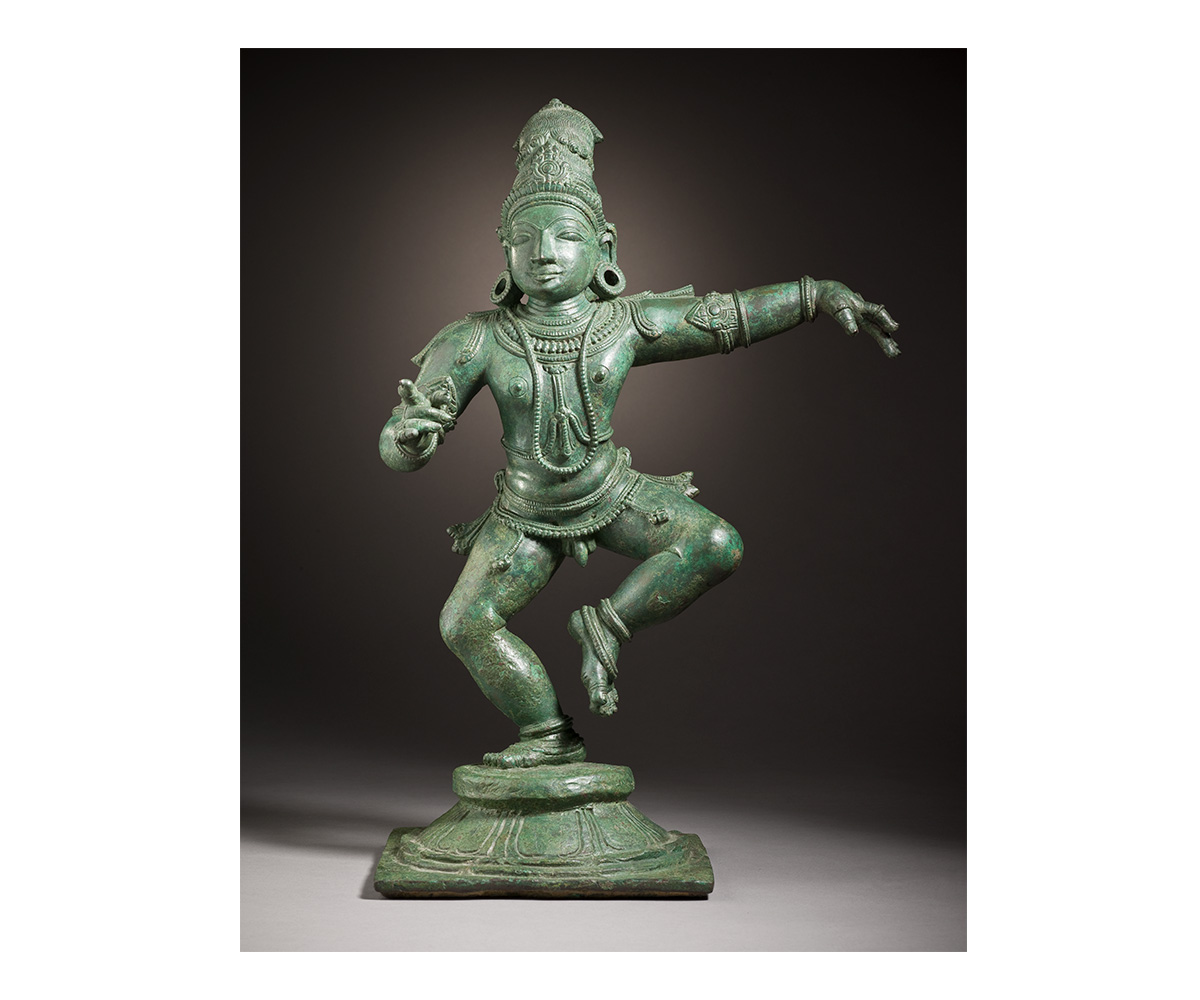
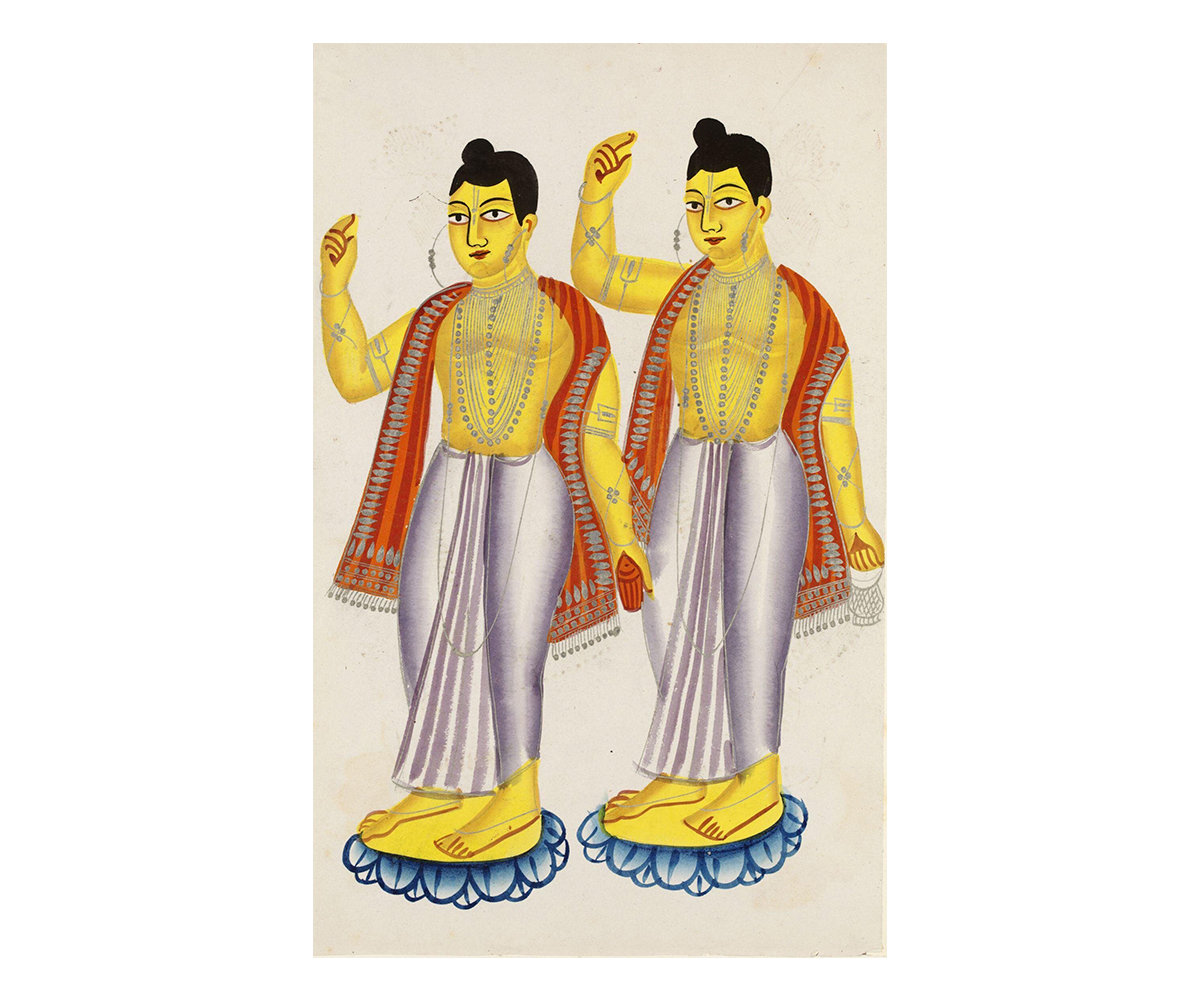
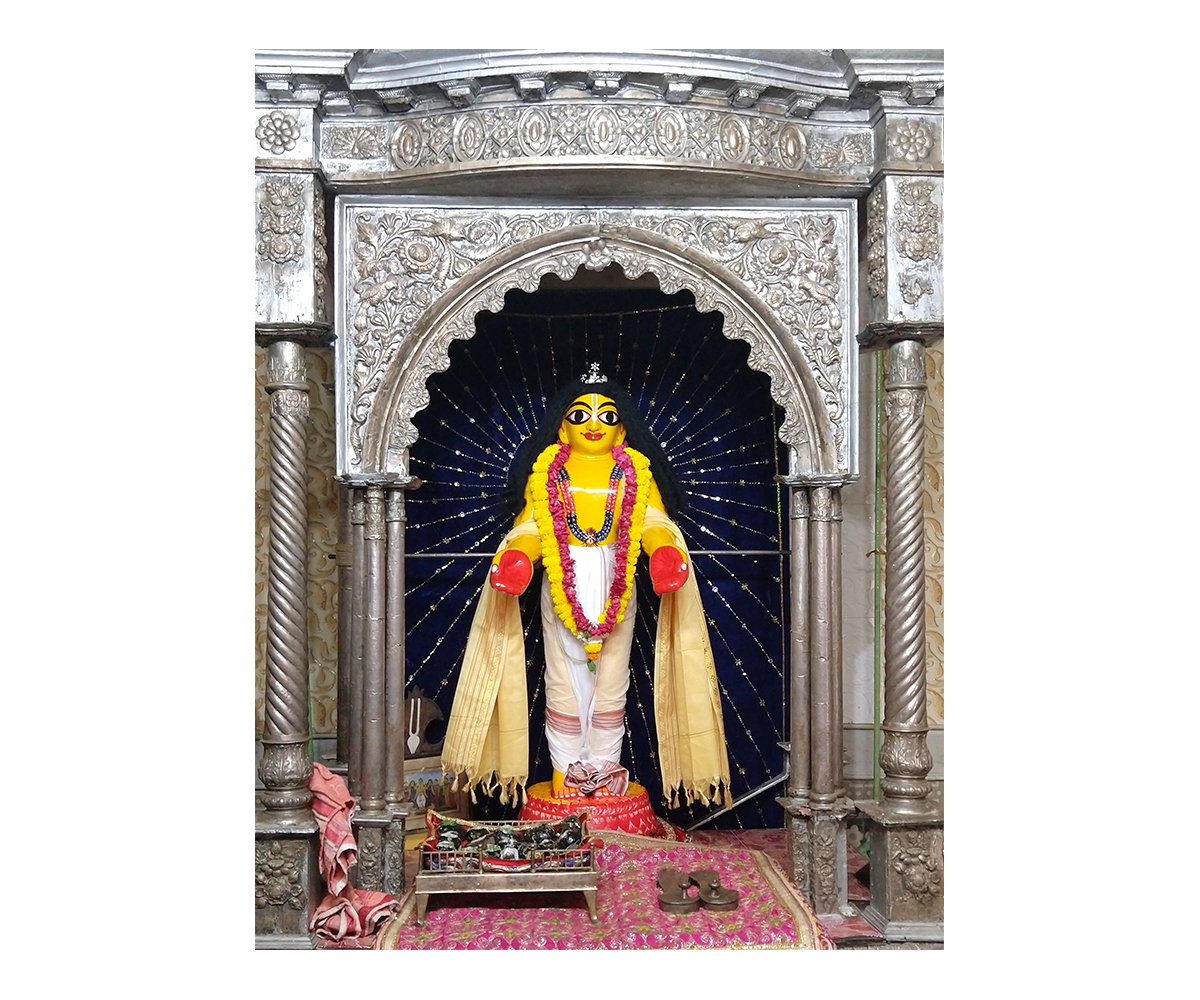
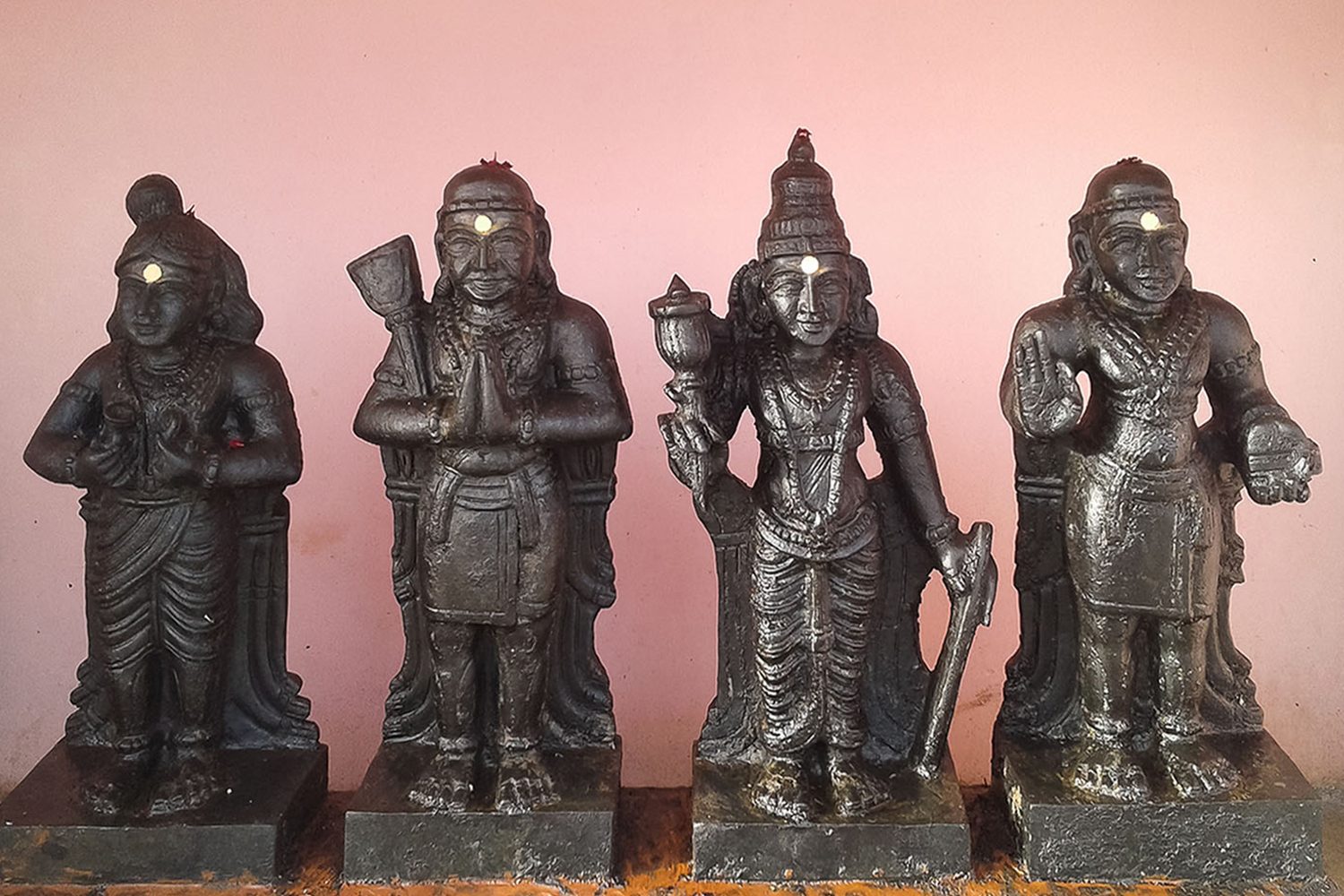
It is not simply the godhead that became the object of worship, but also the devotees that found fame for their selfless devotion. This veneration is particularly distinct in the memorialisation and commemoration of saints and poets closely associated with the bhakti movement after their death. The sixty-three Shaiva Nayanars and the twelve Vaishnava Alvars of the Tamil tradition were thought to have renounced their corporeal form at the end of their lives. This end was memorialised in the form of large monumental temples associated with the date of the saint’s corporeal death. Elsewhere, particularly in the context of the Varkari tradition active in present-day Maharashtra, the worship and commemoration of the poet-saints has been absorbed in the popular religion of the region that is centred not only around the worship of the deity Vithoba, but also the veneration of saints at their samadhis. This commemorative veneration is also translated in visual form with the rendering of iconicised images of prominent ‘bhakts’. Therefore, worship was similarly attributed to the sculpted images of saints such as Karaikkal Ammaiyar, Sambandar, and the memorial ‘portraits’ of other saints that were enshrined in their samadhis.
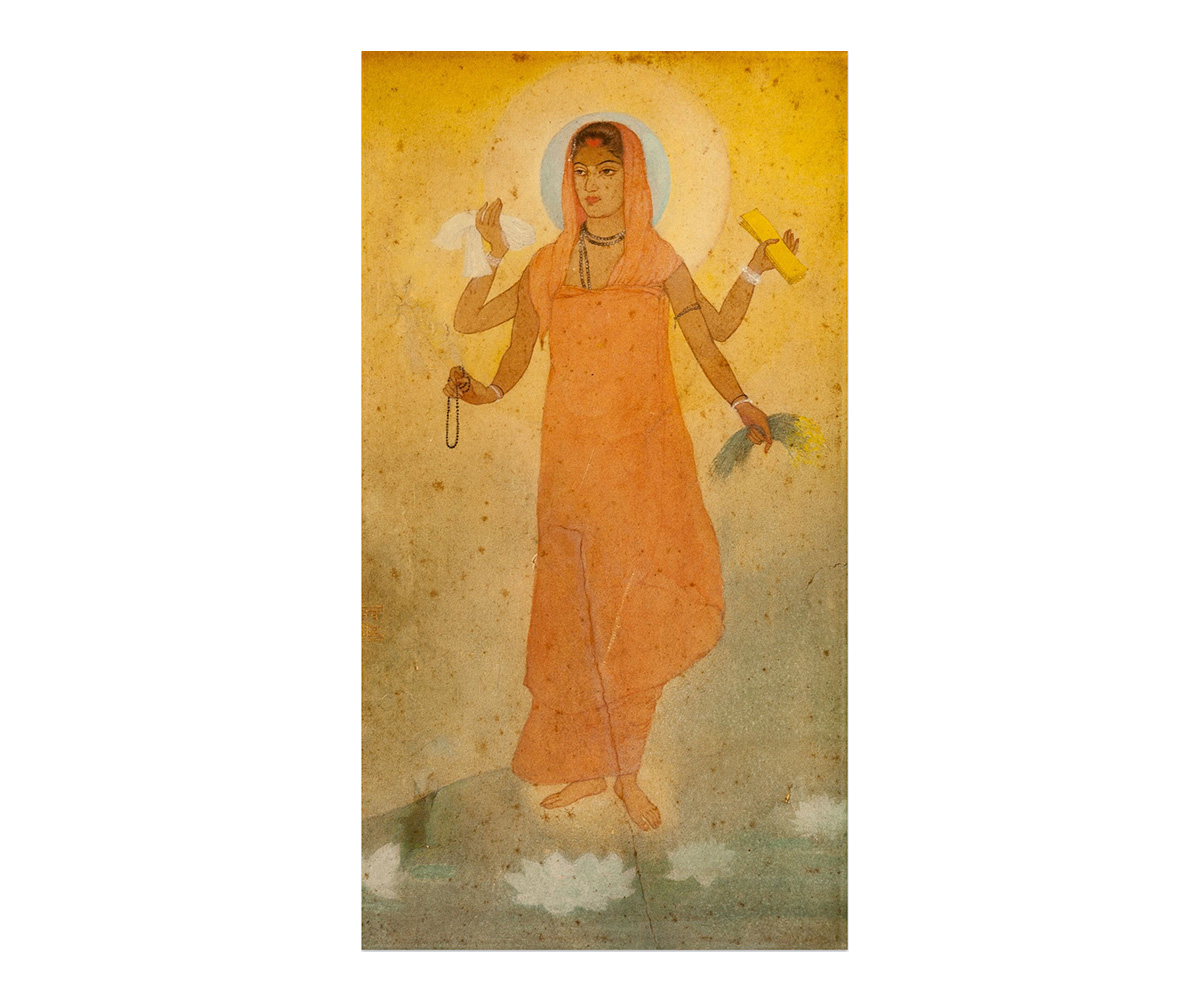
A modern manifestation of bhakti may be identified in the nationalist movement that developed in the nineteenth century that promulgated a culturally-informed deshbhakti as a response to colonialism in South Asia. The movement promoted a pan-Indian identity represented by the deified maternal figure of Bharat Mata. Acts of bhakti were thus enframed as acts committed in service of the new deity — the nation. Visually, the figure of Bharat Mata was shown to populate the expanse of South Asia within a proto-nationalist definition of borders. Additionally, figures identified as idealogues of the nationalist movement were identified as ‘bhakts’ that were willing to make sacrifices for the motherland, and were represented as such, in venerative postures.
First published: 22 November 2023
Image Gallery
Bibliography
Ahuja, Naman P. The Body in Indian Art and Thought. Edited by Belinder Dhanoa. Brussels/Antwerp: Europalia International/Ludion, 2013.
Dasgupta, Surendranath. A History of Indian Philosophy. Vol. 2. Cambridge: Cambridge University Press, 1922.
Dehejia, Vidya. The Body Adorned: Dissolving Boundaries Between Sacred and Profane in India’s Art. Ahmedabad: Mapin Publications, 2009.
Elgood, Heather. Hinduism and the Religious Arts. Religion and the Arts. London: Cassell, 1999.
Flood, Gavin. An Introduction to Hinduism. Cambridge: Cambridge University Press, 1996.
Hawley, John Stratton. A Storm of Songs: India and the Idea of the Bhakti Movement. Cambridge, Massachusetts: Harvard University Press, 2015.
Mitter, Partha. Indian Art. Oxford History of Art. Oxford: Oxford University Press, 2001.
Sarkar, Tanika. Hindu Wife, Hindu Nation: Community, Religion, and Cultural Nationalism. New Delhi: Permanent Black, 2001.
Feedback