As other Tamil royal dynasties face political setbacks, the Chola family and their allies thrive in the martial and temple patronage worlds of the medieval Coromandel coast. As the Pallavas decline, the Pandyas are subdued.
Devotion, Politics, and Temple-Building Under the Cholas
By Anirudh KanisettiThe southern tip of India. Mid-ninth century CE. Over the previous century, the Tamil-speaking coast has seen substantial, if regionally contained, political and religious transformation.
Poet-saints of the Puranic deities Shiva and Vishnu, respectively called the Nayanmar and the Alvar, have forged devotional links between cultivator communities, Brahmin priests, and brick-and-timber Hindu shrines. Buddhism and Jainism no longer wield the power they once had.
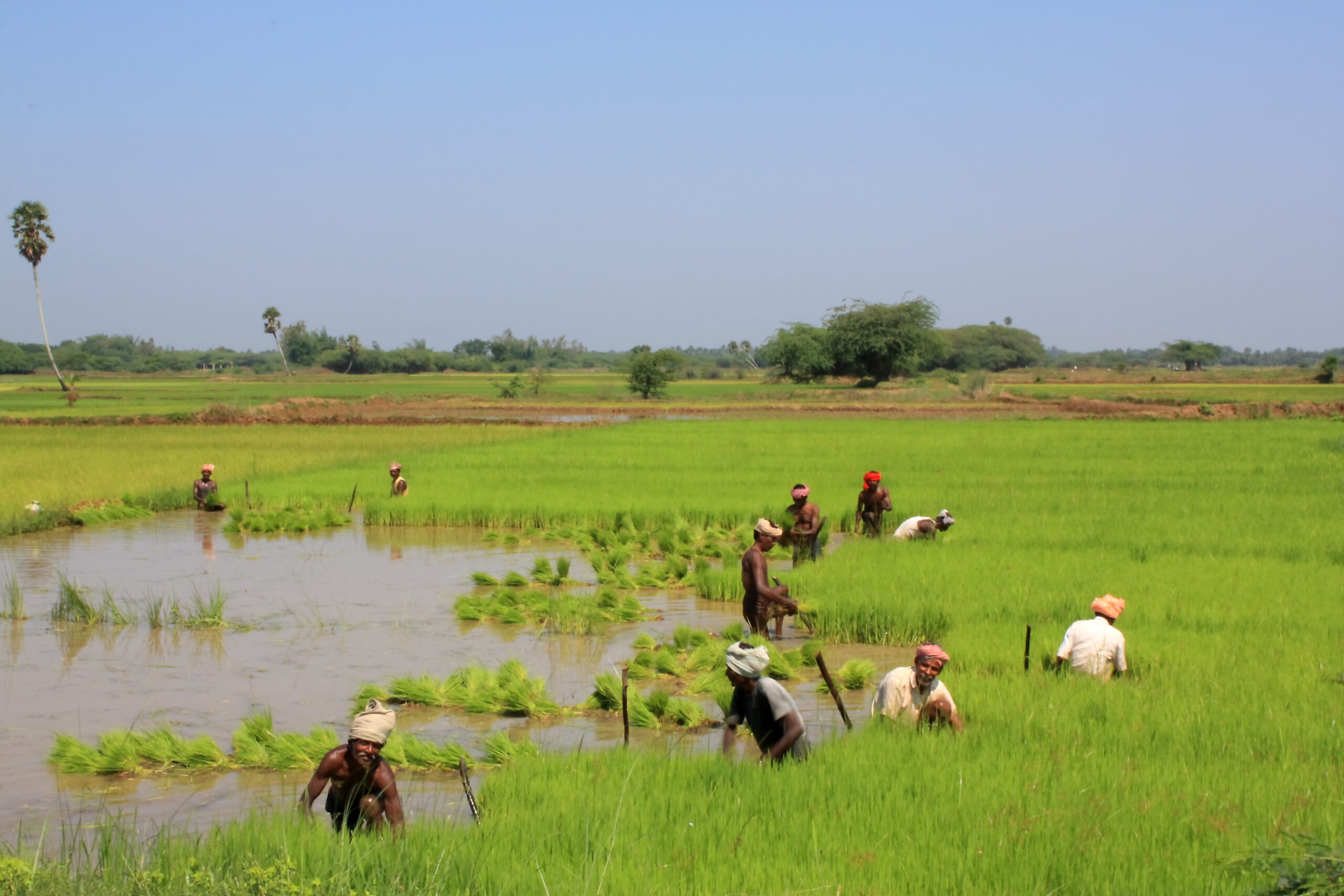
New dynasties, such as the Chera kingdom on the west coast and the Pandyas on the south, have claimed the legacy of the ancient chiefs of the Sangam period. Older ones, such as the Pallava kingdom of the northern Tamil-speaking plain, struggle to maintain their once-unquestioned hegemony. International trade, especially between South India and Southeast Asia, grows. Merchants, cultivators and Brahmins, organised into autonomous assemblies, handle much of the business — trade, tax, temple administration and irrigation — of the Kaveri floodplain.
It is into this heterogenous, dynamic world that the imperial Chola dynasty is soon to emerge.
As other Tamil royal dynasties face political setbacks, the Chola family and their allies thrive in the martial and temple patronage worlds of the medieval Coromandel coast. As the Pallavas decline, the Pandyas are subdued.
A minor king, Vijayalaya—possibly an ally or vassal of the Pallavas—captures the city of Thanjavur from the Muttaraiyar clan, establishing his capital there. Vijayalaya (r. 850–871) adopts the name ‘Chola’, naming himself after a clan of the same name from the Sangam period (third century BCE–third century CE)—a common practice in medieval South Asia.
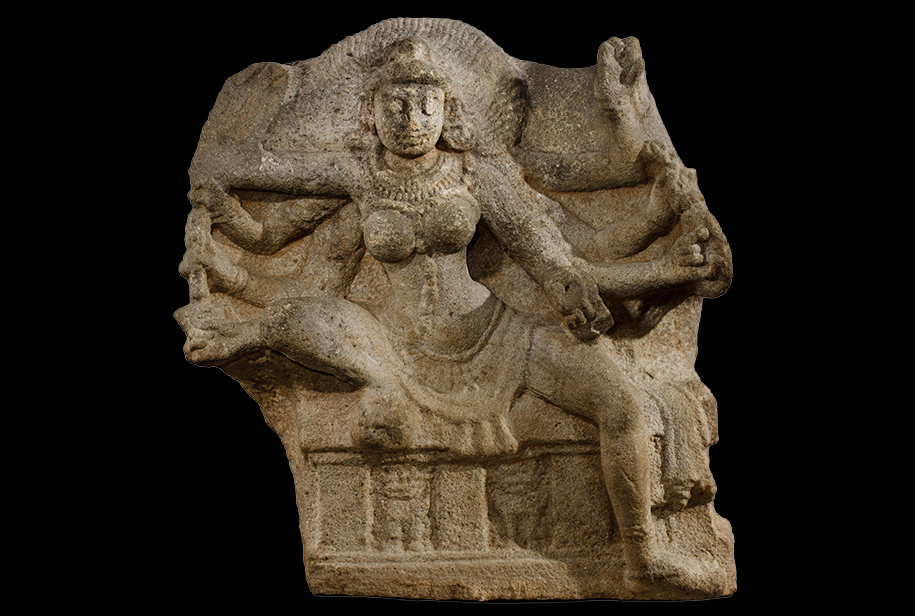
Soon after, Vijayalaya commissions a stone image of the goddess Nishumbha Sudhani (destroyer of the demon Nishumbha), thanking her for his successes. Likely a hyperlocal goddess emblematic of martial power, Nishumbha Sudhani is an independent deity in her own right. She is occasionally identified with the goddess Durga, and considered the consort of the god Shiva. Royal association with war-goddesses is already well-established in medieval South Asia. The Chola dynasty, however, will soon transition primarily to the worship of Shiva, who, through the songs of the Nayanmar poet-saints, is popular with the landed elite Vellala cultivators and influential Brahmins.
Vijayalaya’s son and successor Aditya Chola I (r. 871– 907 ) ascends to the throne, and establishes the Cholas as an independent power.
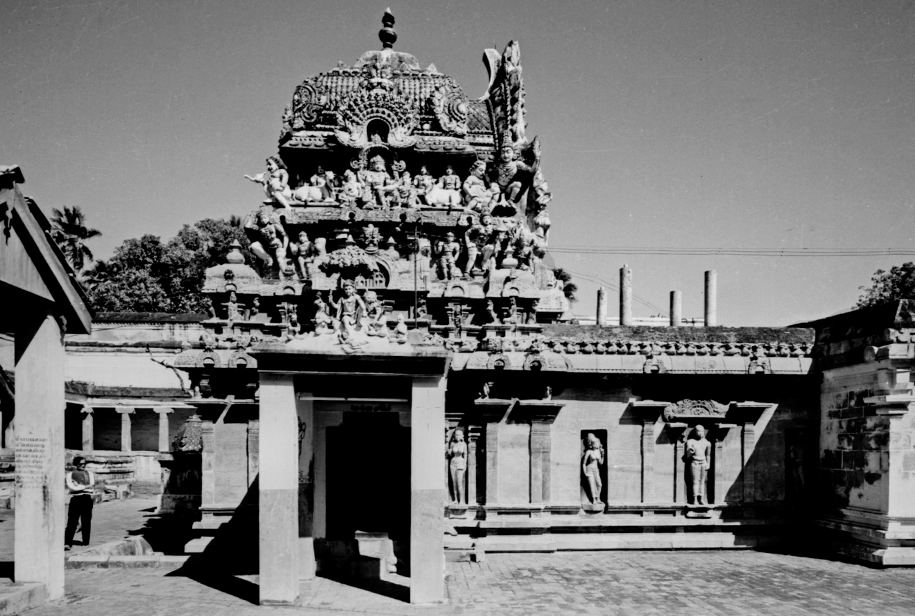
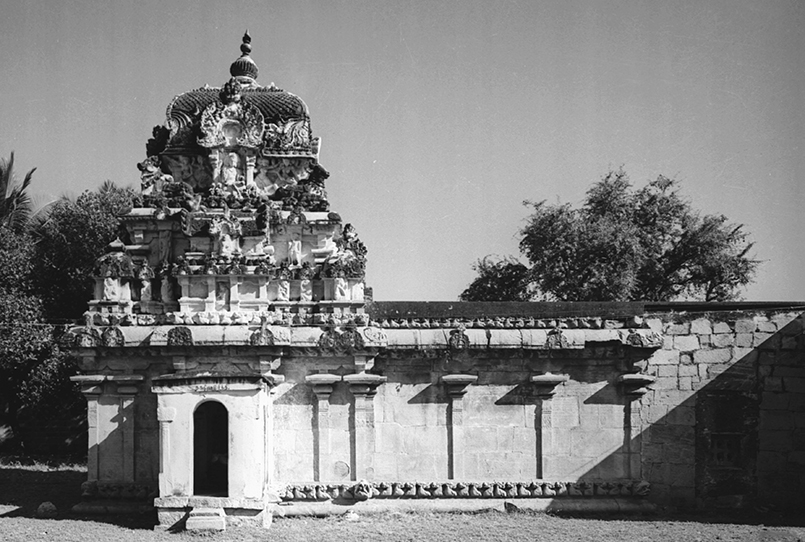
In the following decades, he expands a group of seven Shaiva shrines near Thanjavur, an area considered sacred for centuries. Scholars have debated the extent of Aditya’s direct involvement in these expansions. It is possible that Chola efforts focused on converting existing brick structures to stone, following these up with gifts of land, jewellery, staff endowments and fuel for the temples.
These seven, single-storied temples are among the first examples of Chola building activities based on the Agamas — texts that become the ritual foundation for temple Shaivism in the following centuries. Building a temple and endowing it with Agamic rituals is considered an effective way to secure Shiva’s grace and ensure liberation, where the soul becomes akin to Shiva himself.
These temples, and the general area around Thanjavur and the Kaveri river, will remain a hotspot for Chola court patronage for generations after Aditya.
Until this period, the temple deity was often a wooden sculpture, treated as a living god, following a set routine, emerging to grant an audience to devotees, and visiting the locality in temple processions.
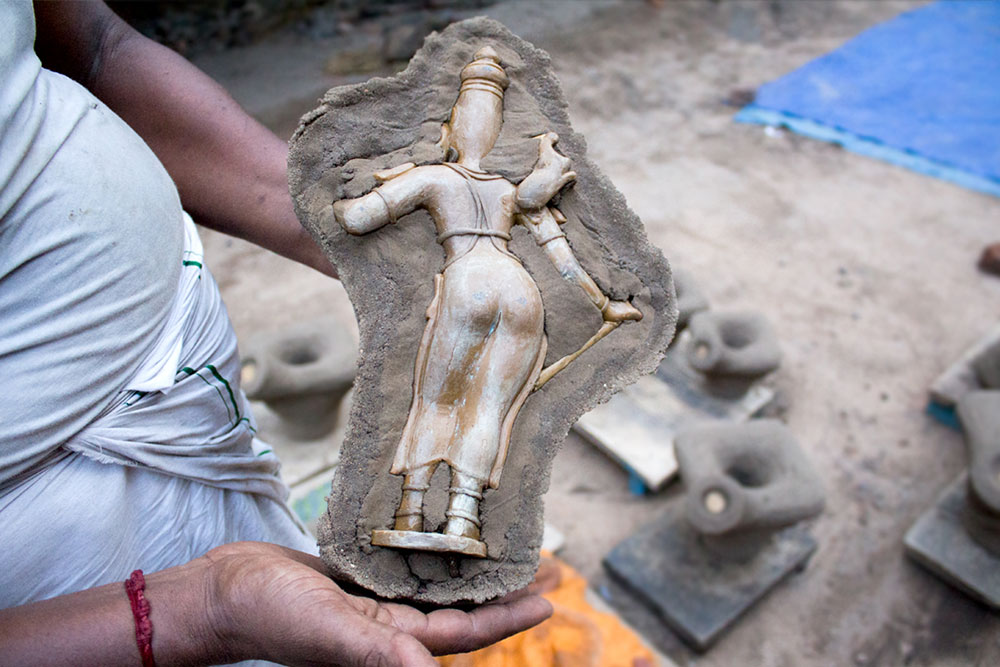
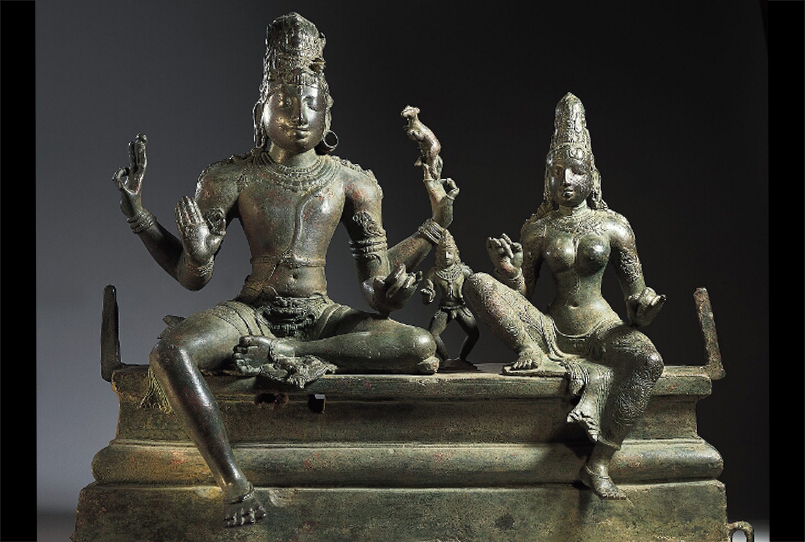
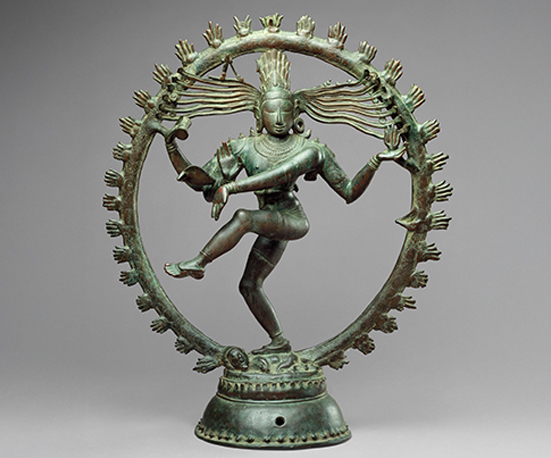
Now, however, possibly in conjunction with the trend of reconstructing temples as enduring stone structures, sacred images are increasingly being produced in metal. Called sheppu tirumeni or ‘sacred forms of copper’, such idols are cast in solid bronze: an alloy of copper, tin, lead and trace amounts of precious metals, using the lost-wax process. Scholars believe that each temple needed around 10–12 idols for a year-long ritual cycle, requiring a large number of bronze workshops to fulfil such demand. While older, Pallava-era antecedents exist, for the next few centuries, sacred bronzes will be produced on a large scale, reaching an unprecedented degree of sophistication.
Aditya Chola I is succeeded by his son Parantaka Chola (r. 907– 955) , who constructs a funerary temple over his father’s remains—the Adityeshwara Temple at Tondaimanad (Thondamanadu, in present day Andhra Pradesh)—making him the first Chola ruler confirmed to have commissioned a surviving temple.
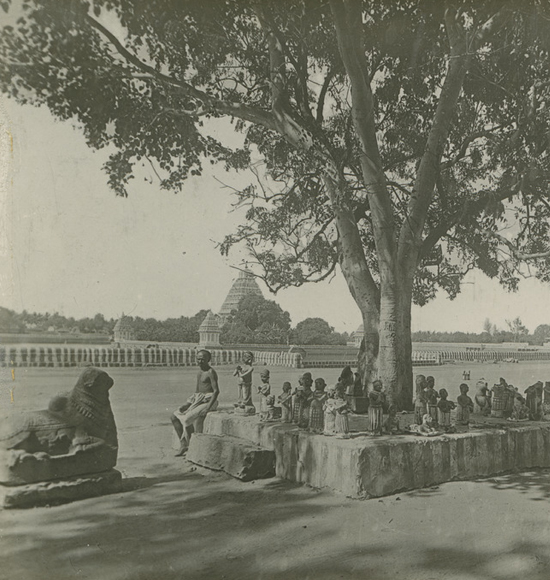
Over Parantaka’s nearly fifty-year reign, the Cholas become a major regional power. He uses marriage alliances with powerful magnates or landed elites in the region, to gather allies for further expansion. The women that arrive at the Chola court through such marriages become influential figures, actively shaping politics through their own resources. Temple patronage is a particularly important avenue for such efforts—existing popular shrines of brick and wood are converted into permanent kattrali, literally translating to ‘stone temples’.
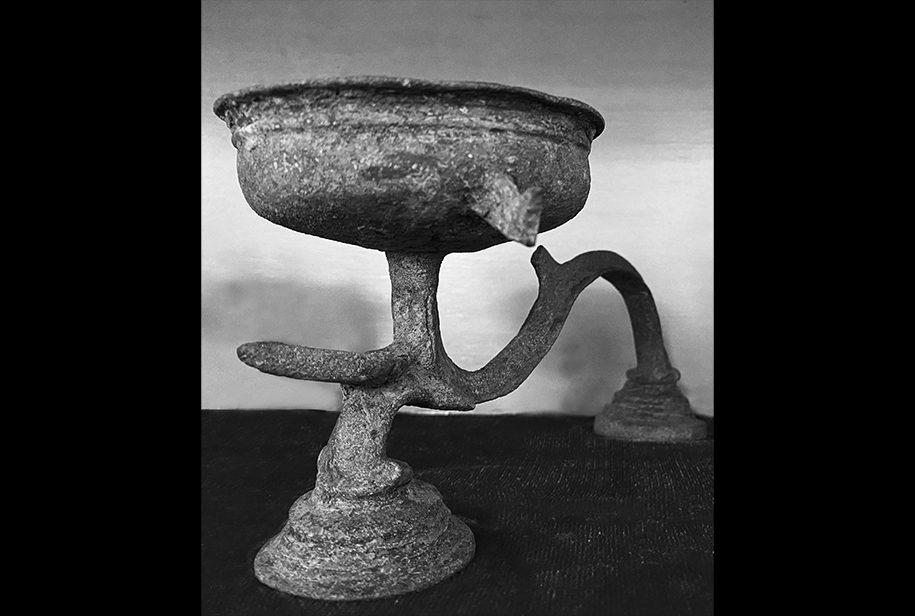
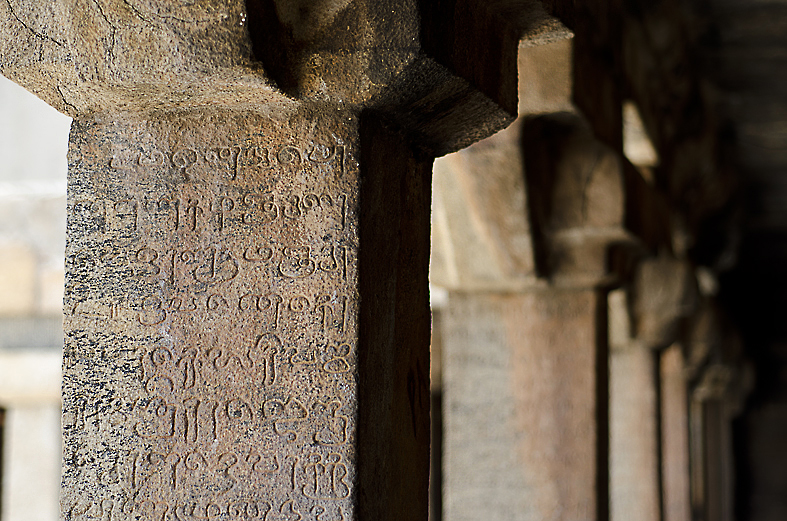
Various members of the Chola family make gifts to the group of seven temples near Thanjavur, increasing their prominence as temple patrons. Inscriptions on the temple walls reveal that these include gold, sheep and land grants for flower gardens, temple tanks, and ritual services, as well as butter for perpetual lamps. This is a time when people sleep not long after sundown, with the onset of darkness. A constant source of light is valuable, and butter for a perpetually lit lamp is considered a fitting gift to god; its donors may expect blessings, and an amplified social standing. Nearly half of the records in most medieval Tamil temples consist of such perpetual lamp donations.
Tamil gentry of various backgrounds—including the Vellala cultivator class, merchant assemblies, and Brahmin agraharas or settlements—make temple gifts. Some of these non-royal donors style themselves kattrali pichchan or ‘besotted with stone temples’, indicating a broad culture of temple patronage of which royals were only a part. These stone temples were built in the vocabulary of the Dravida order, prevalent across the Tamil-speaking region but with distinct familial, sub-regional and workshop-specific variations.
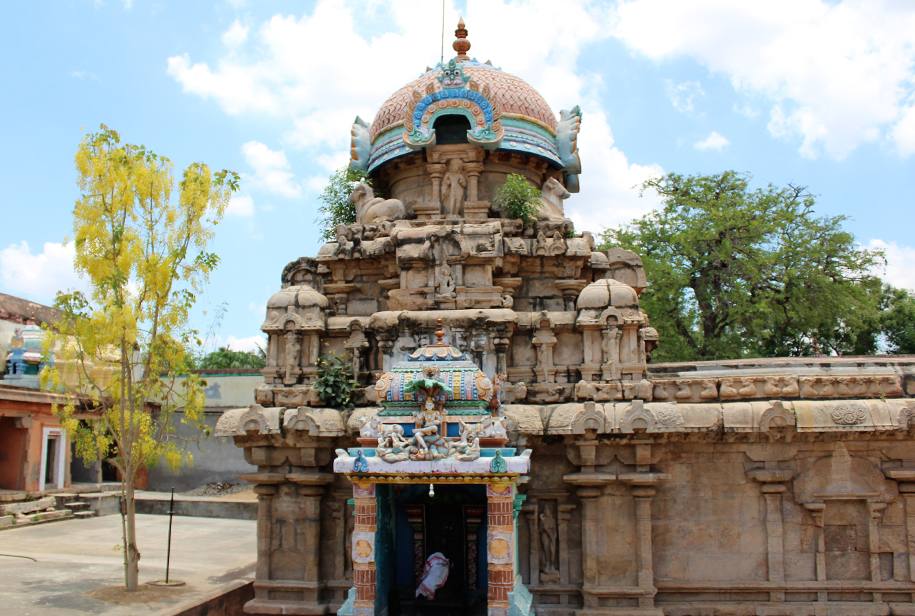
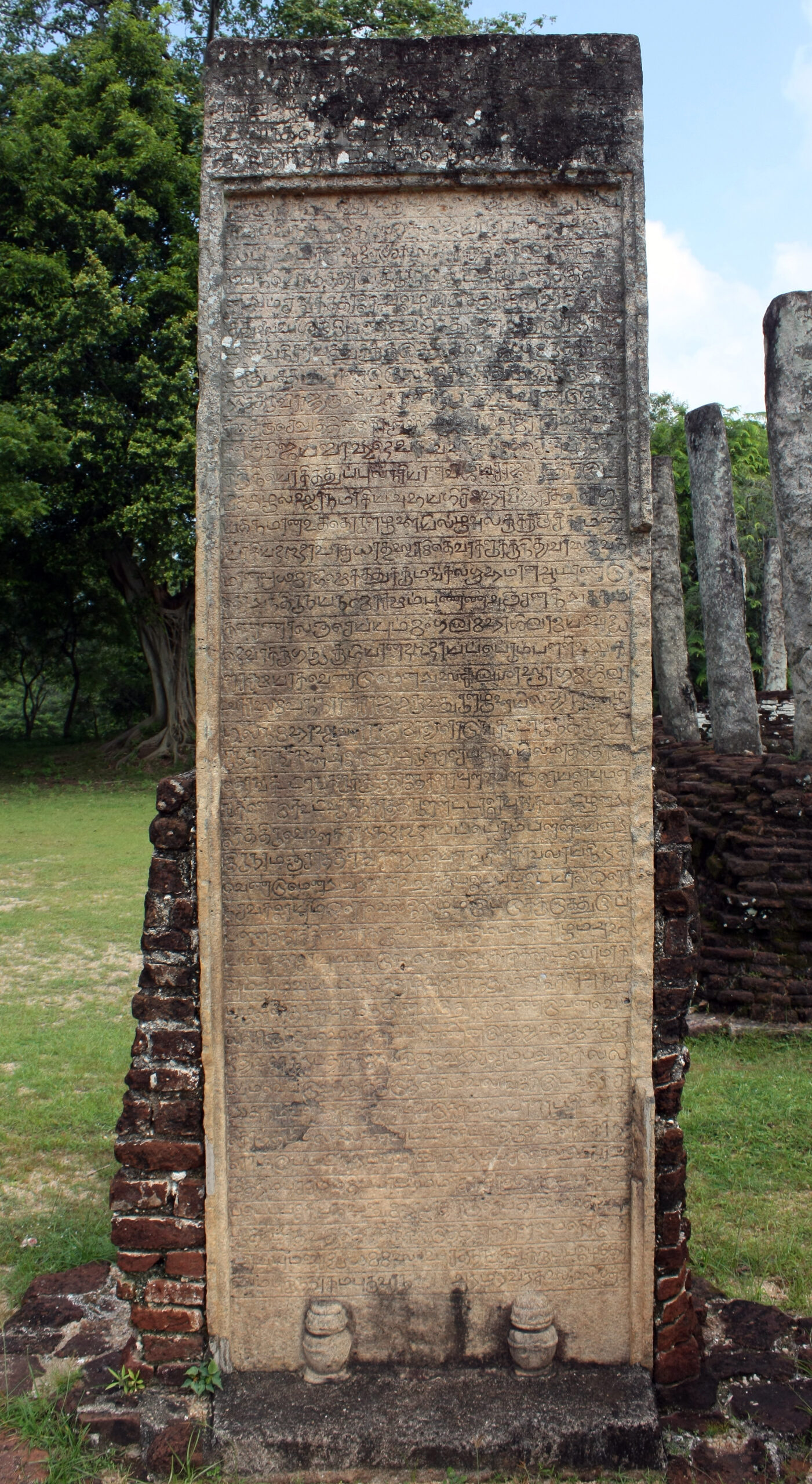
Nangai Bhuti Pidaraiyar, wife of the Chola prince Arinjaya, and daughter-in-law to king Parantaka, commissions a Shiva temple at Tiruchendurai.
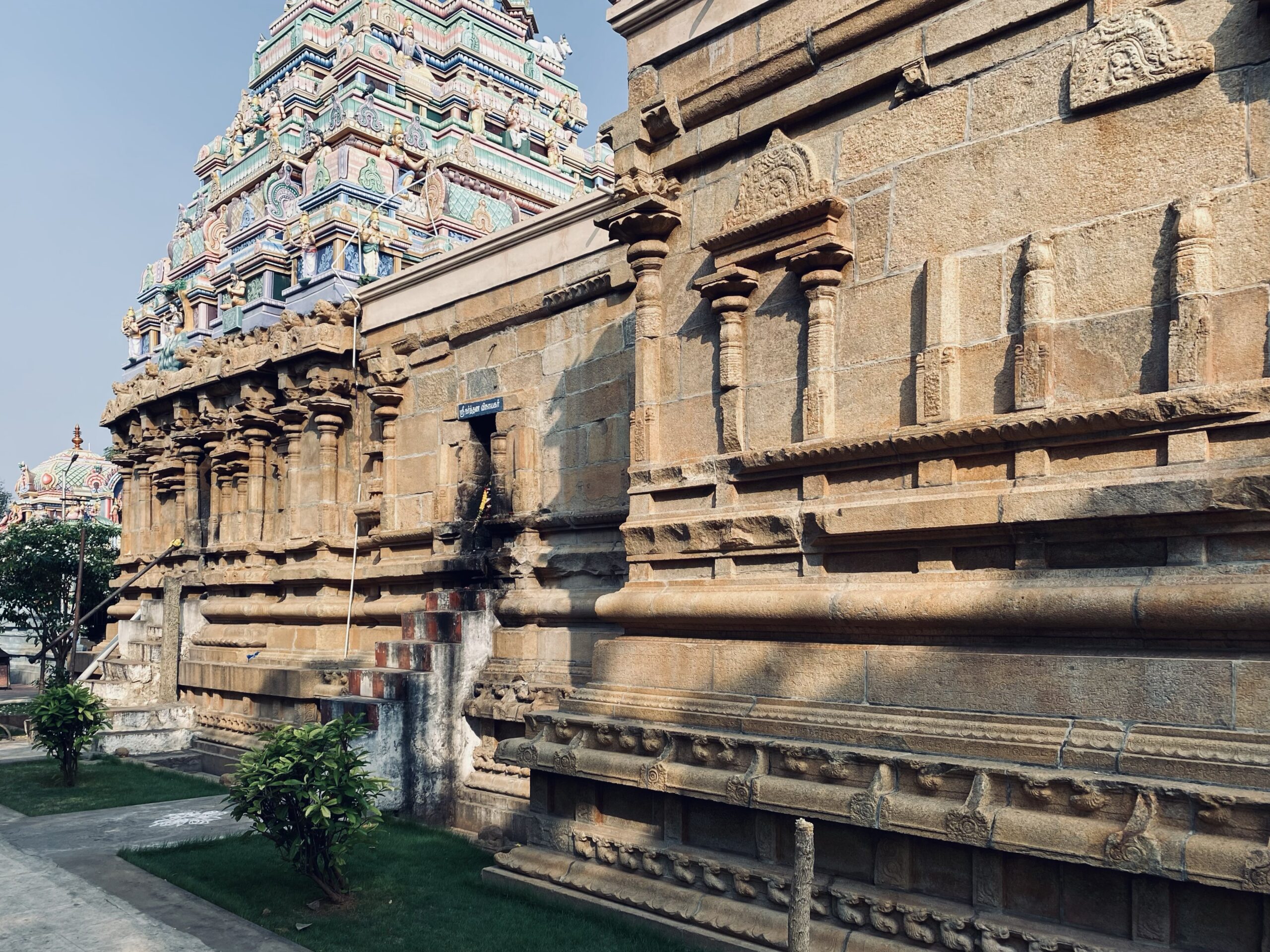
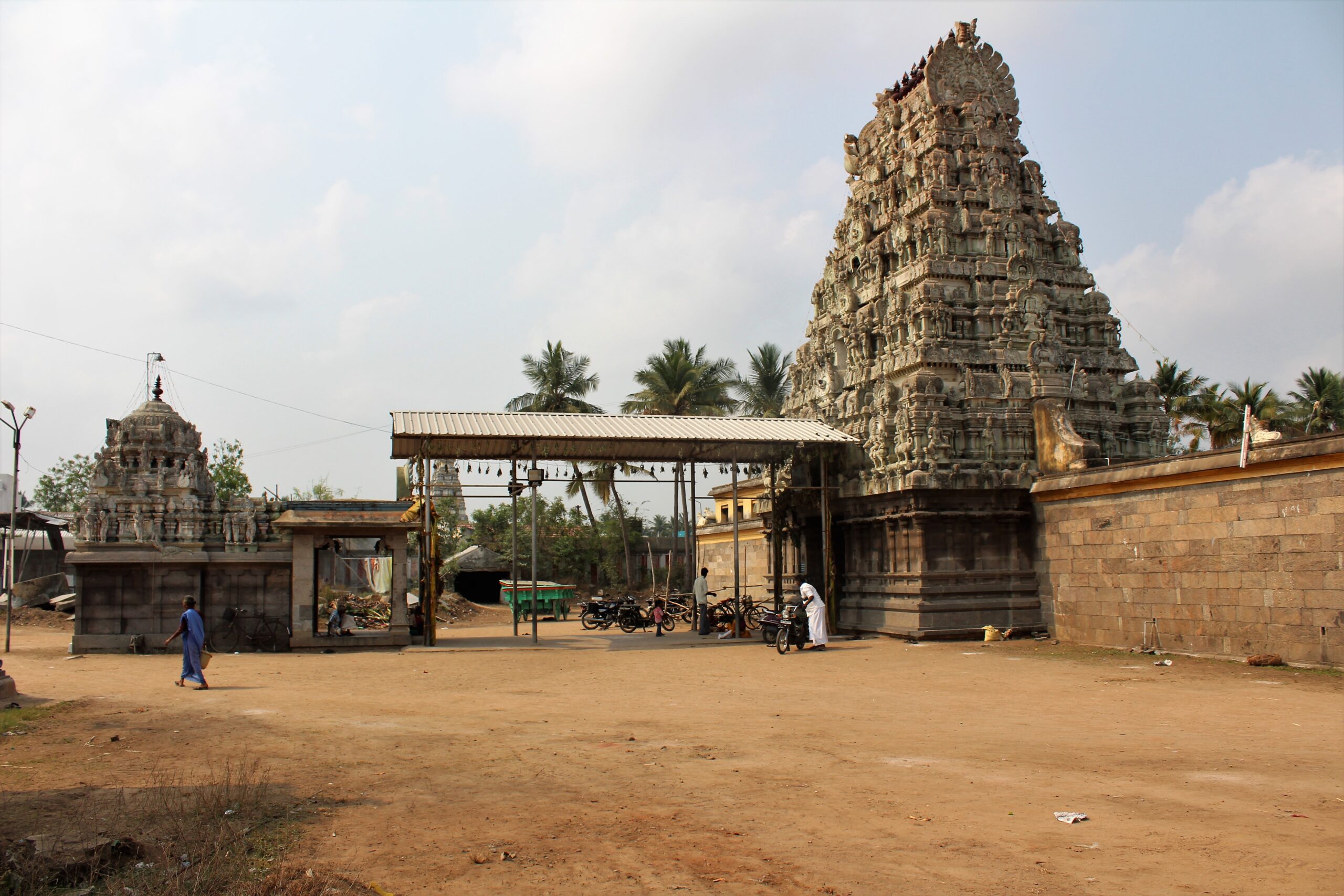
Nangai was born into the Irukkuvel family, rulers in present-day Pudukkottai, Tamil Nadu, and major allies of the Cholas. The location of her temple—on the banks of the Kaveri, firmly within Chola territory—coupled with the architectural style she chooses—the Irukkuvel style—can be interpreted as an assertion of her own identity, at once both Irukkuvel and Chola. With its two-tiered plan, lotus and leonine mouldings at the foundation, and flared, square-shaped capstones, the temple resembles those of Nangai’s father, constructed in their home territories at Kodumbalur.
A few temples across the region share a visual vocabulary with the Irukkuvel temple style, although not commissioned by members of the family. This has led scholars to suggest that a single artisanal workshop favoured by the Irukkuvels is responsible for all these temples.
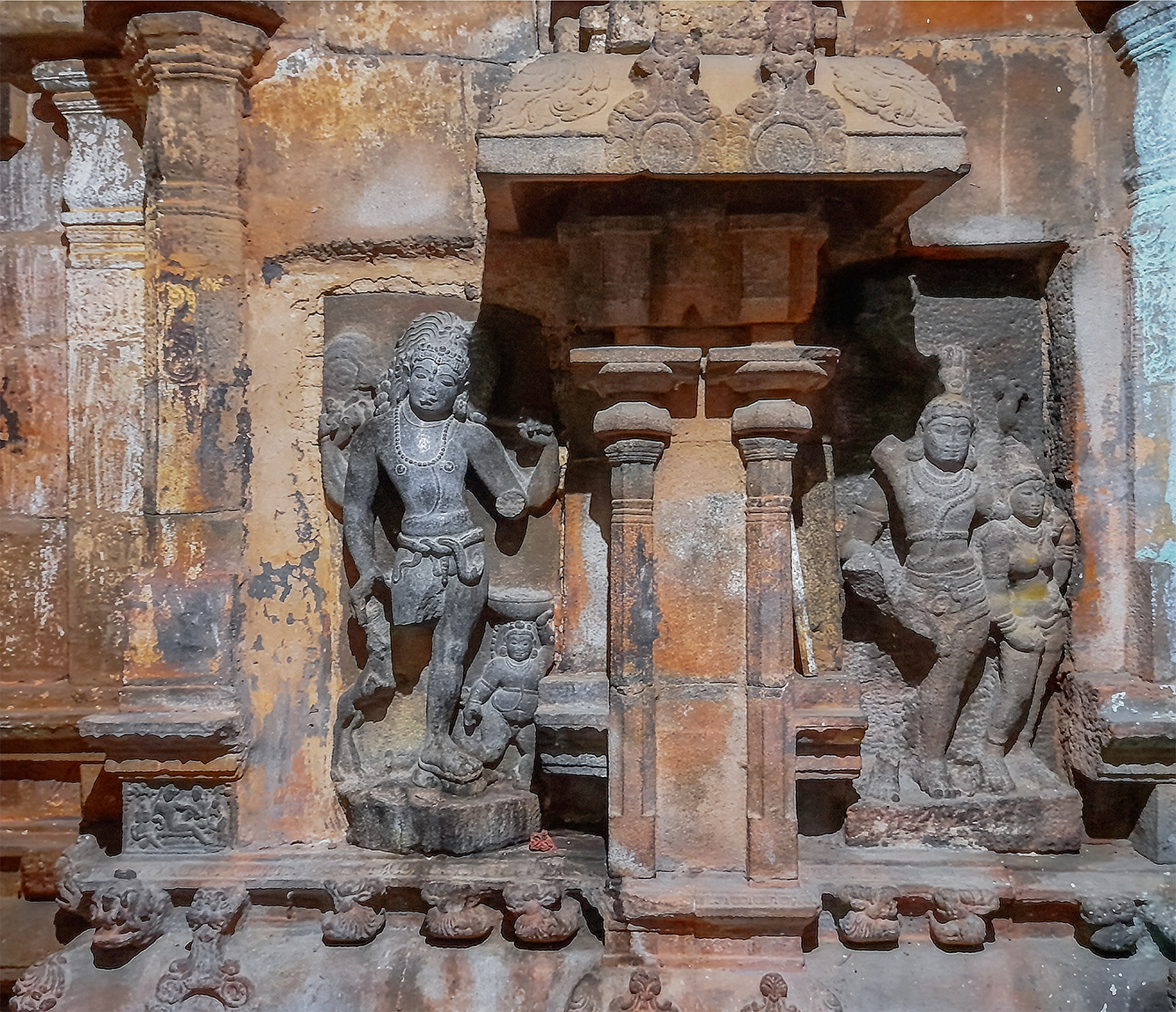
Shiva, by now the most popular deity, is worshipped in many forms—as Tripurantaka or the ‘Destroyer of Three Forts’; as Kalyanasundara, in his married form, with his wife Parvati (or Uma); and as Somaskanda, depicted with Parvati and their son Skanda. These popular forms of Shiva reflect the main preoccupations of the medieval elite—war, marriage and family.
As more temples are commissioned, a growing number of patrons—ranging from court elites to local gentry—hope to gift sculptures to these temples. Across the Kaveri valley, sculptor workshops emerge to cater to this demand, developing distinctive styles in the process.
There are broadly two stylistic lineages in bronze. The ‘Coastal’ workshops are based around the port of Nagapattinam and produce slender and sinuous images, with perfectly oval faces and elongated torsos, creating an impression of height. The ‘Capital’ workshops are based around Thanjavur, and go as far inland as Tiruchirappalli. Their bronzes have compact torsos and comparatively broader shoulders, making them appear more grounded, with heads appearing less oval and more square. Such stylistic differences are visible in both the bronze and stone sculptures of the period.
Patterns of devotion in the region are restructured by Chola interventions. The Cholas suffer and recover from military setbacks. Nataraja or Shiva as ‘The King of Dance’, grows ever-more closely linked to the Chola royal family through the activities of Sembiyan Mahadevi.
Sembiyan Mahadevi, is sister-in-law by marriage to Nangai Bhuti Pidaraiyar; they are married to the sons of the king Parantaka Chola – Gandaraditya and Arinjaya, respectively. Following a period of dynastic turbulence, Sembiyan’s son Uttama (r. ~970– 985) ascends to the Chola throne, and she commissions an Uma-Maheshwara temple, close to the Chola palace complex at present-day Kumbakonam, Tamil Nadu.
Unlike the aristocratic princess Nangai, Sembiyan Mahadevi is not known to have had a family workshop of her own. She appears to have selected her own teams of sculptors, who created a distinctive style seen in all the temples she commissioned.
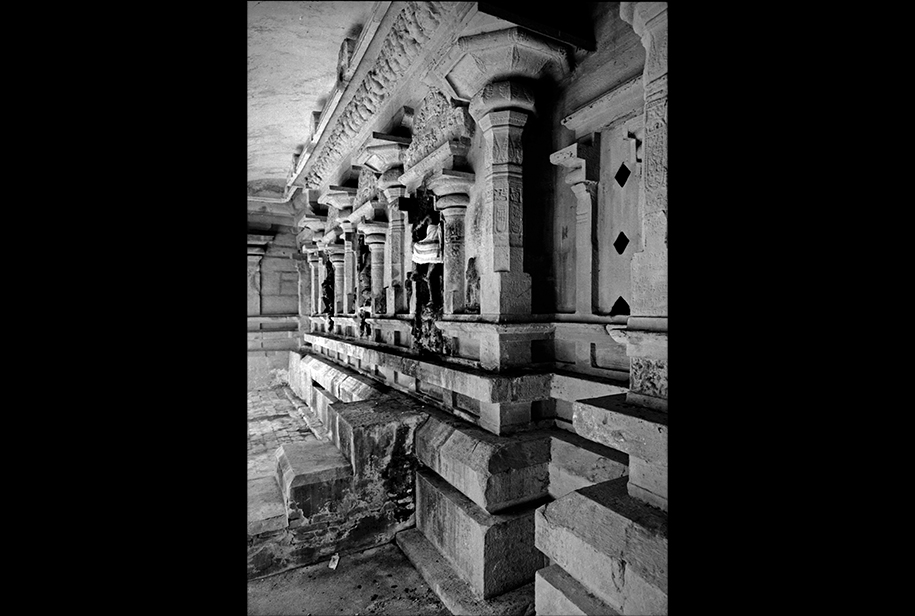
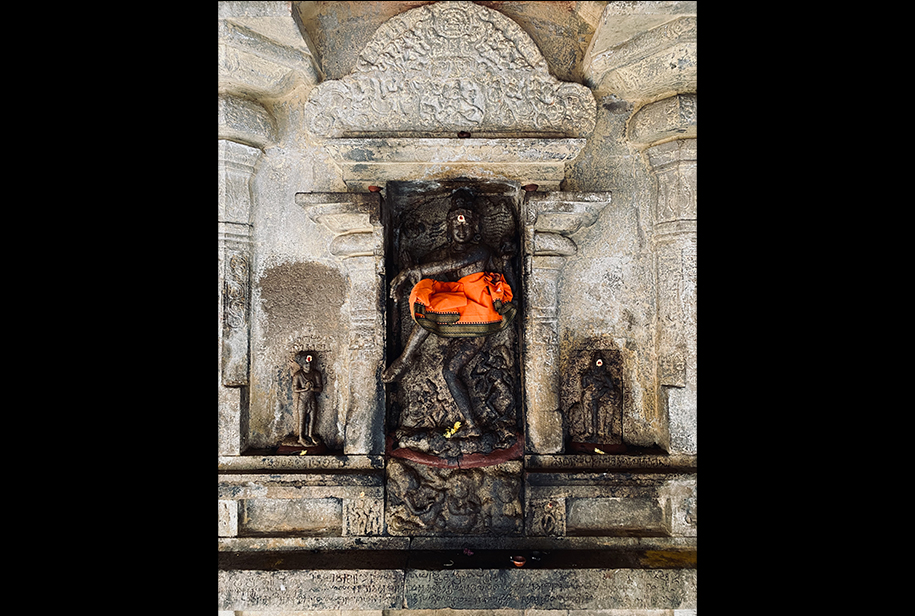
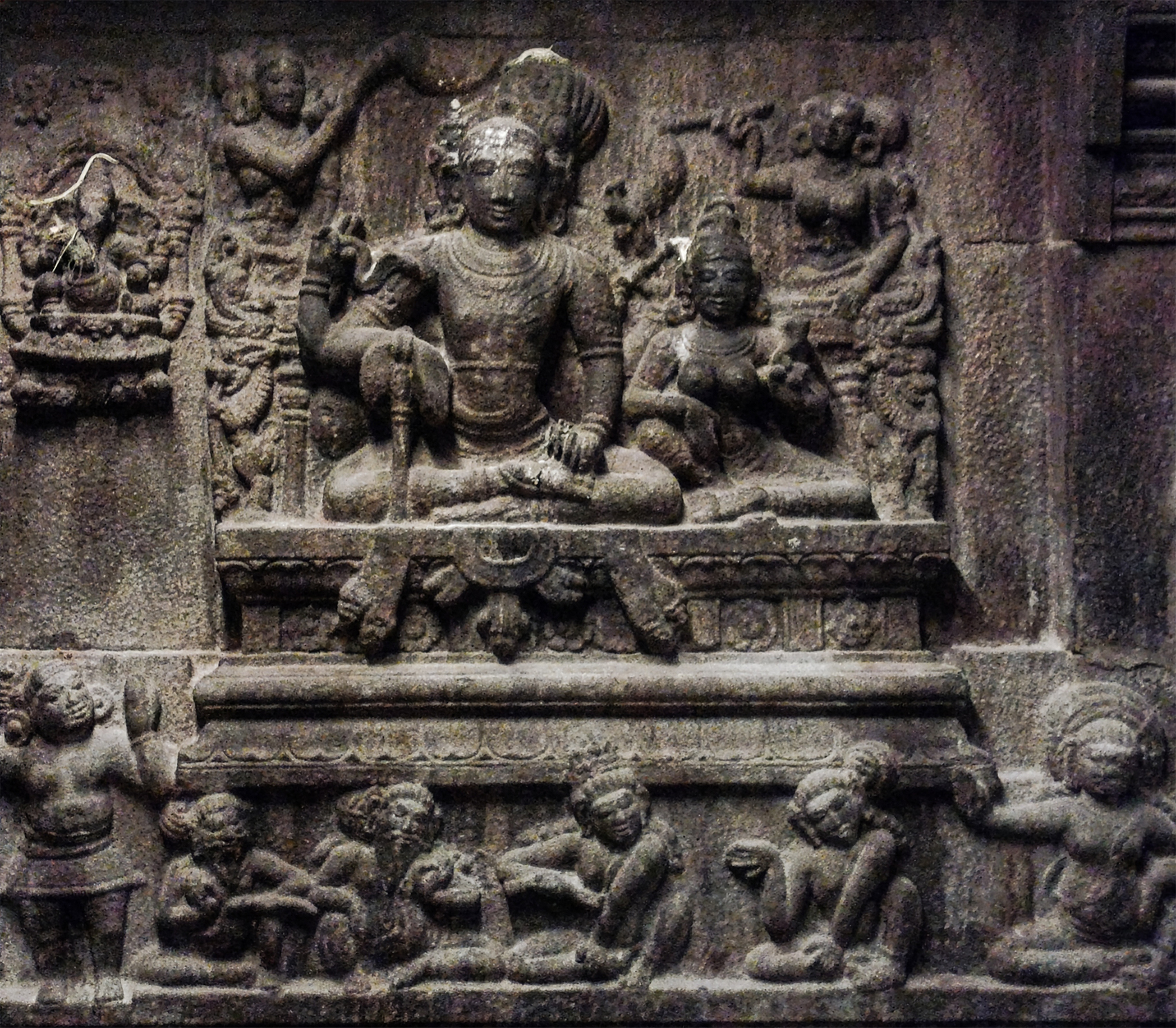
The Sembiyan style is a distinct variant of the Dravida order, and will grow into a popular visual template associated solely with the Chola dynasty. Unlike at Nangai’s temple at Tiruchendurai, Sembiyan’s temples feature life-like sculptures on the mandapa exterior. South-facing Nataraja sculptures are particularly prominent in Sembiyan’s temples. She also positions sculpture-portraits of her husband and son close to the god, linking Chola royal devotion to the power of the deity.
While Sembiyan made minor temple gifts during the reign of her father-in-law Parantaka, during her son Uttama’s reign from ~970–985, her public persona grows most substantially, a direct consequence of her position as the single most prominent patron of the arts in the core region of the Chola territories. She uses her gifts to appease and integrate local gentry, nadu (district) assemblies and magnates into Chola-dominated temple institutions, offering them prestige as the executors of the royal will. Sembiyan frequently makes endowments for the singing of the verses of the Nayanmar poet-saints, a popular devotional practice that now becomes increasingly institutionalised and integral to the functioning of Tamil temples.
Sembiyan’s temple activities in the northern peripheries of the kingdom can be seen as an attempt to consolidate Chola rule there, ingratiating the royal family with the local populace through a display of piety and generosity. Her development of temple patronage as the central focus of Chola kingship, and her dissemination of ‘Sembiyan-style’ temples will far outlast her. Her architectural signature will eventually become known as the ‘Chola’ style, with the ‘dancing Shiva’ carved in a fully-framed niche on the southern wall being the most important feature. Such temples will grow into powerful sites for royal image-building and most importantly, as routes for local elites to participate in royal activities.
For centuries until this point, the worship of Shiva as Nataraja or the ‘King of Dance’ has been centred at a minor shrine in Tillai, present-day Chidambaram in Tamil Nadu, where the local population has worshipped a bronze idol known as Adavallan – ‘Expert Dancer’. By the time Sembiyan becomes Dowager Chola Queen, Nataraja is an important god, but not well-known in the Kaveri floodplain; he also shares space at Chidambaram with other deities, such as the mother goddess and Vishnu Govindaraja. As Nataraja is incorporated into Sembiyan-style temples across Chola territories, he becomes far more recognisable and popular as a symbol of Chola power.
Dancing Shiva images dating to earlier periods exist, but it is in the ninth–tenth centuries CE, that their iconography is fully established. Indicating the success of Sembiyan’s policies, over the next three centuries, over 3,000 bronzes of Nataraja will be commissioned across the Tamil-speaking region.
Merchant assemblies had been active temple patrons even as early as Vijayalaya Chola’s reign in the late ninth century, when they excavated a tank in present-day Pudukkottai district. Groups of merchants such as these collaborate and operate together to expand trade, using their collective numbers to influence the polities that they often work with.
Now, two merchant assemblies—the Valanjiyar (The Southern Sri Lankan Traders) and Ainnurruvar (The Five Hundred)—come together to join the many groups, including nadu (district) assemblies, in commissioning temple reconstructions.
The Valanjiyar and Ainurruvar interrupt an ongoing renovation of the Manavaleshvara Temple in present day Tiruvelvikkudi, Tamil Nadu, to incorporate elements like devakoshtas (niches on walls housing images of deities) on the mandapa, and broadly follow the sculptural program popularised by Sembiyan, especially the integration of a Nataraja image on the southern exterior wall of the mandapa. This is one among many examples of the dissemination and adoption of the ‘Sembiyan style’ across the Chola realm in the late tenth century. It would prove to be one of the most influential variations of the larger, developing Dravida order.
Rajaraja Chola I and his son Rajendra I transform the Chola polity into a militaristic transregional empire, with a drastically expanded ability to patronise temples. This encourages transformations in Tamil temple functioning, as they offer new avenues for devotion and socialisation.
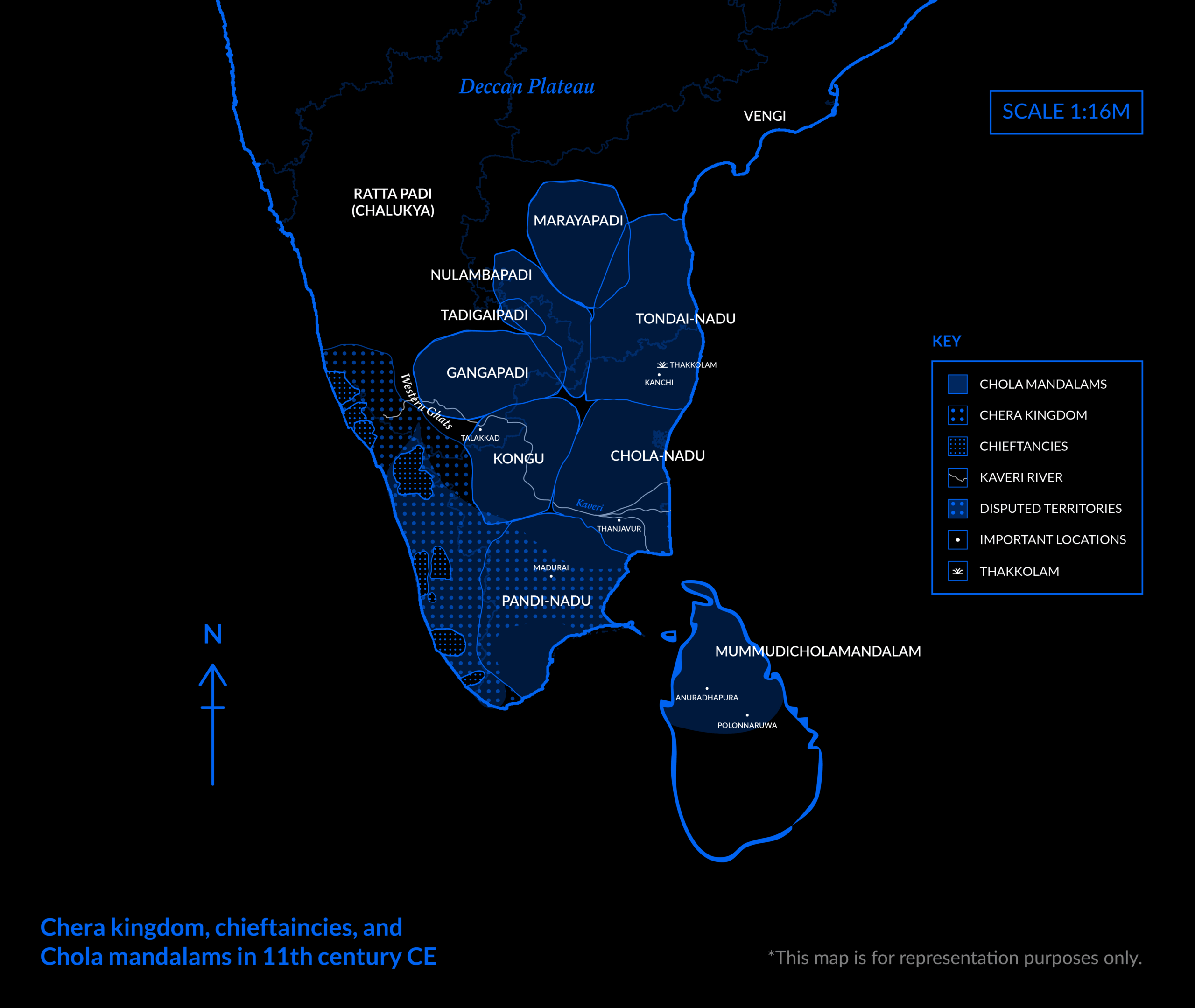
Arulmozhi Varman, grandson of Nangai Bhuti Pidaraiyar and grand-nephew of Sembiyan Mahadevi, ascends to the Chola throne, assuming the title Rajaraja, ‘King of Kings’; a name by which he is henceforth known. He aggressively expands Chola power, raiding a Chera-controlled port on India’s southwest coast. He then conquers Talakkad, capital of the Western Ganga rulers, renaming it Rajarajapuram after himself.
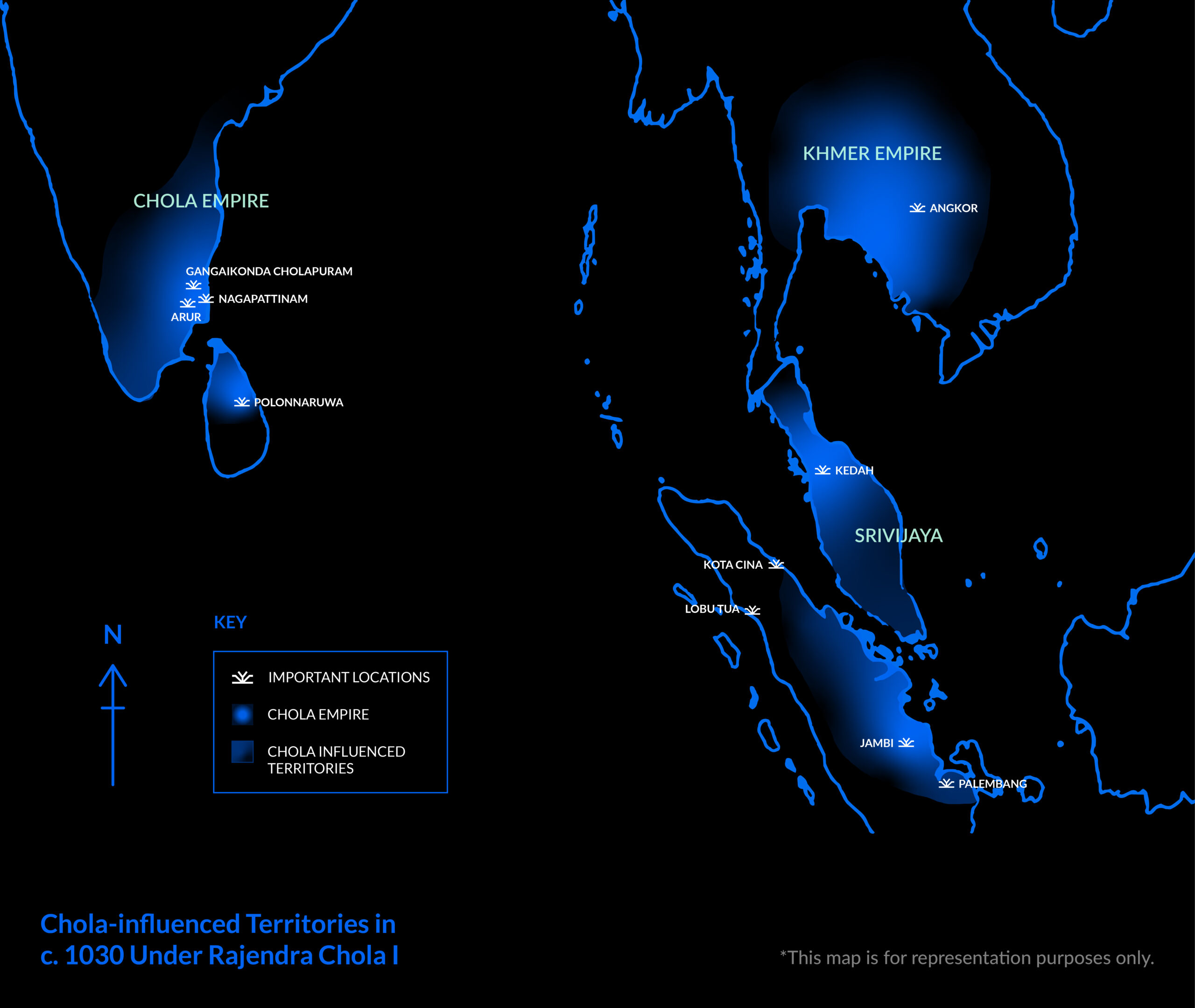
Rajaraja Chola (r. 985–1014) also conquers the northern portion of Sri Lanka, naming it Mummadicholamandalam (Circle of the Three-Crowned Chola). While Tamil traders and Brahmin groups lived on the island before Chola conquests, their epigraphic presence increases after the establishment of the Cholas at Polonnaruwa. The previous capital of Anuradhapura goes into terminal decline, as this new centre of power emerges. The Chola state extends from present-day southern Karnataka and Andhra Pradesh, to northern Sri Lanka. Towards the end of his reign, c. 1013 CE, Rajaraja also sends Tamil merchant emissaries to the Song imperial court of China, possibly the result of a tacit alliance with merchant assemblies seeking to expand their commercial and diplomatic footprint.
Rajaraja initiates substantial administrative transformations. The Kaveri floodplain, previously divided into over 500 uneven nadus (districts), is now divided into nine almost equally-sized valanadus or ‘prosperity districts’, demarcated by major canals. This increases the efficiency of taxation, while diminishing the influence and power of older, local nadu loyalties.
Rajaraja Chola uses his conquests to accumulate immense wealth, which he channels into massive temple donations, following Sembiyan Mahadevi’s precedent of directly linking the royal family with local devotions. His military and administrative officials, army regiments, and family members become an influential class of temple patrons. Their gifts are frequently prefaced with a eulogy to Rajaraja’s military prowess and his generosity to temples.
Rajaraja appoints srikaryam (sacred works) officers to oversee temple endowments. His court, therefore, is able to influence the temple gifting behaviours of the wider Tamil gentry, who begin to include the Chola royal eulogy as a preface to their own donations.
All these developments are indicators of a new Chola state—transregional, with a centralised core reliant on temple gifts to disseminate Chola charisma, and focused on the personality of the emperor as martial leader, premier devotee and generous patron.
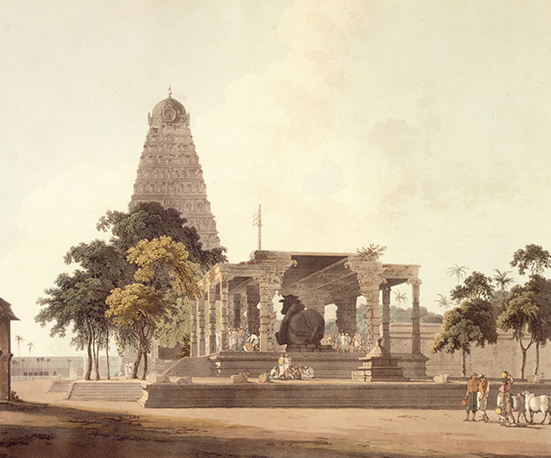
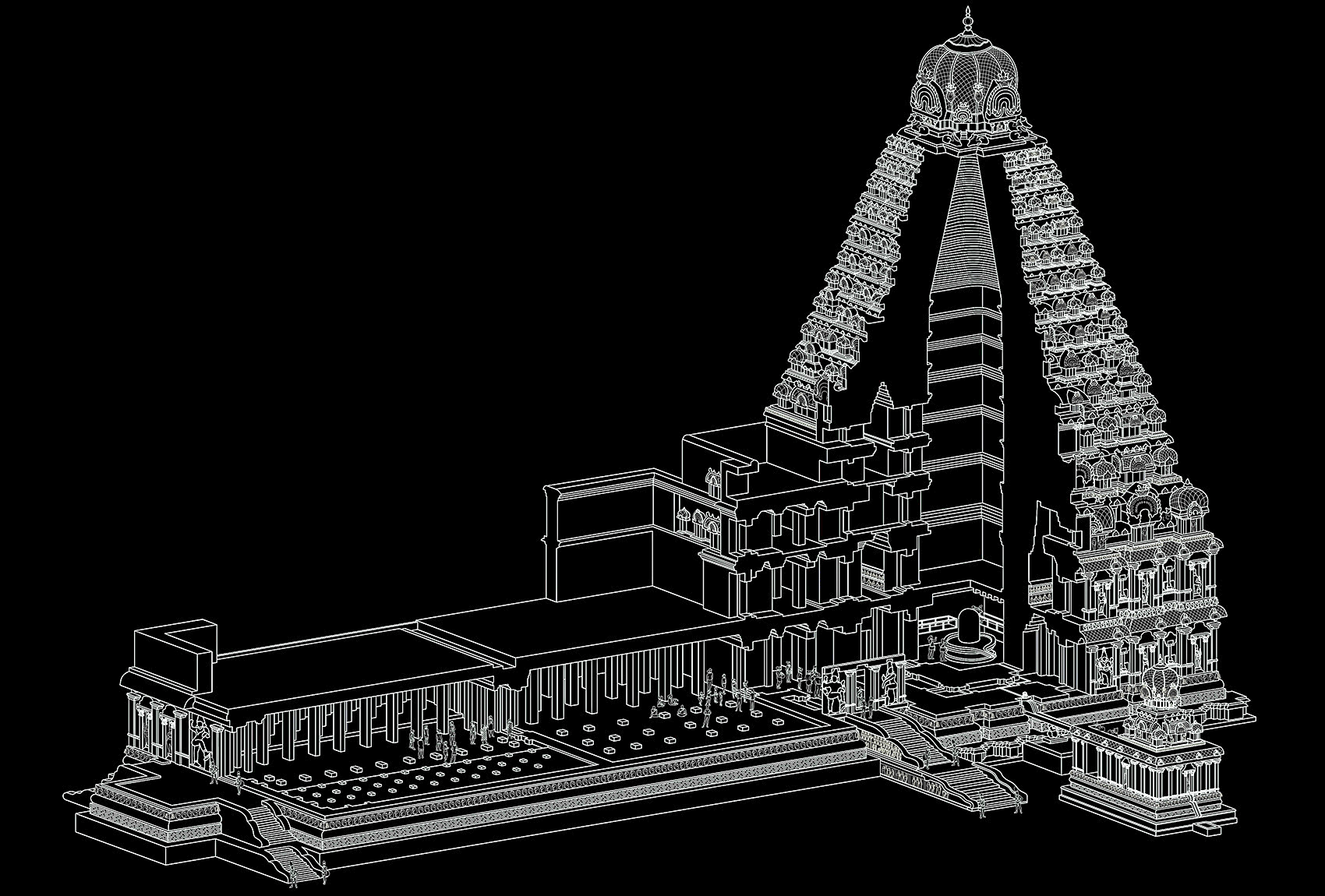
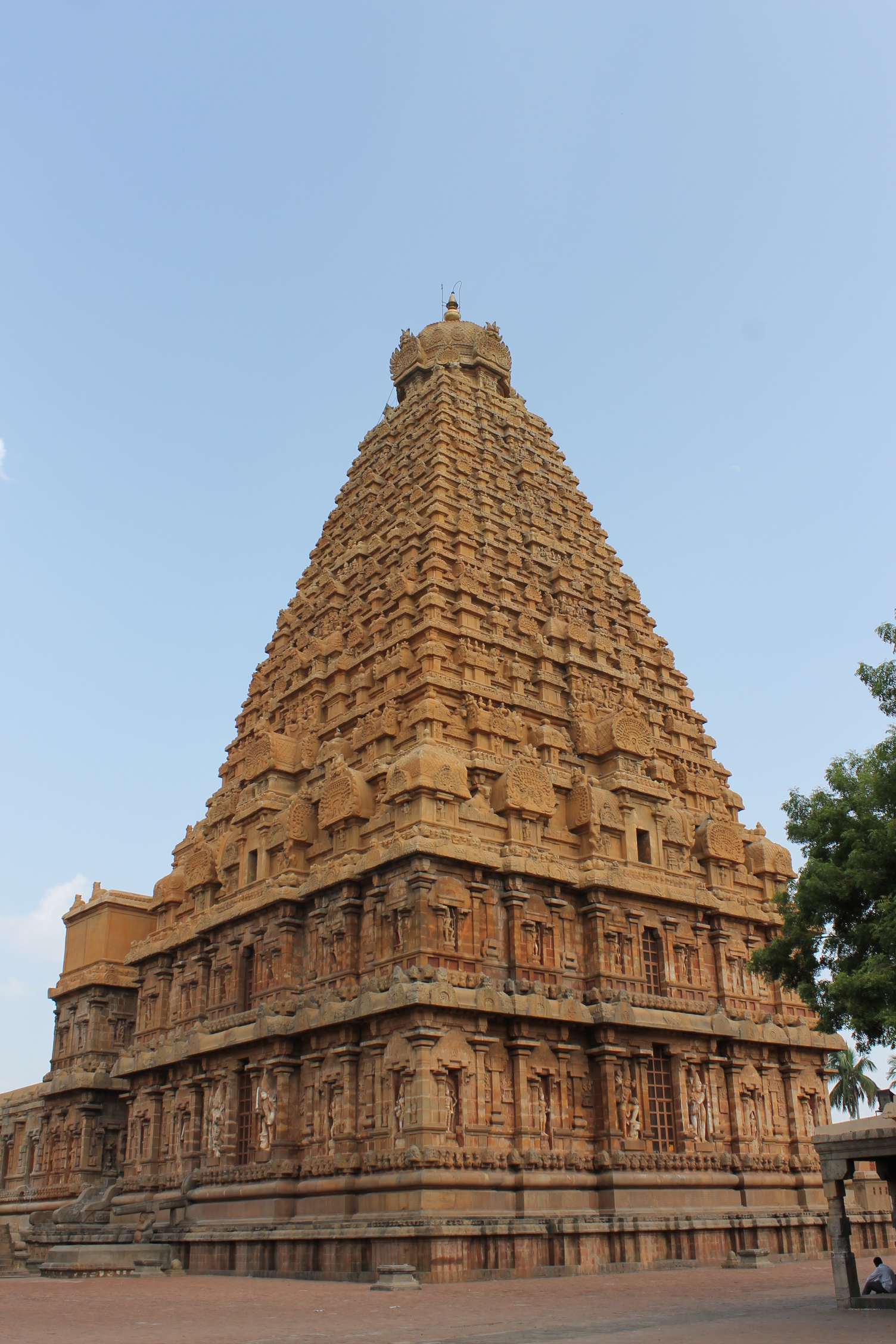
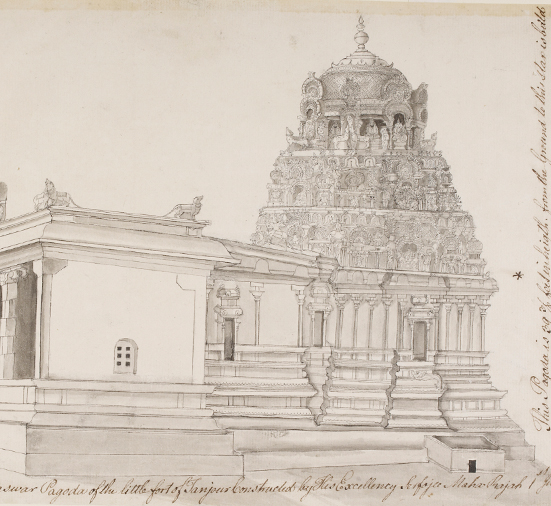
A new colossal temple is built and completed in Thanjavur—the Rajarajeshwaram, or ‘Home of Rajaraja’s Lord’. Today, this structure is known as the Peruvudaiyar or Brihadeeswara Temple. Its central spire, or vimana, rises an astonishing sixty-six metres, towering over the region’s landscape, and entirely unmissable.
This colossus is the symbolic centre of Rajaraja’s imperial formation, and is intended as a new cosmic world-axis, as the king has symbolically conquered and reoriented the four quarters of the medieval Indian world around himself as ‘King of Kings’. This is suggested by the temple’s other name: Dakshina-Meru, the Southern World-Mountain.
The lavish temple is built from the concentrated wealth acquired from the preceding seasonal wars across Chola frontiers. Experienced workshops are hired to work on the many sculptures in the niches of the two-tiered sanctum exterior. However, quite a few smaller auxiliary sculptures at the Rajarajeshwaram are left incomplete and smoothed over, possibly in order to ensure its inauguration on the 275th day of Rajaraja’s 25th regnal year.
The Rajarajeshwaram Temple appears to have been designed as deliberately transregional, incorporating a two-floor sanctum—a design from the Vengi region—and integrating shrines to minor deities into its prakara (compound) wall, as was more typical in Tondai Nadu. The temple is forty times larger than the average temple in the Kaveri floodplain, and Rajaraja’s architects—who possibly came from across the empire—develop a construction plan without ever experimenting with temples of intermediate size. The size of the structure demands creative solutions, suggesting that the workshops and architects involved have a substantial knowledge of practical engineering, as well as carte blanche to break or bend scriptural injunctions as necessary.
The upper storey of the sanctum exterior contains 32 depictions of Shiva Tripurantaka (Shiva as Destroyer of Three Forts). The prominence of this form of Shiva in the sculptural program has led some scholars to argue that Tripurantaka was the ishtadevata or ‘preferred deity’ of Rajaraja I. Others have emphasised the prominence of Nataraja in the temple’s murals, weight measures, and the iconography of the primary bronze statue. The scale of the temple structure, the transregional nature of its architecture and endowments, and its focus on Rajaraja’s close relationship with Shiva all exemplify the nature of his new Chola state. Scholars have suggested that Rajaraja, as primary patron, may have commissioned the temple believing in his assured ascension to a Shiva-like form.
Members of the royal family, courtiers, military generals, local notables—those who want to display their links to the Chola court—become patrons of the Rajarajeshwaram Temple. Rajaraja’s sister Kundavai commissions four bronze idols to be worshipped at the temple, and endows them with large amounts of gold and jewellery. Nayanmar verses are sung and patronised at the temple, and their legends are depicted in its murals, further cementing the Nayanmar’s position in Tamil Shaivism.
In offering such gifts, donors accrue status, recognition and religious merit, per the systems of Agamic Shaivism. At a more quotidian level, temple donations allow the continued formation of networks of people expressing their connections, status, wealth and religious merit to each other, through inscriptions on the temple.
Emulating the gifting behaviours of the Chola court, local grandees, army regiments, and members of the Vellala and Brahmin gentry actively engage in temple patronage by commissioning bronze sculptures of deities.
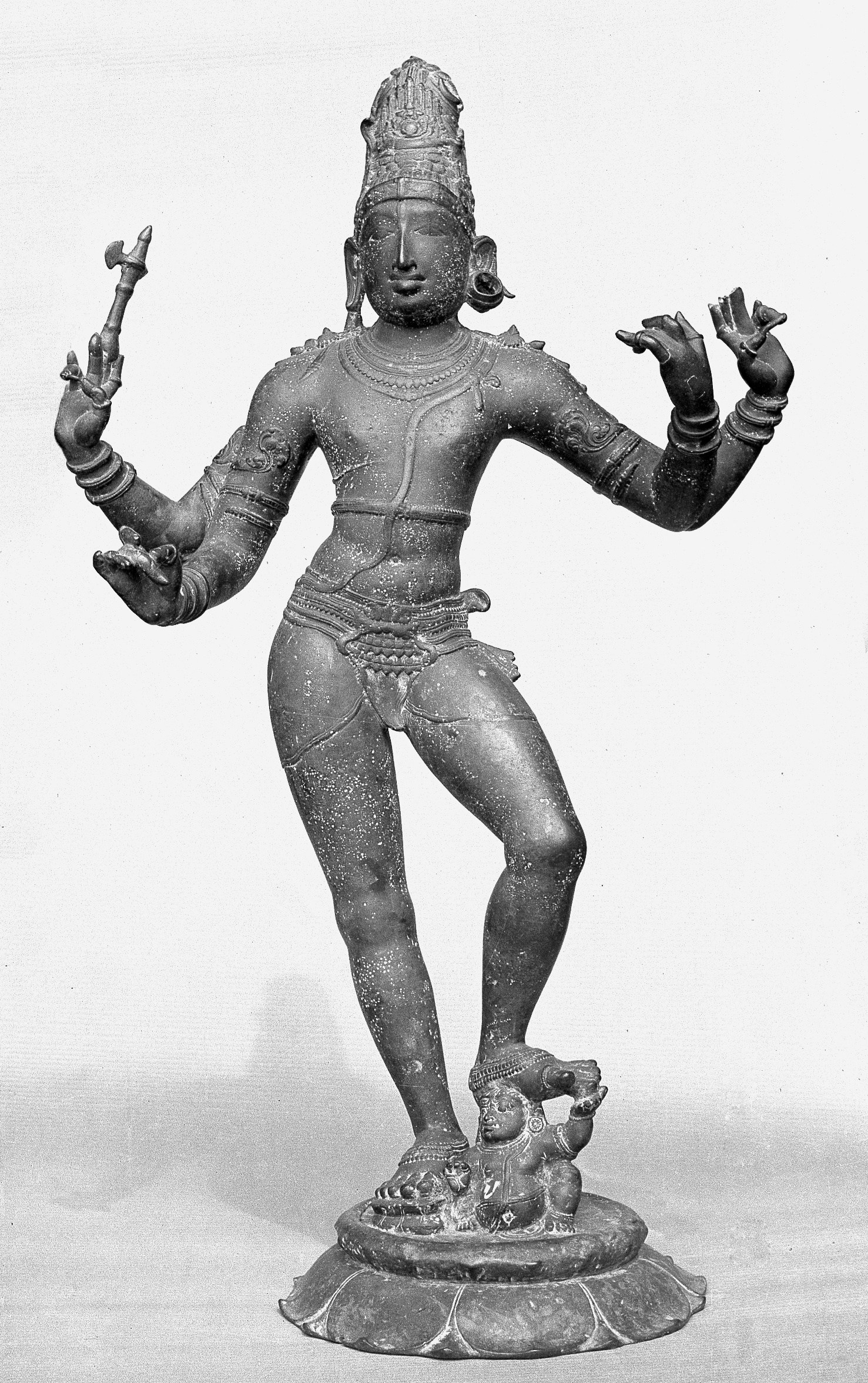
At the temple of Tiruvenkadu, close to the shore, Kadamban Kolakkavan, a military official under Rajaraja Chola, commissions a bronze sculpture of Vrishabhavahana (Shiva as Bull-Rider), accompanied by Parvati and Nandi. Kadamban commissions jewelled ornaments for the Shiva image, while members of the select military regiment called ‘Rajaraja Jananatha’ (Rajaraja, the People’s Leader), joining with other local grandees, commission the accompanying Parvati and Nandi images. In this manner, bronze sculptures, like temples, are sites of socialisation and networking among elites. Their gifts also reflect the belief that divine bodies, like royal bodies, needed to be adorned, to multiply their grandeur. A master sculptor, likely heading a workshop in Tiruvenkadu, created the Vrishabhavahana sculpture.
Beyond the Chola court, the usage of the Dravida style comes to be identified with a developing Tamil identity, reflecting the ongoing evolution of Dravida temples as Tamil social and political spaces. Local deities and non-Tamil speaking populations are assimilated into Dravida-style temples.
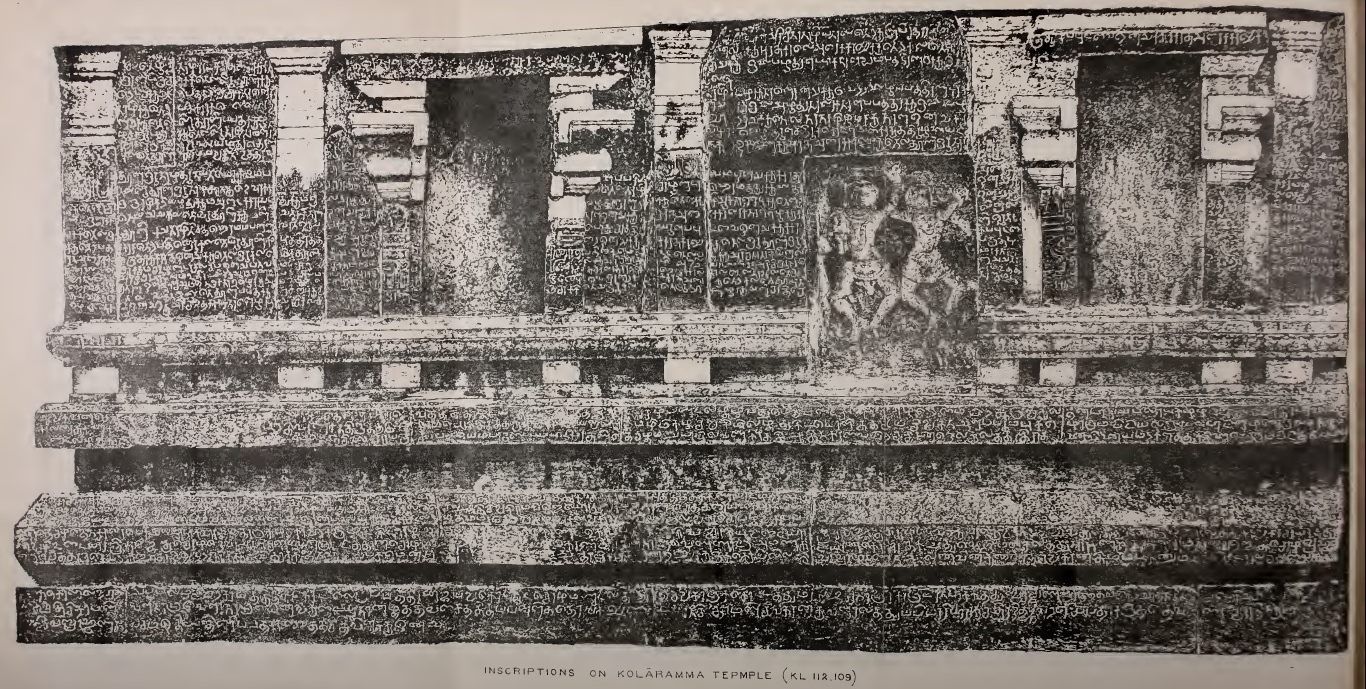
Continuing the momentum of Chola expansion, Rajendra Chola (r. 1012– 1044), son and successor, and initially also co-ruler with Rajaraja, settles a military regiment in the vicinity of present-day Kolar—a region populated primarily by Kannada-speaking pastoralists. One of his courtiers commissions a shrine dedicated to the local goddess Kolaramma, ‘Mother of Kolar’, in stone. This new temple is constructed in the Dravida style typical of the Kaveri floodplain, with architectural ornamentation limited to pilasters, and flat walls with large, blank spaces for inscriptions. He makes bilingual inscriptions instructing native Kannada-speakers and immigrant Tamil-speakers to collectively sacrifice a goat to the goddess every Tuesday.
A similar, possibly Chola-commissioned Dravida-style temple is constructed at Manne, an erstwhile Ganga capital, north of present-day Bengaluru. A temple at Mudigundam, near Talakkad, another Ganga capital, is commissioned by merchants who arrive in the wake of Chola armies. This temple employs a Dravida-style design vocabulary in its floor-plan and on its walls, although local preferences appear to have been followed on the squat, austere vimana.
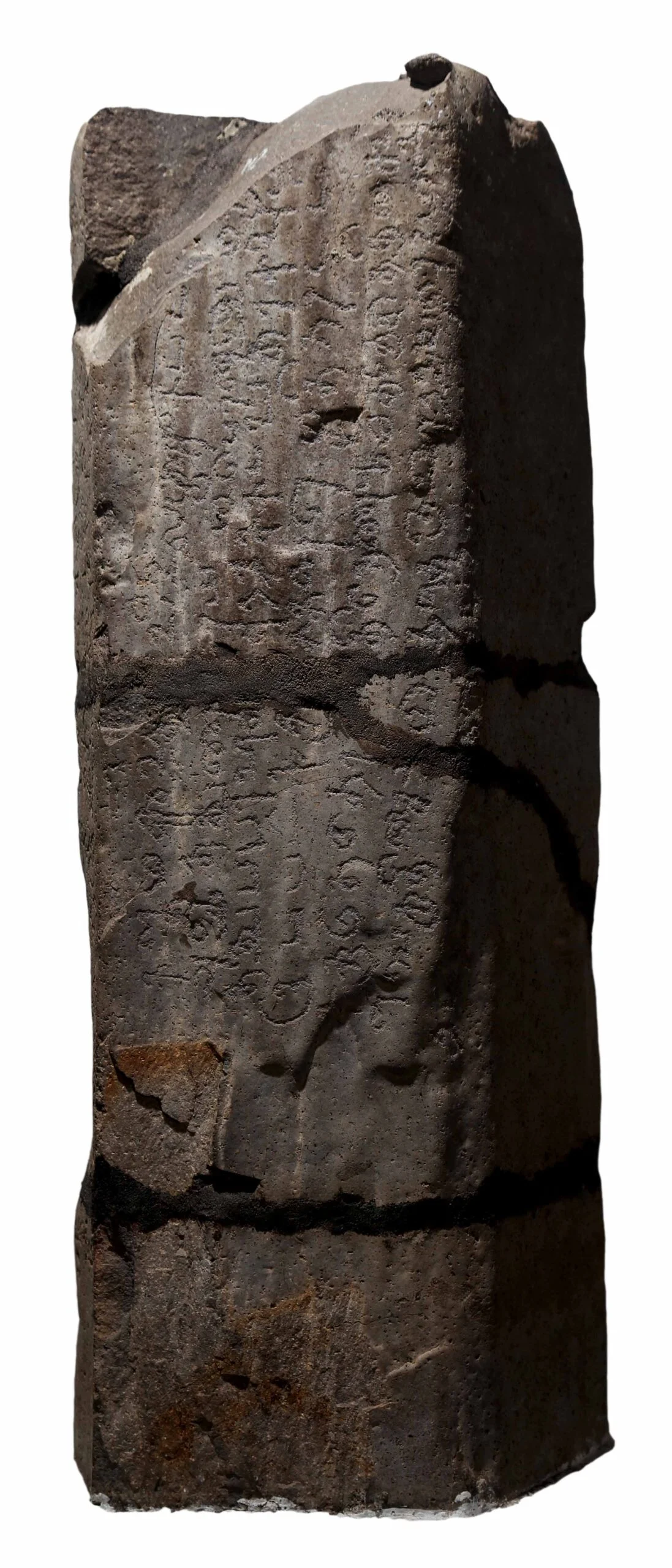
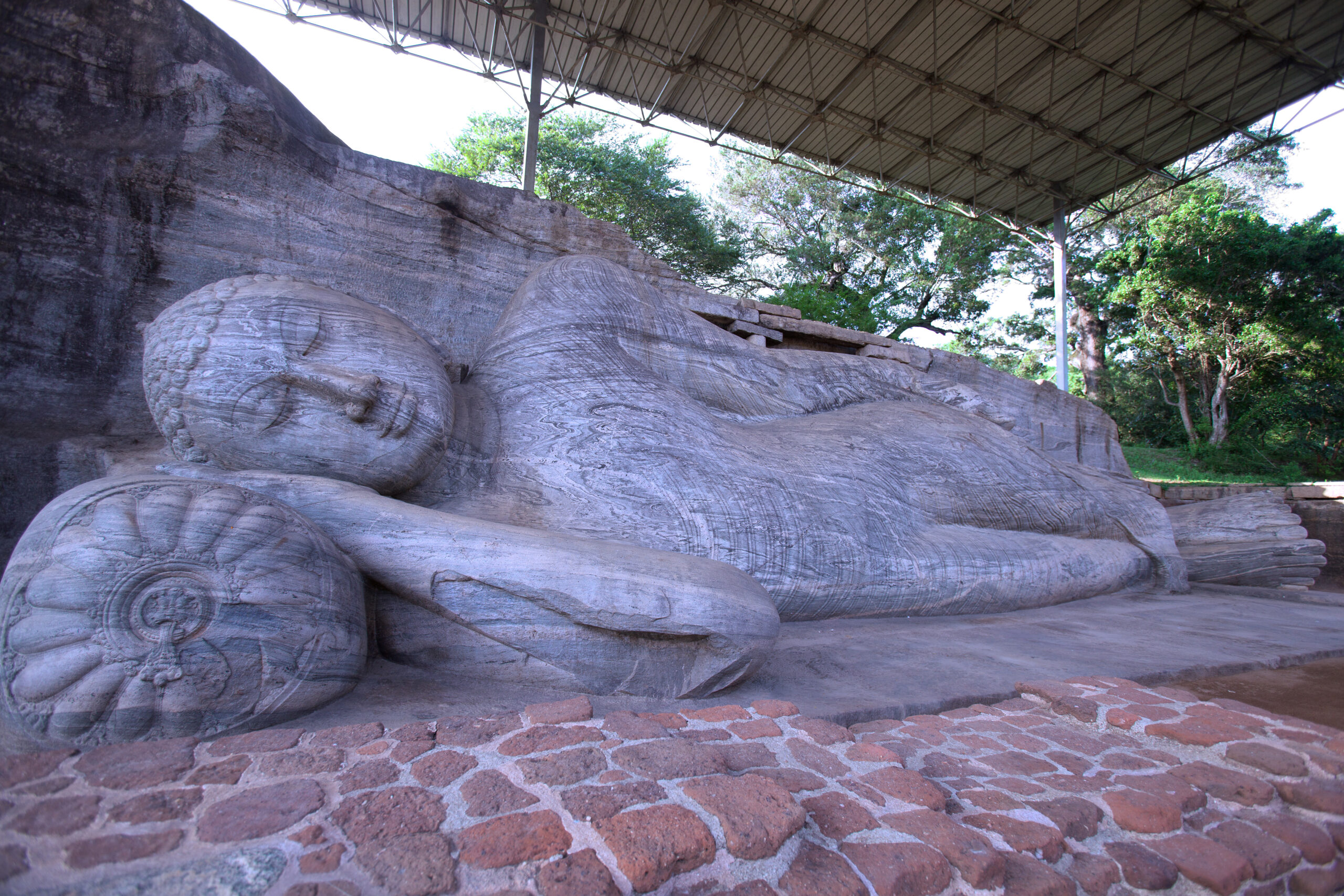
Since the conquest of Sri Lanka under Rajaraja I, Polonnaruwa has served as the regional centre of Chola power on the island. A Buddhist monastery at Trincomalee is renamed Rajaraja-Perumpalli (Rajaraja[’s] Big Monastery), and has a poem honouring him, inscribed in Tamil. The letters are untidy, suggesting that the scribe was most likely a local, unfamiliar with Tamil letters.
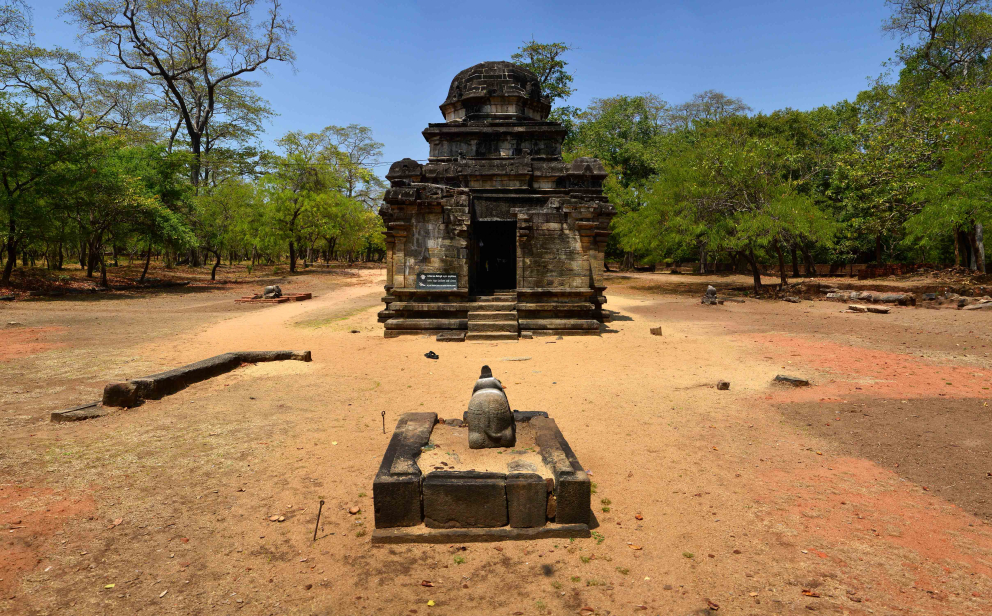
Over the next two centuries, sixteen Dravida-style shrines will be constructed across Polonnaruwa. While one or two may have received royal patronage, most are probably constructed either by Tamil traders, by a mercenary Velaikkarar group (‘The Oathsworn’, originally an elite bodyguard corps sworn to the Chola emperor, who became mercenaries as Chola rule on the island diminished), or possibly by Shaivite Lankans. As with the Mudigundam temple built by Tamil traders in south Karnataka, these temples are not a reproduction of the imperial style, but a creative amalgamation.
Similar to the Chola heartland, there is a surge in the production of Nataraja bronzes; however, both the bronzes and the temples are produced by local artisans catering to the needs of new patrons.
The radical transformations of the Cholas are not unnoticed in the Indian Ocean world. The rulers of Angkor (in Cambodia) and Kedah (in Malaysia) both send embassies to the Chola court, either to negotiate commercial agreements or to request military assistance. The court of Kedah commissions a Buddhist vihara, called the Chudamani or ‘Crown Jewel’, at the Chola port of Nagapattinam. It receives an endowment from Rajaraja I, which is later confirmed by his son, Rajendra I.
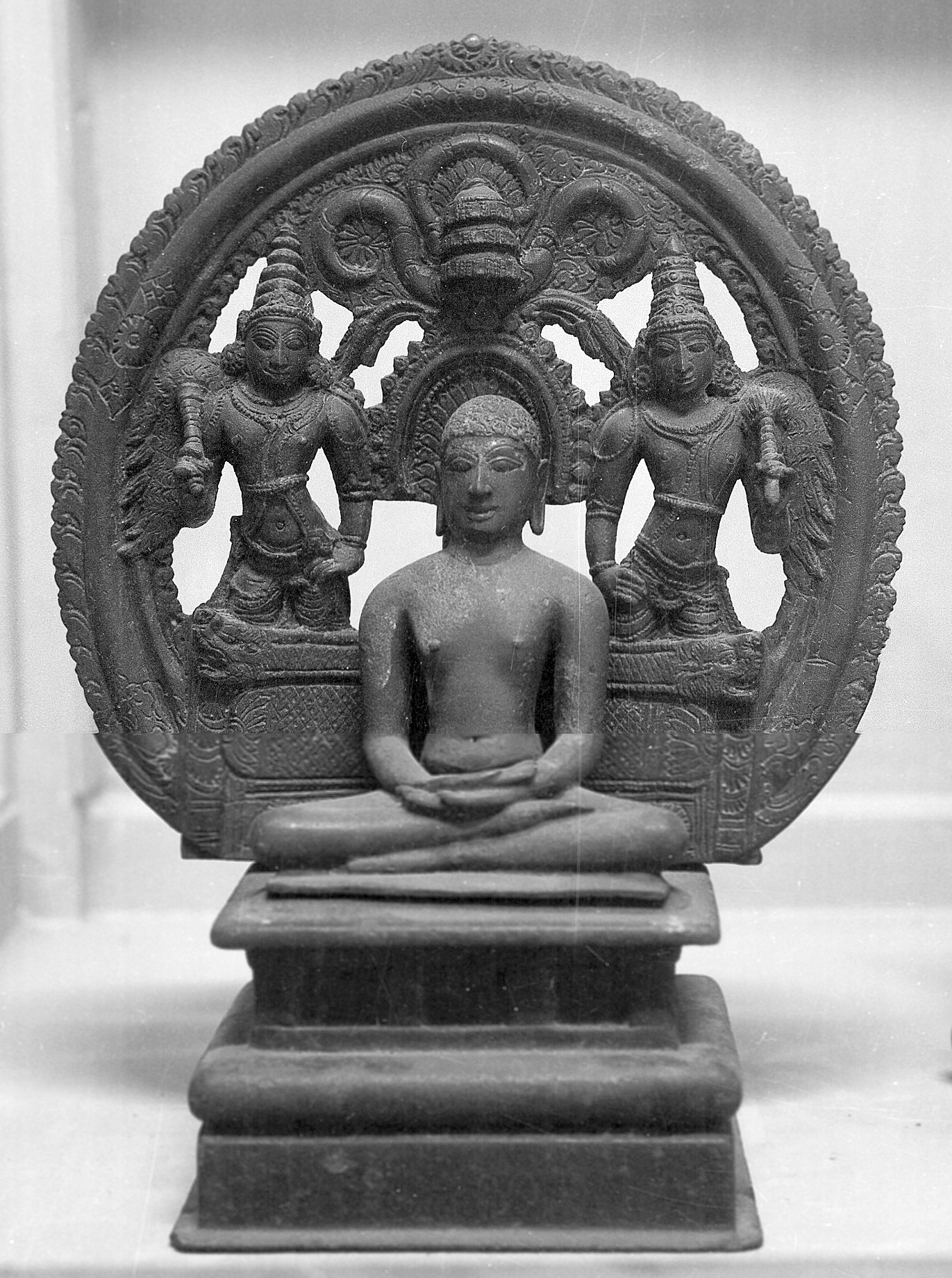
While Shaivite devotion is the primary focus of the Chola dynasty’s patronage, they also occasionally link themselves to Buddhist and Jain devotion. Rajaraja I’s sister, Kundavai, is known to have constructed a Jain temple—even as some Jain lands are re-endowed to the Rajarajeshwaram Temple. The picture painted by texts is highly polemical, with Buddhists and Jains frequently the target of Shaivite diatribes. Jains also mount rhetorical attacks on the sanctity of Hindu divinities. However, both communities share many metaphysical and ritual ideas, suggesting that religious borders are not clearly defined, in practice. Some scholars have suggested Jain antecedents to some ideas in Agamic Shaivism, and Tamil Jains also commission bronzes for worship and processions.
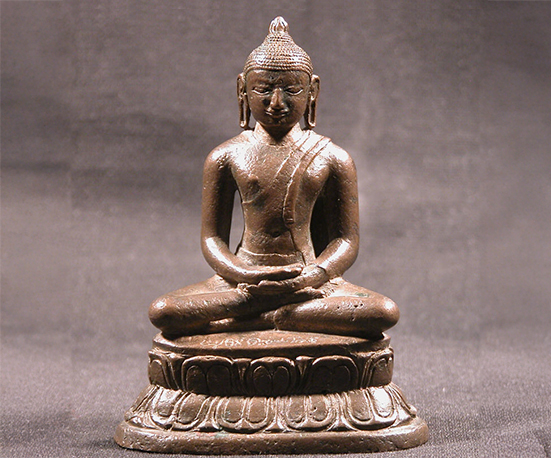
Archaeological excavations at Nagapattinam have found a large number of bronzes from this period, attesting to a thriving Tamil Buddhist community which has left few other traces. Buddhist chronicles from Sri Lanka criticise Chola attacks on the island’s stupas, though there is little archaeological evidence of this; indeed, other chronicles further support finds from Nagapattinam, as ‘Choliya’ monks, from the Kaveri floodplain, were respected for their monastic discipline.
Rajendra Chola embarks on raids against the Later Western Chalukyas of the Deccan; seasonal warfare between the Cholas and Chalukyas will continue for another two generations. Such raids allow the king to sustain the martial and temple gifting practices that are the bedrock of the Chola state.
Rajendra sets out on a military conquest of the sacred river Ganga. He allies with kingdoms in the Andhra and Malwa regions, whereas the Chalukyas align themselves with kingdoms in present-day Odisha. An attack from Rajendra’s allies in central India distracts the Chalukyas, allowing Chola armies to attack targets in Odisha and Bengal, apparently with little resistance. Filling urns with the waters of the Ganga, Rajendra’s forces carry them back to Chola home territories.
Within the next two years, possibly in collaboration with merchant assemblies such as the Ainurruvar, Chola forces are also dispatched to sack the emporium of Kedah in present-day Malaysia, despite the two powers having earlier exchanged embassies. Within the next decades, Tamil merchant settlements—featuring typical Dravida-style temples—will be established in Sumatra.
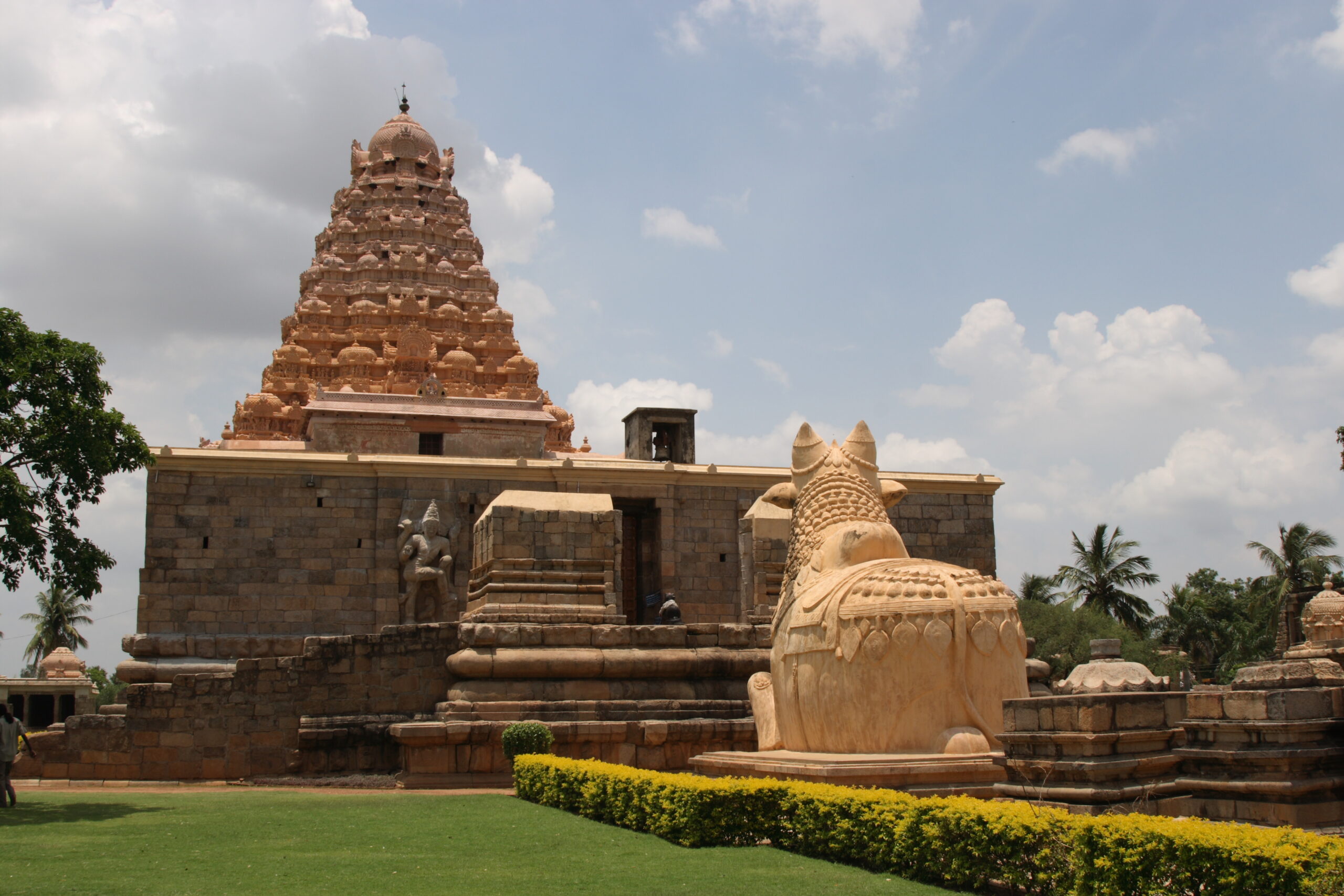
Rajendra Chola commissions the Gangaikondacholeswaram Temple, where Shiva is worshipped as ‘Lord of the Chola Who Seized the Ganga’. Of the fifteen villages that Rajendra gifts to this new shrine, fourteen were once endowed to the Rajarajeshwaram Temple. Rajendra’s architects develop a plan for this great temple, markedly different from his father’s Rajarajeshwaram temple. Great efforts are taken to ensure that the Gangaikondacholeshwaram is as ‘perfected’ as possible, with no unfinished sculptures.
This temple’s size is intended to physically express the imposing martial might, wealth and generosity of the Chola imperial formation. Inscriptions confirm that the temple tank is filled with water from the sacred Ganges, symbolically transforming it into a sacred river, just as the temple is a sacred mountain. Together, both express the orientation of the cosmos around the Chola ‘King of Kings’. In conjunction with the neighbouring city, a new capital known as Gangaikondacholapuram, the temple will serve as a centre of Chola court ritual for the next two centuries.
The scale and symbolism of this temple leaves an impression on the Cholas’ contemporaries and competitors. In the decades immediately after, the Somavamshi dynasty of present-day Odisha and the Paramara dynasty in central India commission their own colossal imperial temples: the Lingaraja at Bhubaneswar, and the incomplete Bhojeshwara at Bhojpur.
During the reigns of the sons of Rajendra I, the wider Tamil gentry gain influence. Temples increasingly become a site where elite politics and relationships are negotiated. Rajendra I is succeeded by his son, Rajadhiraja I. As Chola expansion slows, the close link between royal legitimacy, martial conquest, and temple gifting falters.
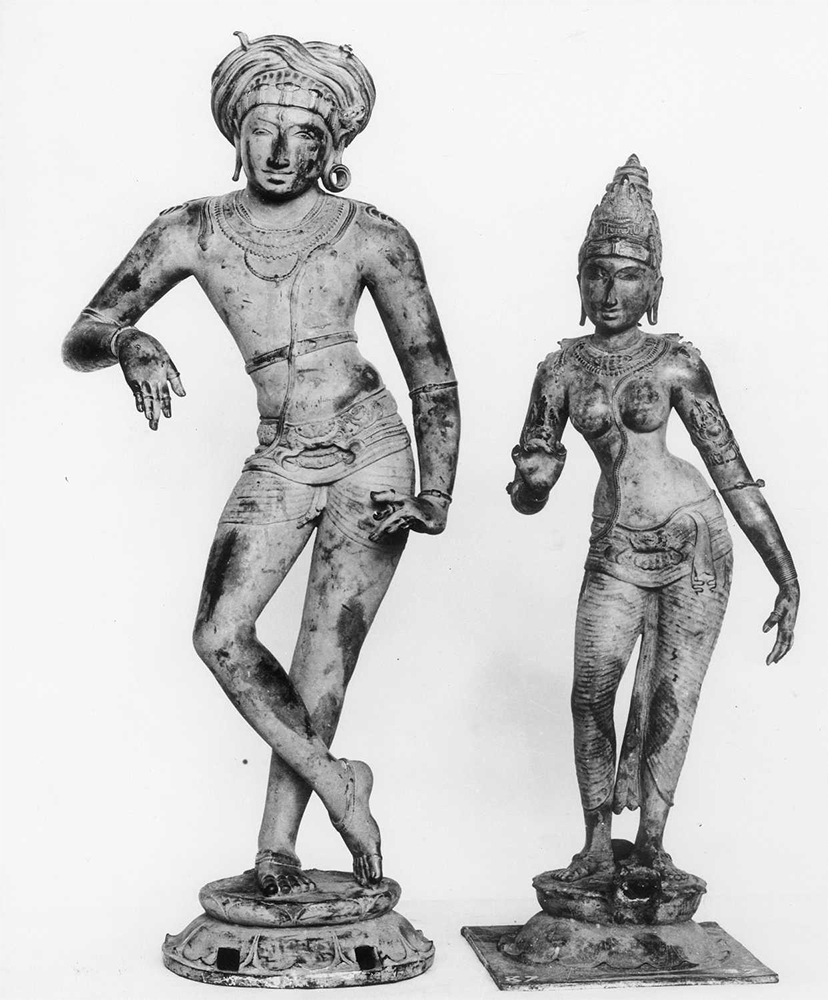
The same unnamed master-sculptor—the Tiruvenkadu Master who made the Vrishabhavahana sculpture for Kadamban Kolakkavan, a military official under Rajaraja Chola—creates a bronze image of Shiva Ardhanarishwara (Shiva as Half-Woman, Half-Man). This image is commissioned by Tuppayan Uttamacholi, the favoured companion of the new king, Rajadhiraja Chola (Rajadhiraja I, who was made co-regent in 1018, and reigned till 1054, when he was killed leading his army into war).
Other sculptures attributed to the Tiruvenkadu Master include Shiva as Pichcha Devar (The Begging Lord), Bhairava, and the saint Kanappa. His work is generally identifiable by the careful, rounded treatment of fingers and fingernails, an intimate understanding of body language, and a distinctive looped knot on the loincloth.
The Ardhanarishwara is the sole known royal commission that the Tiruvenkadu Master works on; most of his patrons appear to have been local grandees and other Chola court officials. Indeed, the vast majority of known ‘Chola’ bronzes are commissioned by the Tamil gentry, rather than directly by the court.
During the reigns of Rajendra’s younger sons, Rajendra II (r. 1052–1063) and Vira Rajendra (r. 1062–1069), the Chola court grows increasingly occupied with the Later Western Chalukyas. Within Chola dominions, new assemblies, such as the Chitrameli Periyanadu or the ‘Shining Plough of the Great Nadu’ emerge. While similar trade-based assemblies have existed across the region’s history, this conglomerate is unique in bringing together Brahmins, merchants and landowners from across Tondai Nadu. This ‘super assembly’ makes its fortunes by selling agricultural produce to the Kaveri floodplain’s new, growing temple towns. This allows them to emerge as local men of importance who can commission temple gifts, decide agricultural revenues and deliver justice—especially since the Chola court is increasingly preoccupied with frontier warfare and internal rivalries. Their first epigraphic mention is in a set of inscriptions at the Thiruvanishwara Temple at present-day Thamaraipakkam near Kanchipuram.
The nature of the Shining Plough assembly has been a matter of some debate, with scholars initially considering them a state organisation but now agreeing that they represent an alternate centre of power which appropriated a package of behaviours associated with Chola royalty and elite assemblies of merchants and Brahmins. Inscriptions by the Shining Plough show them using eulogies, commissioning images, and enquiring into temple finances. Super assemblies of this sort will continue to grow in social, political and religious might, even as the Chola centre continues to weaken.
As the Chola court struggles with a succession crisis in the late 1060s, a prince from the related royal family of Vengi, known variously as Rajiga or Rajendra, begins to flex his political muscle. He is set apart as the only male contestant of Chola descent in the otherwise female line.
To build a support base, Rajiga orders fresh endowments at the Kolaramma temple at Kolar. A local monastic order, possibly the Kalamukha Shaivas, and a tantric expert are integrated into the temple’s hierarchy, partially displacing the incumbent Brahmin priests. This may be intended both as a nod to powerful local elites, as well as to please the fierce goddess. Rajiga also offers tax concessions to immigrant Tamil settlers of the Valangai Mahasenai, or the ‘Great Army of the Right Hand’. Such moves help him build a broad support base in Chola frontier territories, making himself ruler in all but name. By 1074, he consolidates his power, adopting the regnal name Kulottunga I (r. 1070– 1122), and claiming legitimacy through his mixed Chola and Chalukya descent. As emperor, he further expands offerings of blood and liquor to Kolaramma, demonstrating that the Chola court is willing to support heterodox practices, provided that they bring sufficient political benefits. He presses for his paternal claims on Vengi with the full might of the Chola state behind him in 1075, finally unseating his uncle. As a result, Vengi will remain loosely integrated into the Chola imperial formation for the next century.
Since before Rajendra Chola’s raids in the early eleventh century, Tamil merchants have settled around Southeast Asia through active participation in Indian Ocean trade networks. Rajendra Chola’s Kedah raid had a domino effect on the region’s geopolitics, significantly weakening the Srivijaya confederacy, which had been the pre-eminent power in the archipelago for the last three centuries. The Tamil merchant presence in the region significantly increases, as they form ties with various city-states. The Ainurruvar is the most prominent among Tamil merchant guilds active across the region, commissioning an inscription in Lobu Tua in the Indonesian island of Sumatra.
Mercantile expansion appears to have been encouraged by the state, and while there is interstate diplomacy between the Cholas and other Indian Ocean dynasties, the evidence for a Chola overseas empire remains inconclusive. Instead, archaeology suggests a substantial expansion of Tamil-style corporate institutions and religious art driven primarily by the merchant diaspora. Tamil-style bronze images have been found throughout eastern Sumatra, and modern-day Indonesia. A brick foundation has been found in Jambi, and a Shaivite style dipalakshmi (traditional oil lamp held by a woman/goddess) figure associated with it. At Kota Cina, another important site on the northeastern side of Sumatra, excavations have yielded artefacts of Chinese, Arabic and Indian origins. However, no epigraphic evidence in Southeast Asia attests to the participation of the Chola state, post the Kedah raid.
The Chola empire loses its transregional character, and new, post-Chola polities rise on its former frontiers. Chola generals-turned-dynasts muscle into temples that formerly closely aligned with the dynasty.
The Cholas under Kulottunga I (r. 1070– 1122) enact a programme of consolidation, abandoning Lanka, to focus on the internal dynamics of their core territories in mainland South Asia. This does not sever cultural, religious or social ties, but allows new Lankan power centres to develop relationships with Tamil corporate bodies who have immigrated to the island. The Cholas themselves will follow similar policies on the mainland.
The transformed Chola state focuses on tax revenue and internal trade, instead of persistent warfare and looting. Kulottunga demands higher agrarian revenues from the Kaveri plains, abolishes tolls and tariffs to stimulate trade, and imposes taxes on non-agrarian production like textile-looms. Under his leadership, the state begins to work with caste groups, magnates and coalitions, either recognising their authority, or integrating them into the ranks of the military and administrative elite. Within the next decades, these groups will emerge as the premier class of temple patrons, on India’s southeastern coast.
Vijayabahu I, a Lankan chieftain, conquers Polonnaruwa. The Tamil population in the city, including the traders and mercenaries of the Ainurruvar merchant assembly, are assimilated by the new kingdom. The Velaikkarar (The Oathsworn), a mercenary group of Tamil origins, is enlisted to guard the famous ‘Buddha’s Tooth Relic’ in Polonnaruwa.
Vijayabahu’s dynasty embarks on a new programme of religious patronage and construction, often with the participation of Tamil-speaking groups. The resulting Polonnaruwa style reveals a synthesis of earlier Anuradhapura elements with existing and incoming Dravida influences. Polonnaruwa, as the capital of a new Lankan state, continues to be a site of profuse and diverse art, as it once was under the Cholas, but the Shaivite shrines give way to Buddhist ones.
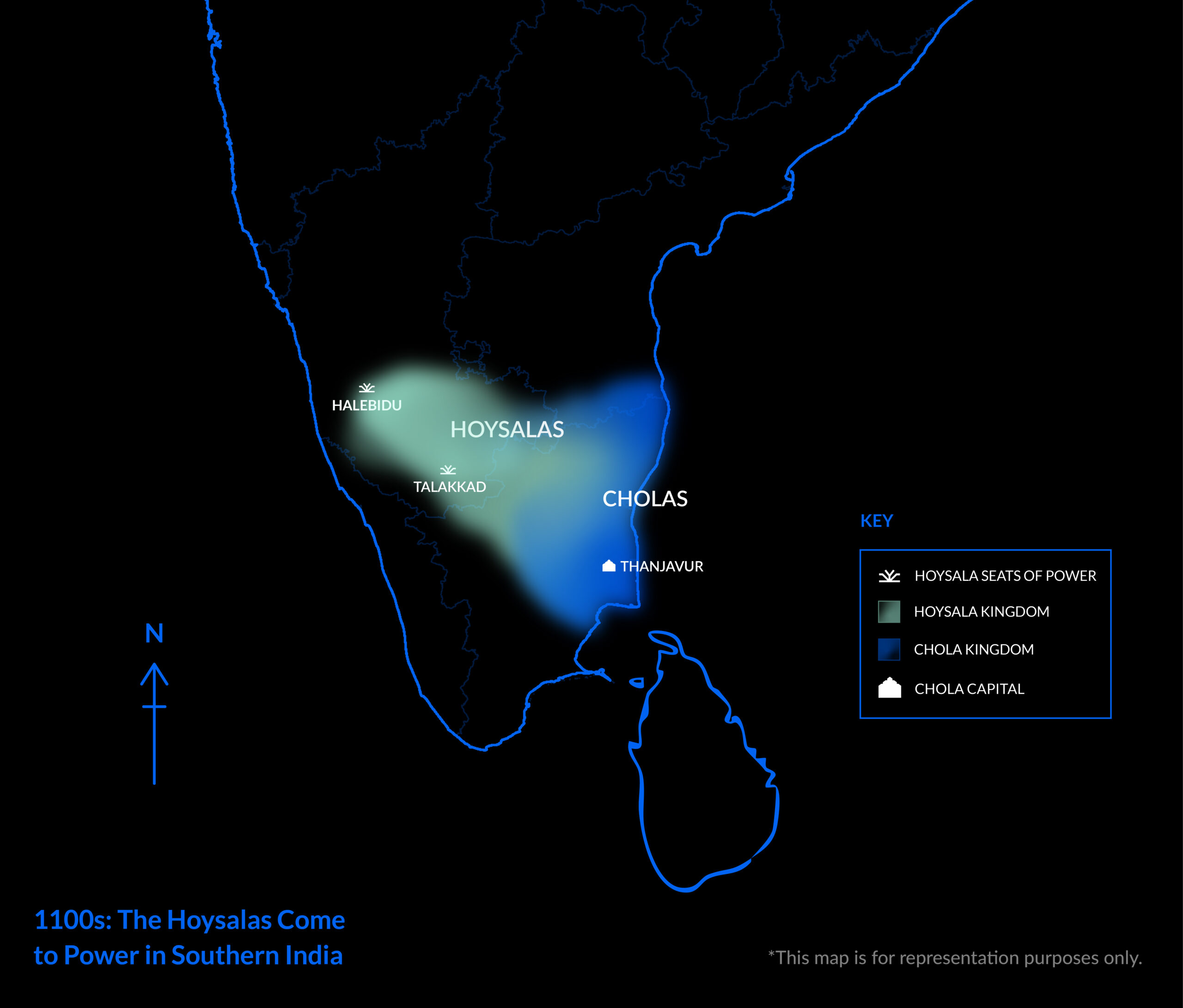
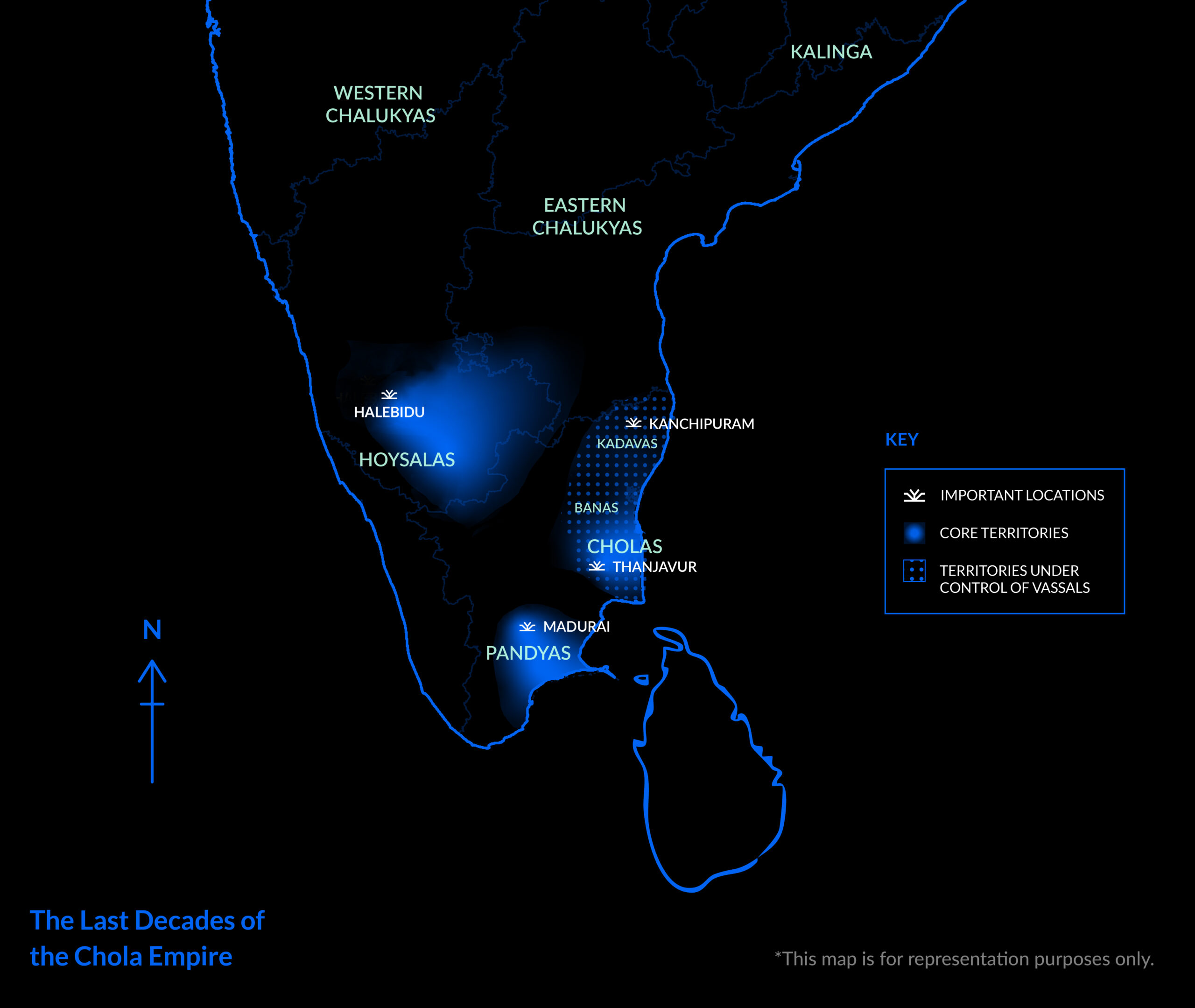
The Hoysala dynasty establishes their dominance over what is today Southern Karnataka, expelling the last vestiges of Chola power. Originally a tribal group from the nearby Western Ghats, they begin as independent warriors before becoming vassals of the Later Western Chalukyas and participating in various campaigns of the Chola-Chalukya wars across the peninsula. By 1117, Vishnuvardhana Hoysala seizes the Chola centre of power in Talakkad, controlling the trade routes between the Deccan and Tamil plains. He adopts imperial titles, calls upon the memory of an older local dynasty (the Gangas), commissions temples, and leads raids into the Kaveri floodplain, essentially reversing the strategy used by Chola rulers in prior decades. Inscriptions suggest that on multiple occasions, the Hoysalas carry off bronze idols from Tamil temples, which then have to be ransomed.
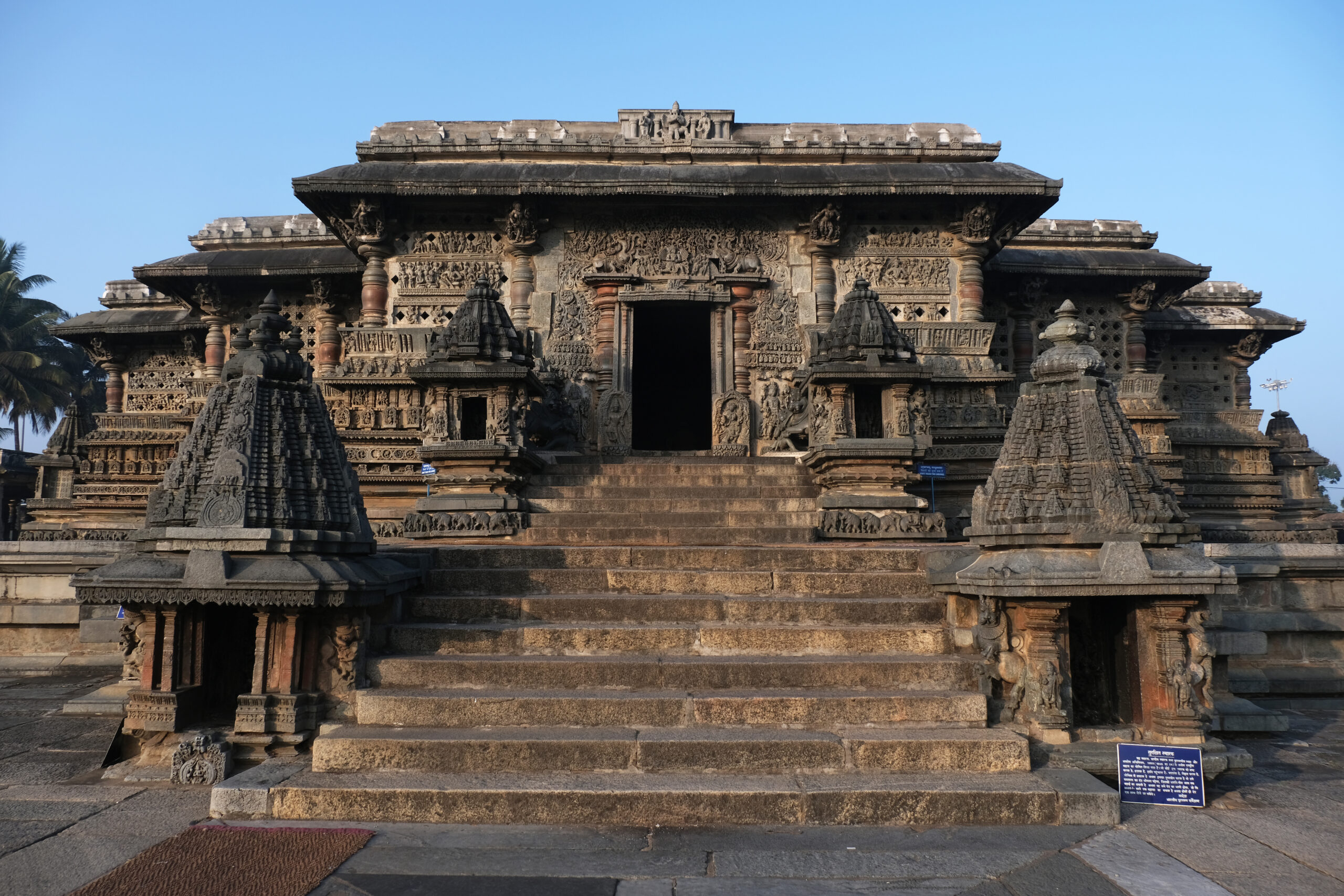
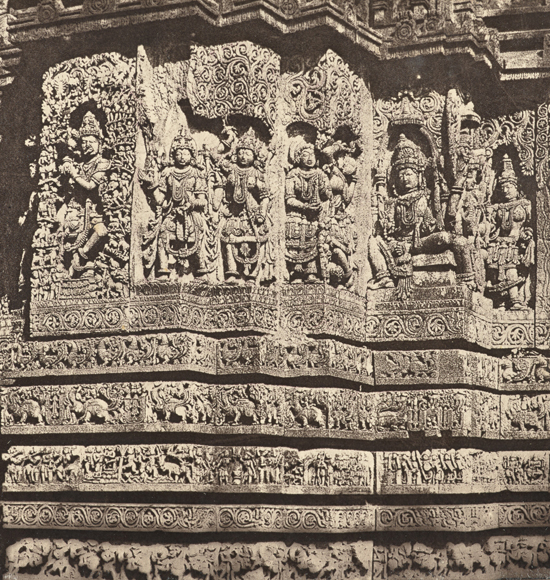
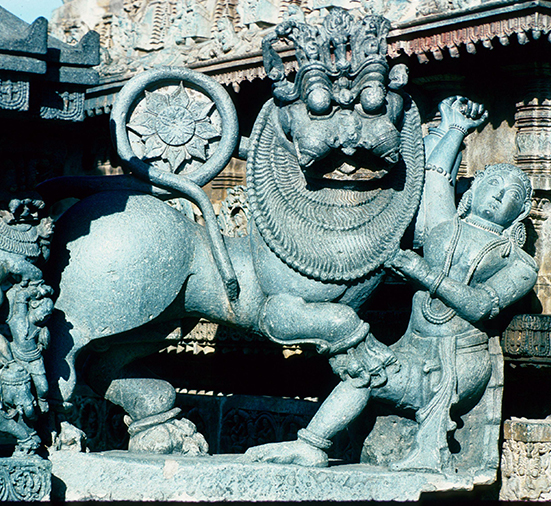
The Vaishnava Chennakeshava and Shaiva Hoysaleswara temples, commissioned by Vishnuvardhana Hoysala in his capital region (present-day Hassan district, Karnataka), represent a stylistic departure from earlier South Karnataka architecture, as well as the Dravida-style temples introduced by Tamil-speaking immigrants at Kolar and Mudigundam. Influenced by developing ideas from the Karnata–Dravida style of North Karnataka, they introduce stellate plans and the use of chloritic schist into South Karnataka temples. The architectural ornamentation of their temples employs aedicules of the Bhumija style, popular at the time in present-day Maharashtra and Madhya Pradesh. Hoysala armies had campaigned there a few decades prior, while vassals of the Western Chalukyas. Inscriptions show that the Hoysalas take care to employ artists who migrated to their court from North Karnataka. The resulting shrines have no precedent in the region, in both the size and the lavishness of their sculptural and architectural decoration.
While Tamil-style Dravida temples of the medieval period were intended to reinforce ideas of Tamil culture and identity, it appears that the Hoysalas instead choose designs that deliberately break from earlier modes, and integrate concepts associated with other prestigious courts and patrons.
Kulottunga I’s decision to shift the Chola focus away from plunder-expeditions allows for the rise of magnate-warlords, especially in Tondai Nadu, who make fortunes by controlling the few campaigns still authorised by the court, employing the same tactics that first powered the dynasty’s rise to prominence, such as public generosity at important temple sites.
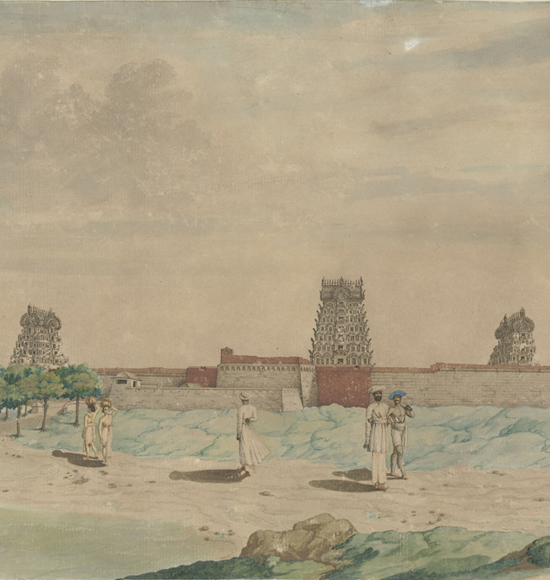
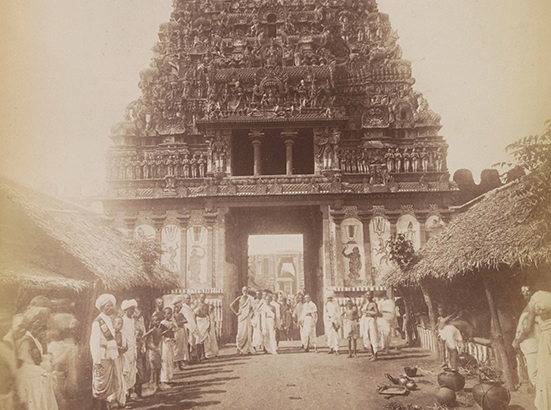
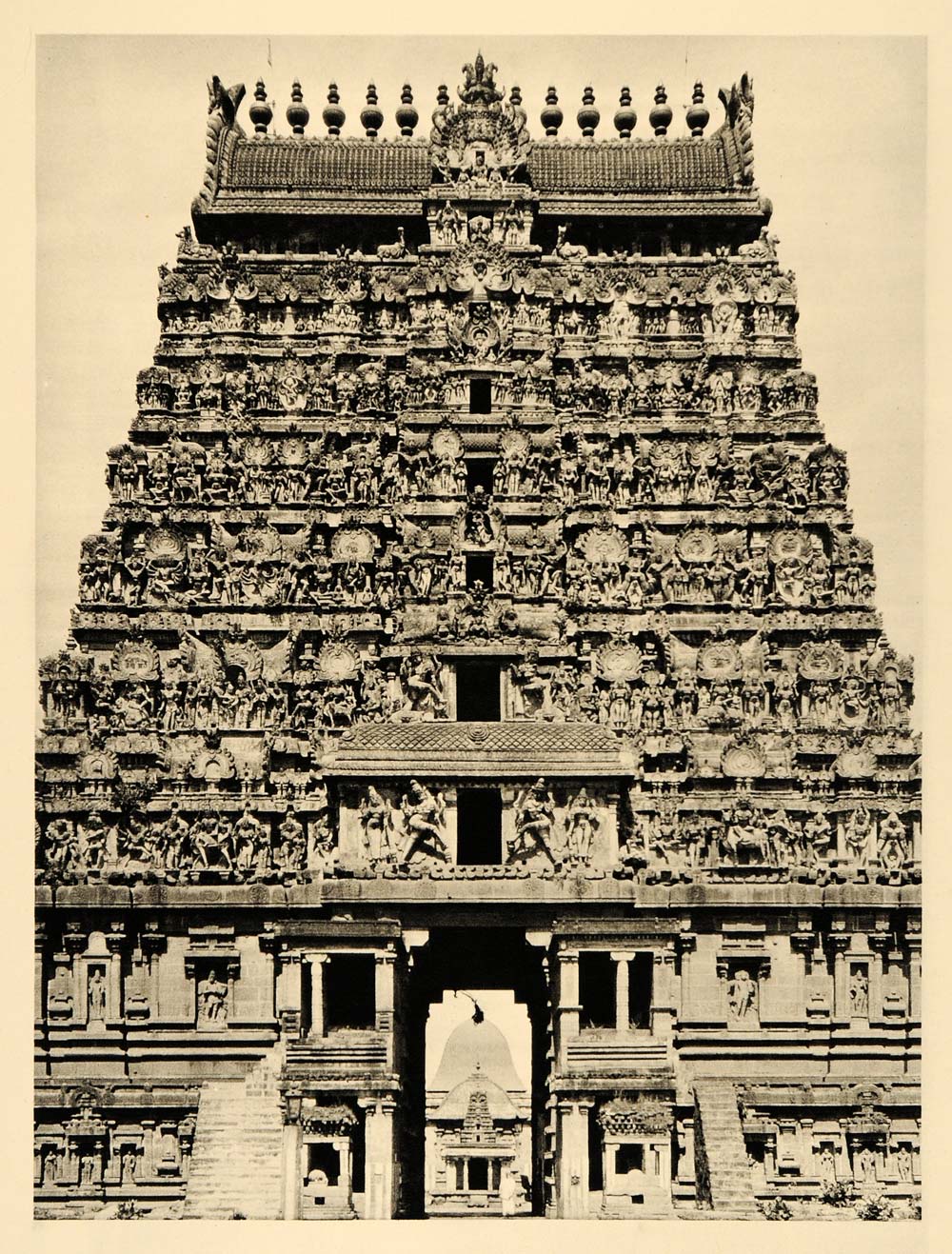
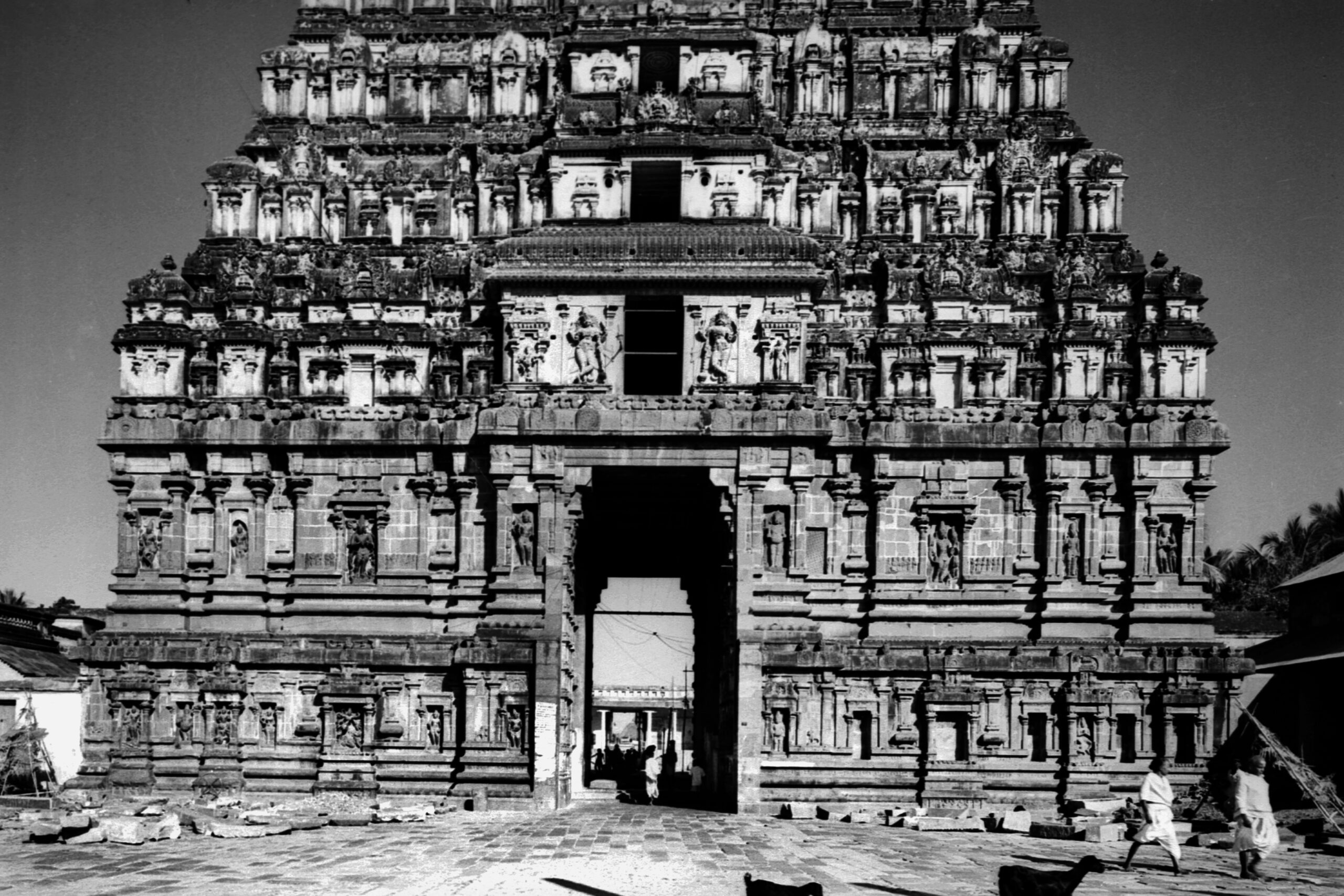
Naralokavira, a general in the Chola army, expands shrines throughout Tamil lands, notably the Nataraja temple at Chidambaram—by now a site of immense significance both to the Cholas and to the Tondai Nadu elite. His additions at Chidambaram comprise a massive stone wall, seaside pavilion, pillared hall, a step-well and a chariot-shaped dance hall. He also adds two gopurams towards the east and west (a pattern that goes on to become typical for Tamil temples), setting the precedent for the expansion of temple complexes through elaborate gopuram gateways. In establishing regular processions for the temple bronzes from the shrine to the seaside, he creates a precedent for the use of Chidambaram as a site to proclaim wealth, prowess, and oftentimes ambiguous subordination to the Chola court.
Another of Kulottunga I’s generals, Karunakara Tondaiman, leads a successful expedition into Kalinga, modern-day Odisha. Styling himself as a descendent of the Pallava kings of Tondai Nadu, Karunakara and his wife patronise the Shiva Thyagaraja Temple at Tiruvarur.
The Kadava clan, erstwhile hunter-gatherers, establish their authority in Nadu Nadu, the interstitial region between the Chola core territories on the Kaveri floodplain and the increasingly independent magnates of Tondai Nadu. Like other upstarts from their time, the Kadavas trace themselves to the Pallava dynasty, claiming Pallava titles.
Their rights to local revenue and manpower are granted by Chola kings, in return for military support. The Kadavas reinvest this income in local temples, establishing ties with local assemblies and grandees.
The Vaikunthaperumal Temple in Tiruvenainallur, a Vishnu shrine, garners substantial attention and donations from numerous Kadava men and women. This town is a centre of Kadava power; they add a gopuram to an existing Shiva temple there, in keeping with the trend established by Naralokavira, a general in Kulottunga I’s army.
Other magnate dynasties, both of aristocratic and upstart backgrounds, are embroiled in competition through temple patronage. These include the Malaiyaman, Sambuvaraya and Bana clans. Their competition results in substantial expansions to hitherto less-prominent shrines such as Tiruvannamalai. They make additions to temples, including courtyards, compound walls, dancing-halls, goddess shrines and lavish adornments for deities.
As the Tamil elite grows more diverse, theologians expand the social base of Shaivism and Vaishnavism, absorbing part of the social base of Jainism and Buddhism. Though less dominant, the Chola court remains influential in shaping interlinked new religious and aesthetic developments.
The poet Sekkilar’s Periya Puranam (The Great Purana) compiles hagiographies of the sixty-three Tamil Nayanmar saints, integrating them into an organised theological framework. The list spans all social groups, likely to broaden its appeal, coalescing Tamil Shaiva identity, and centres around figures like Sambandar, Appar and Karaikkal Ammaiyyar.
The god Shiva is portrayed as a stern, divine father who receives and rewards intense, sometimes bloody devotion—a shift in his image, away from the playful, erotic figure of earlier Tamil poetry. Devotees of Shiva are often narratively pitted against Jains, suggesting lively, ongoing competition for patronage. Some scholars have argued that the Periya Puranam was a response to Jain critiques of Shaivism.
Though the worship of some saints and the recitation of their verses had existed prior to the Puranam, it serves to establish the standard list of sixty-three as foci of devotion and temple patronage. Bronze icons of saints are increasingly commissioned. These help further expand the prominence of Tamil temples as centres of socialisation, devotion and patronage, and help consolidate Shaivism’s dominance in a multireligious environment. Similar trends also develop in Vaishnavism, with schools such as Srivaishnavism professing the artificiality of caste boundaries, and new Vaishnava hagiographies being composed.
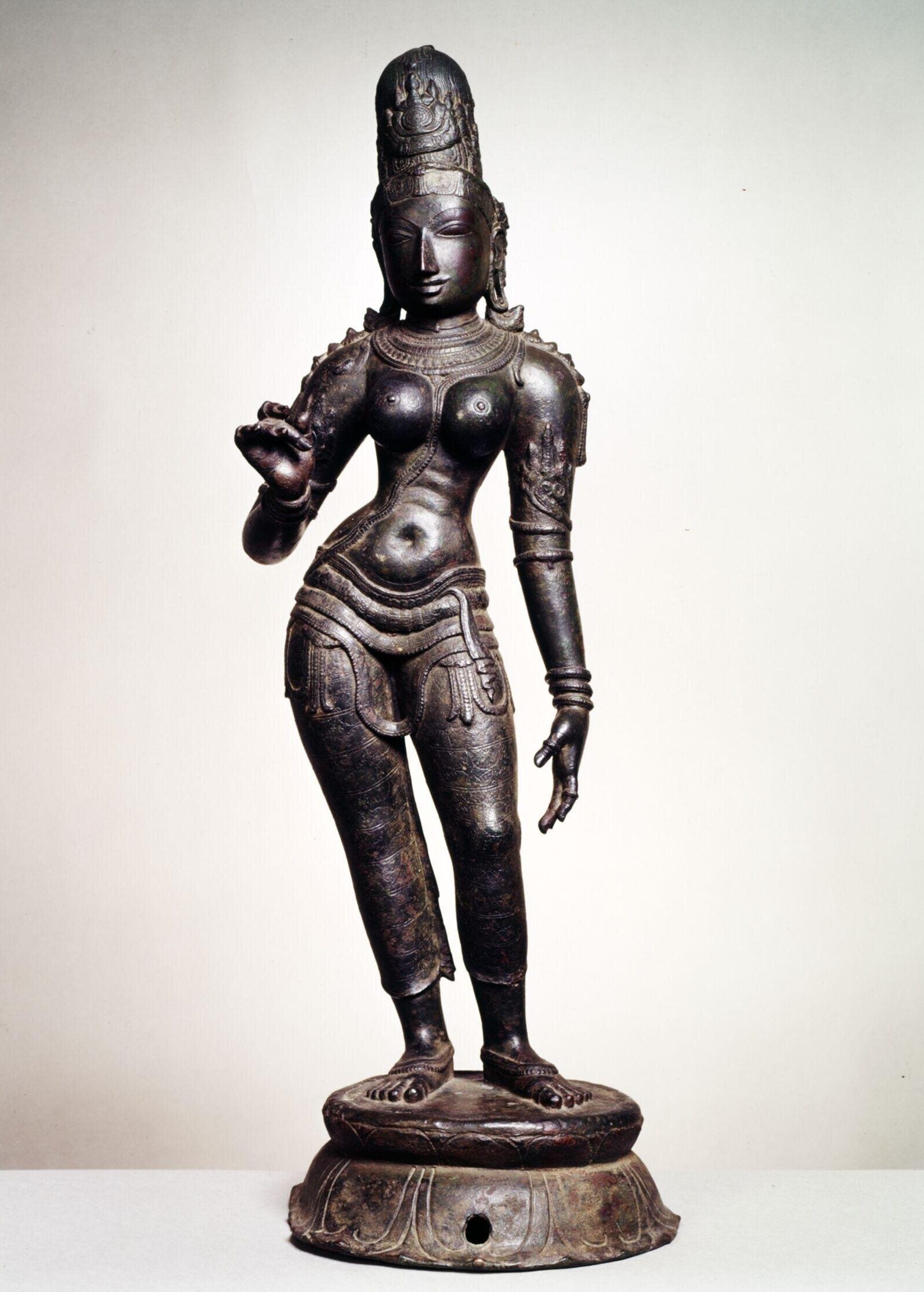
Reflecting theological developments such as those of the Periya Puranam, patrons’ and sculptors’ aesthetic preferences for bronze idols transition from the intimate, sensuous bodies of earlier centuries to more regal, solemn, dignified figures.
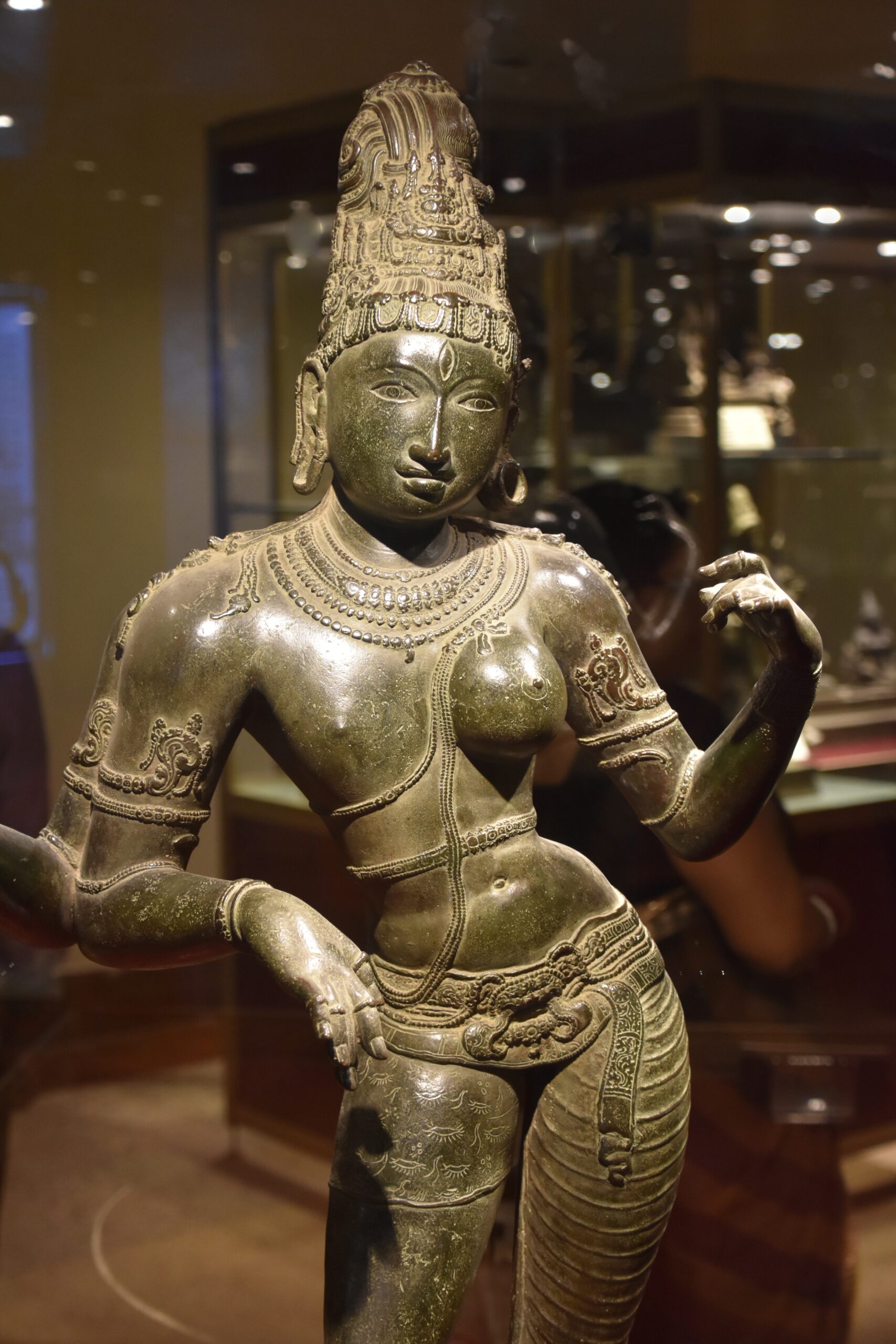
The main Shaiva deities, Shiva and his consort, Uma, are now depicted somewhat apart from each other, and from the devotee. The sizes of Uma bronzes also grow, and she is depicted with larger, higher breasts and accentuated areola. Uma is increasingly described as ‘Bhoga Shakti’ (Pleasure Force), with bronzes bearing this name commissioned for the threshold of Shiva temple sancta in the thirteenth century.
Vaishnava devotees are simultaneously moving towards this new aesthetic. Features such as the nose and nipples are sharply defined, and ornaments are detailed precisely.
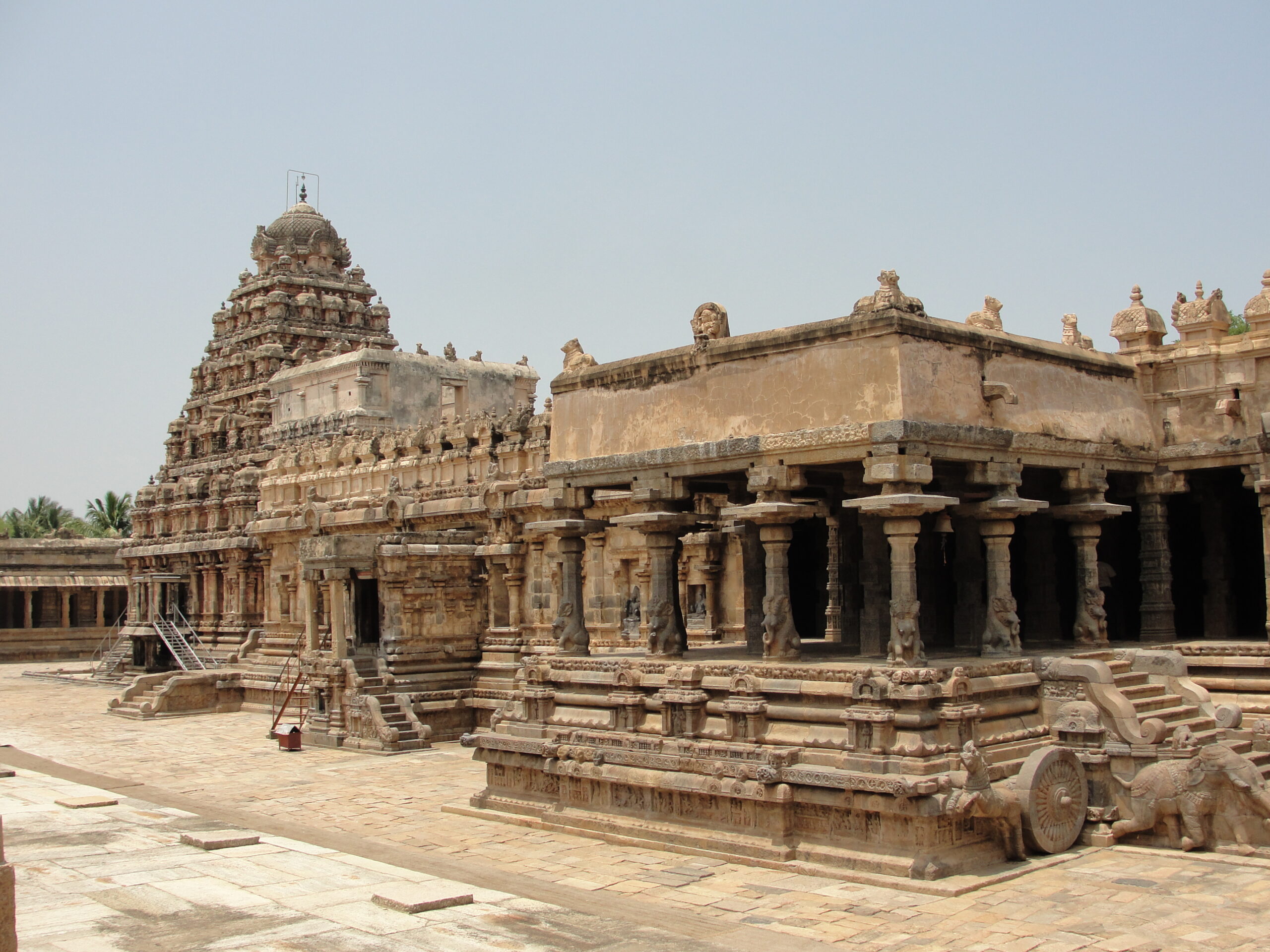
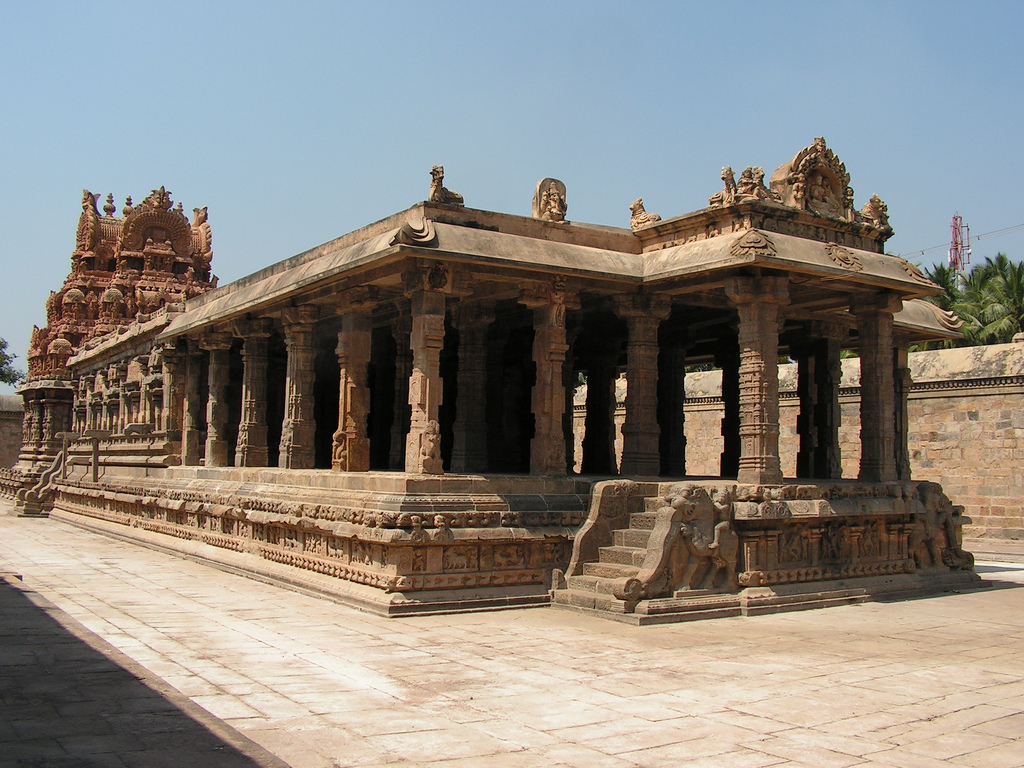
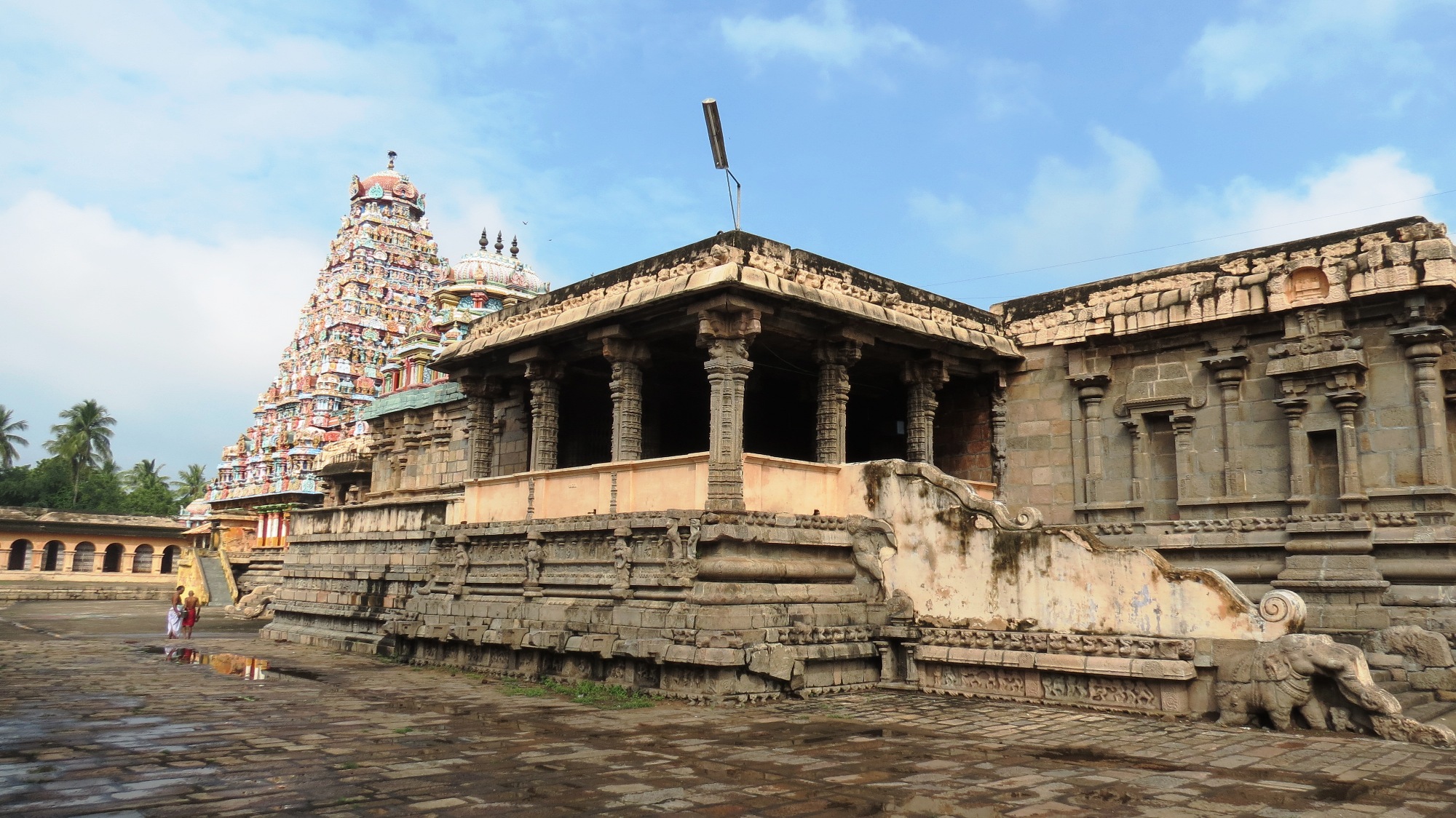
Rajaraja Chola II (r. 1146– 1173) commissions a temple in Darasuram, near the palace complex. Its name Rajarajeshwaram, deliberately calls on the memory of his ancestor’s temple in Thanjavur. Today it is known as the Airavateshwara Temple.
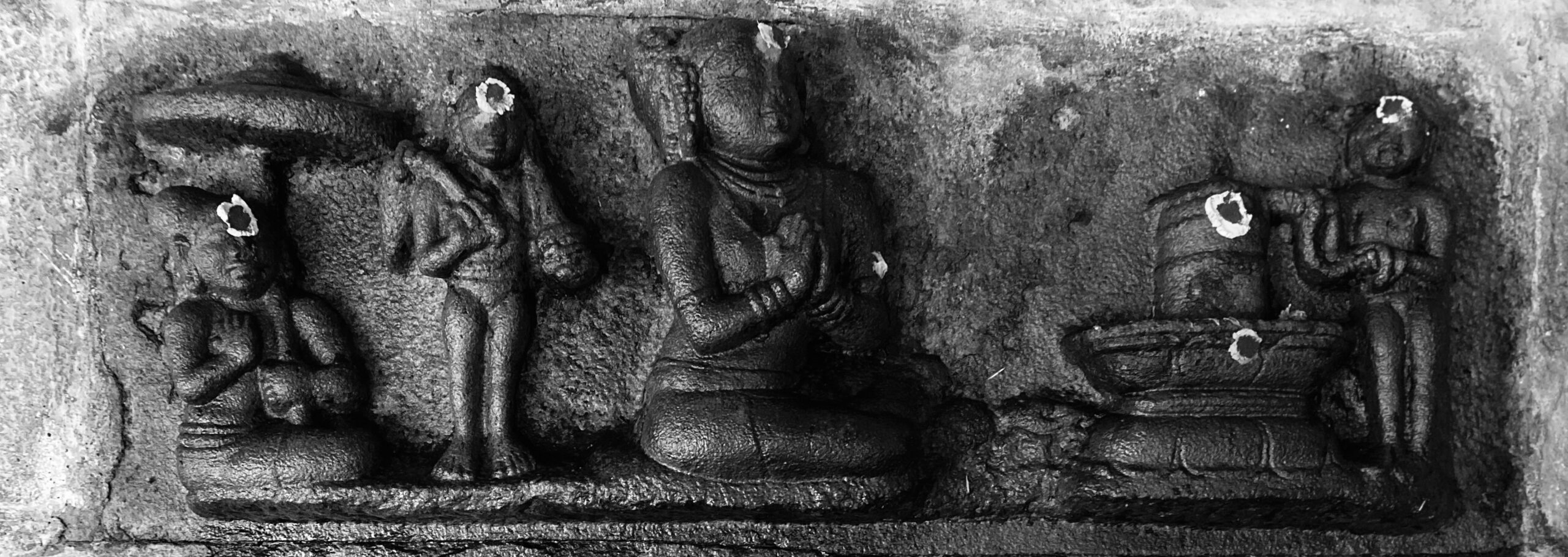
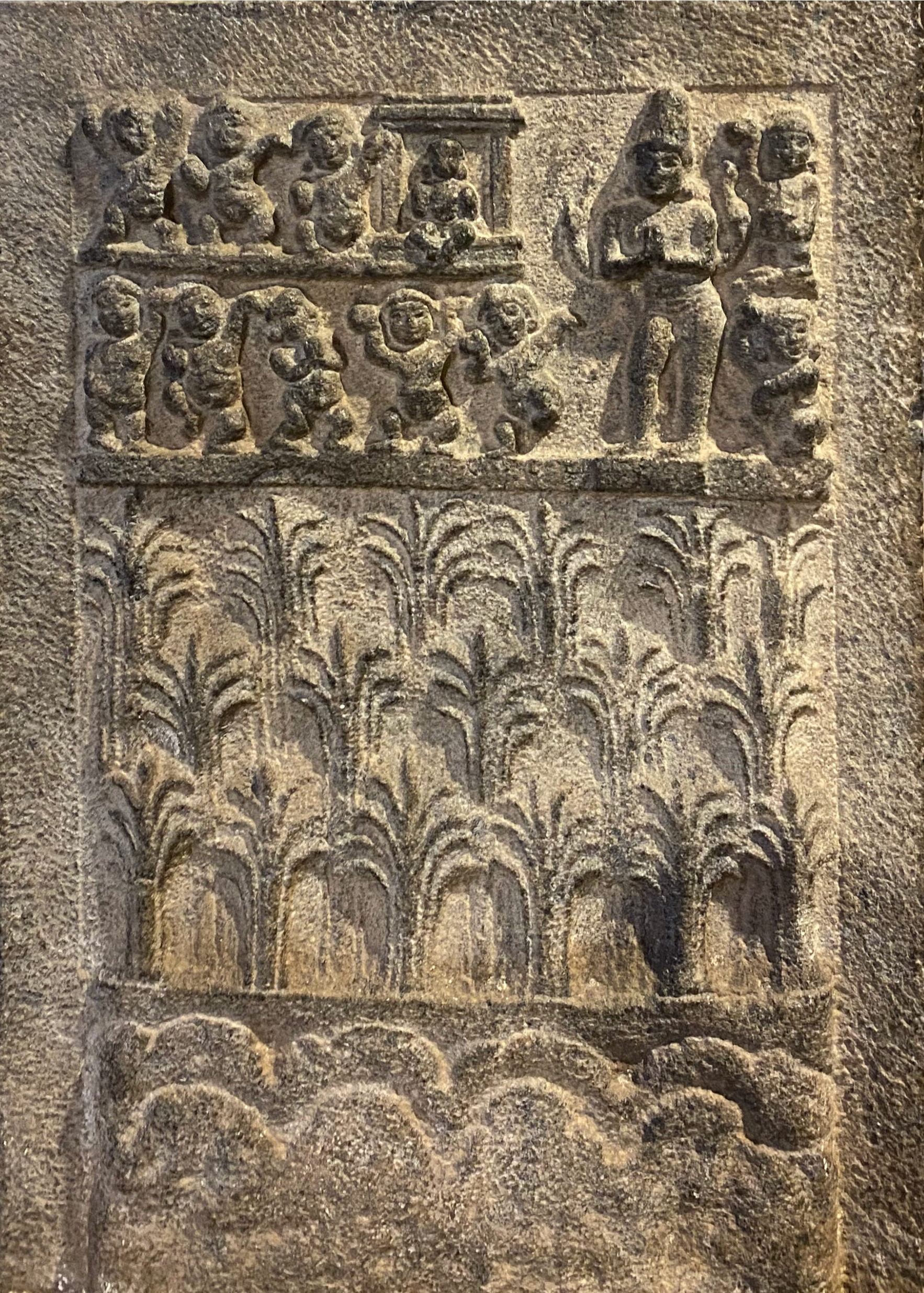
Reflecting the new emphasis on saint-focused Shaivism, Rajaraja II likely intended this temple to serve as a visual representation of the Periya Puranam. This complex is the first to incorporate relief carvings of all sixty-three saints from the Puranam, including on a continuous narrow band around the structure, between the base mouldings and wall niches. At eighty-three feet, the temple is significantly shorter than the Rajarajeshwaram in Thanjavur.
Contemporary contexts of exchange, trade and war continue to shape architectural sensibilities: one of the temple’s dwarapala sculptures had been looted from Kalyana, capital of the Chalukyas, about a century prior. The madanika figures in the mandapa of the temple, a Deccan architectural feature, suggest that artists from that region worked at Darasuram. The architectural adornment of the vimana, which features recesses and projections on the walls and an elaborate treatment of the shala and kuta aedicules, may similarly reflect an awareness of Deccan architectural trends, or the involvement of Deccan artisans.
The chariot-like form of the pillared hall (agramandapa), with large wheels flanking the stairway, is inspired by older structures, such as the chariot-shaped hall added by the general Naralokavira at the Chidambaram temple complex. The wheel motif is further developed by royal temples elsewhere in South Asia, most notably the Sun Temple at Konark, Odisha.
The Airavateshwara Temple at Darasuram includes a shrine for Uma—Shiva’s consort—featuring its own gateway and enclosed courtyard. While somewhat smaller than Shiva’s, the shrine is clearly important, and planned as part of the complex from the outset, in a departure from earlier Chola temples.
Known as the kamakottam (The Fortress of Love) or a ‘Bedroom Chamber’, shrines such as this will develop into an aspect of the Shaiva temple, with the last temple service of the day conducted here.
Ever since Vijayalaya established the Chola dynasty, the worship of independent goddesses had received patronage from the court. The kamakottam, however, emphasises the goddess’s relationship with Shiva. These shrines for goddesses help further integrate female deities into Shaivite and Vaishnavite worship, a process that had been underway across South Asia for centuries.
Rising royal revenue demands and the growing wealth of landed magnates undermine earlier systems of collective land ownership and administration by nadu (district) assemblies. Aristocrats consolidate their control over land and manpower, investing in temple estates to avoid paying taxes, and so weaken the Chola treasury. This leads to a dramatic increase in inequality, marked by rising rents and falling wages, with severe social consequences.
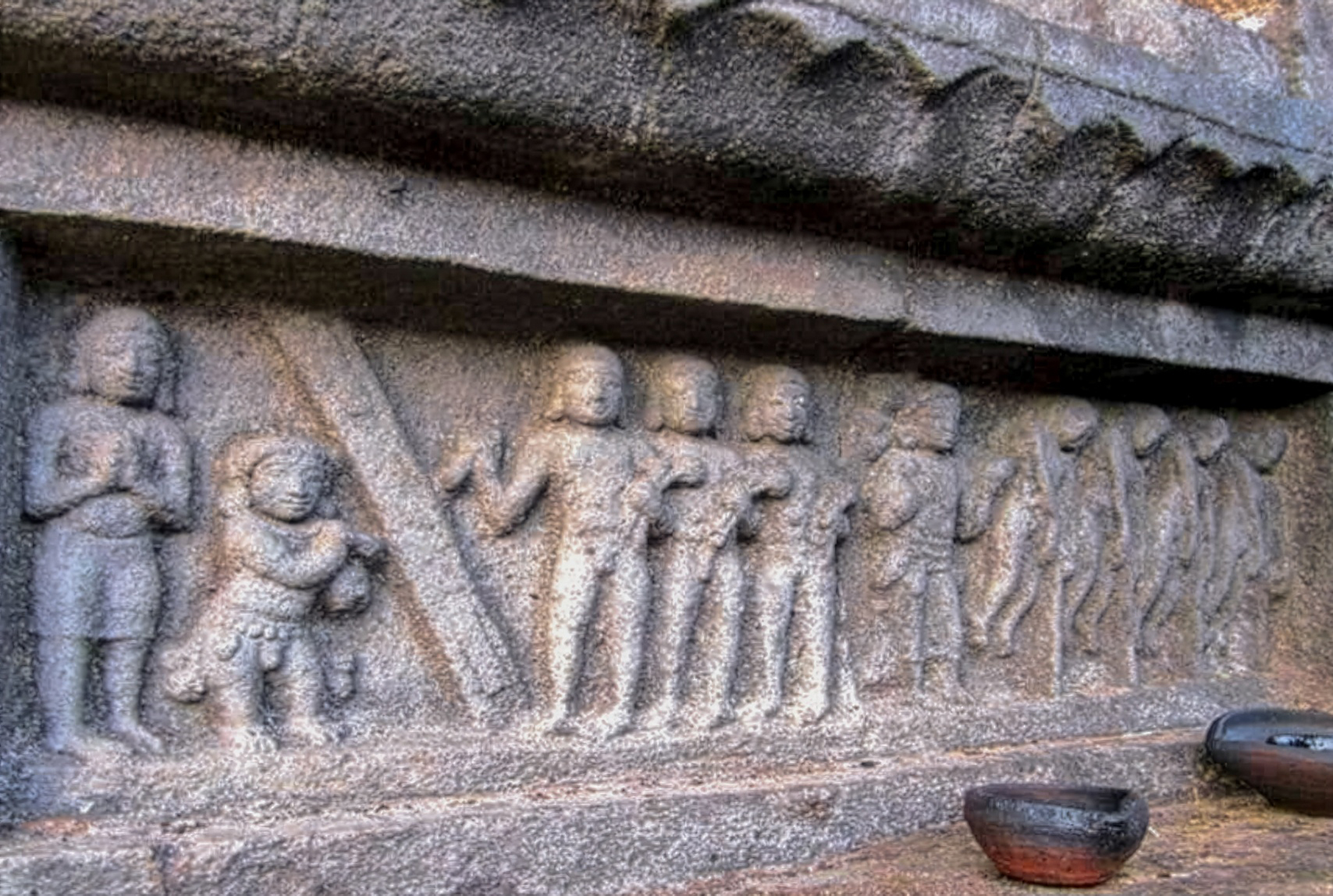
The practice of slavery is gradually institutionalised – when land is transferred, peasants attached with it are transferred as well, and people become property. Lower caste labourers and craftspeople, such as Paraiyars, are often sold to others; on occasion, slaves are branded as a mark of ownership. Bonded labourers are relegated to the most humiliating and strenuous work in temples, such as cleaning leftovers or pounding rice.
Buddhism had a following among sections of Tamil society even during the heyday of Chola expansion in the eleventh century. During the reign of Virarajendra Chola (r. 1063–1069), the Viracholiyam – a treatise on grammar and poetics envisioning a Buddhist ethical order, was presented to the Chola court. The Viracholiyam cites a vast body of medieval Tamil Buddhist literature that has since been lost.
Buddhism actively participated in the prevailing devotional culture of medieval South India, with bronze images of the Buddha, similar to those of Shiva, being venerated, ritually bathed, and paraded. Buddhist monks from Chola territories were known for their rigorous discipline, and participated in Lankan monastic reforms in the twelfth century.
By this point, though, Tamil Buddhism fades as a religious force, as other forms of Shaivism and Vaishnavism grow exponentially with aristocratic patronage. Fewer texts and endowments are found in the historical record. Nagapattinam, however, continues to remain an active Buddhist community, which also includes foreign trading diasporas, gradually becoming an island in a religious world dominated by Shaivism and Vaishnavism. More than 300 Buddhist bronzes have been found in excavations at Nagapattinam, with the latest dating to the seventeenth century. Scholars have suggested Buddhist bronzes produced in Java directly used models from Nagapattinam.
With new states rising, the Chola dynasty becomes increasingly irrelevant to politics on the Coromandel Coast. Instead, vigorous new collectives and patrons take centrestage, setting in motion temple trends still visible today.
Kulottunga III (r. 1178– 1218), a successful Late Chola king, commissions the Tribhuvana Vireshwaram Temple in the town of Tribhuvanam, now called the Kampaheshwarar Temple.
The temple is 126 feet tall—only the Rajarajeshwaram and Gangaikondacholapuram stand taller. Enclosed by two outer walls and gopurams, this temple also features separate shrines for a goddess and Sarabha, a deity new to the twelfth century. Its composite columns feature yalis emerging from the side, a departure from their typical placement at the base of columns in earlier Tamil temples. This arrangement becomes much more popular across South India from the sixteenth century on, when it is picked up by patrons belonging to the Vijayanagara imperial elite.
While the temple expresses the ongoing evolution of Tamil architectural ideas, it is the last structure of such a scale ever commissioned by the Chola court, representing the end of the imperial Chola temple tradition, following in the line of the Rajarajeshwaram, Gangaikondacholapuram and the Airavateshwara.
Around the same time as the construction of this temple, warriors of Turkic descent establish a state based in what is today known as Delhi.
Maravarman Pandya successfully sacks the Chola centres of Uraiyur and Thanjavur, subjugating the then ruler, Rajaraja III (r. 1216–1260). He asserts the independence of the Pandyan kingdom; power now centres around the city of Madurai in southern Tamil Nadu.
The core region of the Pandyas is nowhere nearly as fertile as the Kaveri river valley and delta, but this also means that it lacks the powerful magnates who had cornered the resources of the Chola core territories. The water of the Tamraparni river is harnessed through dams, channels and storage tanks, which increases the Pandyan resource base considerably. With this comes a surge in temple building activities. The Pandyas also leverage their geographical position to involve themselves in new Eurasian military trends, including the import of horses for heavy cavalry.
In Tirunelveli, the Pandyas expand an older shrine, the Nellaiappar Temple. It is endowed with the agricultural wealth of the wider Pandya kingdom, and acts as a focus for state-building.
The Kadavas, Banas and Hoysalas raid and ransack territories of the Chola imperial core, and embroil themselves in Chola politics, completing the terminal decline of the dynasty’s power. In one of his campaigns, Maravarman Pandya penetrates as far north as Chidambaram, severing it from networks of Chola legitimacy.
The Chola situation has deteriorated to the point where Rajaraja III (r. 1216–1260) is captured by the Kadava king, Kopperunchinga, in c. 1231, only to be released after Hoysala intervention.
Kopperunchinga attempts to remake Chidambaram in his image, building an east-facing temple called the mulasthana, with a stone linga, in line with the traditions of his supposed-ancestors, the Pallavas. However, the famous south-facing bronze of Nataraja, with its own strong local following, remains the centre of worship in the complex. He dismantles general Naralokavira’s gopuram, erecting a new east-facing gopuram aligned with his mulasthana shrine instead. He also removes the mother goddess housed in the complex, situating her over a mile away in order to do away with blood sacrifices that were seen as ‘polluting’, bringing Chidambaram in line with the Shaiva Siddhanta ritual system.
Kadava men and women—including Kopperunchinga’s mother—had been active patrons of temples across Northern Tamil Nadu in previous decades, but his activities at Chidambaram, undertaken after successful wars against other magnates and the Cholas, mark a new degree of prominence for the clan. Chidambaram had seen gradual expansion since the times of Parantaka I, and the temple had come to be intimately linked with Chola kingship. The implicit message is of Kadava’s sovereign status, independent of the Cholas.
Kopperunchinga also makes substantial endowments of rice and cash, practically every year. Gardens, especially those cultivating red lotuses are planted. Inscriptions suggest that hundreds of kilogrammes of fruit were to be offered to Nataraja daily. Chidambaram gradually becomes the most significant hub of Tamil Shaivism, and is simply referred to as koyil, or ‘the temple’. Kopperunchinga continues to make endowments at Chidambaram over the course of 35 years, until his death in 1242. Though popular memory most closely associates Chidambaram with Chola patronage, the temple’s present form is perhaps most deeply shaped by the activities of Kopperunchinga.
The Hoysala court patronises the Vaishnavas, an intelligent political move that helps distinguish them from the Shaiva-focused Cholas. In the socio-political and religious flux of this period, women from powerful families are resurging as major donors across South India. Chola power continues to decline towards a final collapse.
The Hoysala ruler Narasimha establishes his regional capital, Vikramapura (present day Kannanur). Umadevi, his queen, commissions a temple dedicated to the Vaishnava deity Krishna at nearby Srirangam, which is the most important centre of the Sri Vaishnava sect. In contrast to the typical Hoysala star-shaped plan, this temple incorporates Dravida elements, including a square layout. A flurry of Hoysala officers and Tamil grandees move to ingratiate themselves with the royals through donations to this shrine.
Srirangam is home to Kannada immigrants and local Tamil-speakers. The only surviving remnant of the medieval city is a distinctly Dravida Shiva temple built by local artisans. In a reversal of the processes seen at Kolar centuries prior, the Hoysalas’ usage of Dravida architectural concepts in these Tamil-speaking territories suggests that they wish to be seen locally as participating in Tamil community life and devotions, although their temples in the Deccan reflect a more cosmopolitan imperial idiom.
Even as the women of the Chola court fade from the inscriptional record, those of magnate dynasties grow more prominent. Mittanar Nacchiyar, the daughter of Kadava king Kopperunchinga I, inscribes her gifts to the temple at Tirukkoyilur, Tamil Nadu. Like the Kadavas, another upstart family, the Malaiyamans, sees the prominent involvement of queens in temple patronage. Punniyavattiyar, a Malaiyaman by birth and mother of a local lord, declares temple lands at Tiruppalappandal tax-free. Donations and declarations like these help women assert their position in their marital family while also consolidating the ascendent position of their natal family.
Some wealthy women and men, not necessarily of martial families, claim the title ‘Devaradiyar’ (God’s Servant). They obtain temple roles in exchange for gifts, and are particularly involved in foods, dance and music offered to the gods.
The cooks are mostly male. Working women in temples do not come from influential backgrounds, and are typically paid about a third of what their male contemporaries make — while being relegated to more difficult work.
One Chidambaram temple record of a wealthy woman’s donation talks of a brinjal curry called gojju. Another food offering endowed by a woman was fried ‘appam’ at the temple of Srirangam. The term Devaradiyar (or more recently, Devadasi), gradually came to refer to women attached to temples, not necessarily as patrons.
The Chola state is in terminal decline as new caste alliances, vast super assemblies, upstart magnates and rival kings have eaten away much of their authority and resources.
The Surutimans, former hunter-gatherers who rose to prominence as Chola auxiliaries in the eleventh century, lead the solidification of the Left Hand 98, a social coalition of those considered of ‘low’ origin. They had once been part of the Idangai Mahasenai, the ‘Great Army of the Left Hand’, and accompanied Chola emperors—such as Rajendra I—on campaigns into the Deccan. By now, the Surutimans have created a Brahmanical myth of their origins – a prestigious background for themselves, as they gain influence.
Such developments are common, and new major caste-based alliances emerge, of which two are important — the Left Hand 98 and Right Hand 98 alliances, which have had a tumultuous history of rivalry and occasional cooperation. Following in the tradition of older Tamil collectives, they imitate the elite behaviours of the thirteenth century, collectively negotiating rights, privileges, access to temples, and proximity to deities as coalitions, maintaining their internal hierarchies and enforcing ideas of caste identity while also engaging in trade, agriculture and temple patronage.
The Left and Right Hand divisions continue to exist under the British Raj in the nineteenth century, before gradually fading, as new forms of political mobilisation develop.
Epigraphic attestations of the Chola dynasty come to an end in 1279, marking the end of the reign of Rajendra III (r. 1246– 1279), its last ruler. The Hoysalas, former kingmakers in the Kaveri floodplain, are driven out by a resurgent Pandya dynasty, which expands into the politically-fractured erstwhile Chola core. Pandya kings endow a new shrine to Murugan, and gild the central shrine at Chidambaram, absorbing both these important temples into their royal networks, and displacing the Cholas, Kadavas and other magnates as premier temple patrons. The Hoysalas continue to be an important player in the geopolitics of the region, with their hold over Southern Karnataka remaining unshaken till the early fourteenth century. The Chola dynasty, however, disappears from the historical scene.
In Quanzhou, China, a group of Chinese-Tamil diaspora merchants construct a temple called either the Kanishvaram (Lord of the Mongol Khan) or the Kadalishvaram (Lord of the Sea). The structure is later destroyed in riots in the port in 1357.
Remains suggest that the temple contained elements that situated it artistically all over the Indian ocean. Sculptures feature scrolling clouds inspired by Daoist temples and Persian-style lions, continuing the logic of much older Tamil temples, such as that of the Irukkuvel princess Nangai at Tiruchendurai. A Tamil inscription attributing the temple’s construction to a merchant named Sambanda Perumal also features horizontally written Chinese text, deviating from the typical vertical arrangement. Sambanda Perumal and his fellow patrons may have been descendants of the Ainurruvar or ‘The Five Hundred’—the merchant group so intimately linked with the Chola state.
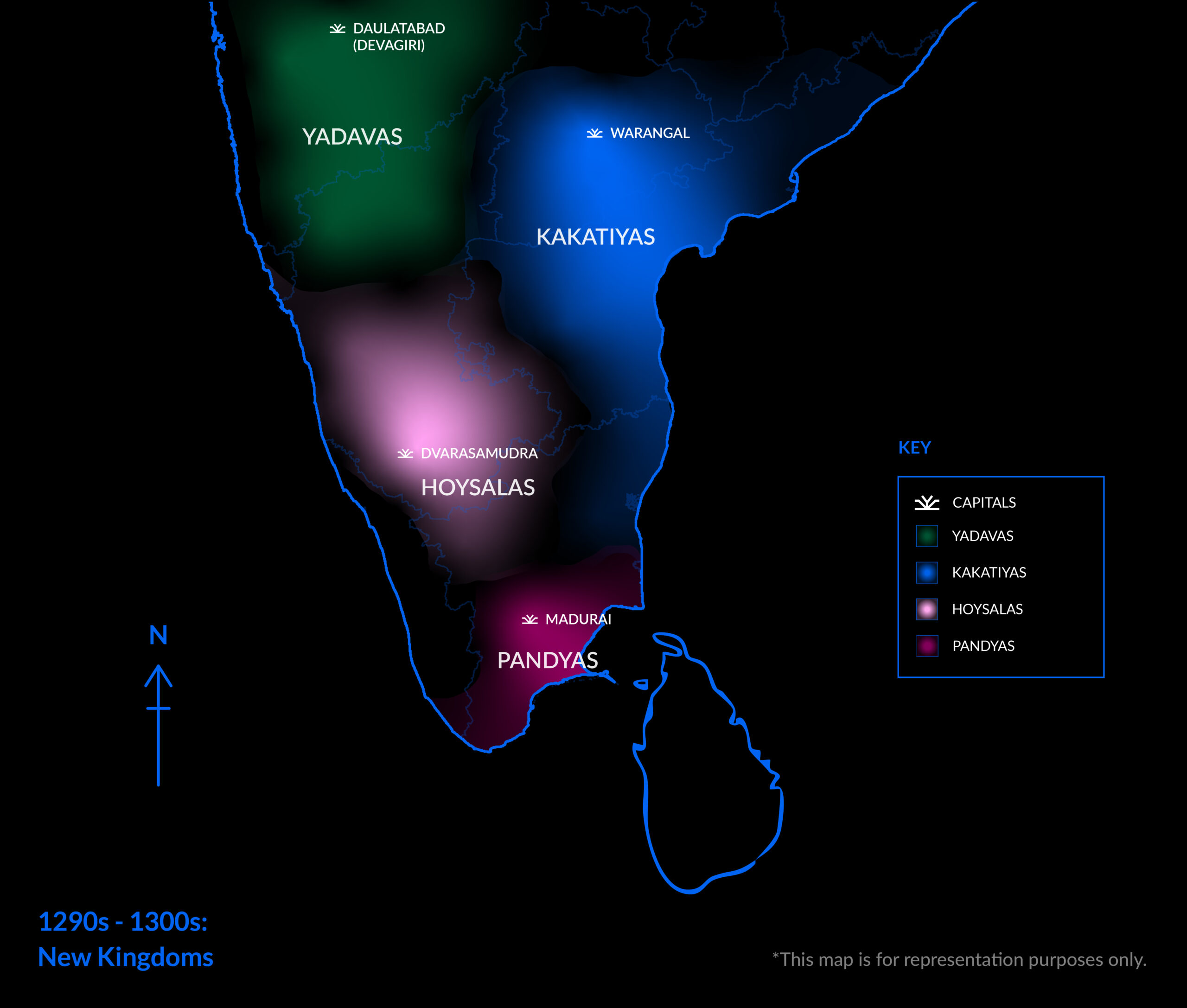
The Pandyas prove unable to achieve what the Cholas once did, making relatively little headway against the powerful collectives of the Kaveri floodplain and Tondai Nadu. The Hoysalas are still strong in the southern Deccan. The Yadavas are prominent in the northern parts and another Chalukya successor state, the Kakatiyas, hold sway over the eastern Deccan and the Andhra coast. One by one, these kingdoms fall to raids by the Delhi Sultanate, first under the general Malik Kafur, and then under Sultan Muhammad Bin-Tughlaq.
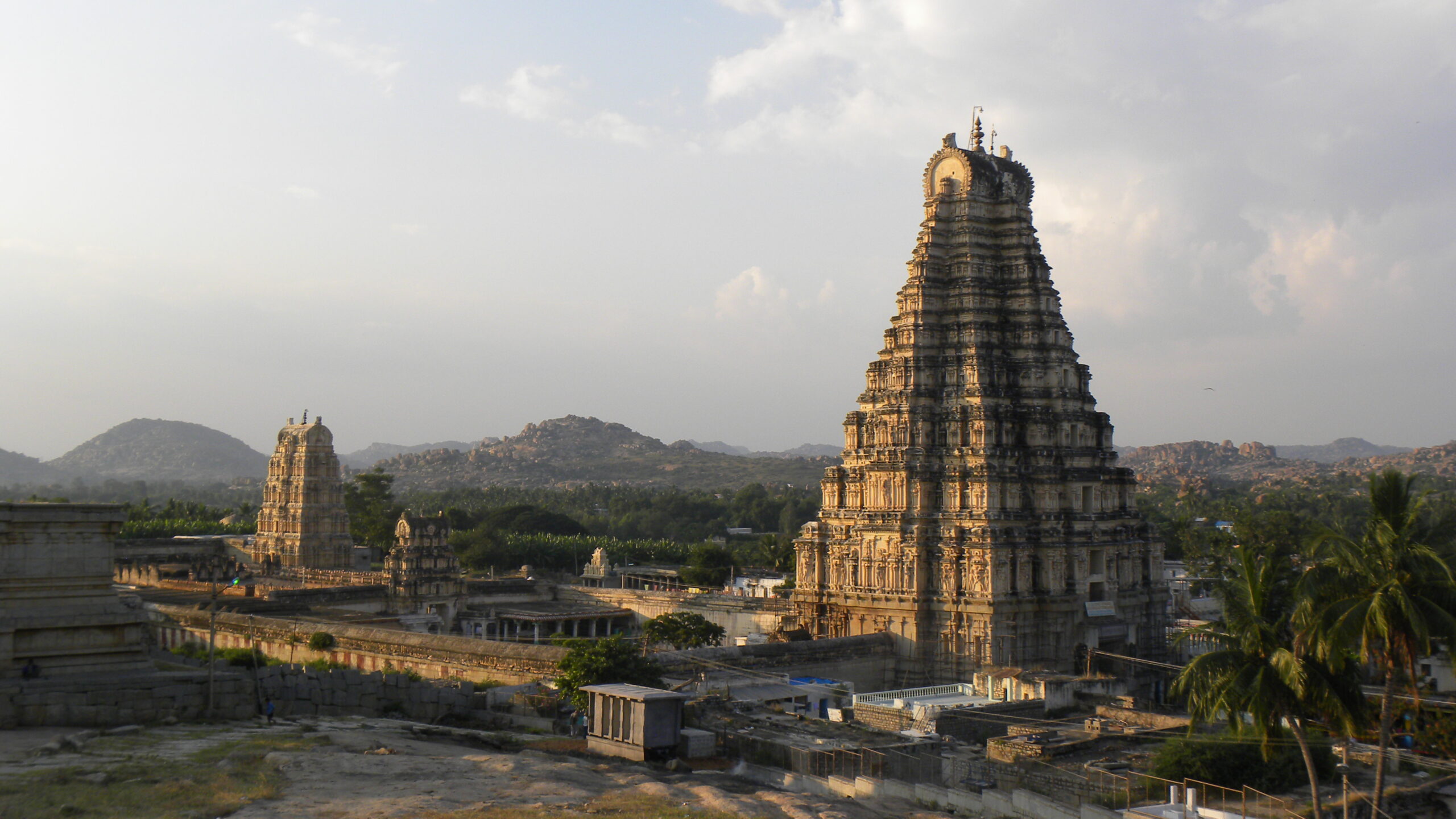
In the aftermath of the Delhi Sultanate’s raids into South India, new powers rise to fill the political vacuum. The Vijayanagara empire dominates much of South India, extending northwards to the Raichur Doab, where it contends with the Bahmani Sultanate. Vijayanagara architecture absorbs much of Chola and Pandya temple architecture, particularly the conception of temples as a series of courtyards demarcated by gopuram gateways and endowed with processional bronzes. These become the typical feature of many South Indian temples.
The development of South Indian historiography in the Madras Presidency leads to the rediscovery of the Cholas in Tamil popular culture; their bronzes become icons of global art. From the vast footprint of the Tamil diaspora to the shape of the South Indian temple, from the social structure of contemporary Tamil Nadu to the deep trading connections of the Coromandel coast, the Chola legacy continues to live on in ways both expected and not.
Ali, Daud. “The Epigraphical Legacy at Gangaikondacholapuram.” In New Dimensions in Tamil Epigraphy: Select Papers from the Symposia Held at EPHE-SHP, Paris in 2005, 2006 and a Few Invited Papers, edited by Appasamy Murugaiyan, 1–31. Chennai: Cre-A, 2012.
Balasubrahmanyam, S.R. Later Chola Temples: Kulottunga I to Rajendra III (A.D. 1070–1280). Mudgala Trust, 1979.
Bhargava, Piyush. “Hoysala Temple Architecture – “The Later Chalukyan Style.” Proceedings of the Indian History Congress 71 (2010): 1307–9. http://www.jstor.org/stable/44147623
Branfoot, Crispin. “‘Expanding Form’: The Architectural Sculpture of the South Indian Temple, ca. 1500-1700.” Artibus Asiae 62, no. 2 (2002): 189–245. https://doi.org/10.2307/3250266.
Cane, Nicolas. “Temples, Inscriptions and Historical (Re)Construction: The “Epigraphical Persona” of the Cōḻa Queen Cempiyaṉ Mahādevī (Tenth Century).” Bulletin de l’École Française d’Extrême-Orient 105 (2019): 27–60.
Champalaksmi, R. Trade, Ideology, and Urbanization: South India 300 BC to AD 1300. Oxford University Press, 1996.
Cox, Whitney. Politics, Kingship and Poetry in Medieval South India: Moonset on Sunrise Mountain. South Asia Edition. Cambridge: Cambridge University Press, 2016.
Davis, Richard H. Ritual in an Oscillating Universe: Worshiping Śiva in Medieval India. Princeton, NJ: Princeton University Press, 1991
Dehejia, Vidya. The Thief Who Stole My Heart: The Material Life of Sacred Bronzes from Chola India, 855-1280. The A.W. Mellon Lectures in the Fine Arts 65. Princeton, NJ: Princeton University Press, 2021.
Derret, J. Duncan M. The Hoysalas: A Medieval Indian Royal Family. London: Oxford University Press, 1957.
De Silva, Kingsley. A History of Sri Lanka. Penguin Books: 1981.
Eaton, Richard M., and Phillip B. Wagoner. Power, Memory, Architecture: Contested Sites on India’s Deccan Plateau, 1300–1600. New Delhi: Oxford University Press, 2014.
Eaton, Richard M. India in the Persianate Age: 1000–1765. New Delhi: Penguin Books, 2019.
Fernando, Milroy. “A Study of the Mysticism of Service and Morality in the Periya Purāṇam of Cēkkiḻār”. D. Phil Dissertation. University of Birmingham, 2014.
Foekema, G. Architecture Decorated with Architecture: Later Medieval Temples of Karnātaka, 1000-1300 AD. New Delhi: Munshiram Manoharlal Publishers, 2003.
Guitiérrez, Andrea. “Medieval Food as Deity Worship: The Elaboration of Food Offerings in Chola-Era Ritual Practice.” In The Routledge Handbook of Hindu Temples: Materiality, Social History and Practice, edited by Himanshu Prabha Ray, Salila Kulshreshtha, and Uthara Suvrathan, 126–44. Oxford, New York: Routledge, 2023.
Guy, John. “The Nataraja Murti and Chidambaram: Genesis of a Cult Image.” In Chidambaram: Home of Nataraja edited by Vivek Nanda and George Michell, 70–82. Mumbai: Marg Publications, 2004.
Hall, Kenneth R. Networks of Trade, Polity and Societal Integration in Chola-Era South India, c. 875–1279. Delhi: Primus Books, 2014.
Hall, Kenneth R. Trade and Statecraft in the Age of Cholas. New Delhi: Abhinav Publications, 1980
Heitzman, James. Gifts of Power: Lordship in an Early Indian State. Delhi: Oxford University Press, 2001.
Impart Encyclopedia of Art. “Ardhanarishwara Bronze Statue, Government Museum, Chennai.” Accessed October 1, 2025.
https://imp-art.org/articles/ardhanarishwara-bronze-statue-government-museum-chennai/.
Impart Encyclopedia of Art. “Chola Bronze Sculptures.” Accessed June 18, 2025. https://imp-art.org/articles/chola-bronze-sculptures/
Impart Encyclopedia of Art. “Gangaikondacholapuram.” Accessed January 29, 2025. https://imp-art.org/definitions/gangaikondacholapuram/
Impart Encyclopedia of Art. “Gangaikondacholapuram Temple Sculptures.” Accessed January 29, 2025. https://imp-art.org/articles/gangaikondacholapuram-temple-sculptures/
Impart Encyclopedia of Art. “Vrishabhavahana.” Accessed February 11, 2025. https://imp-art.org/definitions/vrishabhavahana/
Impart Encyclopedia of Art. “Vrishabhavahana and Uma Chola Bronzes, Thanjavur Art Gallery.” Accessed February 11, 2025. https://imp-art.org/articles/vrishabhavahana-and-uma-chola-bronzes-thanjavur-art-gallery/
Indrapala, K. The Evolution of an Ethnic Identity: The Tamils of Sri Lanka c. 300 BCE to c. 1200 CE. UK: Ohm Books, 2005.
Kaimal, Padma. “A Man’s World? Gender, Family and Architectural Patronage in Medieval India.” Archives of Asian Art 53 (2002): 26–53.
Kaimal, Padma. “Early Cōḻa Kings and ‘Early Cōḻa Temples’: Art and the Evolution of Kingship.” Artibus Asiae 56, no. 1/2 (1996): 33–66. https://doi.org/10.2307/3250104.
Kaimal, Padma. “Shiva Nataraja: Shifting Meanings of an Icon.” The Art Bulletin 81, no. 3 (1999): 390–419. https://doi.org/10.2307/3051349.
Kanisetti, Anirudh. Lords of Earth and Sea: A History of the Chola Empire. Delhi: Juggernaut Books, 2025.
Kanisetti, Anirudh. Lords of the Deccan: Southern India from the Chalukyas to the Cholas. New Delhi, India: Juggernaut Books, 2022.
Karashima, Noboru. A Concise History of South India – Issues and Interpretations. Oxford University Press, 2014.
Karashima, Noboru. Ancient to Medieval: South Indian Society in Transition. Oxford Collected Essays. New Delhi: Oxford University Press, 2009.
Kinsley, David. Hindu Goddesses: Visions of the Divine Feminine in the Hindu Religious Tradition. University of California Press, 1988.
Kulke, Hermann. “Śrīvijaya Revisited: Reflections on State Formation of a Southeast Asian Thalassocracy.” Bulletin de l’École française d’Extrême-Orient 102 (2016): 45–95. https://www.persee.fr/doc/befeo_0336-1519_2016_num_102_1_6231#:~:text=%C5%9Ar%C4%ABvijaya’s%20place%20of%20origin%20was,city%20on%20the%20Malay%20Peninsula.
Kumar, Sunil. Emergence Of The Delhi Sultanate. Permanent Black, 2007.
Lambourn, Elizabeth. “Towards a Connected History of Equine Cultures in South Asia: Bahrī (Sea) Horses and “Horsemania” in Thirteenth-Century South India.” The Medieval Globe 2, no. 1 (2016): 57–100.
Lee, Risha. “Constructing Community: Tamil Merchant Temples in India and China, 850-1281.” PhD Thesis, Columbia University, 2012.
Lee, Risha. “Rethinking Community: The Indic Carvings of Quanzhou.” In Nagapattinam to Suvarnadwipa: Reflections on the Chola Naval Expeditions to Southeast Asia, edited by Hermann Kulke, K. Kesavapany and Vijay Sakhuja, Reprint, 240–70. Nalanda-Sriwijaya Series. New Delhi: Manohar, 2019.
Ludden, D. “Patronage and Irrigation in Tamil Nadu: A Long-term View.” The Indian Economic and Social History Review, 16(3), 347-365, 1979. https://doi.org/10.1177/00194646790160030.
Ludden, David. Peasant History in South India. Princeton, NJ: Princeton University Press, 1985.
Mahalakshmi, R. “Beyond the Politics of Conquest: Brahmanical Iconography in Polonnaruva.” In Readings on the Temple, edited by Naman P Ahuja, 186–193. Marg Foundation, 2021–2022.
MAP Academy and Shrey Maurya. “Dwelling on Beauty and Prowess.” Deccan Herald, November 18, 2022. https://www.deccanherald.com/features/dwelling-on-beauty-and-prowess-1163509.html.
McKinnon, Edward. “Kota Cina: Its Context and Meaning in the Trade of Southeast Asia in the Twelfth to Fourteenth Centuries.” PhD thesis, volume I of II.
McKinnon, E. Edwards. “Mediaeval Tamil Involvement in Northern Sumatra, C11-C14 (The Gold and Resin Trade).” Journal of the Malaysian Branch of the Royal Asiatic Society 69, no. 1 (270) (1996): 85–99. https://www.jstor.org/stable/41493294
Meegama, Sujatha Arundathi. From Kovils to Devales: Patronage and “Influence” at Buddhist and Hindu Temples in Sri Lanka. https://escholarship.org/content/qt4sf180xb/qt4sf180xb.pdf
Meegama, Sujatha Arundathi. “South Indian or Sri Lankan? The Hindu Temples of Polonnaruva, Sri Lanka.” Artibus Asiae 70, no. 1 (2010): 25–45.
Mines, Mattison. The Warrior Merchants: Textiles, Trade and Territory in South India. Cambridge: Cambridge University Press, 1985.
Monius, Anne E. Imagining a Place for Buddhism: Literary Culture and Religious Community in Tamil-Speaking South India. Oxford; New York: Oxford University Press, 2001.
Nagaswamy, R. Bṛhadīśvara Temple: Form and Meaning. New Delhi: Indira Gandhi National Centre for the Arts, in association with Aryan Books International, 2010.
Nagaswamy, R. “On Dating South Indian Bronzes.” In Indian Art & Connoisseurship: Essays in Honor of Douglas Barrett, ed. John Guy, Chidambaram Ahmedabad, India: Indira Gandhi National Centre for the Arts, in association with Mapin Publishing, 1995.
Orr, Leslie C. “Chiefly Queens: Local Royal Women as Temple Patrons in the Late Cōḻa Period.” In The Archaeology of Bhakti II: Royal Bhakti, Local Bhakti, edited by Emmanuel Francis and Charlotte Schmid, 385–421. Collection Indologie 132. Pondicherry, India : Paris, France: Institut français de Pondichéry ; École française d’Extrême-Orient, 2016.
Orr, Leslie C. “Domesticity and Difference/Women and Men: Religious Life in Medieval Tamil Nadu.” In Women’s Lives, Women’s Rituals in the Hindu Tradition, edited by Tracy Pintchman, 109–29. Oxford University Press, 2007.
Orr, Leslie C. Donors, Devotees and Daughters of God: Temple Women in Medieval Tamilnadu. South Asia Research. New York: Oxford University Press, 2000.
Orr, Leslie C. “Slavery and Dependency in Medieval South India.” In The Cambridge World History of Slavery, edited by Craig Perry, David Eltis, Stanley L. Engerman, and David Richardson, 313–34. The Cambridge World History of Slavery. Cambridge: Cambridge University Press, 2021.
Orr, Leslie C. “Temple Life at Chidambaram in the Chola Period: An Epigraphical Study.” In Śrī Puṣpāñjali: Recent Researches in Prehistory, Protohistory, Art, Architecture, Numismatics, Iconography and Epigraphy. Dr. C.R. Srinivasan Commemoration Volume, edited by Koluvail Vyasaraya Ramesh, S. Subramonia Iyer, M. J. Sharma, S. Swaminathan and C.S. Vasudevan, 227–41. Delhi: Bharatiya Kala Prakashan, 2004.
Orr, Leslie C. “The Vaisnava Community at Srirangam: The Testimony of the Early Medieval Inscriptions.” Journal of Vaisnava Studies, vol. 3, no. 3, 1995.
Paranavitana, S. “The Statue near Potgul-Vehera at Poḷonnaruva, Ceylon.” Artibus Asiae 15, no. 3 (1952): 209–17. https://doi.org/10.2307/3248562.
Rajarajan, RK. “Stucco Images in the Tribhuvaṉam Temple”. History Today no. 22 (2021): 36–45. https://www.academia.edu/81539675/Stucco_Images_of_Tribhuvanam.
Ray, Himanshu P. “Nagapattinam Bronzes in Context: Cultural Routes and Transnational Maritime Heritage.” CSMVS Research Journal, 2019, 22–31.
Sastri, K.A. Nilakantha. The Cōḷas. Madras: University of Madras Press, 1955.
Sastri, K.A. Nilakantha. The Illustrated History of South India. Oxford University Press, 2009.
Sastri, K.A. Nilakantha. The Pāṇḍyan Kingdom: From the Earliest Times to the Sixteenth Century. London: Luzac & Co., 1929.
Schwindler, Gary J. “Speculations on the Theme of Śiva as Tripurāntaka as It Appears during the Reign of Rājarāja I in the Tanjore Area ca. A.D. 1000.” Ars Orientalis 17 (1987): 163–78.
http://www.jstor.org/stable/4629360.
Spencer, George W. “The Politics of Plunder: The Cholas in Eleventh-Century Ceylon.” The Journal of Asian Studies 35, no. 3 (1976): 405–19. https://doi.org/10.2307/2053272.
Sri Lanka Archeology. “Velikkara (Vellakkara) Inscription at Polonnaruwa Sri Lanka.” https://www.archaeology.lk/velikkara-inscription-at-polonnaruwa/.
Srivathsan, A. (1995). “The Persecution of Ramanuja: A View From the Srirangam Temple Complex.” The Indian Economic & Social History Review 32, no. 4 (1995): 475–487. https://doi.org/10.1177/001946469503200404.
Subbarayalu, Y. Political Geography of the Chola Country. Madras: Tamil Nadu State Department of Archaeology, 1973.
Subbarayalu, Y. South India Under the Cholas. New Delhi: Oxford University Press, 2012.
Swaminathan, S. The Early Chōḷas: History, Art, and Culture. Delhi: Sharada Publishing House, 1998.
Venkataraman, K.R. “Hoysalas in the Tamil Country.” Annamalai University Historical Series 7. Annamalai Nagar: Annamalai University, 1950.
Vose, Steven M. “The Violence of Devotion: Śaivas, Jains and the Periyapurāṇam in Medieval South India.” Cult/ure: The Graduate Journal of Harvard Divinity School, 103–126 (2006).
Younger, Paul. “The Home of Dancing Śivan̲: The Traditions of the Hindu Temple in Citamparam.” New York: Oxford University Press, 1995.