-
ChicagoMukherjee, Rush. "A Radical Imagination: An Interview with Curator Amal Khalaf." Impart Perspectives, March 6, 2026. https://imp-art.org/perspectives/interviews/a-radical-imagination-an-interview-with-curator-amal-khalaf/
-
MLAMukherjee, Rush. "A Radical Imagination: An Interview with Curator Amal Khalaf." Impart Perspectives, Mar. 6, 2026, https://imp-art.org/perspectives/interviews/a-radical-imagination-an-interview-with-curator-amal-khalaf/. Accessed 15 Oct 2026.
-
HarvardMukherjee, R. (2026) A Radical Imagination: An Interview with Curator Amal Khalaf, Impart Perspectives. Available at: https://imp-art.org/perspectives/interviews/a-radical-imagination-an-interview-with-curator-amal-khalaf/ (Accessed: 15 October 2026).
A Radical Imagination: An Interview with Curator Amal Khalaf
The Bahraini-Singaporean artist and curator discusses her practice, upcoming projects, and the gallery as a space of political potential and transformation.
By Rush Mukherjee
Link copied!
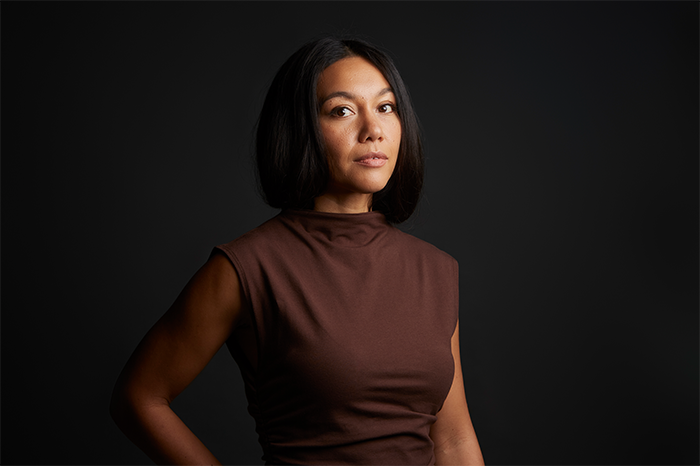
Curator Amal Khalaf. Photograph: Christa Holka
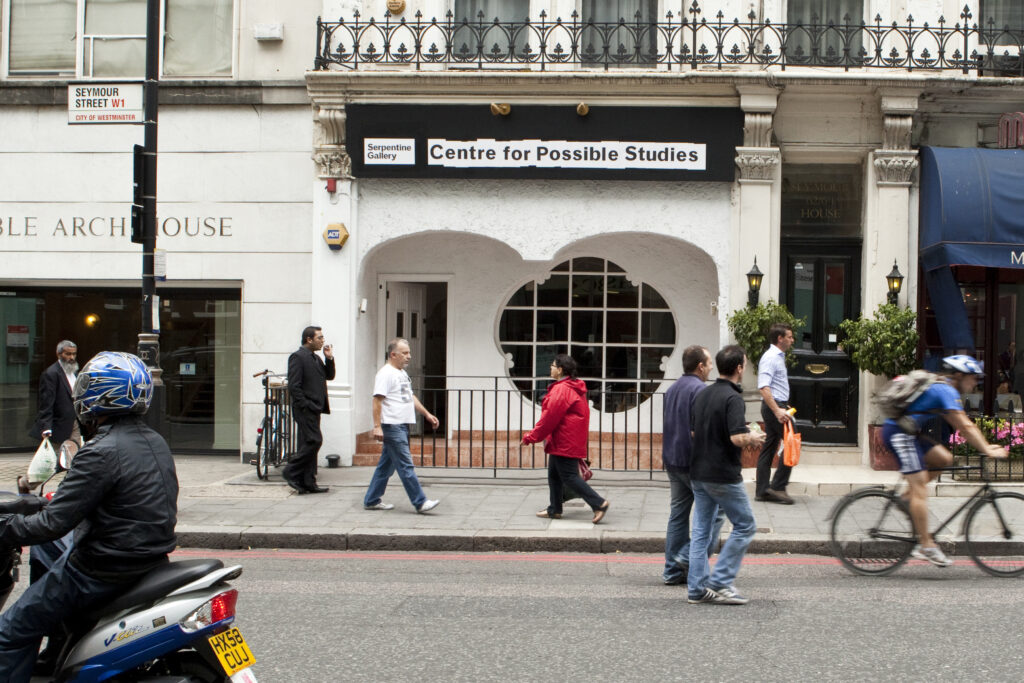
Bahraini-Singaporean artist and curator Amal Khalaf’s practice sits at the intersection of the arts, social justice, and community organising around a range of issues — from migrant justice and rights to the city to effective labour organising. The UK, and now Thailand-based Khalaf served as the director of programs at artist-run cooperative Cubitt for six years (2019-25), and was the Civic Curator at the Serpentine Galleries (2009-23). One initiative that exemplifies her approach is the Serpentine Edgware Road Project (2009-2013), which she was part of since its inception, dedicated to connecting local and international artists with residents of the neighbourhood surrounding the galleries. She co-curated the Sharjah Biennial 16 in 2025; organised the Bahrain pavilion at the Fifty-Eighth Venice Biennale in 2019; and co-directed the tenth edition of the Global Art Forum, Art Dubai, in 2016. While she has expressed discomfort with the label of “curator,” she is now gearing up for the Busan Biennale, opening in September 2026, where she will serve as the co-artistic director. What connects her myriad endeavours, including experiments in radical pedagogy and collectivist art interventions, is the belief that “the art spaces we create are spaces where we can all practice our imaginations and politics.”
In a free-flowing conversation, Khalaf discusses her practice and the gallery as a space of political potential and transformation.
Rush Mukherjee: The 2025 Sharjah Biennial was the first biennial you have ever curated. What were some of the challenges you faced during the process of putting the show together. Did its location come with certain constraints? How did you navigate them?
Amal Khalaf: It was definitely my first biennial. I’m someone who had, up until that point, done a bunch of independent projects, put together exhibitions, and also, was involved in work that goes into building institutions. I was also used to working with artists over long periods of time — across three years or more. The exciting thing about the Biennial was the time frame of two years for preparation. The constraints around the reduced amount of time allowed me to think about what parts of my practice I wanted to deepen and push in this context, and the things I wanted to try and do differently as a curator. Something that is so central to the work I do as a curator is thinking about the location and the place-making context. When you work with artists over long periods of time, you really can respond to and think about the place and the space.
[Fortunately], the Biennial was connected to a place I call home. I grew up in Bahrain. I’ve been to every single Sharjah since 2005 — it’s been my school, my place of learning. So the context of the Sharjah Biennial was familiar. It’s not necessarily just about growing up in a place but what feels familiar, both as someone who is khaleeji [“of the Gulf”], who speaks Arabic, but [has] also always been an “outsider” because I’m not fully Arabic. I don’t look Arabic, and so I have always been treated as someone that’s not from there. But [it’s] a port city. Being on the water’s edge of the same sea that I grew up with was a moment for me to really bring in a deeply personal framework to the Biennial.
In terms of connecting to the space and wanting to speak about the space, as someone who had been working in and around the Gulf for so long, I realised that there were many, many narratives about the region that were never present in the writings about the region, or exhibitions and projects about the region. Narratives that I knew. The Gulf I grew up with, deeply coloured by my relationship with my grandmother and the kind of practices that are not mainstream, are not celebrated by top-down images and declarations about what it means to be from this place. [For instance] talking about the spiritual, the matrilineal, the magic and animistic practices that don’t fit the Bedouin Sunni identity. And starting from these conversations about the sea itself, to the embodied knowledge that we inherit about the matrilineal — these became the connecting points when I was in conversation with the other four women curators.
Mukherjee: What are your thoughts on co-curation and the exchanges it involves? You have talked about the Sharjah Biennial being kind of a chorus, like a polyphony.
Khalaf: I knew all [four] of them through their work. I had spent time in some of the places they had referenced in their curatorial projects, but we’d never worked together. In terms of harmonising, I think we were invited to co-curate soon after the Covid pandemic. There were many, many disasters across the world; wars were beginning. It was like this ongoing experience of grief that was enveloping each of our own communities and contexts. And so we connected quite quickly on certain themes and questions. Even though the artists we had worked with and our practices and contexts were very different, we had points of connection through it all. We started to use language and terms that we collectively resonated with. We were actively listening to each other.
And I think that’s something that could only happen because of the constellation of curators I was with. We would always return to each other during the process, listening and sharing… And there was a lot of exchange, in particular for me, working with Alia Swastika and Natasha Ginwala. I was at both of their sites. We visited artists together. We had lots of things to say, me and Natasha, about lament, the water and sea. I had a lot to discuss with Alia about radical pedagogies, working with collectives, creating space for collaborative practices.
Mukherjee: The 2025 Biennale was touted as a space that celebrated a decentralised approach to contemporary art. Could you tell us a little bit about what that means for you?
Khalaf: There were many ways to experience the exhibition. First, physically, you could experience the exhibition in different ways. There were no guides… no guiding central text. We really resisted having such a framework. We offered this multi-vocal list of possible objects, identities, ideas “to carry” as a holding space for the exhibition. And then, there were five ways that you could enter. So, in a sense, we were offering multiplicity in the ways in which visitors encountered each work.
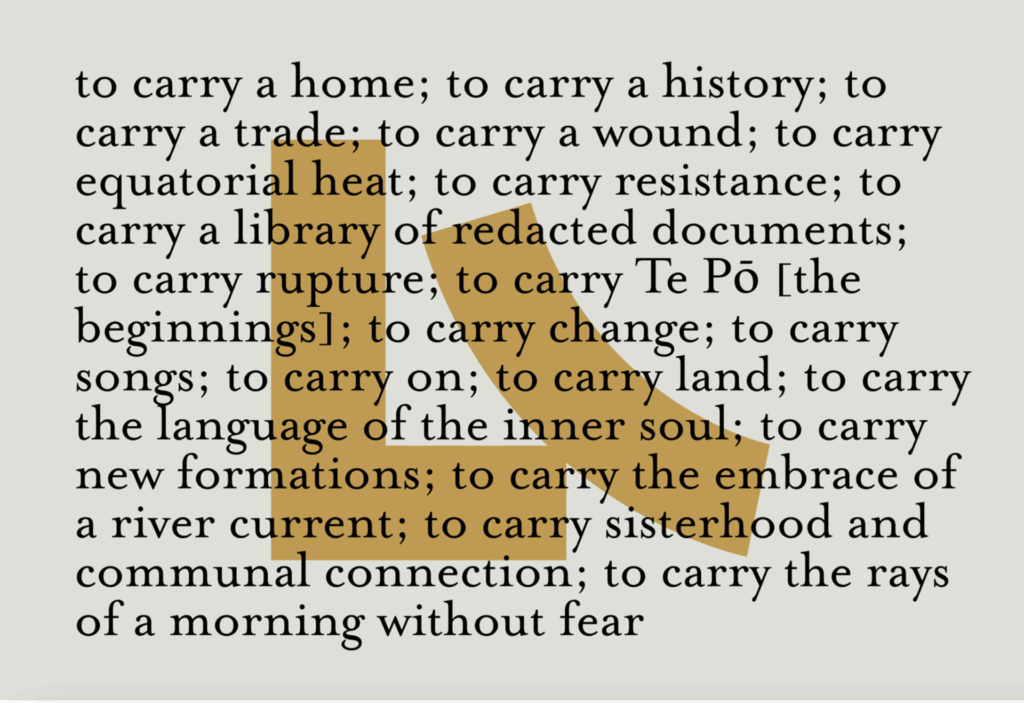
But also, there were many other processes that were part of the exhibition and the Biennial itself, and not all of them even took place in Sharjah. So that was something important for us. We were thinking a lot about the redistribution of resources from a place like Sharjah. I think a lot of the artists we worked with — not all of them — but many were not gallery represented. That was really important for us. Alia brought in an artist from Papua who has never shown outside of Indonesia, for example. We were really keen to bring in artists who are thinking in different ways. We were thinking, how do we redistribute these [Biennale] resources? How can some of the processes of the Biennial also appear in other places?
Mukherjee: What are some of the specifics you like incorporating while curating art shows?
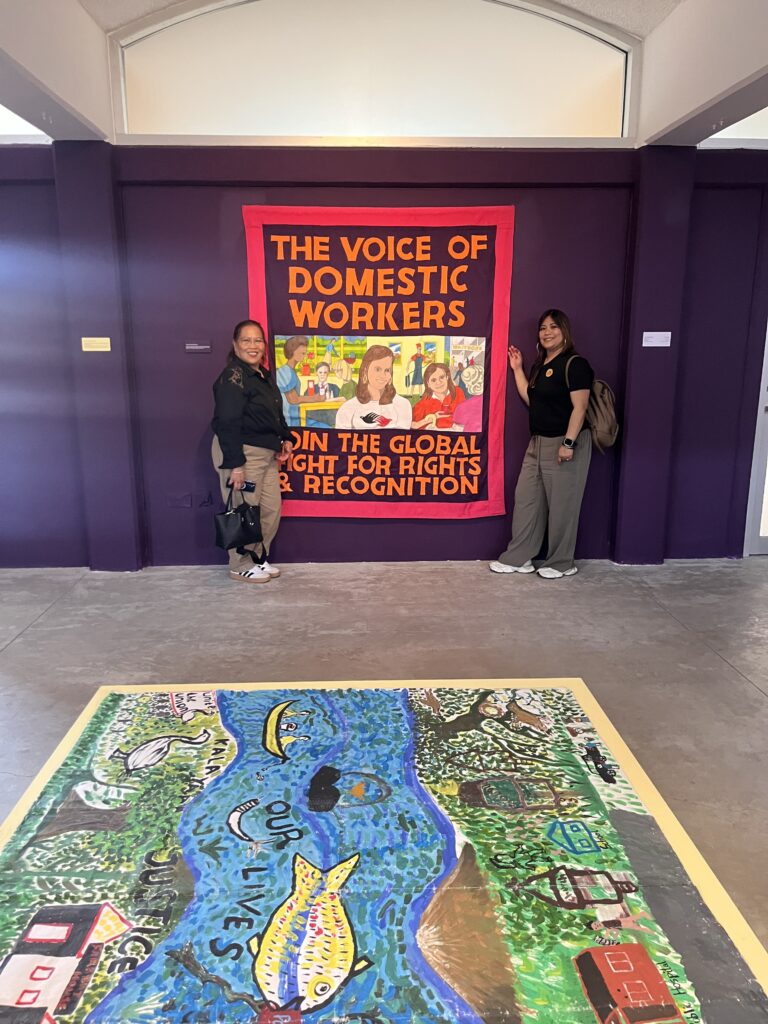
Khalaf: I am usually really keen to reach out to artists that have an expanded practice of collaborating with others. I like working with collectives that are working on very interesting economies that are challenging what it means to survive and be political as artists. In this context, at Sharjah, we had Bilna’es, who are from Palestine. Then there were others, like political campaign groups, like the Voice of Domestic Workers. For me, it’s like, who’s allowed to curate, who’s allowed to produce knowledge? It is also really important for me to represent artists from minority backgrounds, women, or queer people. In Sharjah, this also had a personal register in that I was really influenced by my grandmother’s story, who’s from a minority community in the Gulf.
Mukherjee: Was bringing West Asia into greater conversation with South Asia something that you wanted to focus on, given the backgrounds of the curators?
Khalaf: Yeah, hundred per cent, and this was a deep conversation. It was about, I feel, thinking about it really physically through the sea. That was a starting point for me, and also Zainab, for example, who was thinking about the relation of Turkey and Greece and the Mediterranean to South Asia. Me and Natasha were thinking about the Indian Ocean, the wider Indian Ocean, and by default, then stretching out to Southeast Asia through Alia’s program, and so we did work with a lot of people that are thinking about the littoral, who are thinking about bodies of water. That became a really strong way to kind of begin this conversation on South Asia. On a personal level, in terms of how I was approaching the project, I was thinking about diversifying, complicating this “purist” Sunni Bedouin male identity of the Gulf. Of who lives there and who belongs to the Gulf.
Mukherjee: Your work foregrounds social justice and your practice lies at the intersection of activism and art. Can you tell us a bit about some of the processes that shape your practice?
Khalaf: I come from a political family in Bahrain, and I also come from a place like the Gulf where power dynamics are violently expressed. Dissent and critique are discouraged and punished. So, I think at the heart of why I choose to work in art, as opposed to participating in social movements, is the need for an embodied shift. There is a power, I think, that artists and artworks can bring to the table. They enable and support action or empathy or understanding about injustices we see in the world around us.
I have, in the past, worked in documentary films for TV. I was working in a department of the BBC that covers wars — this was in 2003-04. What I started to see in some of these spaces made me unhappy. Specifically, I became disenchanted with this “charitable” power dynamic that appears with people who are covering stories… like, “I’m doing good,” “I’m telling the story.” But, they’re actually foregrounding their point of view. The way they document poor people or the subject of their films — like that kind of dynamic, I found really, really uncomfortable. It’s this hero complex. That is when I started to think about other forms, like workshops, and how to kickstart the process of telling stories collectively; of being able to centre the lived experience. That was something you couldn’t do via mainstream media at that time, in the early 2000s. I found the process of holding workshops far more effective because it creates a space where something shifts in people. So I entered the art world doing workshops.
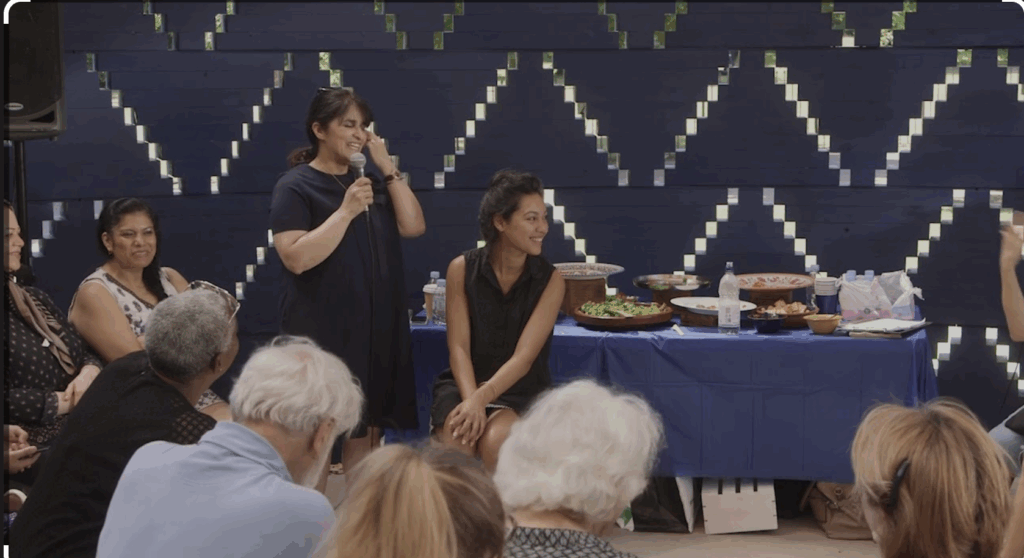
I feel there’s something in this process of being together, making something together with other people, and now, as a curator, inviting artists who all have different ‘ways of doing’ based on varied concerns. It is really rewarding, really powerful — a space where I think things can happen. I’m also thinking about the violence of institutions, which is why I spoke about participatory budgeting, which is actually something that was used by social movements that began in the ‘60s and the ‘70s. It’s used by so many people in the activist space even now while organising to gain rights, gain access to services and resources. I just used that process, but within an art project, and in a context — like the Serpentine — where our funding is coming from corporations and very rich patrons. So, it becomes quite interesting for me; how we take that money and redistribute it collectively.
Mukherjee: Let’s talk about your work at Cubitt and Serpentine. You’ve talked about the fact that most of your projects take around three to eight years, perhaps longer. Why do you prefer long term projects?
Khalaf: There are lots of reasons why I think [a minimum of] three years is helpful. I’m also an artist, and I have been in an art collective before. I think there’s a demand in terms of the art economy and the way institutions function in that economy. The dominant model is commissioning art, which is often a short term, transactional engagement. A lot of artists function on this kind of project-to-project, commission-to-commission basis. I think, in a way, there’s a responsibility that we have as institutions and curators to support artists and do something that they wouldn’t be able to do otherwise if they were on their own in their studio. The Serpentine is a well-funded institution. When I began working there, I began feeling that it was my responsibility to actually invite artists whose practices aren’t favoured by the art market. They’re not necessarily emerging artists; they’re just artists working on projects that aren’t easy to put on a wall, not easy to sell. So part of my work is now invested in creating the space to research, the space to build relationships, not just with me but across groups because, very often, I’m inviting artists into a context. And for that, I realised you need time… you need time to fail as well when you are embracing new approaches, radical formats.
Mukherjee: Since you mentioned commercialisation, are there any particular trends that you’ve spotted in the global art market at the moment?
Khalaf: Interestingly, since Covid, there’s been a really strong return to the painting medium, which is quite interesting for me. I mean, I’m a moving image commissioning curator, so a lot of my projects will often also end up as a film because I am working with artists who think about lens-based media. These are quite challenging works to sell. In the last 10 years, there are more and more galleries, like Experimenter for example, that are able to find those who are interested in such work. There are, even now, collectors and institutions that are specifically only collecting video-based work. I’ve also seen an interesting trend emerge, in the form of new departments in collecting museums dedicated to collecting performance, which for me, is super radical and super interesting. Like, what does it mean to own a performance, right?
Mukherjee: Can you tell us a bit about your experiences co-curating Ghost 2568?
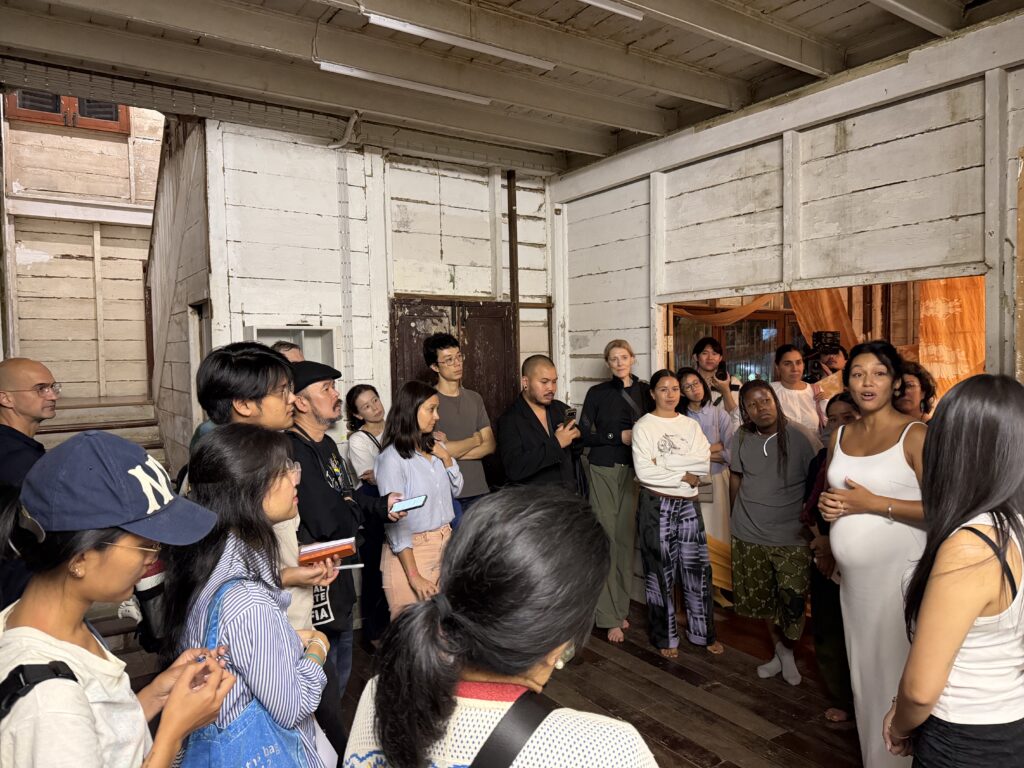
Khalaf: Yes! Ghost 2568 was the third event as part of a triennale. We mostly focussed on Bangkok city. Korakrit Arunanondchai, an artist from Bangkok, kind of founded the Ghost project — I actually invited the last two curators of the previous two editions — Korakrit, as well as Christina Li, who did the second one, to haunt this third and final version of Ghost. It was a performance and moving image festival that was held across venues all over Bangkok. My process for Ghost 2568 was rooted in a Thai phrase [pronounced “P̄hī k̄hêā”] that refers to spirit possession. To me it meant a form of transgression, and how I feel about ghosts. I think spirits have in Asia, in general, this kind of cultural positioning as entities that surpass boundaries — not just walls and physical spaces — but also barriers related to socioeconomic classes, rules of governance and the government, the military, gender…
In the process of curating this edition, I’d been thinking about how artists can be agitators. So I invited a lot of different artists who were doing this in their own practice, and thinking about ways of making us see the world from a different perspective. I spoke to and interacted with a lot of young artists based in Bangkok. Almost all the commissioned work came from Bangkok-based artists, all of whom are from various generations. So they collectively held memories of recent years and those from a decade ago — moments of huge protest that are now very silent, almost absent. So we were kind of exploring this idea of displacement, loss. How do we remember? How can we reactivate?
Mukherjee: Can you tell us a bit about your conceptual approach to the Busan Biennale 2026? Will Busan’s identity as a port city play a role, like it did in Sharjah?
Khalaf: For me, Dissident Chorus, which is what we have titled Busan Biennale 2026, begins from the body and from sound. I’ve been thinking about the “chorus,” not as harmony, but as multiplicity — voices that overlap, interrupt, stutter, refuse alignment. The exhibition is interested in what happens when meaning does not stabilise under pressure. When power tries to smooth things out, and instead, something breaks, or sings differently. Busan feels incredibly resonant in this regard. As a port city, Busan is already a site of thresholds, where goods circulate, but also where languages, gestures, griefs, and desires move. They are spaces of trade and extraction, but also refuge and solidarity. I’m interested in that tension, between flow and control, between openness and surveillance. In Sharjah, the maritime condition became a way of thinking through and listening through shared grief; the sea as archive, as witness, as a force that exceeds borders. In Busan, I’m thinking more about the port as a space of friction. The port is not neutral; it’s infrastructural. It is built to facilitate capital, but it is also inhabited by workers, migrants, and histories of resistance.
So yes, Busan’s identity as a port city plays a role, but perhaps less as metaphor and more as method. I’m thinking about circulation: how ideas circulate, how dissent travels, how sound moves through architecture, the way water moves. I’m also thinking about temporality, tides, repetition, and return. A chorus functions similarly. It gathers voices over time. It allows for echo. The exhibition will be shaped through listening, to local histories, to artists working in and around the city, to the political and ecological realities of this coastline. The “dissident” aspect is about the moments where something resists assimilation. A stutter. A pause. A misalignment that reveals structure. If Sharjah asked me to think about the sea as ‘memory,’ in a sea I grew up in, Busan is asking me to think about the port as ‘encounter,’ as a site where bodies, infrastructures, and voices collide. Ultimately, Dissident Chorus will be polyphonic. And perhaps the port, with its layered flows and frictions, is already a kind of chorus.
First published: March 6, 2026