-
ChicagoSavansukha, Pooja. "The Waq-Waq Tree and How it Fuelled the Mughal Imagination." Impart Perspectives, November 26, 2021. https://imp-art.org/perspectives/dispatches/the-waq-waq-tree-and-how-it-fuelled-the-mughal-imagination/
-
MLASavansukha, Pooja. "The Waq-Waq Tree and How it Fuelled the Mughal Imagination." Impart Perspectives, Nov. 26, 2021, https://imp-art.org/perspectives/dispatches/the-waq-waq-tree-and-how-it-fuelled-the-mughal-imagination/. Accessed 21 Sep 2026.
-
HarvardSavansukha, P. (2021) The Waq-Waq Tree and How it Fuelled the Mughal Imagination, Impart Perspectives. Available at: https://imp-art.org/perspectives/dispatches/the-waq-waq-tree-and-how-it-fuelled-the-mughal-imagination/ (Accessed: 21 September 2026).
The Waq-Waq Tree and How it Fuelled the Mughal Imagination
The legendary tree purportedly grew on an island in the sea of China, inhabited by beautiful women and mythical beings. These tall tales would later inspire the decorative waq style, seen on textiles, manuscripts and other mediums.
By Pooja Savansukha
Link copied!
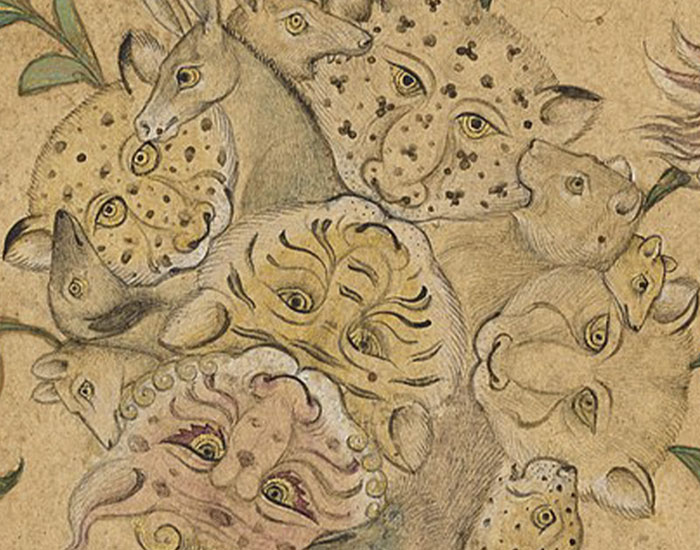
Detail, A Floral Fantasy of Animals and Birds (Waq–waq).; Mughal; early 1600s; Opaque watercolour and gold on paper; 37.6 x 26.6 cm; The Cleveland Museum of Art
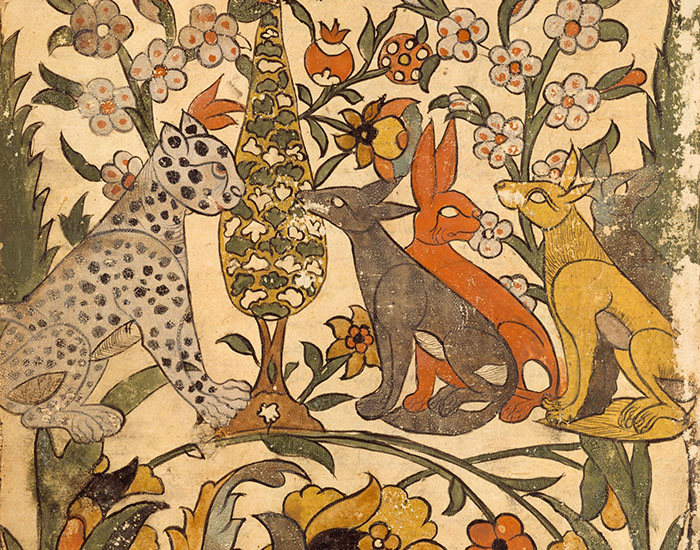
Attributed to the seventeenth-century Mughal workshops, “A Floral Fantasy of Plants and Animals” features a plant rendered in saz-style, popular across Islamic cultures from the sixteenth century, and characterised by leaves with serrated edges, sinuously curving stems and enchanted creatures.
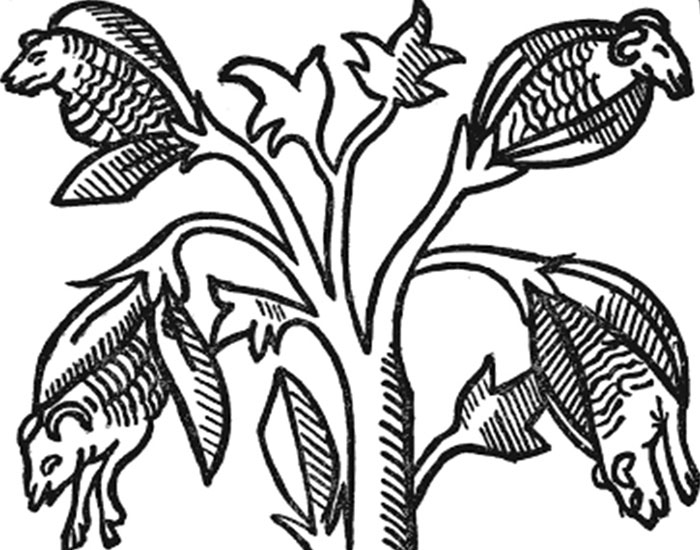
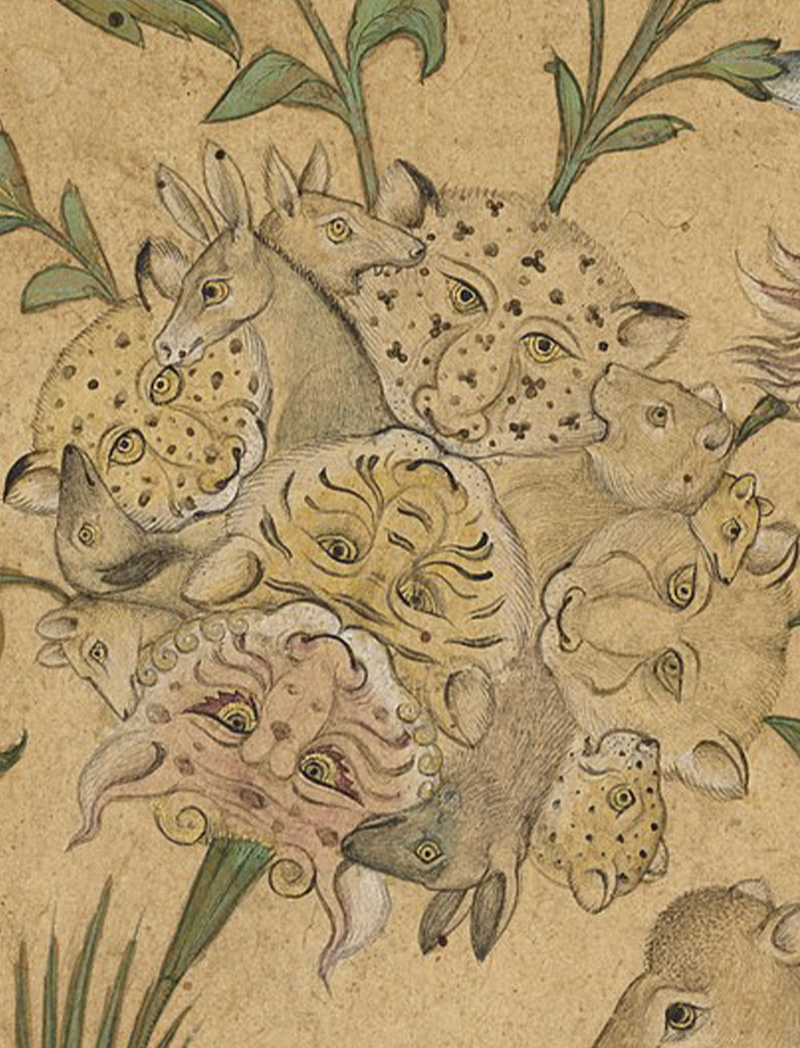
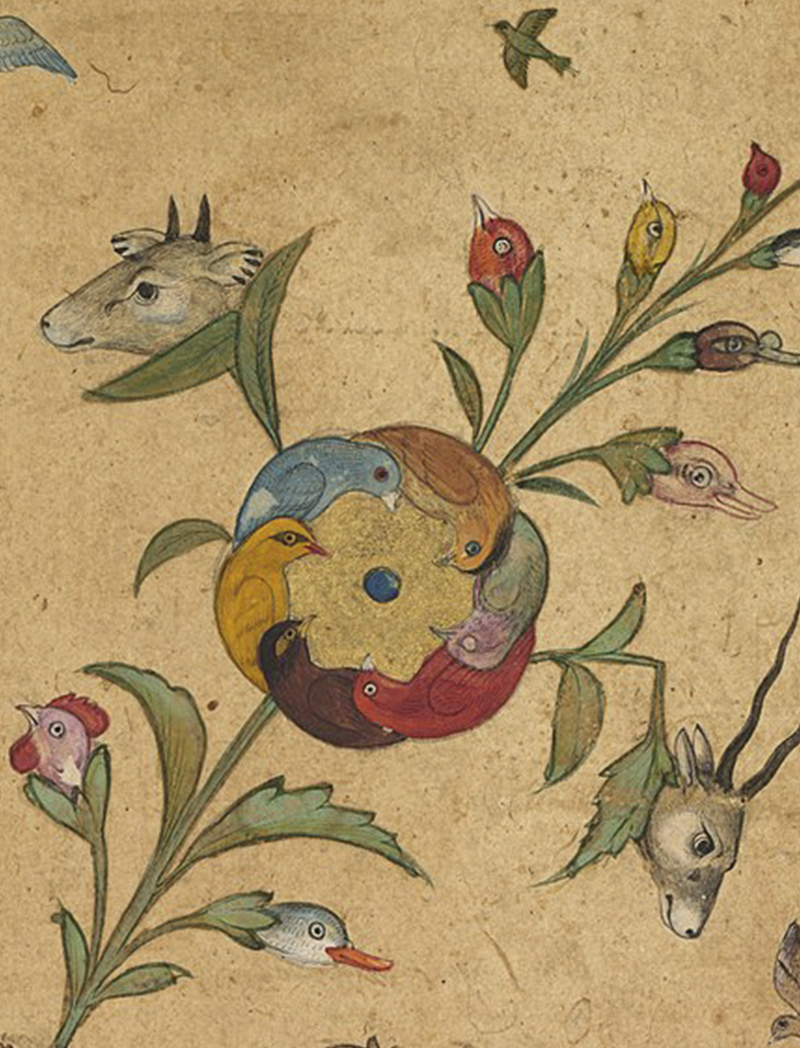
The plant produces life in myriad forms, with branches blossoming into the heads of animals or birds, including lions, tigers, rams, dragons, an elephant and various birds. Painted with naturalistic features, yet uncanny through their coexistence, their representation, in profile as well as through aerial views, lends a surreal quality to the work. A large composite, demonic face conjoined to striped and speckled felines — among other creatures — and a circular cluster of birds to its upper-right draw our attention to the centre of the painting.
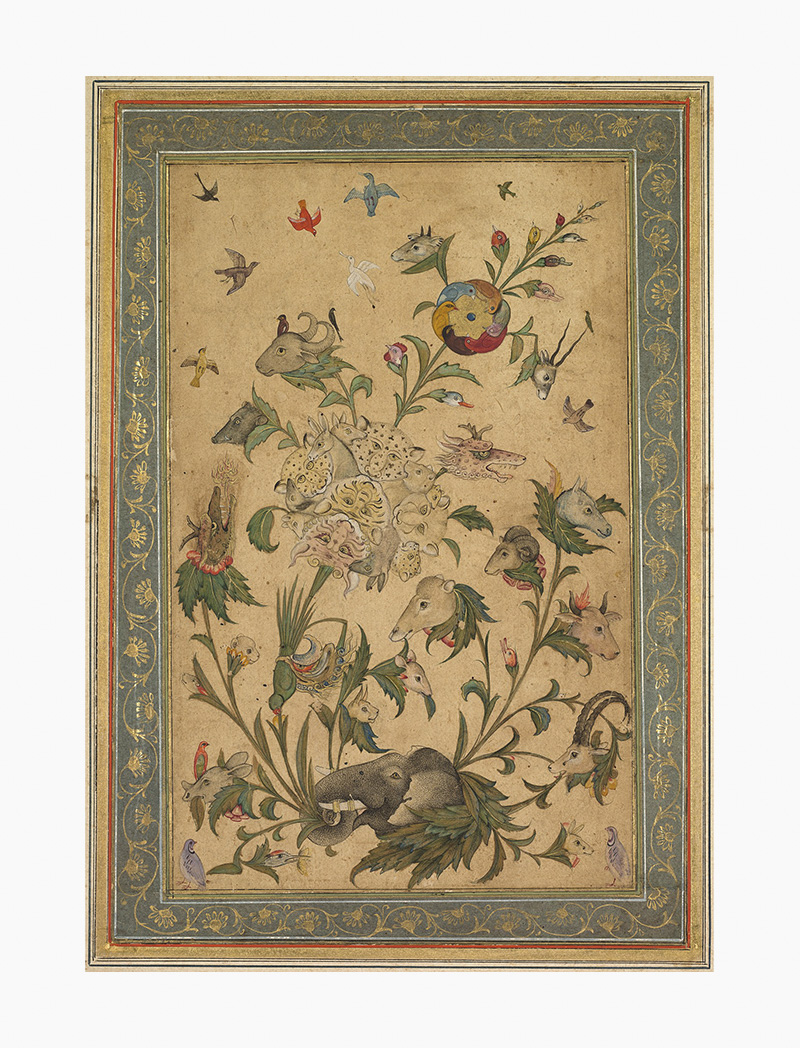
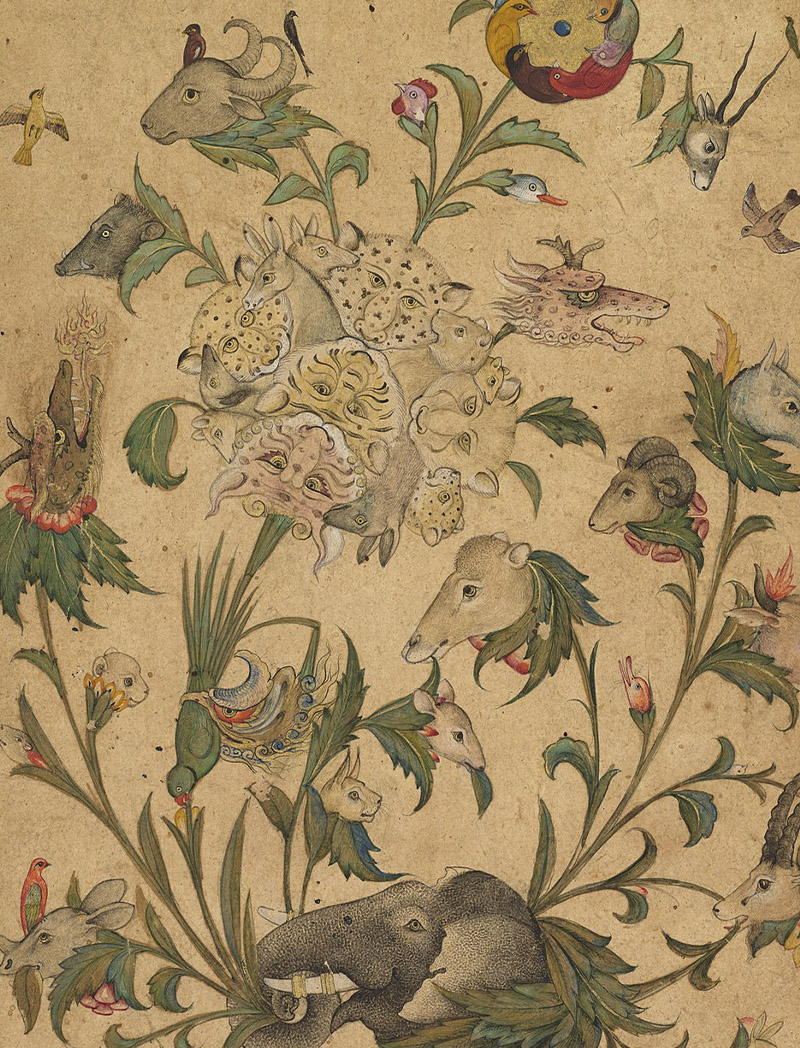
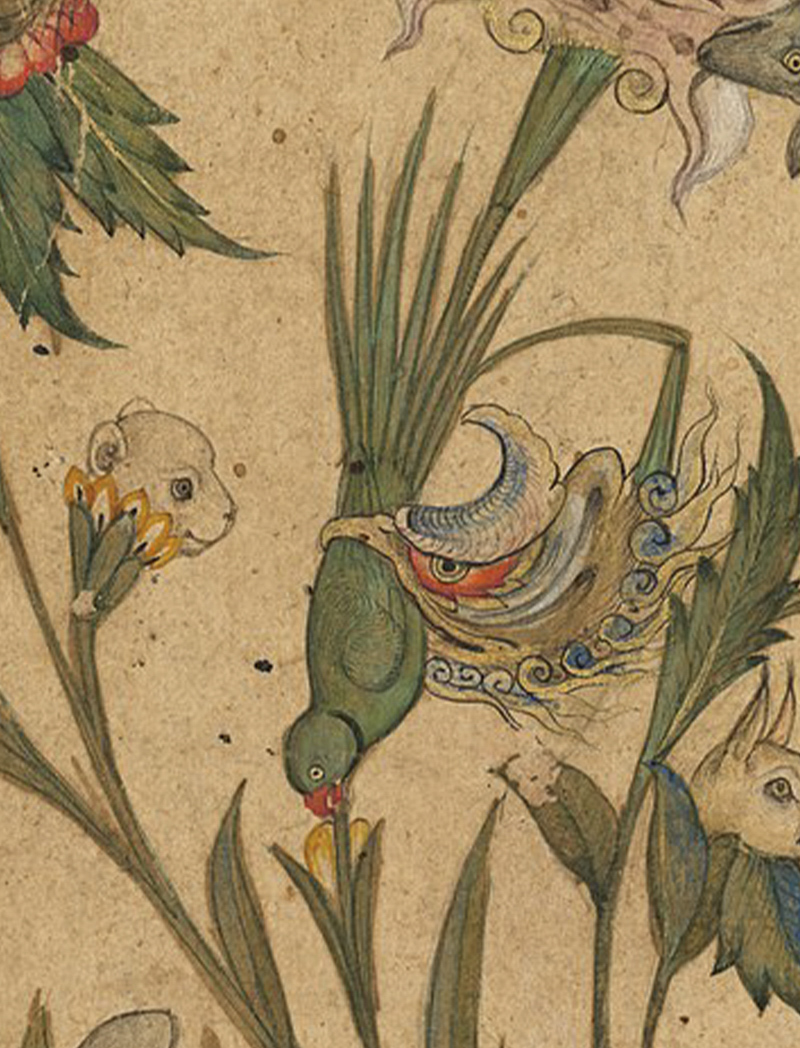
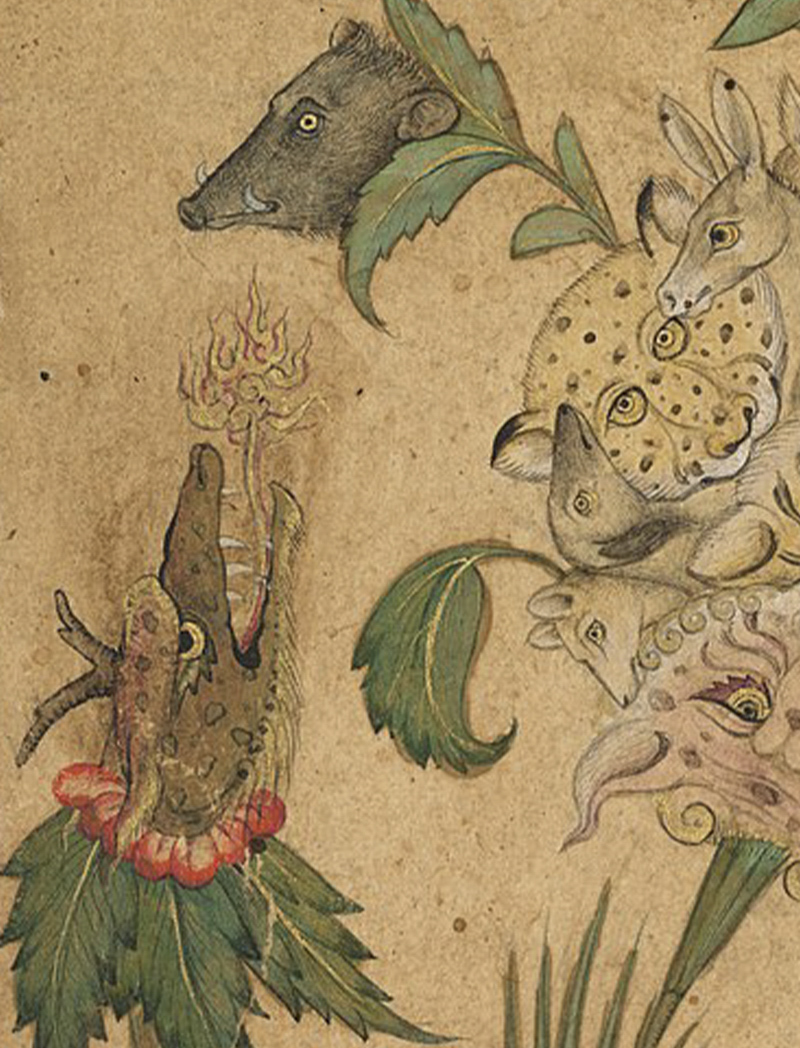
Its composition, however, remains balanced with renderings of other animals that are absorbed in their own worlds, chewing off sprawling tendrils they emerge from or interact with each other. A closer look reveals a phoenix clenching the body of a parakeet as another creature looks on; elsewhere a dragon seems to threaten to burn the beard of an unassuming boar. Some birds manage to break loose from their stems and fly freely in the background.
Such images were inspired by the waq-waq tree, described in Persian and Arabic manuscripts that circulated in regions across present-day Turkey to India in the fifteenth–seventeenth centuries. This legendary tree was most popularly said to grow on an island in the sea of China, inhabited by beautiful women and mythical beings. Considered wondrous and appealing, it evolved into the decorative waq style seen on textiles, architecture, illuminated manuscripts and other mediums. Revealing the strong influence of cultural and natural life and the rich biodiversity of the regions they inhabited, this style also reflects the vivid imaginations of its artists.
First published: November 26, 2021