-
ChicagoMaurya, Shrey. "Mapping the History of Ladakh’s Looms Through Murals." Impart Perspectives, June 30, 2021. https://imp-art.org/perspectives/dispatches/mapping-the-history-of-ladakhs-looms-through-murals/
-
MLAMaurya, Shrey. "Mapping the History of Ladakh’s Looms Through Murals." Impart Perspectives, Jun. 30, 2021, https://imp-art.org/perspectives/dispatches/mapping-the-history-of-ladakhs-looms-through-murals/. Accessed 3 Mar 2026.
-
HarvardMaurya, S. (2021) Mapping the History of Ladakh’s Looms Through Murals, Impart Perspectives. Available at: https://imp-art.org/perspectives/dispatches/mapping-the-history-of-ladakhs-looms-through-murals/ (Accessed: 3 March 2026).
Mapping the History of Ladakh’s Looms Through Murals
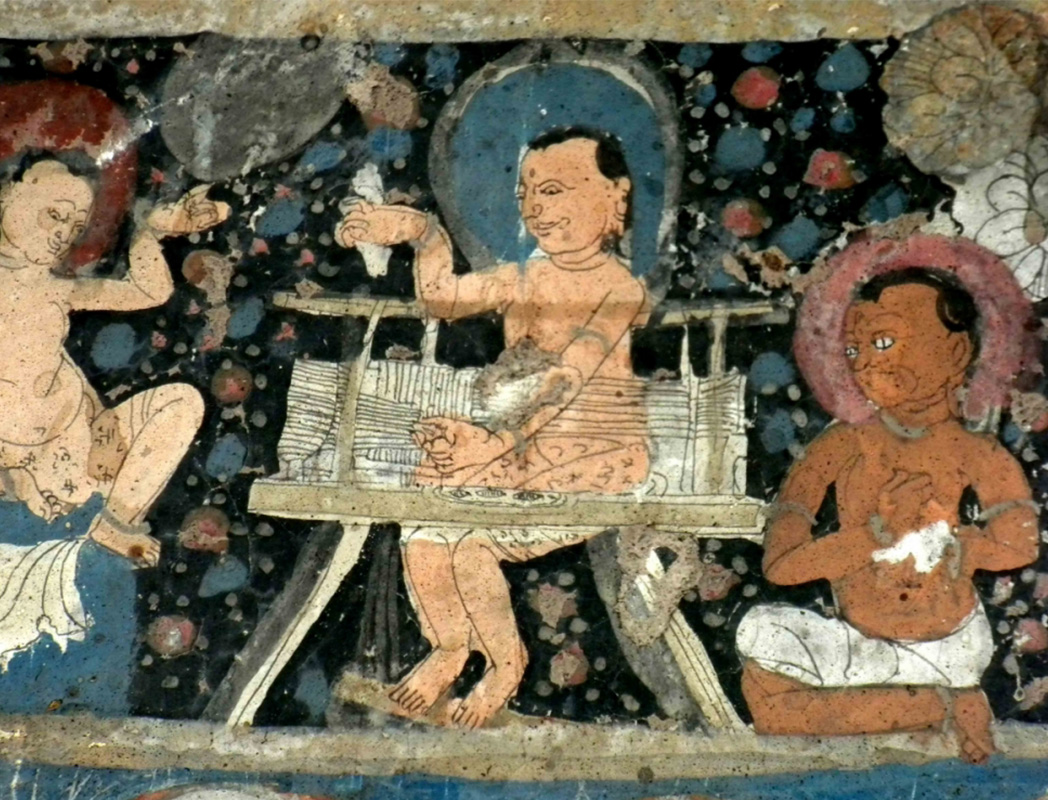
One Buddhist mural, depicting the "Mahasiddha" Tantipa (The Weaver), serves as definite evidence that weaving was practised in Ladakh as far back as the twelfth century.
By Shrey Maurya
Link copied!
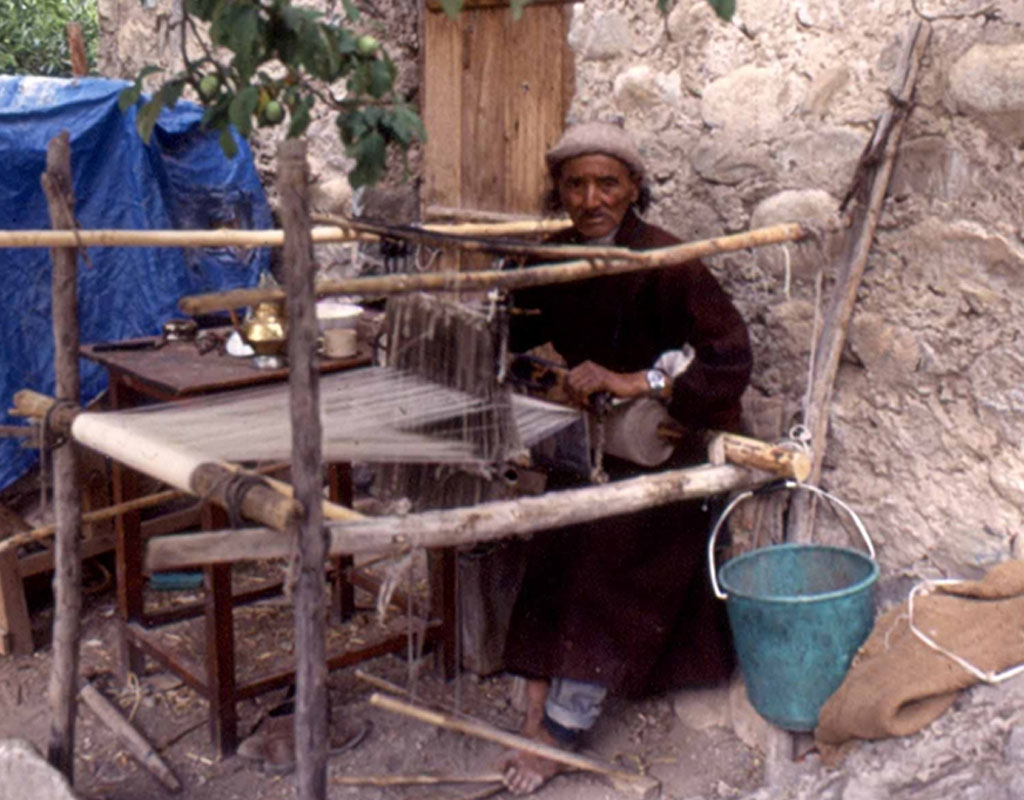
A man weaving on a foot loom in a village in Ladakh. Courtesy Sahapedia
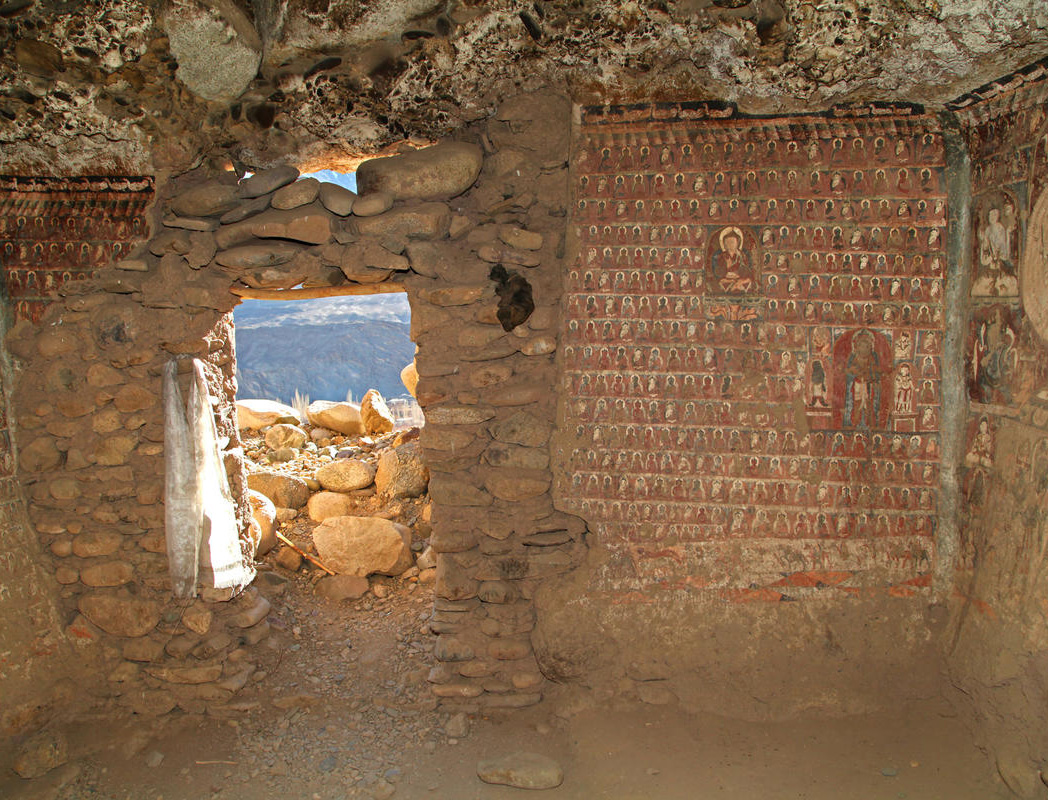
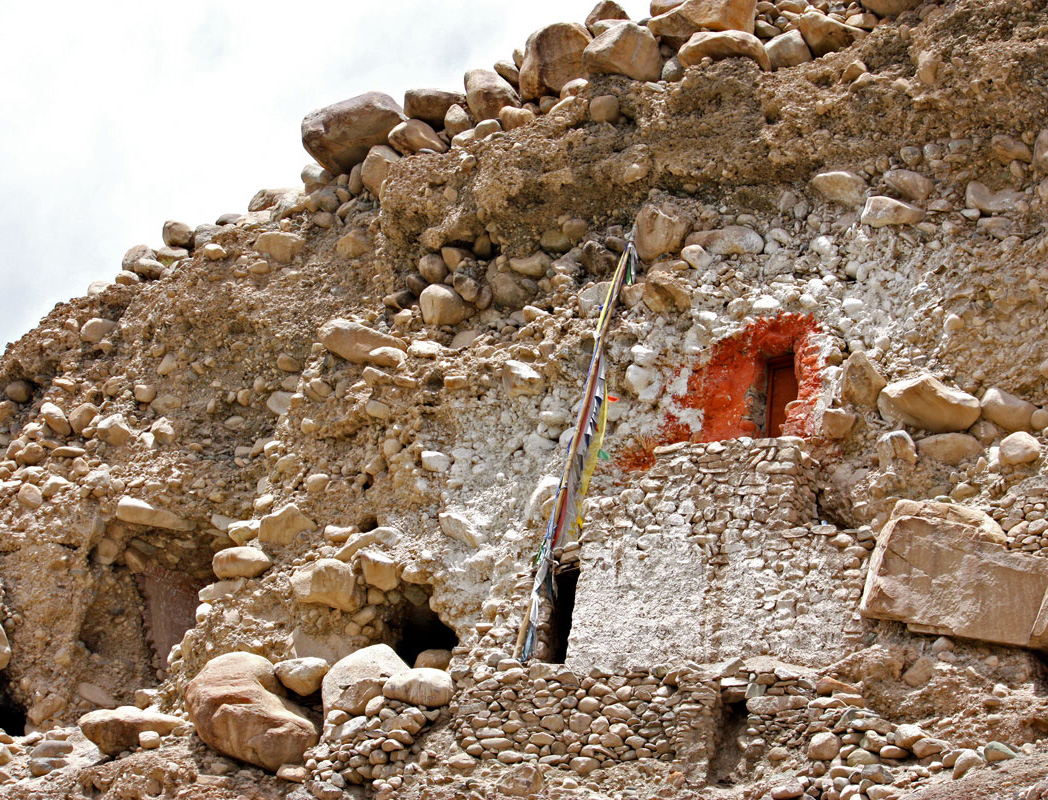
Little is known about the historic origins of weaving in Ladakh, yet a handloom culture continues to thrive in the region even today. One mural serves as definite evidence that weaving was practised in the region as far back as the twelfth century. High in the hills, behind a village named Saspol in the Leh district of Ladakh, are the rock-cut Gon-Nila-Phuk Caves.
Among the eighty-five mahasiddhas painted on the walls of one particular cave is the “Mahasiddha” Tantipa (The Weaver), seated at a type of foot loom. The white fabric he is weaving is most likely undyed wool, a commonly used material in the region. While the identity of the artist remains unknown, most scholars agree that the similarity in style indicates that the paintings were made by the same artists that worked on murals in the nearby Alchi Monastery.
Foot looms and backstrap looms continue to be used to this day. In the western and central villages of Ladakh, it is men who weave on foot looms that are easy to set up and dismantle, while women prepare the yarn. Among the nomadic communities, such as the Changpas, who roam the high-altitude plateaus in the eastern reaches of Ladakh, known as Changthang, both women and men weave on portable looms, although it is only women who use the backstrap loom.
First published: June 30, 2021