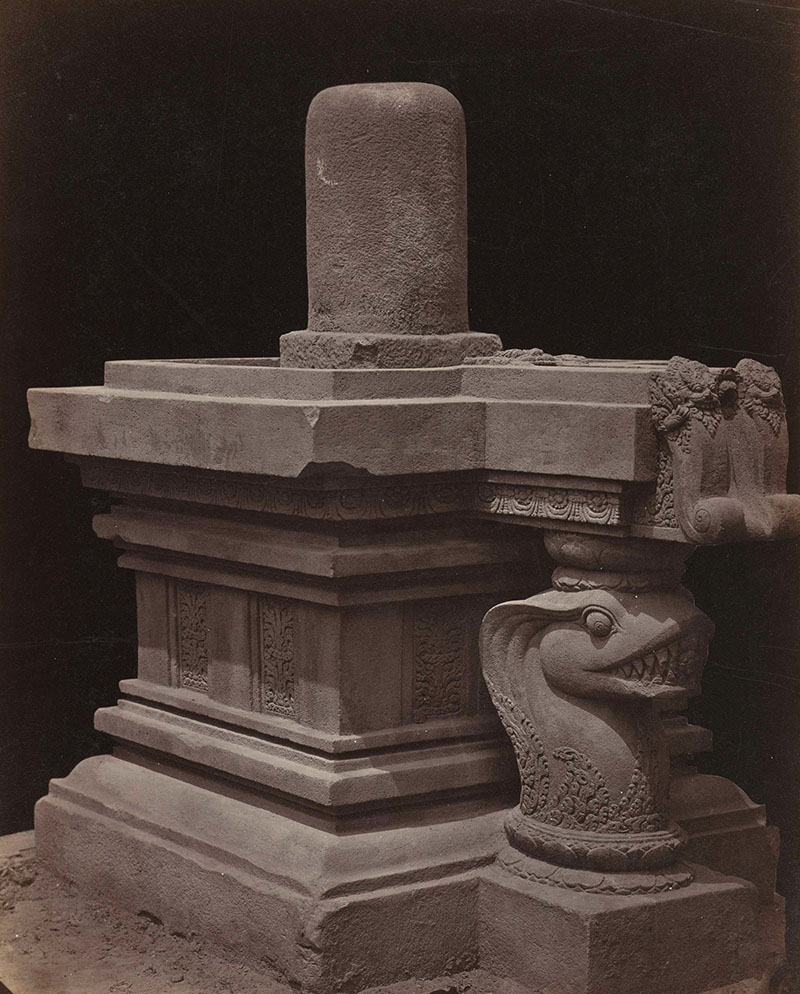
It symbolises the goddess Shakti as well as the feminine procreative power within Hindu iconography. The word itself literally translates to “abode,” “source,” “womb,” or “vagina.” In the sect of Shaivism, the yoni and the lingam (an aniconic form of Shiva) are believed to represent the male and female principles of the universe and, collectively, signify the eternal process of creation and destruction. In Hindu temples, the two often appear together, with the yoni acting as the receptacle on which the lingam lies.
More Definitions
Tenjur
A sacred text belonging to the Tibetan Buddhist canon, comprising commentaries, treatises and a collection of abhidharma (ancient Buddhist texts).…
Rishyasringa
A sage in Hindu mythology portrayed in the Mahabharata as the harbinger of rains and in the Ramayana as the…
Manjushri
Also known as Manjughosa and Vaigsvara, he is a bodhisattva who is associated with prajna (wisdom) in the Mahayana and…
Gandharva
Celestial beings in Hindu, Jain and Buddhist mythology. They are depicted as having golden or blackish complexions and are often…
Chin Mudra
A mudra or gesture in South Asian iconographic traditions, in which the thumb is held close to the palm and…
Vajrayana
A form of Tantric Buddhism that developed in India in the medieval period and is currently widely practiced in Tibet,…
Kevala
A concept in Jainism that pertains to omniscience or the attainment of supreme wisdom. It is the last in the…
Matanga
In Jaina religious art, a yaksha (nature spirit) who is an attendant of Mahavira, the twenty-fourth Tirthankara. His iconographical attributes…