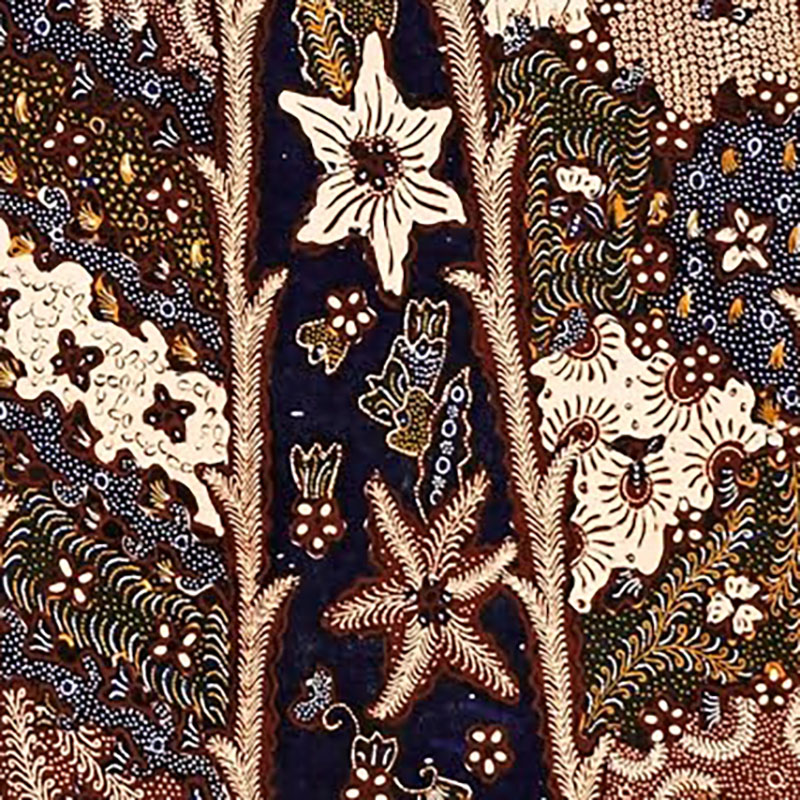
A technique of resist-dyeing in which molten wax is applied to portions of a textile, using blocks or a pen-like instrument, and allowed to harden before the fabric is dyed in cold water. The dyed fabric is then treated in boiling water, allowing the wax to melt. This process may be repeated multiple times depending on the dyeing scheme required. The popular technique of Batik utlises wax-resist dyeing.
More Definitions
Screen-Printing
Also known as serigraphy and silk-screen printing, it is a stencil-based technique of printing on a substrate such as paper…
Japanese Ink Wash Technique
Known as sumi-e (black ink painting) in Japanese, it is a painting technique that uses black ink in water in…
Illusionism
A technique in painting, sculpture and architecture where the artwork simulates the optical reality of the viewer by employing techniques…
Tapestry Weave
A weft-facing technique of weaving, wherein coloured weft yarns are interlaced with plain-coloured warp. The design is created using the…
Kashikari
Painted and glazed ceramic ware, particularly tiles, common in the Islamic world, typically featuring colourful arabesques, floral and geometric motifs,…
Ginning
The process of removing debris and dirt from raw cotton fibre, either manually or by running it through a mechanical…
Sapma and Thrima
Discontinuous patterning techniques in Bhutanese weaving, using supplementary weft to create single-faced motifs and patterns (invisible on the reverse of…
Khapa Sari
Also known as patiya sari, it is a tussar silk sari characterised by extra weft rib weaves in the pallu…