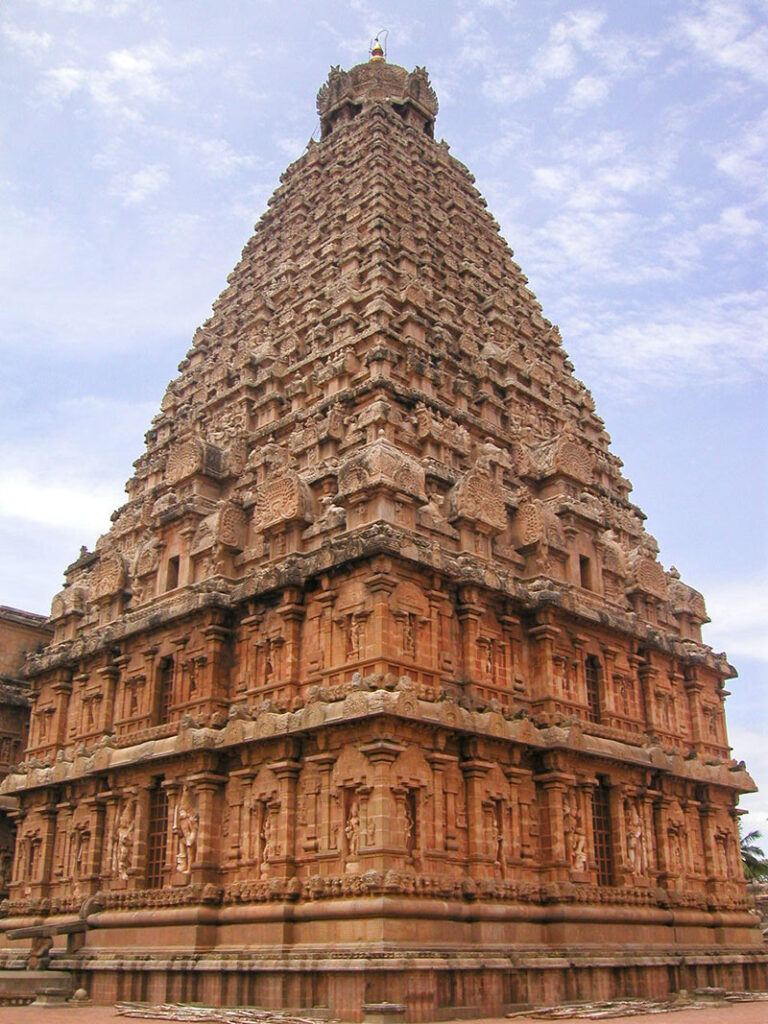
Shrine enclosing the inner sanctum or garbhagriha in the Dravida-style Hindu or Jain temples of South India; multi-shrine complexes may have multiple vimanas. ‘Vimana’ (in Sanskrit texts often referring to a divine seat, chariot or vehicle) generally refers to the entire shrine structure, comprising an intricately carved base (adhisthana) typically square in plan; ornate walls with sculpted projections and recesses; and a pyramidal superstructure above. The latter rises in tiers (talas), culminating in a domed or barrel-vaulted roof — or a pitched wooden roof, in Kerala temples — topped with finials; at times ‘vimana’ may refer specifically to the superstructure. The base corresponds to the prasada and the deula of the Nagara and Kalinga styles of northern and eastern India, respectively, and the tower to the shikhara and the rekha deula — the Dravida shikhara refers to the capping stone alone. The vimana inspired the form of the typically larger gopuram or gateway.
vimana
Link copied!