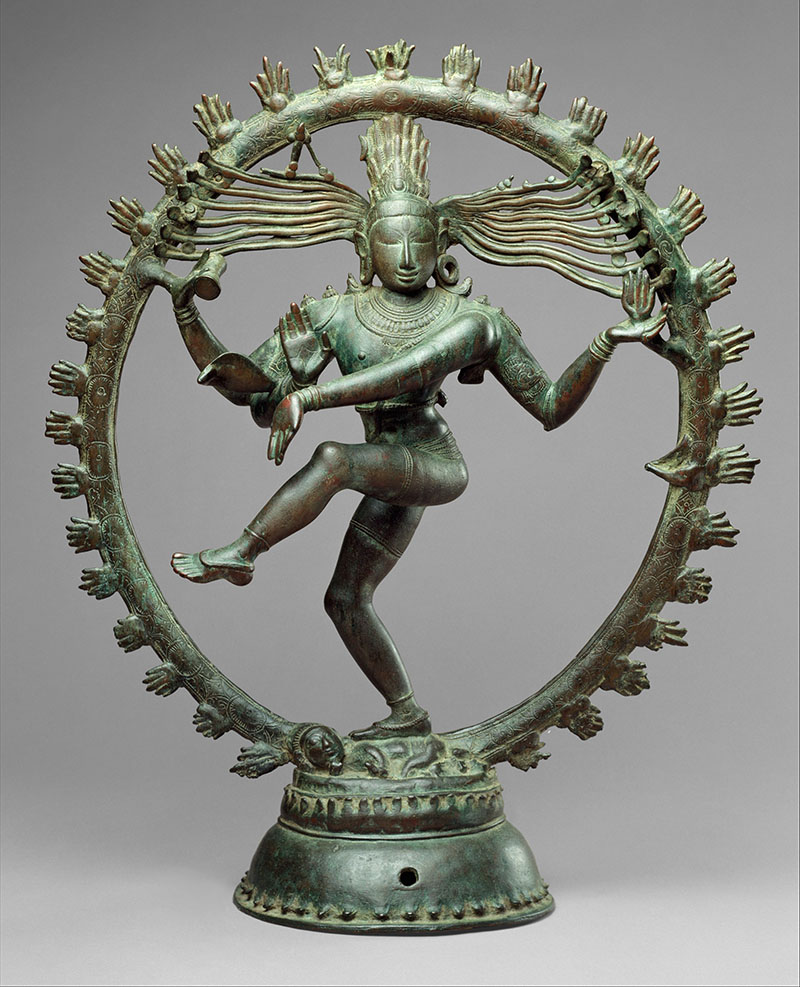
A form of dance codified in the Natyashastra, an ancient treatise on the performing arts. The tandava carries divine associations, particularly with the Hindu god Shiva. Dependent on the mood of the performance, the tandava can be joyous, violent, grievous or destructive.
More Definitions
Strategic Management for the Art of Theatre (SMART)
Established in 2015, it is an initiative of the Bengaluru-based not-for-profit arts organisation, the India Foundation for the Arts. It…
Bishnupriya Dutt
Bishnupriya Dutt (b. n.d.) is an Indian scholar of theatre studies and performance arts, as well as a professor and…
Jambavati Kalyanam
A sixteenth-century Sanskrit play authored by the Vijayanagara ruler Krishnadevaraya. According to inscriptions, the play was performed for the general…
Sutradhar
Literally meaning "thread-holder," it is the term for a stage manager and the character of a narrator within Sanskrit drama.…
Paryankasana
Composed of two parts — paryanka, meaning "bed" or "couch", and asana meaning "pose" –– it is a yoga pose…
Nayika
The heroine in dramatic representation, as outlined in the Natyashastra, who is represented in different scenarios with the nayaka, who…
Dandahasta
A gesture in which the arm is presented forward and held straight, like a stick. The hand is positioned similar…
Shringara
One of the nine rasas within Indian performing arts, it may be understood as the feeling of love, or as…