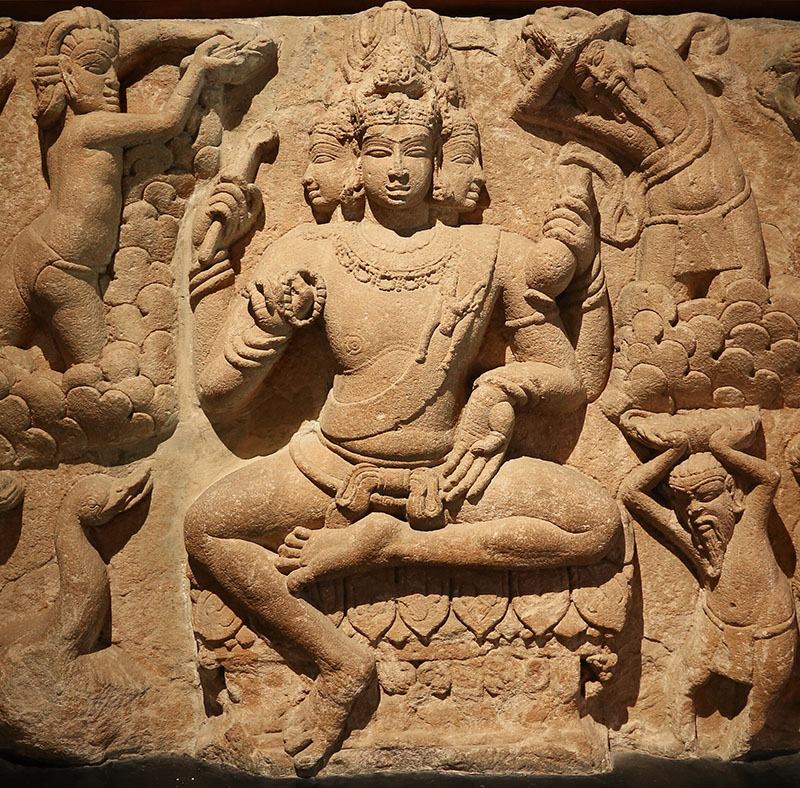
Meaning “creation” in Sanskrit, it is one of the cosmic acts of deities in the Hindu religious tradition. It is primarily associated with the Hindu deity, Brahma, and is also one of the five acts (panchakriya) of Shiva in his form as Nataraja.
More Definitions
Bhakti
A set of devotional practices that emerged in South India from the sixth century CE and spread to north India…
Amuktamalyada
A sixteenth-century epic poem in Telugu, authored by the Vijayanagara king, Krishnadevaraya. It narrates the story of Andal, one of…
stambha
Sanskrit for ‘pillar’, historically appearing in various contexts, including Vedic liturgy, Brahmanical mythology, and Brahmanical treatises on architecture, theatre and…
Krishna’s Lila
Anecdotes and narratives around the life of the Hindu god Krishna. The stories are derived from different textual and epic…
Quran
The primary religious scripture of Islam, containing the word of God as revealed by the archangel Jibrail (Gabriel) to the…
Stithi
Meaning "preservation" or "existence" in Sanskrit, it is one of the cosmic acts of the deities in the Hindu religious…
Sutra
Literally meaning "string" or "thread," it refers to literature from the ancient and medieval periods that was originally preserved and…
Devi-Bhagavata Purana
Also known as Devi Bhagavatam, it is often categorised as a Mahapurana and revolves around the figure of the Devi…