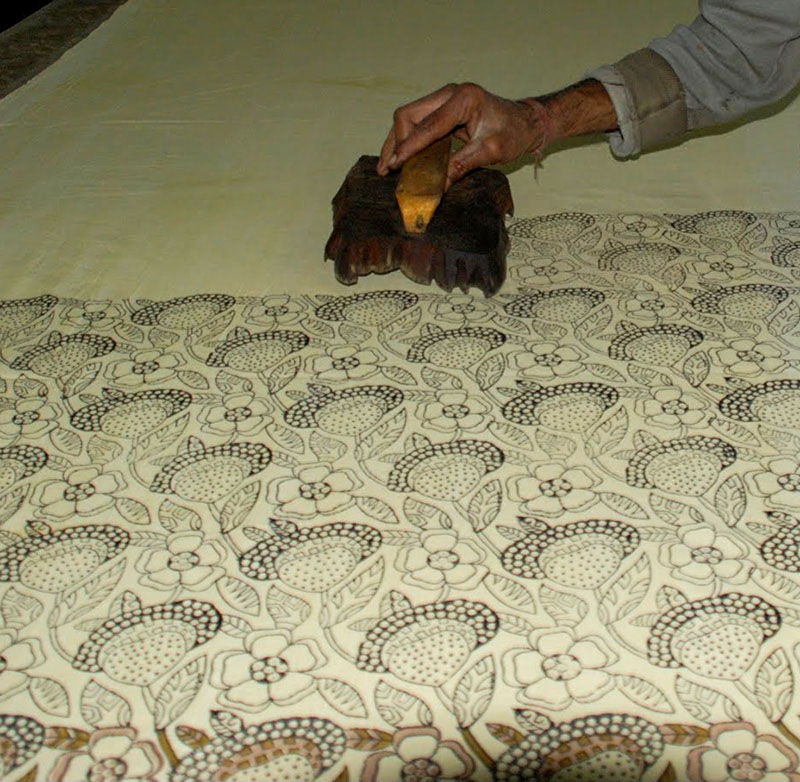
Derived from the Hindi and Urdu word for “outline,” it is a step in some Indian block-printing processes, in which the design is outlined and stamped on the base fabric using a resist of lime and gum. It also describes the wooden blocks used to create outlines for printed motifs in these traditions.
More Definitions
Talim
An instructional code that translates the designs to be woven in Kani shawls. The code is written on a sheet…
Serigraphy
A stencil-based printing process which involves forcing ink through a fine screen, usually made of silk, polyester or nylon, onto…
Fresco
A mural painting technique where water-based pigments are applied over wet lime plaster. As the paint and plaster dry together,…
chamfer
A slope or bevel, typically at 45º, at the intersection between planes in woodwork, architectural and engineering detailing, and other…
Gelatin Dry Plate
A method of producing photographic negatives that emerged in the 1880s, using a glass plate coated with silver salts in…
Kashikari
Painted and glazed ceramic ware, particularly tiles, common in the Islamic world, typically featuring colourful arabesques, floral and geometric motifs,…
Calotype
An early photographic technique invented by William Henry Fox Talbot, who patented it in 1841. Also known as talbotype, the…
Overdye
In textile production, it is the practice of dyeing a fabric or yarn that has already been dyed.