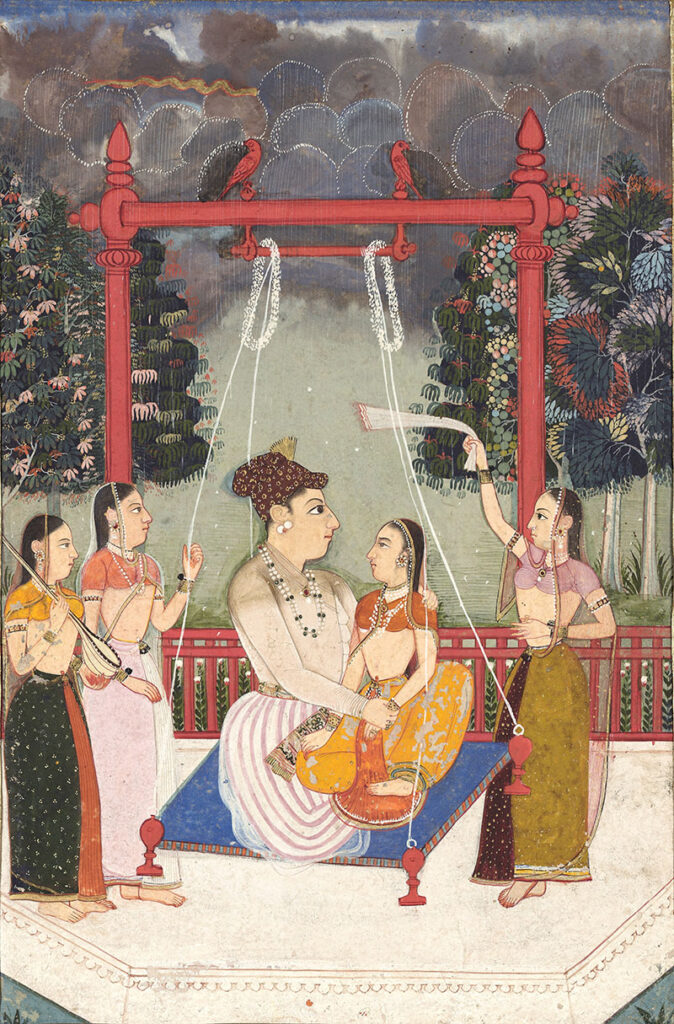
A central element within Indian classical music, it is a melodic framework based on a given set of notes appearing in a set order and a scale. Using a defined set of notes, and by varying the emphasis on particular notes or by using characteristic movements between notes, the performer uses a raga to evoke a mood. Being the central element of music-making, ragas are also classified based on the mood they evoke, the number of notes and the constituent notes.
More Definitions
Sangha
A monastic order comprising bhikkhus (monks) and bhikkhunis (nuns), it is one of the Three Jewels of Buddhism. From the…
Shaivite Upanishads
A body of fourteen Upanishadic texts dedicated to Shaiva traditions and practice, which expound on the worship of the Hindu…
Samhara
Meaning "destruction" or "withdrawal" in Sanskrit, it is one of the cosmic acts of deities in the Hindu religious tradition.…
Brihat Samhita
A Sanskrit text written by the astronomer Varahamihira in the sixth-century CE, during the Gupta period. Primarily centred on astrology,…
Lotus Sutra
A collection of scriptures associated with Mahayana Buddhism, which influenced the creation of the Tiantai, Tendai, Cheontae and Nichiren schools.…
Domingo Paes
Domingo Paes (b. n.d.; d. n.d.) was a Portuguese horse trader who visited Vijayanagara, the capital of the Vijayanagara empire,…
Sangam Period
The early historical period of the southernmost region of India, corresponding to present-day Tamil Nadu and parts of Kerala. Dating…
Dhamma
The Pali word for dharma, it stands for the “the law of nature” or “the truth” and primarily refers to…