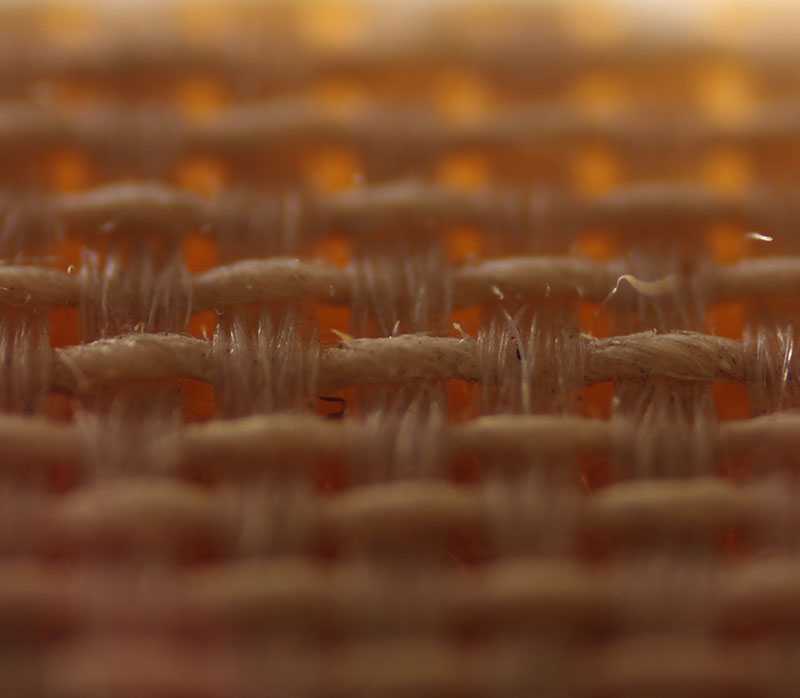
Also known as tabby weave, it is the most common weave in textiles. In this weave, each weft yarn passes over one warp yarn and under the next one, with this alternating sequence continuing across rows of weft in a 1:1 ratio. Other weaves, such as twill or satin, feature differing ratios and sequences of the weft yarn, which results in fabrics of different patterns and qualities.
More Definitions
Satin Stitch
Also known as damask stitch, it is a technique in embroidery that uses flat stitches to cover sections on a…
Somak Weaving
A flat-weave tapestry weaving technique where weft yarns are wrapped over four warp threads before being twisted back under the…
Gelatin Dry Plate
A method of producing photographic negatives that emerged in the 1880s, using a glass plate coated with silver salts in…
Woodcut
A relief carving-based technique where the image remains at the surface level of a wooden block while the negative spaces…
Collagraph
A printmaking technique in which colour is applied to a printing surface covered with different materials and texture, then transferred…
Kasavu
The gold zari used in the border of a traditional white Kerala textile, such as a sari or a mundu…
Naqshaband
The designer of the naqsha (map or design plan) of Banarasi brocade. They sketch and create the map of motifs…
Kashika Vastra
Meaning “clothes from Kashi” in Sanskrit, it is a possible reference to the brocaded fabric produced in Kashi (now Varanasi).