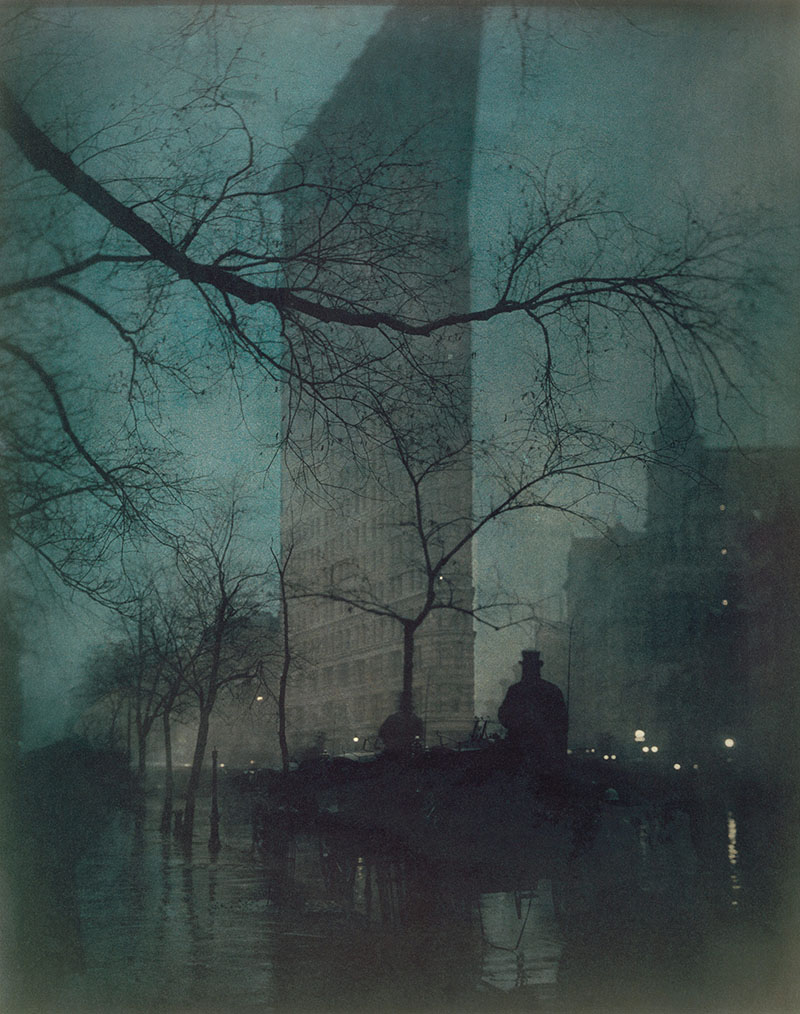
An aesthetic movement in photography during the late nineteenth and early twentieth century that focused on composition, light and subject matter rather than accurate representation of reality. It was first suggested in the writings of Henry Peach Robinson in his book Pictorial Effect of Photography (1869). Alfred Stieglitz, Clarence H White and Alvin Coburn were among the American photographers who had a significant influence on the movement. In India, photographers such as Shapoor Bhedwar, Jehangir S Taraporewala, Pestonji S Batliwala and Karl Khandalawala were also making photographs with a distinct pictorial and artistic quality to them.
More Definitions
European Realism
A movement originating in France in the 1840s, which rejected then-prevalent ideals of Romanticism in French art and literature in…
Surrealism
An art movement that emerged in twentieth-century France and aimed to express the creativity of the unconscious mind through the…
Picturesque
An aesthetic category accorded to pictures that have an agreeable and appealing visual quality, and is particularly used for idealised…
Colour Field Painting
An abstract painting style categorised within American Expressionism, it is characterised by large-scale canvases painted expansively with flat, solid colour…
Naturalism
A painterly style where elements are depicted in their natural setting, without the use of ornamentation and idealised forms. Naturalist…
Romantic Naturalism
A philosophical strand in literature and art that draws on Romanticism’s emphasis on human emotion and sensuality as well as…
Post Painterly Abstraction
An artistic movement that derived from Abstract Expressionism and synthesised styles such as action painting, colour field painting and colourism…
Chinoiserie
The European interpretation of Chinese and East Asian decorative arts, design, literature and culture, characterised by extreme decoration, stylised objects…