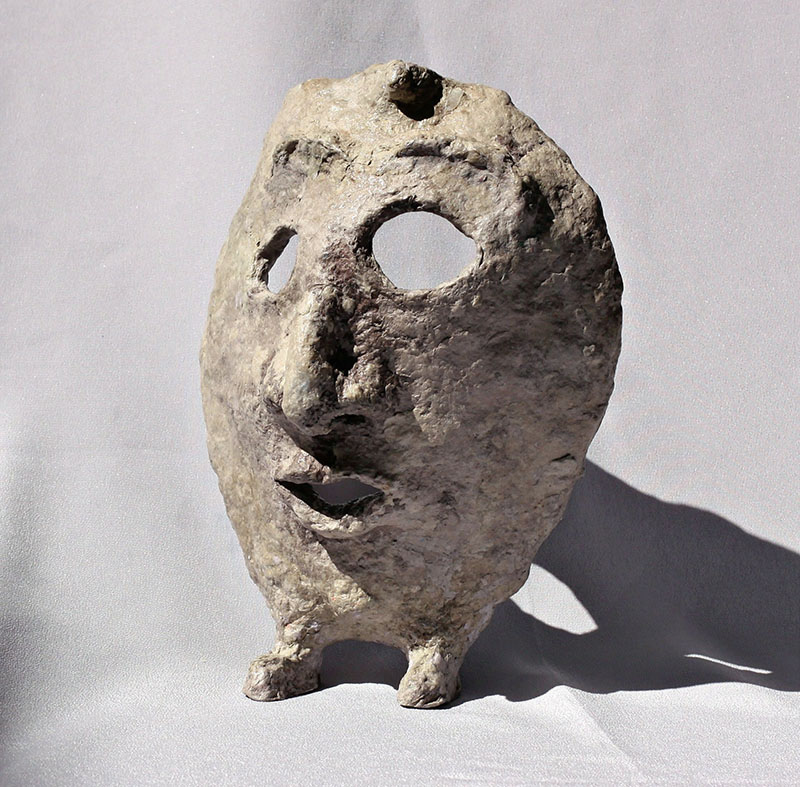
Meaning “chewed paper” in French, it is a composite material made of pulped paper mixed with a glue or adhesive paste and other fibrous materials. The term also applies to paper strips that are adhered to or pressed between moulds, or papier-mâché that includes plaster. Its use originated in present-day China, and the technique of crafting objects from it was well-established in Asia over several centuries before being introduced to Europe in the thirteenth century. In Europe, it gradually became a substitute for plaster and stucco in furniture ornamentation, and several finishes were developed for its use. It is now also used in sculpture.
More Definitions
Hank
A unit of measure in the textile industry, it describes a coiled or wrapped length of yarn or loosely gathered…
Mangalore tiles
Moulded terracotta tiles popularly used on sloping roofs in India, first manufactured in 1864–65 by the Basel Mission Tile Works…
Crepe
Also known as crape, it is a fabric characterised by a rumpled, crimped or rippled surface texture. These effects may…
fixer
In photography, a chemical solution used in the final stage of processing photographic film. It contains sodium or ammonium thiosulphate,…
Wasli
A type of handmade paper originally conceived as a surface for Mughal miniature paintings. The paper was developed in India…
Resham
An Oriya term meaning "silk."
Chaunsa Khaddar
A handspun and handwoven textile made of fine yarn that is used as a base fabric for Phulkari or Bagh…
Kasavu
The gold zari used in the border of a traditional white Kerala textile, such as a sari or a mundu…