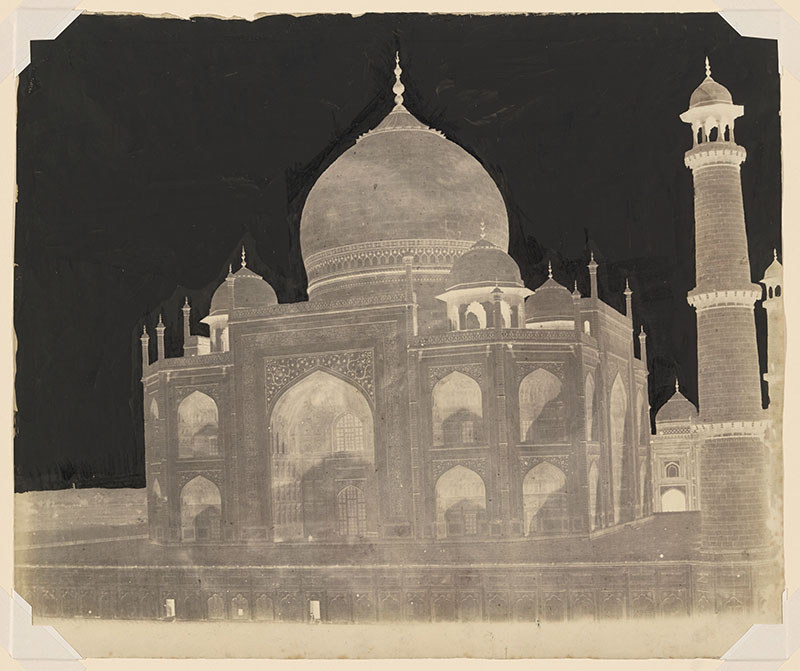
A photographic negative created on paper, rather than on modern cellulose film or a glass plate. William Henry Fox Talbot’s calotype process from the 1830s was among the earliest techniques to use paper negatives, with several variations emerging around 1850, such as those using waxed paper. It remains in use as an alternative photographic medium, as the texture of the paper and the possibility to scratch or draw on it before printing create room for artistic expression.
More Definitions
Frame Loom
Made of rods and boards fixed at right angles, it is a compact, box-shaped loom. It is portable and can…
fixed-focus lens
Camera lens whose focal distance is pre-determined at the time of manufacture and cannot be adjusted by the user. It…
Large Format Camera
Film cameras that produce images that are 9 cm x 12 cm or larger.
Three-Shuttle Loom
A loom that uses three shuttles to create saris with a dense weave and solid colours. It utilises two shuttles…
Medium Format Camera
Film cameras that produce images larger than 24 mm x 36 mm but smaller than 4 inches x 5 inches.
Enlarger
A transparency projector used to produce photographic prints from negatives and transparencies. Enlarging became popular in the mid to late…
Camera Lucida
An optical device and precedent to the camera, which was used as an aid for drawing and sketching. Developed in…
Non-Fungible Tokens
A unique digital certificate or token that authenticates the ownership of a virtual or physical asset such as a collectible,…