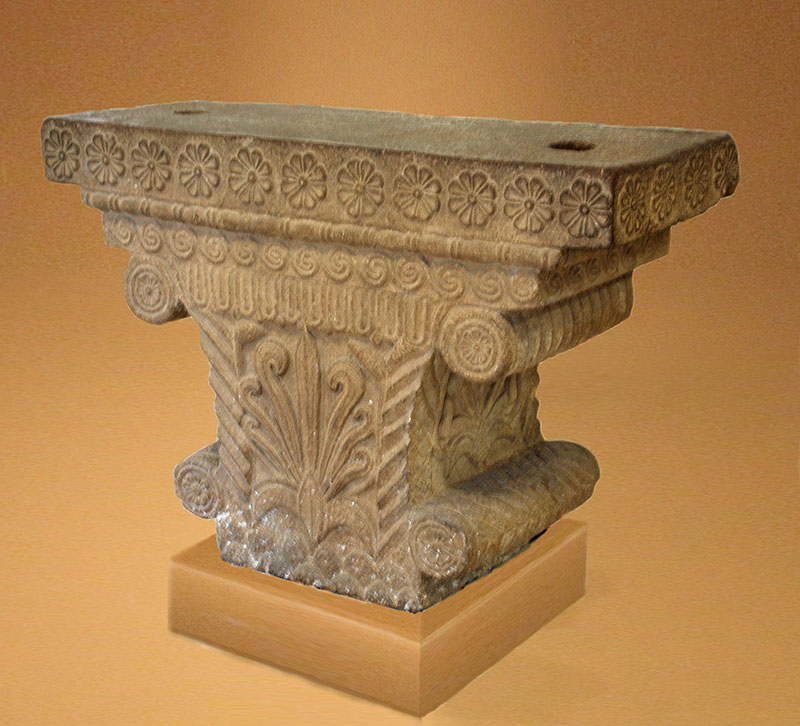
First major South Asian empire, covering, at its height, a vast majority of the Indian subcontinent. Founded around 320 BCE by Chandragupta Maurya with its capital in Pataliputra in the Magadha region (present-day Patna, Bihar), it reached its peak under Chandragupta’s grandson Ashoka (r. 262–238 BCE) and declined by 185 BCE. Mauryan innovations in military and political administration fostered productivity in settled agriculture, widespread trade, and the development of infrastructure. Art and architecture flourished: Mauryan monuments are among the oldest extant specimens of stone sculpture from the subcontinent. Maurya kings generally favoured the non-Vedic heterodox (sramana) sects — Buddhism, Janinism and Ajivikism — however, the period was characterised by the spread of the Brahmanical caste system, especially in the Gangetic valley. The name ‘Maurya’ may derive from the clan name ‘Moriya’; notably, it was likely not used by the Maurya kings themselves.
More Definitions
Syed Ahmad Khan
Syed Ahmad Khan (b. 1817; d. 1898) was an educator, philosopher and reformer who is considered to be one of…
Tushaspha
A governor at Girnar in Junagarh, Gujarat, under the Mauryan emperor Ashoka. He is believed to have been of Greek…
Sassanka
The first independent ruler of the Gauda kingdom, who reigned c. late sixth to mid seventh century. His reign was…
Timur
Timur (1336–1405; r. 1370–1405), also known as Tamerlane, was a Turkic conqueror of Mongol descent. He rose from among the…
Henry Daly
Henry Daly (b. 1823; d. 1895) was a British Indian army officer who served as agent to the Governor General…
Mahajanapadas
Sixteen ancient kingdoms and republics across north and north-western South Asia that existed between the sixth and fourth centuries BCE.…
Gonandiya
An ancient dynasty from Kashmir that is referred to in the twelfth century CE text Rajatarangini, by the historian Kalhana.…
Nayaka
The governors of the Vijayanagara Kingdom, who declared independence after the Battle of Talikota in 1565 CE and they ruled…