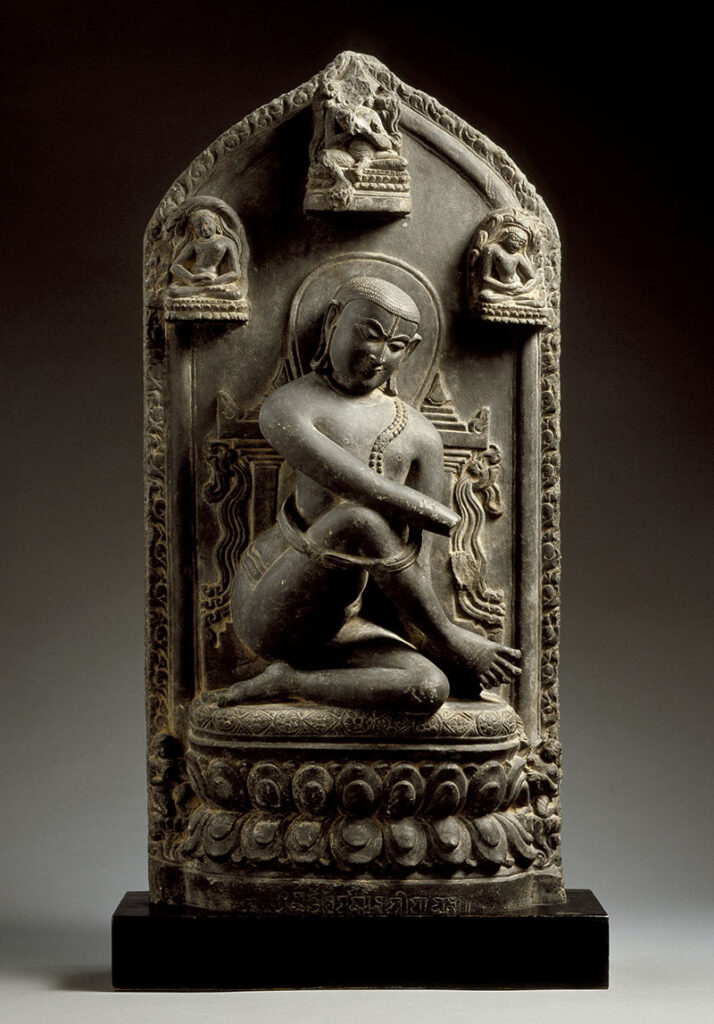
A term used in Tibetan and Tantric Buddhism for someone who embodied the perfect siddhi (psychic or supernatural abilities) through their sadhana (practice) of yoga and tantra. There are about eighty-four mahasiddhas that have been referenced in hagiographies and poetic verses, and they are considered to be the founders of Vajrayana Buddhism. Scholars have suggested that these figures likely lived between c. 750–1150 CE. From the Sanskrit mahasiddha, meaning “great adept.”
More Definitions
Skanda Purana
The largest of the eighteen major Puranas, it comprises over eighty-one thousand verses written honour of Skanda, the son of…
Shringara
One of the nine rasas within Indian performing arts, it may be understood as the feeling of love, or as…
Appar
A Shaivite poet-saint from seventh century Tamil Nadu. He was one of the Nayanar poet-saints and is believed to have…
Raga
A central element within Indian classical music, it is a melodic framework based on a given set of notes appearing…
Alvar
A group of twelve Vaishnavite Tamil poet-saints who advocated for personal devotion (bhakti). Their poetry and devotional songs were based…
Thiruvilaiyadal Puranam
A sixteenth-century Tamil text attributed to Paranjothi Munivar, which comprises sixty four stories narrating the miracles of the Hindu deity,…
Gita Govinda
A Sanskrit poetic epic that describes the love between the Hindu god Krishna, his chief consort Radha and the gopikas…
Nayanar
A group of sixty-three Shaivite poet-saints in Tamil Nadu between the third to eighth century CE. Belonging to diverse castes,…