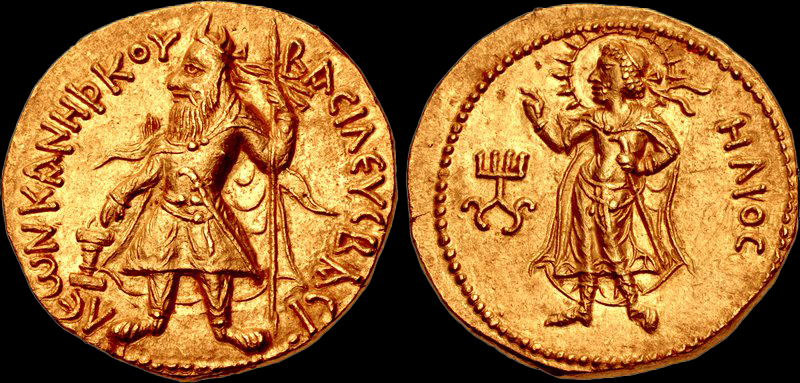
A syncretic empire founded in the Bactrian region of central Asia around the first century CE, it spread to Uzbekistan, Afghanistan and parts of the Indian subcontinent, stretching as far as present-day Varanasi, Uttar Pradesh. The empire’s rulers, who were great patrons of Buddhism and Zoroastrianism, were instrumental in the development of the Gandhara and Mathura schools of art.
More Definitions
Pandya
A dynasty that ruled over areas of present-day Tamil Nadu and had their capital in Madurai. References to the dynasty…
Pulakesin I
Pulakesin I (r. 544–567 CE) was a king of the Badami Chalukya dynasty and is considered to be the dynasty’s…
India Office Records, British Library
The publications, printed maps, archive and public records of the East India Company, the Board of Commissioners for the Affairs…
Nizam Shah
Nizam Shah was a ruler of the Ahmednagar Sultanate from 1553 until his death in 1565. He led the coalition…
Early Western Chalukya
Also known as the Badami Chalukyas, the dynasty ruled over parts of present-day Karnataka and the Deccan from the sixth…
Safavid
A dynasty that ruled over Iran between 1501 and 1736 CE. It consolidated the empire, established a system of state…
Dantidurga
The founder of the Rashtrakuta kingdom, who reigned between c. 735–c. 756 CE. He patronised the rock-cut architectural cave temples…
Maurya empire
First major South Asian empire, covering, at its height, a vast majority of the Indian subcontinent. Founded around 320 BCE…