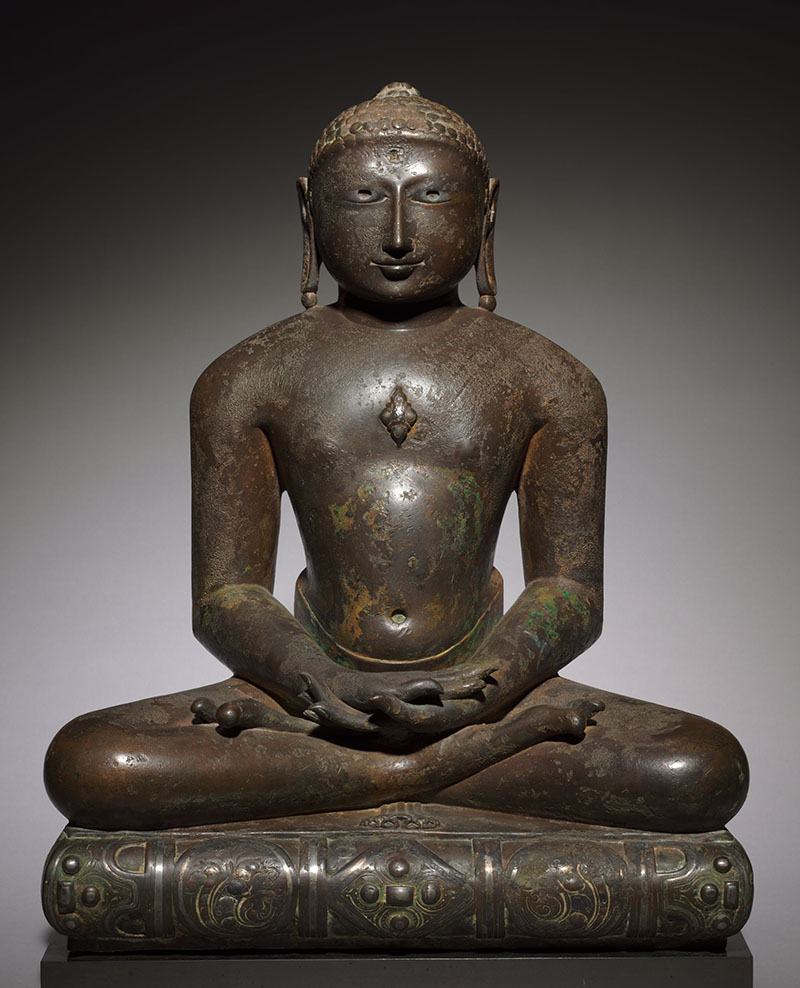
A concept in Jainism that pertains to omniscience or the attainment of supreme wisdom. It is the last in the fourteen stages of spiritual development in Jainism. According to Digambara beliefs, a kevalin (someone who has attained kevala) does not experience hunger and thirst, whereas according to Svetambara beliefs, a kevalin has human needs and travels to preach. From the Sanskrit word kevala, meaning “one and only.”
More Definitions
Kamasutra
An ancient Sanskrit text on sexuality and eroticism, dating to c. 400 BCE–300 CE and attributed to Vatsyayana. It is…
Hiranya
A Sanskrit term meaning “golden.”
Mahavastu Avadana
A text of the Lokottaravada school of early Buddhism, it was written in Sanskrit, Pali and Prakrit between the second…
Amuktamalyada
A sixteenth-century epic poem in Telugu, authored by the Vijayanagara king, Krishnadevaraya. It narrates the story of Andal, one of…
Puranas
A genre of ancient and religious texts written in Sanskrit, Tamil and other languages. The texts are encyclopaedic and cover…
Prajnaparamita
A central concept in Mahayana Buddhism that refers to the perfect way of seeing reality. It also refers to a…
Newar (language)
Language of the Newar people, indigenous inhabitants of Nepal Mandala. Newar is a Tibeto-Burman language from the Sino-Tibetan family. It…
Tathata
A central concept in Buddhism that denotes the essential or true nature of reality, which is beyond the range of…