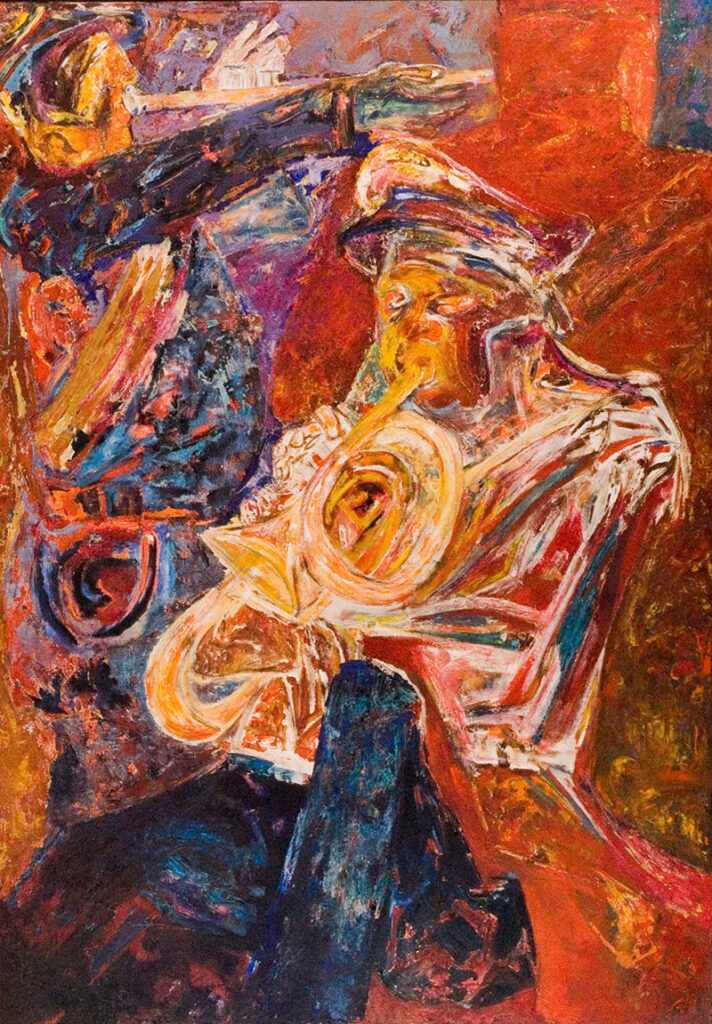
A painting technique in which paint is thickly applied to the canvas, creating a surface texture. This can aid in intensifying the effects of light and shadow or revealing the energetic strokes of the painter. It became prominent in the seventeenth century with Baroque painters such as Rembrandt and Diego Velazquez, and gained popularity throughout the nineteenth and twentieth centuries, exemplified in the works of Vincent Van Gogh and Jackson Pollock.
More Definitions
Double-Interlock
A technique of tapestry weaving wherein two differently coloured weft threads interlock on a single warp thread. This method allows…
Combination Printing
An early photographic technique wherein two or more negative images are combined to create a single image. This technique allowed…
Stippling
A painting and drawing technique where a pattern of dots is used to produce the effect of shading.
Wax Resist-Dyeing
A technique of resist-dyeing in which molten wax is applied to portions of a textile, using blocks or a pen-like…
Parthian Shot
A cavalry technique wherein the horse-rider would retreat while the archer turns back and shoots at the enemy. It was…
Serigraphy
A stencil-based printing process which involves forcing ink through a fine screen, usually made of silk, polyester or nylon, onto…
Patthakati
Skilled artisan involved in the process of making Benarasi brocade textiles, who punch holes in a card corresponding to a…
En Plein Air
Meaning “in open air” in French, it is the style of creating a finished landscape painting outdoors. Before the practice…