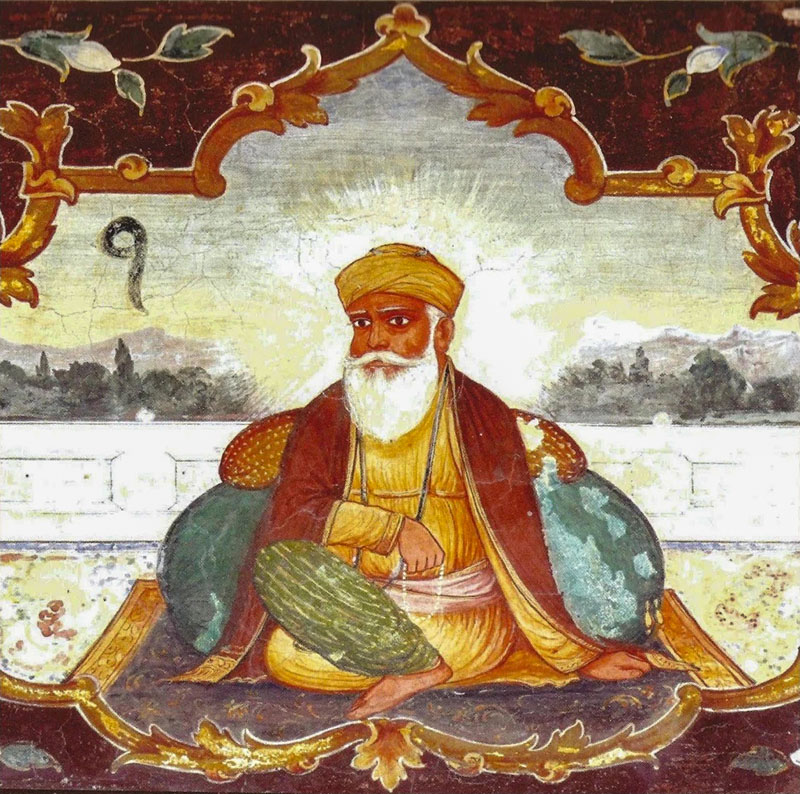
The first of the ten Sikh gurus, Guru Nanak (b. 1469, d. 1539) was the founder of Sikhism. Born in present-day Nankana Sahib, Pakistan, he is believed to have travelled across South Asia preaching his message of “ik onkar” (One God), which are recorded in the form of hymns and poems in the holy text of the Sikhs, the Guru Granth Sahib.
More Definitions
Domingo Paes
Domingo Paes (b. n.d.; d. n.d.) was a Portuguese horse trader who visited Vijayanagara, the capital of the Vijayanagara empire,…
Andal
Andal, also known as Kotai, was a ninth-century Vaishnava poet-saint active in the region of present-day Tamil Nadu, India. She…
Vidyaranya Swami
Vidyaranya Swami (b. 1296; d. 1391), popularly known as Madhavacharya, was the author of the Hindu philosophical text Sarvadarshanasangraha and…
John Murray
A Scottish-born doctor who started making photographs c. 1849, while working in the Medical Service of the army of the…
Biruda
An honorific epithet given to Tamil rulers, musicians, poets and other important figures.
Kapil Jariwala
Kapil Jariwala (b. n.d.) is an independent curator and art dealer. He established the Kapil Jariwala Gallery in 1986 in…
Anne Morrell
An author, textile artist and academic working with histories of textile and embroidery from the Indian subcontinent. She is Professor…
Foy Nissen
Foy Nissen (b. 1931; d. 2018) was a writer and historian. From 1962 onwards, he took photographs of Mumbai, which…