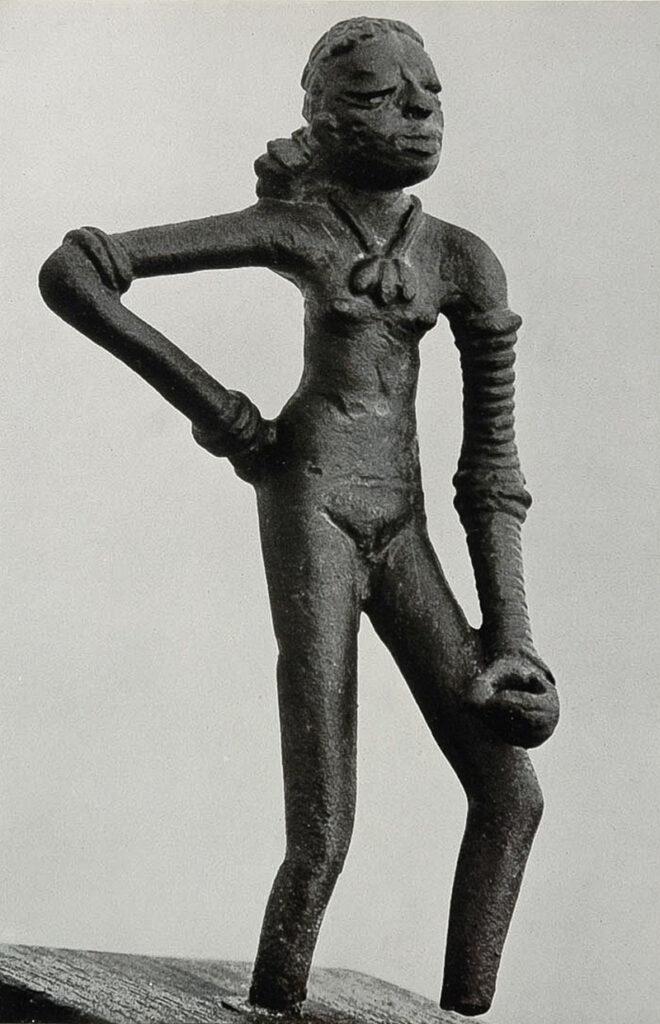
A prehistoric period characterised by the production and use of bronze as well as signs of urbanisation. Its commencement varies in different regions of the world, such as the Indus Valley Civilisation (3300–1300 BCE), Greece and China (c. 3000 BCE), and the United Kingdom (c. 1900 BCE). It is the second of the three-age classification of human history, preceded by the Stone Age and followed by the Iron Age. The transition from the Neolithic cultures to the Bronze Age is known as the Chalcolithic period.
More Definitions
Vedic Period
The period between the late Bronze Age and the early Iron Age in the northern portion of the Indian subcontinent,…
Stone Age
A prehistoric period characterised by the invention and use of stone tools by early humans, it began around 3.3 million…
Chalcolithic Period
The period that marked the transition from Neolithic cultures to the Bronze Age, characterised by rudimentary writing systems as well…
Albert H Longhurst
Albert H Longhurst (b. 1876; d. 1955) was a British archaeologist and art historian specialising in the arts of southern…
State Archaeological Museum, Gwalior
A museum located in the Gujari Mahal Palace in Gwalior, Madhya Pradesh, it is also known as the Gujari Mahal…
Indus Valley Civilisation
A Bronze Age civilisation located along the basin of the Indus river, in the northwestern regions of South Asia comprising…
Mohenjo-Daro
An archaeological site located in present-day Sindh, Pakistan, and dated to c. 2500 BCE. It was one of the largest…
Hand Stencil
The technique of imprinting human hands on rock surfaces, found in Prehistoric cave paintings. The process involves placing one hand,…