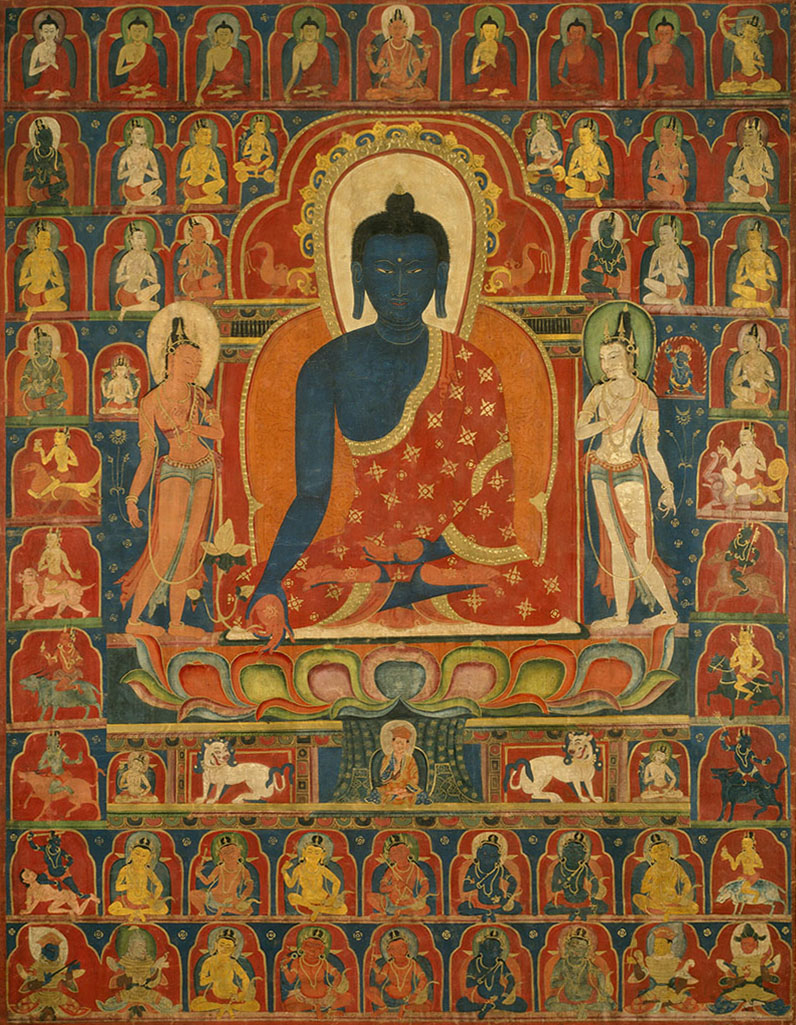
Also known as the Medicine Buddha, he is the Buddha of healing and medicine in Mahayana Buddhism and is believed to cure suffering through his teachings. He is considered a bodhisattva who took twelve significant vows upon attaining enlightenment. He is also an important deity in Chinese Buddhism, along with Amitabha and Shakyamuni. The deity is typically depicted seated, holding a lapis or blue jar of medicine in his left hand and the stem of the aruna fruit (myrobalan or Terminalia chebula) in his right hand. He is also depicted with a blue halo. From the Sanskrit bhaisajyaguru, meaning “medicine master.”
More Definitions
Rati
In Hindu mythology, Rati is the goddess of love. She is the consort of Kama, the Hindu deity of love.
Jinas
Also known as Tirthankaras, jinas are teachers and guides who lead their followers on the path of dharma and are…
Pandavas
The protagonists of the Indian epic Mahabharata, they are the five sons of Pandu, namely, Yudhisthira, Bhima, Arjuna, Nakula and…
Bhagirath
The mythical king of the Sagara Dynasty who performed several years of penance in the Himalayas. He is known to…
Muhammad
Muhammad (b. c. 570 CE; d. 632 CE), was the founder of Islam and is considered by Muslims to be…
Sardula
Another name for yalis or vyalas, they are guardian deities in Hindu and Buddhist mythology depicted as a composite creature,…
Upanishad
A body of texts written in Sanskrit and considered to be the latter part of the Vedas. They cover issues…
madanika
Celestial figure of a young, beautiful woman in Indian art and mythology, often associated with nature. The Sanskrit term madanika…