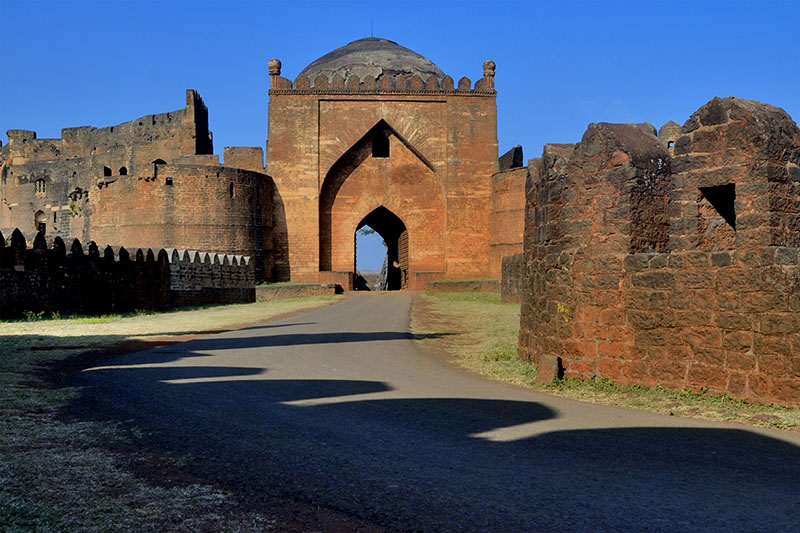
Muslim kingdom of the northern Deccan in India, founded in 1347 by Zafar Shah, a soldier in the service of Muhammad bin Tughlaq of the Delhi Sultanate, who seized Daulatabad (near present-day Aurangabad) in rebellion and ascended the throne as Ala-ud-Din Hasan Bahman Shah. At its height the kingdom spanned south-central India, across areas of present-day Maharashtra, northern Karnataka, Telangana, and northern Andhra Pradesh, with its capital at Ahsanabad (present-day Gulbarga) and later Muhammadabad (present-day Bidar), both in present-day Karnataka. It vied for control of the Deccan with the Vijayanagara kingdom and the Gajapatis of Odisha. The sultanate declined in the late fifteenth century, splintering into the successor states of Bijapur (ruled by the Adil Shahis), Ahmadnagar (ruled by the Nizam Shahis), Golconda (ruled by the Qutb Shahis), Berar (ruled by the Imad Shahis) and Bidar (ruled by the Barid Shahis).
More Definitions
Gahadavala Dynasty
Established by the king Yashovigraha, this dynasty ruled parts of present-day Uttar Pradesh and Bihar in the eleventh and twelfth…
Kanishka
Kanishka (b. n.d.; d. n.d.) was the third emperor of the Kushan Empire (first century CE to third century CE).…
Calico Acts
Passed by the British Parliament in 1700 and 1721, these acts banned the sale and use of imported calico cloth…
India Office Records, British Library
The publications, printed maps, archive and public records of the East India Company, the Board of Commissioners for the Affairs…
Zamindar
A autonomous or semiautonomous ruler of a province who held hereditary ownership of large areas of land and reserved the…
Khmer empire
Southeast Asian state that was founded in 802 CE and declined in 1431 CE. At its height, the Khmer empire…
Ahmadnagar Sultanate
Muslim kingdom of the Deccan in India, founded in 1490 by Malik Ahmad (later entitled Malik Ahmad Nizam Shah), the…
Hoysala
A dynasty that ruled over the southern Deccan in India between the eleventh and mid-fourteenth centuries. At its peak, the…