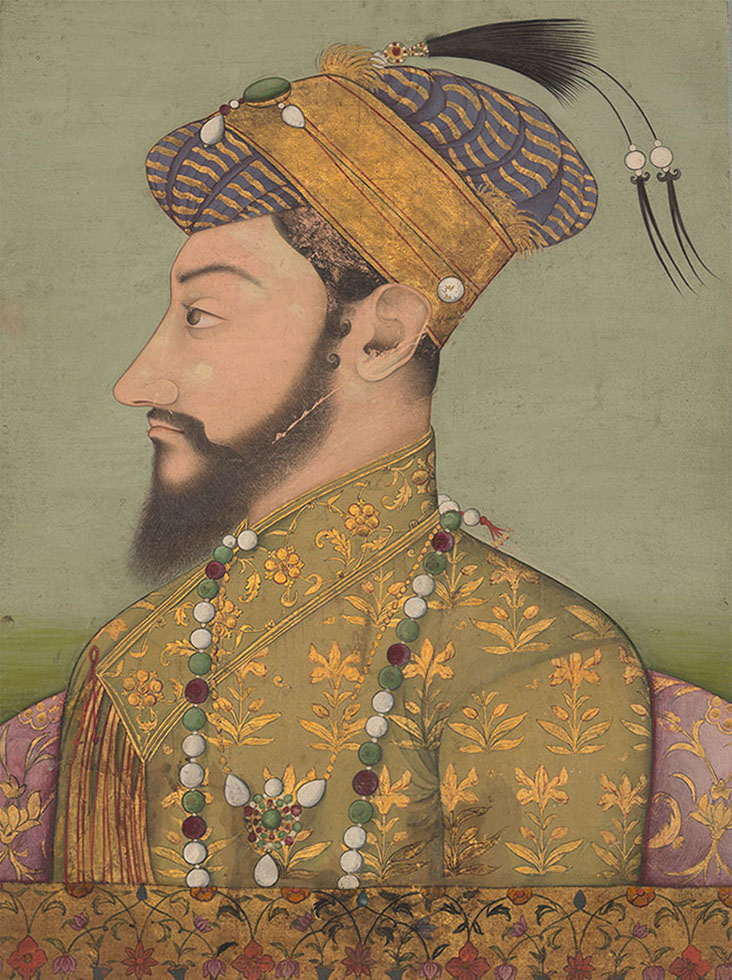
Aurangzeb (b. 1618; d. 1707) was the sixth Mughal emperor of India. He succeeded his father Shah Jahan, and ruled between 1657 and 1707. His reign was marked by extensive territorial expansion, Islamic orthodoxy and cultural austerity. His reign also saw the construction of mosques and memorials such as Moti Masjid in Delhi, Badshahi Mosque in Lahore and Bibi ka Maqbara in Aurangabad.
More Definitions
Kanishka
Kanishka (b. n.d.; d. n.d.) was the third emperor of the Kushan Empire (first century CE to third century CE).…
TS Nagarajan
TS Nagarajan (b. 1932; d. 2014) was a photojournalist who worked primarily on political portraiture and social issues such as…
Chandragupta Maurya
Chandragupta Maurya (b. n.d.; d. c. 297 BCE) was the founder of the Mauryan Empire and ruled from c. 321…
Jawaharlal Nehru
Jawaharlal Nehru (1889–1964) was a prominent leader of the Indian independence movement and the country’s first prime minister (1947–1964). Born…
Nandivarman
A Pallava ruler who succeeded Permeshvaraverman II and ruled over parts of Tamil Nadu and Andhra Pradesh in the eighth…
John Wilson
John Wilson (b. 1804; d. 1875) was a Scottish Christian missionary, educator and Orientalist who lived in the Bombay Presidency…
Bishnupriya Dutt
Bishnupriya Dutt (b. n.d.) is an Indian scholar of theatre studies and performance arts, as well as a professor and…
Ahilyabai Holkar
Ahilyabai Holkar (b. 1767; d. 1795) was a Maratha queen and known for her patronage of architecture. She was responsible…