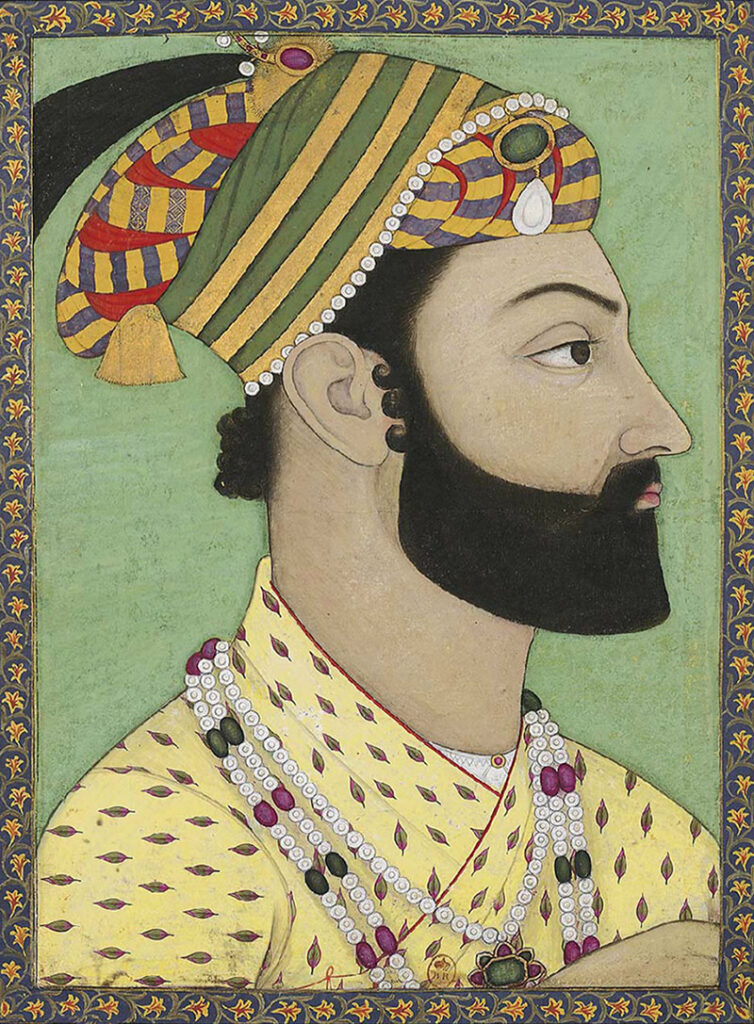
Ahmad Shah Durrani (b. c. 1722; d. 1772; r. 1747–72) was the first ruler of the Durrani empire and is considered the founder of modern-day Afghanistan. A member of the Sadozai clan, he was a hereditary leader of the Abdali tribe and commanded Abdali troops in the army of the Persian ruler Nadir Shah during 1736–47. Following Nadir Shah’s assassination in 1747, he took over sovereign leadership with the support of other Afghan clan chiefs, also taking the royal insignia and the coveted Koh-i-Noor diamond from his predecessor. Having christened himself Shah Durr-i-Durran — ‘King, Pearl of Pearls’ — he went on to establish a kingdom that encompassed present-day Afghanistan and parts of modern-day Iran, Pakistan, Turkmenistan and India, with its capital at Kandahar — where he was finally entombed. His manner of governance drew inspiration from Safavid and Mughal models.
More Definitions
Kamala Dongerkery
Kamala Dongerkery (b. 1909; d.1992) was an art and culture historian, social worker and author who worked on Indian embroidery,…
William Morris
William Morris (b. 1834; d. 1896) was a British textile and interior designer, writer and socialist activist popularly associated with…
Pyaari Azaadi
Pyaari Azaadi (b. 1966), formerly known as Jaishri Abichandani, is a Brooklyn-based artist and curator working across a range of…
Chokha
A painter in nineteenth century Rajasthan who worked in the courts of Mewar and Devgarh. He was the son of…
Ulrik Plesner
Ulrik Plesner (1930–2016) was a Modernist architect born in Florence, Italy to a Scottish painter and a Danish historian. His…
Bishnupriya Dutt
Bishnupriya Dutt (b. n.d.) is an Indian scholar of theatre studies and performance arts, as well as a professor and…
Ratnadeep Gopal Adivrekar
Ratnadeep Gopal Adivrekar (b. 1974) is a contemporary artist born in Mumbai, Maharashtra, known for his work on Indian and…
FO Oertel
Friedrich Oscar Oertel (b.1862; d.1942) was a German engineer and archaeologist best known for his excavations at Sarnath in 1904–05,…