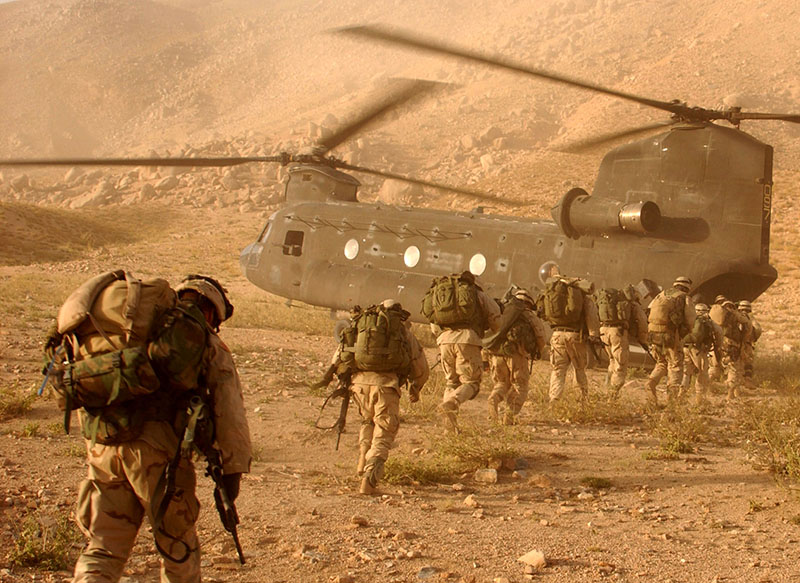
Two-decade-long conflict in Afghanistan between US-led forces and the Taliban. In retaliation to the al-Qaeda’s terrorist attacks in the US on September 11, 2001, and the Taliban’s refusal to surrender al-Qaeda leaders, American and British military forces launched an assault in Afghanistan on October 7, 2001. This followed two weeks of covert operations on ground in which the Central Intelligence Agency worked with local anti-Taliban groups to help target Taliban strongholds across the country — collaborations that would lead to the dismantling of Taliban power in coming years. Over the years the US helped establish new government administrations and initiate rebuilding efforts in the country; however, by the time international troops withdrew in 2021, anti-American sentiment in Afghanistan had grown and the Taliban also regained power.
More Definitions
Maharaja Jai Singh III
Maharaja Jai Singh III (b. 1819; d. 1835) was the ruler of the Jaipur princely state from 1819 to 1835,…
Khmer empire
Southeast Asian state that was founded in 802 CE and declined in 1431 CE. At its height, the Khmer empire…
Chandragupta II
Chandragupta II (b. n.d. ; d. n.d) was ruler of the Gupta dynasty from 376 to c. 413 CE. The…
Afghan War (1978–1992)
After the emergence of an unstable communist government in Afghanistan in 1978, which soon faced coups and insurgency from various…
Early Western Chalukya
Also known as the Badami Chalukyas, the dynasty ruled over parts of present-day Karnataka and the Deccan from the sixth…
Delhi Sultanate
Medieval Muslim empire covering large portions of present-day India, Pakistan and Bangladesh, ruled by a series of five dynasties —…
Nayaka
The governors of the Vijayanagara Kingdom, who declared independence after the Battle of Talikota in 1565 CE and they ruled…
Vijayanagara Kingdom
Established in 1336, it was one of the dominant kingdoms of southern India in the late medieval and pre-modern periods,…