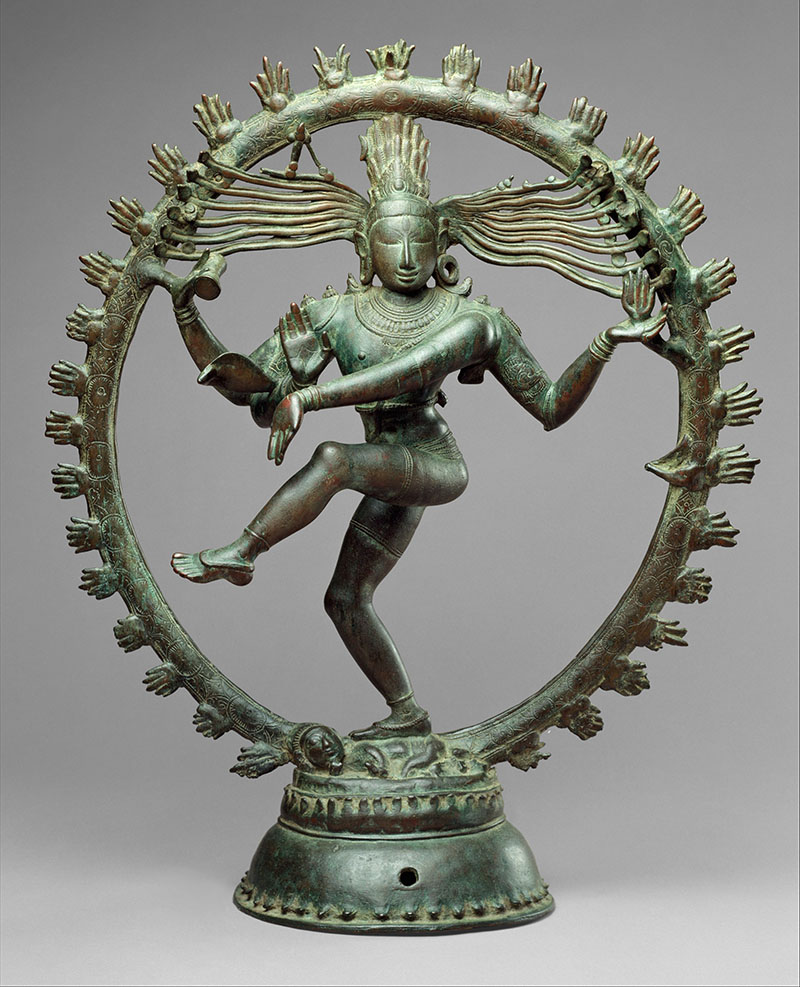
A form of dance codified in the Natyashastra, an ancient treatise on the performing arts. The tandava carries divine associations, particularly with the Hindu god Shiva. Dependent on the mood of the performance, the tandava can be joyous, violent, grievous or destructive.
More Definitions
Vidushaka
Within Sanskrit drama, it describes the good-natured jester or clown who often provides comic relief, usually through explicitly humorous action…
Nrtya
Meaning "dance, act on stage or play" in Sanskrit, it may be used to refer to "pure dance," which involves…
Strategic Management for the Art of Theatre (SMART)
Established in 2015, it is an initiative of the Bengaluru-based not-for-profit arts organisation, the India Foundation for the Arts. It…
Paryankasana
Composed of two parts — paryanka, meaning "bed" or "couch", and asana meaning "pose" –– it is a yoga pose…
Nautch Girls
A term used for female dancers who performed nautch (a dance related to Kathak, Dasi Attam and folk dances) at…
Bishnupriya Dutt
Bishnupriya Dutt (b. n.d.) is an Indian scholar of theatre studies and performance arts, as well as a professor and…
Taala
Meaning “clap" in Sanskrit, it is a measure of rhythm or metre in South Asian musical traditions. It works in…
Abhinaya
According to the Natyashastra, it may be understood as a combination of two words — abhi meaning "towards" and naya…